Every homeowner knows the sound. It starts as a gentle patter on the roof, escalating into a rhythmic drumming. Then, if something is wrong, the rhythm breaks. Instead of the satisfying whoosh of water rushing down the downspout, you hear a splash—a heavy, chaotic pouring of water hitting the ground right next to your foundation.
This is the sound of water overflow. It is the sound of a gutter system that has been defeated by debris.
While gutters are essential for managing rainwater, they have a fatal flaw: they are open buckets. They catch everything that falls from the sky and the trees above. When leaves, twigs, and pine needles accumulate, they create dams that block the flow of water. The result is overflow, a problem that looks like a nuisance but acts like a wrecking ball to your home’s structural integrity. That’s why professional gutter services in South Carolina focus not just on installation, but long-term flow protection and overflow prevention.
The solution to this persistent problem is often simple yet misunderstood: gutter guards. These protective devices act as a filtration system for your roof, ensuring that only water enters the channel while debris stays out. But how exactly do they work, and can they really handle the torrential downpours we experience here in South Carolina?
If you’re new to the concept, here’s a full breakdown of what gutter guards are and whether you actually need them.
In this deep dive, we will explore the mechanics of gutter guards, how they effectively prevent water overflow, and why they might be the most important upgrade you make for your home this year.
Understanding the Root Cause of Water Overflow
To appreciate how gutter guards solve the problem, we must first understand why overflow happens. It is rarely a failure of the gutter trough itself; rather, it is a failure of capacity caused by obstruction.
The Debris Dams
The primary culprit is organic debris. In Columbia, SC, we are blessed with beautiful foliage—towering oaks, expansive maples, and the ubiquitous pine trees. While these trees provide shade and beauty, they are the natural enemy of open gutters.
When leaves fall, they don’t just sit loosely in the gutter. They get wet. Wet leaves mat together, forming a dense, heavy sludge that acts like cement. This sludge piles up at the narrowest points of the system: the downspout outlets. Once the outlet is blocked, the water has nowhere to go. It fills the gutter trough until it reaches the brim, and then it spills over.
The Volume vs. Velocity Equation
Gutters are designed to handle a specific volume of water based on the square footage of your roof. However, this calculation assumes an unobstructed path. Even a small handful of pine needles can reduce the flow rate of a downspout by 50% or more. During a heavy summer thunderstorm, the volume of rain hitting your roof is immense. If the velocity of the water exiting the system is slowed by debris, the system backs up almost instantly.
Gutter guards are designed to solve both sides of this equation: they eliminate the debris dams and maintain the velocity of water flow.
What Are Gutter Guards?
Gutter guards—also known as gutter covers, screens, or helmets—are protective layers installed over or inside your existing gutters. Their purpose is simple: let water in, keep everything else out.
While the concept is straightforward, the engineering can be quite sophisticated. There are several types of gutter protection available, each with its own method of preventing overflow:
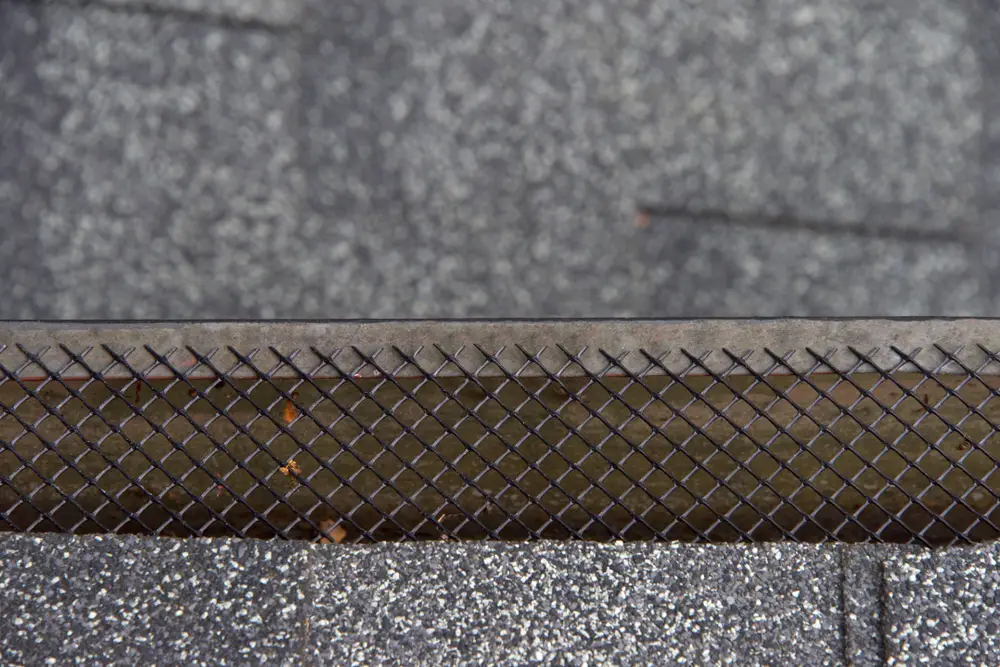
- Mesh Screens: These are metal sheets with thousands of tiny holes. They act like a sieve. They are excellent at keeping out large leaves and grit, though some finer sediment can pass through.
- Reverse Curve (Surface Tension) Guards: These use a solid cover with a curved nose. They rely on the scientific principle of liquid adhesion. Water clings to the curve and flows into the gutter, while leaves (which don’t adhere to the curve) fall off the edge.
- Brush Guards: These look like large pipe cleaners that sit inside the gutter. They keep large debris on top while allowing water to flow through the bristles.
- Foam Inserts: Triangular wedges of porous foam that fit into the gutter. Water soaks through; debris sits on top.
Regardless of the type, the goal is the same: maintain an open channel for water to travel, ensuring it never creates the blockage that leads to overflow.
The Mechanism: How Guards Stop the Overflow Before It Starts
So, how does a thin piece of metal or plastic prevent the waterfall effect? It comes down to flow management.
1. Maintaining Continuous Channel Capacity
The most critical way gutter guards prevent overflow is by preserving the capacity of the gutter trough. An open gutter might be 5 inches deep, but if 3 inches of that depth are filled with rotting leaves, you effectively only have a 2-inch gutter. A 2-inch gutter cannot handle a heavy storm.
Gutter guards ensure that the interior of the gutter remains empty. By keeping the channel clear, the full depth of the gutter is always available to hold and transport water. This means when a sudden deluge hits, your system has maximum capacity to manage the volume without spilling over the sides.
2. Protecting the Downspout
The downspout is the bottleneck of the entire system. It is the drain in the bathtub. If the drain is plugged, the tub overflows. Gutter guards act as the ultimate drain cover. By preventing debris from ever entering the horizontal trough, they ensure that nothing large enough to clog the downspout ever reaches the opening.
When the downspout remains clear, water creates a vacuum effect as it falls, pulling more water behind it and increasing the efficiency of the drainage. This rapid evacuation of water is essential for preventing overflow during high-intensity rainfall.
3. Shedding Debris
Without guards, debris accumulates until you manually remove it. With guards, the system becomes self-cleaning to a large degree. Leaves and pine needles land on top of the guard. Because they are elevated and exposed to airflow, they dry out much faster than they would inside a wet gutter. Once dry, the wind typically blows them off the roof. This passive shedding mechanism is key to keeping the water entry points open.
The Domino Effect: What Happens Without Protection
To understand the value of preventing overflow, you have to look at the damage overflow causes. It isn’t just about water splashing on your head; it creates a domino effect of destruction.
Foundation Instability
This is the most severe consequence. Gutters exist primarily to protect your foundation. When gutters overflow, water falls directly next to the base of your home. This saturates the soil, causing it to expand and exert pressure on your foundation walls. Over time, this hydrostatic pressure cracks the concrete. Conversely, if the soil washes away, the foundation loses support and settles, leading to uneven floors and sticking doors.
Siding and Fascia Rot
Water that overflows doesn’t always fall straight down. Often, due to surface tension, it curls back underneath the gutter and runs down the fascia board and siding. This constant exposure to moisture causes wood rot, peeling paint, and mold growth on your exterior walls. If you have noticed staining on your siding, you may already need Gutter Repair Services to fix the alignment or seal leaks caused by this overflow.
Landscape Erosion
You spend hundreds or thousands of dollars on landscaping—mulch, flower beds, shrubs. A single overflow event acts like a pressure washer on your garden beds. It washes away mulch, exposes plant roots, and creates unsightly trenches in your yard. Gutter guards keep the water in the downspout, where it can be directed safely away from your delicate plants.
Why Columbia, SC Homes Specifically Need Gutter Protection
Local geography and weather patterns play a huge role in home maintenance needs. In Columbia and the surrounding Midlands, we face a specific set of challenges that make gutter guards almost mandatory for overflow prevention.
The "Famously Hot" Thunderstorms
Our climate is characterized by intense, short-duration thunderstorms, particularly in the summer. We can receive an inch of rain in 30 minutes. This puts incredible stress on gutter systems. A slow-draining gutter might handle a drizzle, but it will instantly overflow during a South Carolina cloudburst. Gutter guards ensure that your system is operating at 100% efficiency the moment the sky opens up.
The Pine Needle Problem
If you live in Columbia, you know about pine needles. They are everywhere. Unlike broad leaves, which might blow out of a gutter, pine needles are insidious. They are thin enough to slip through standard screens and sticky enough to glue themselves to the bottom of the gutter. They create dense mats that are notoriously difficult to clean.
High-quality micro-mesh gutter guards are specifically designed to combat this. The openings are small enough that even pine needles cannot penetrate, yet water can still flow through. For homeowners with pine trees near their roofline, this is the only reliable way to prevent clogs and subsequent overflow.
Homes surrounded by mature trees face unique challenges, which is why gutter guards are especially important for properties with heavy tree coverage.
Gutter Guards vs. DIY Cleaning: A Cost and Effort Comparison
Many homeowners hesitate to install gutter guards because of the upfront cost. They figure they can just clean the gutters themselves. However, when you analyze the long-term cost and effort, gutter guards often win out.
The Hidden Costs of Regular Cleaning
To prevent overflow effectively without guards, you need to clean your gutters at least two to four times a year.
- Time: That is several weekends a year spent on a ladder instead of with your family.
- Equipment: You need ladders, gloves, buckets, and perhaps a pressure washer.
- Professional Cleaning: If you hire a service, you are paying recurring fees indefinitely. Over five or ten years, the cost of professional cleaning often exceeds the one-time cost of installing guards.
The Safety Factor
There is no price tag on safety. Ladder falls are one of the leading causes of home-related injuries in the United States. Every time you climb up to clear a clog to stop an overflow, you are taking a risk. Gutter guards keep your feet on the ground. By eliminating the need for frequent cleaning, they dramatically reduce your risk of injury.
If you’re weighing your options, this comparison of gutter guards vs regular cleaning breaks down cost, safety, and long-term value.
Professional Installation vs. DIY Guards
You can buy cheap plastic gutter guards at a big-box store, but they rarely deliver on the promise of preventing overflow. In fact, poorly designed DIY guards can actually cause overflow.
The Problem with Cheap Guards
Many DIY guards sit flat inside the gutter. Leaves pile up on top of them, creating a lid that seals off the gutter entirely. The water then cascades over the leaves and onto the ground—the exact problem you were trying to solve. Additionally, plastic guards warp in the sun and become brittle in the cold, eventually collapsing into the gutter and creating a clog themselves.
The Professional Advantage
Professional Gutter Installation Services utilize high-grade materials like aluminum and stainless steel mesh. These systems are engineered to withstand the weight of debris and heavy snow without collapsing.
Furthermore, professional installation ensures the pitch of the gutter is correct. If your gutters are already sagging or pitched incorrectly, installing guards won’t fix the overflow. A professional will realign and repair the existing system before securing the guards, ensuring the entire assembly works in harmony.
Common Myths About Gutter Guards
There is a lot of misinformation about gutter protection. Let’s clear up a few myths regarding overflow.
Myth: Gutter guards make the water shoot over the gutter in heavy rain. Fact: This is only true for poorly designed or improperly installed reverse-curve systems. High-quality mesh or screen guards are designed with "flow ratings" that far exceed the heaviest rainfall ever recorded in South Carolina. They can handle gallons of water per minute without overshooting.
Myth: You never have to maintain gutter guards. Fact: While "maintenance-free" is a marketing term, "low maintenance" is the reality. Guards drastically reduce the work, but you may occasionally need to brush off the top of the guards if debris settles there. However, this is much easier than digging wet muck out of the channel, and it doesn’t require dismantling the system.
Myth: They cause ice dams. Fact: Ice dams are caused by attic insulation issues and heat loss from the roof, not gutter guards. In fact, by keeping the gutter empty of debris, guards can prevent the frozen blocks of ice that often weigh down gutters and cause them to rip away from the fascia.
The Long-Term Savings of Overflow Prevention
Investing in gutter guards is an investment in preventative health for your home. By stopping overflow, you are avoiding expensive repairs down the road.
- Foundation Repair: Can cost anywhere from $5,000 to $15,000+.
- Siding Replacement: Rotting siding is expensive to match and replace.
- Landscape Restoration: Replanting shrubs and replacing mulch annually adds up.
- Basement Waterproofing: Cleaning up a flooded basement is a massive expense and headache.
Compared to these potential costs, the price of installing a robust gutter protection system is minimal. It provides peace of mind that, regardless of the storm intensity or the season, your water management system is functioning correctly.
Maintaining Your Gutter Guards
Once you have guards installed, your battle against overflow is largely won, but a little vigilance goes a long way.
- Visual Inspections: After a major storm, just look up. Ensure no large branches have fallen on the roof that might be blocking the guards.
- Brush Off: If you see a pile of pine needles sitting on top of the guard (which can happen in valleys of the roof), a telescoping brush can usually knock them off from the ground.
- Check the Flow: Next time it rains, watch the downspout. A strong, steady stream means the guards are doing their job perfectly.
Conclusion: Stop the Waterfall Today
Water overflow is more than just an annoyance; it is a symptom of a system that is failing to protect your home. It creates moisture issues, damages your foundation, and degrades your landscaping. In a region like Columbia, SC, where trees are plentiful and storms are sudden, relying on open gutters is a gamble.
Gutter guards provide a scientifically sound, effective barrier against the debris that causes clogs. They ensure that your gutters remain empty channels, ready to divert water away from your home safely and efficiently. They transform a high-maintenance headache into a self-reliant protection system.
Don’t wait for the next storm to watch your gutters fail again. Take proactive steps to protect your property. If you are ready to explore your options for gutter protection, or if you need an assessment of your current system’s health, Cola City Roofing is here to help.
Visit our Contact Us page today to schedule a consultation. Let us help you keep the water where it belongs—in the gutter and away from your home.