When people think about the future of home technology, they usually picture smart thermostats, solar roof tiles, or security systems you can control from your phone. Gutters rarely make that list. They are, after all, metal troughs on the side of a house—simple, functional, and largely unchanged for decades.
But at Cola City Roofing, we know that even the most fundamental parts of a home evolve. The future of gutters in 2026 isn’t about flying robots cleaning your eaves; it’s about smarter engineering, better materials, and a deeper understanding of how to protect homes from increasingly unpredictable weather.
For homeowners in Columbia and the Midlands, the "future" is really about resilience. It’s about installing systems that require less worry and offer more protection. As we look ahead, the trends we see aren’t just aesthetic choices; they are practical shifts toward durability and efficiency. Whether you are building a new home or replacing an aging system, understanding where the industry is heading can help you make a decision that pays off for decades to come.
Why Gutter Trends Matter More Than Ever
It’s easy to dismiss "gutter trends" as industry noise. Do gutters really have trends? They do, but unlike fashion, these trends are driven by necessity rather than style.
We are seeing a shift in how homeowners view their exteriors. In the past, gutters were often an afterthought—something slapped on at the end of a build. Today, they are recognized as a critical component of the home’s defense system. This shift is driven by a few key factors:
- Weather Volatility: We are seeing more intense storms with higher rainfall rates. A system designed for the average rainfall of 1990 may not handle the summer storms of 2026.
- Investment Protection: Homes are more expensive than ever. Protecting that investment from water damage—the most common cause of home deterioration—is a top priority.
- Low-Maintenance Living: Modern homeowners are busy. They want solutions that work without constant intervention.
Staying ahead of these trends means choosing a system that is prepared for the reality of tomorrow’s weather, not just today’s.
Smarter Gutter Designs Focused on Water Control
The primary job of a gutter has always been to move water. What’s changing is how we design them to move it more effectively. In 2026, we expect to see a continued move toward high-capacity designs becoming the residential standard.
For years, the 5-inch K-style gutter was the default for almost every home. Now, we are seeing a significant shift toward 6-inch systems as the new norm, especially here in South Carolina. The reason is simple physics: a 6-inch gutter holds nearly 40% more water than a 5-inch gutter.
This isn’t just about size; it’s about flow dynamics. Smarter design also involves deeper troughs and smoother transitions at the downspout outlets to reduce friction and turbulence. The goal is to evacuate water from the roof as quickly as possible. When a summer thunderstorm dumps two inches of rain in an hour, that extra capacity is the difference between a dry foundation and a flooded flowerbed.
Materials That Last Longer With Less Maintenance
One of the biggest frustrations for homeowners is rust and degradation. In the past, galvanized steel gutters were common, but they were prone to rusting over time. Vinyl gutters offered a rust-free option but often became brittle and cracked in the sun.
The future belongs to aluminum and copper, but with significant improvements in longevity.
- Advanced Aluminum Alloys: Modern aluminum gutters are being made thicker and more rigid. They resist denting from falling branches better than their predecessors and are light enough to put less strain on the fascia.
- Better Coatings: The paint finishes on aluminum gutters are vastly improved. Factory-applied baked-on enamel finishes are designed to resist fading, chalking, and peeling for 20 years or more. This means your gutters will look new longer without needing a fresh coat of paint.
- The Return of Copper: For those looking for a lifetime solution, copper is seeing a resurgence. It never rusts, requires no painting, and develops a beautiful patina over time. It’s a trend toward "buy it once, buy it right."
Seamless Systems Continuing to Lead the Way
If there is one trend that has solidified itself as the industry standard, it is seamless gutters. In 2026, we anticipate that sectional gutters (sold in pieces at big-box stores) will become almost exclusively a DIY repair product, while professional installations will be 100% seamless.
The logic is undeniable. Every seam is a potential leak point. Every seam creates a ridge inside the gutter that catches debris and slows down water flow. Seamless gutters, custom-formed on-site to the exact length of the home, eliminate these weak points entirely.
As technology improves, the machines used to form these gutters are becoming more precise, allowing for cleaner lines and tighter tolerances. This ensures that the gutter not only functions better but also looks like a natural architectural feature of the home rather than a bolted-on accessory.
Increased Demand for Gutter Guards and Debris Protection
Gutter guards used to be a niche add-on, often viewed with skepticism. Today, they are becoming a standard part of the initial installation conversation. The reason is the rising value of time and safety. Climbing a ladder twice a year to scoop out muck is a chore fewer homeowners are willing—or able—to do.
In 2026, we expect the market to consolidate around the most effective technologies:
- Micro-Mesh Dominance: The industry is moving away from simple screens with large holes (which trap seeds and pine needles) toward surgical-grade stainless steel micro-mesh. These systems filter out everything but water, keeping the trough virtually empty of debris.
- Integrated Systems: We are seeing more systems where the guard and the gutter are designed to work together, rather than the guard being a generic aftermarket clip-on. This improves the strength of the entire system and ensures a better fit.
Homeowners in the Midlands, surrounded by pines and oaks, are driving this trend locally. They know that in our area, an unprotected gutter is a clogged gutter.
Better Integration Between Roofs and Gutters
Historically, roofers did the roof, and gutter guys did the gutters. Sometimes they talked; often they didn’t. The future is a more holistic approach where the two systems are integrated.
We are seeing more emphasis on the drip edge —the metal flashing that bridges the gap between the roof deck and the gutter. In 2026, proper drip edge installation will be non-negotiable. It prevents water from wicking behind the gutter and rotting the fascia board.
We are also seeing better coordination regarding downspout placement. Architects and builders are thinking about drainage earlier in the design process, ensuring that downspouts can be placed in effective locations that don’t ruin the curb appeal or dump water on a walkway. It’s a shift from "Where can we put them?" to "Where should they go?"
More Focus on Installation Quality and Performance
As materials become more standardized, the differentiator in 2026 will be installation quality. Homeowners are becoming more educated. They are asking questions about hanger spacing, screw types, and pitch.
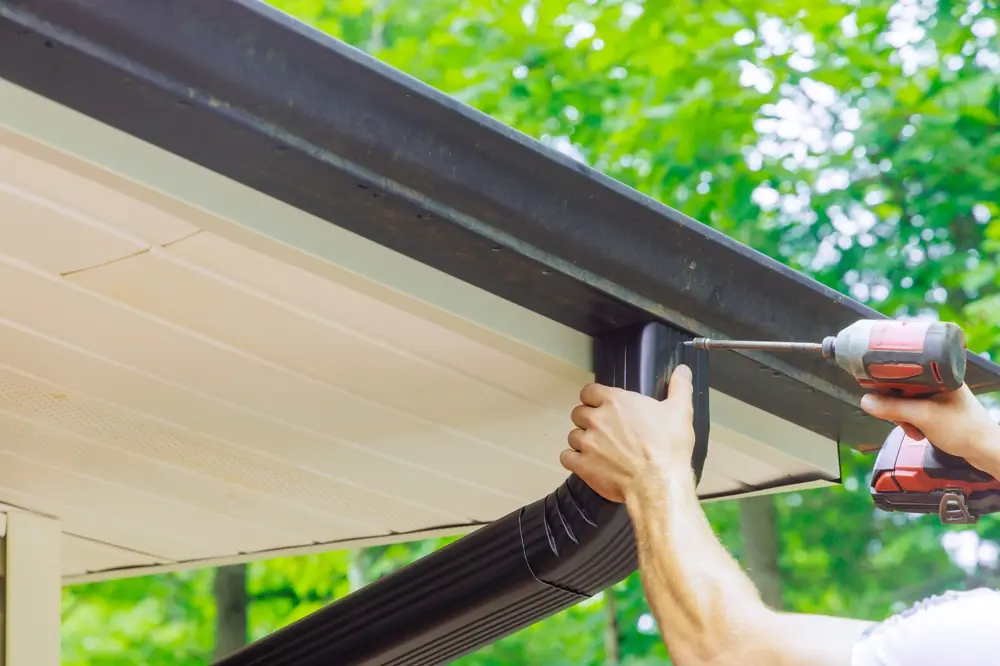
- Stronger Hangers: The days of the "spike and ferrule" (the long nail through the gutter) are gone. Heavy-duty internal hangers that screw into the fascia are the standard. We expect to see hangers placed closer together—every 18 to 24 inches—to handle the heavier water loads from intense storms.
- Precision Pitching: Installers are using better levels and laser tools to ensure the pitch (slope) of the gutter is perfect. This ensures every drop of water drains completely, preventing standing water and mosquito breeding.
The trend is toward "performance installation"—installing the system not just to hang on the house, but to withstand heavy loads and harsh conditions.
How Climate and Weather Are Shaping Gutter Design
We cannot talk about the future without talking about the weather. Climate data shows that while annual rainfall totals might fluctuate, the intensity of individual storms is increasing. We are getting more rain in shorter bursts.
This reality is shaping gutter design directly.
- Larger Downspouts: Just as gutters are getting wider (6-inch), downspouts are upsizing too. The standard 2×3 inch downspout is being replaced by 3×4 inch versions, which can drain water twice as fast.
- More Outlets: Systems are being designed with more frequent drainage points to prevent the gutter from filling up and overflowing during a flash storm.
- Storm-Ready Anchoring: In areas prone to high winds (like ours during hurricane season), we are seeing more robust fastening methods to keep gutters secure when the wind howls.
What Hasn’t Changed — and Likely Never Will
For all the talk of trends and technology, the fundamentals of a good gutter system remain the same. Gravity hasn’t changed. Water still runs downhill.
In 2026, just as in 1925, the core principles of a successful system are:
- Catch the water: The gutter must be positioned correctly under the roof edge.
- Move the water: The pitch must be correct to encourage flow.
- Discharge the water: The downspouts must move water at least 4-6 feet away from the foundation.
No amount of technology can fix a system that ignores these basics. The best future-proof system is one that respects these timeless rules of physics.
What Homeowners Should Prioritize in 2026 and Beyond
If you are looking at gutter work in the coming year, how should these trends influence your decision? Here is a practical priority list:
- Capacity First: Don’t default to the cheapest, smallest size. Ask about 6-inch gutters. If you have a large roof or steep pitch, they are likely the right choice.
- Seamless is Essential: Do not compromise on this. Sectional gutters are a short-term fix, not a long-term solution.
- Invest in Guards: If you have trees, budget for quality micro-mesh guards. The cost upfront pays for itself in reduced maintenance and safety.
- Check the Fascia: Ensure your installer inspects the wood behind the gutters. Putting new, high-tech gutters on rotten wood is a waste of money.
- Think About Discharge: Plan where the water goes. If you need underground drains or extended downspouts to protect your landscaping, include that in the project.
Planning Ahead With a Gutter System Built to Last
The "future" of gutters isn’t flashy. It’s quiet. It’s a system that works so well you forget it’s there. It handles the torrential downpour while you sit comfortably inside. It protects your foundation without you having to constantly check on it.
At Cola City Roofing, we are excited about these shifts in the industry because they align with how we’ve always done business. We believe in doing it right the first time, using materials that last, and designing for the specific weather patterns of the Midlands.
As we move into 2026, our promise is to keep offering solutions that make sense for your home and your budget. Whether that means upgrading to high-capacity 6-inch seamless gutters or installing a robust guard system, we are here to help you future-proof your home against whatever the weather brings next. Let’s build a system that’s ready for the future, starting today.