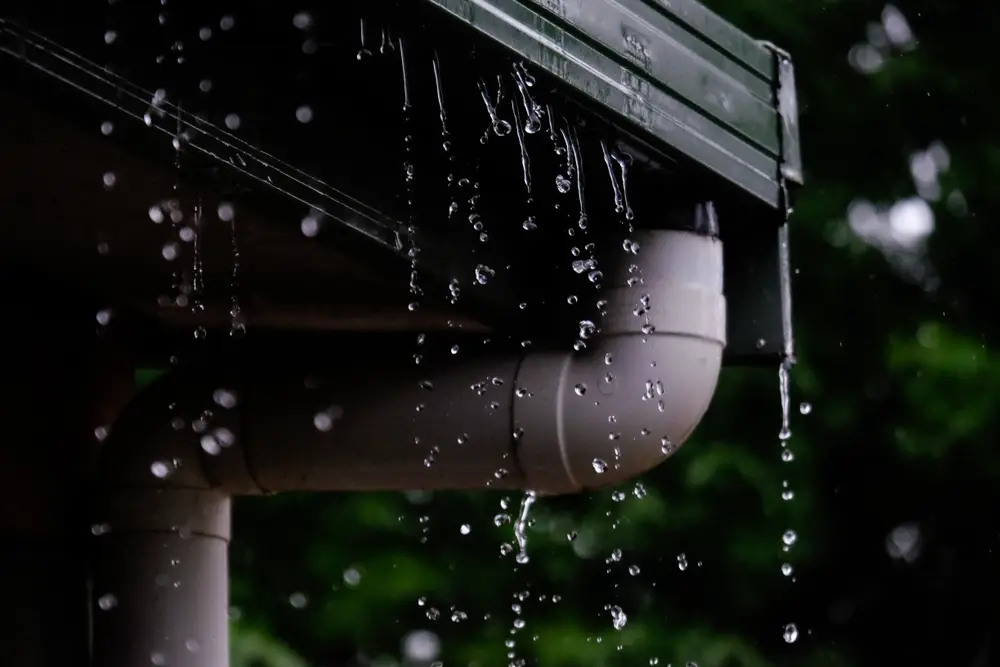
If you’ve lived in the Midlands for more than a summer, you know what rain looks like here. It doesn’t just drizzle; it dumps. We get sudden, intense thunderstorms that can drop an inch or two of water in under an hour. While that might be good for the lawns in Lexington and Columbia, it is brutal for your roof.
Most homeowners don’t think about their gutters until they see a waterfall pouring over the front steps or notice a muddy trench dug into their flower bed. But by then, the system has already failed.
At Cola City Roofing, we see the aftermath of these storms constantly. We see what happens when standard, builder-grade gutters try to keep up with a South Carolina deluge. The truth is, not all gutter systems are built to handle our specific climate. What works in a drier state or a region with gentle showers often falls short here.
Choosing the right gutter system for your home isn’t just about picking a color that matches the trim. It’s about capacity, durability, and managing water volume.
Why South Carolina Rain Puts Extra Stress on Gutters
It’s not just the total amount of rain we get annually; it’s how we get it.
In the Pacific Northwest, they get a lot of rain, but it often falls as a light, steady mist over many days. Gutters there rarely get overwhelmed. Here in South Carolina, we deal with "high-intensity rainfall events."
When a summer storm rolls through, the volume of water hitting your roof is massive. If you have a 2,000-square-foot roof, one inch of rain equals roughly 1,250 gallons of water. In a heavy storm, that water hits your roof and rushes down the slope at high speed.
Your gutters have to catch that fast-moving water, contain it without spilling over, and funnel it away from your foundation—all within seconds.
The stress comes from two places:
- Volume: The sheer weight of the water can pull gutters loose if they aren’t secured properly. Water weighs over 8 pounds per gallon. A gutter full of water is heavy.
- Velocity: Fast-moving water can overshoot the gutter entirely if the system isn’t sized or positioned correctly.
If your gutters aren’t up to the task, that water ends up around your foundation, leading to crawl space moisture, erosion, and even structural settling.
What Makes a Gutter System Work Well in Heavy Rain
So, what separates a gutter that overflows from one that handles the storm? It comes down to a few key design features.
Capacity is King The most important factor is how much water the trough can hold and how fast it can move it. Standard residential gutters are typically 5 inches wide. For many smaller homes, this is fine. But for homes with steep roofs or large surface areas, 5 inches often isn’t enough during a downpour. The water fills the trough faster than it can drain, causing overflow.
Pitch and Flow Water doesn’t move on its own; gravity moves it. A gutter system needs to be pitched (sloped) correctly toward the downspouts. If the pitch is too flat, water sits still. If it’s too steep, it looks bad and the water rushes too fast toward the end cap, potentially splashing out.
Secure Attachment In a heavy rain, the gutter is under load. It needs to be anchored to the fascia board securely. We look for hangers spaced every 18 to 24 inches, screwed into solid wood. If the hangers are spaced too far apart—which we often see on budget installations—the weight of the water will cause the gutter to sag. Once it sags, it holds more water, gets heavier, and eventually pulls away from the house.
Best Gutter Materials for SC’s Rainy Climate
The material you choose affects how long your system will last in our wet, humid environment. You need something that resists rust and can withstand the expansion and contraction caused by our temperature swings.
Aluminum Gutters: Reliable and Cost-Effective
For 90% of the homes we work on in Columbia, aluminum is the right choice. It is the gold standard for a reason.
- Rust-Proof: Aluminum does not rust. This is critical in a humid climate. You don’t want to be worrying about corrosion eating through the bottom of your gutters after five years.
- Lightweight but Strong: Aluminum puts less stress on your fascia board than steel, but when using a professional gauge (thickness), it is strong enough to handle heavy water loads.
- Value: It offers the best balance of performance and price.
The key with aluminum is the "gauge" or thickness. We recommend .027 or .032 gauge aluminum. The stuff you buy at a big-box store is often thinner (.019 gauge), which can bend easily under the weight of a heavy rain or debris.
Steel Gutters: Strong, With Added Maintenance Considerations
Galvanized steel is stronger than aluminum. It can take a hit from a falling branch better than aluminum can. However, steel has an Achilles’ heel: rust.
While galvanized steel is coated with zinc to prevent corrosion, that coating eventually wears off. Once the steel is exposed to our South Carolina moisture, it will rust. If you choose steel, you must be diligent about inspecting it for scratches and keeping it painted or sealed. For most homeowners, the extra maintenance isn’t worth the extra strength, unless you specifically need the durability for an area prone to falling limbs.
Galvalume is a steel option coated with a mix of aluminum and zinc, which resists rust better than standard galvanized steel. It has a distinctive industrial look that fits certain modern or rustic home styles well.
Copper Gutters: Long-Term Performance in Wet Conditions
Copper is the ultimate material for wet climates. It never rusts and never needs painting. In fact, it gets more beautiful with age as it develops a green patina.
Copper is incredibly durable. A properly installed copper system can last 50 to 100 years. It handles water beautifully and adds significant curb appeal. The downside, of course, is the cost. It is significantly more expensive than aluminum. However, for historic homes in downtown Columbia or high-end custom builds, copper is an investment that pays off in longevity and aesthetics.
Why Seamless Gutters Perform Better During Heavy Storms
We’ve talked about materials, but the construction of the gutter matters just as much. Specifically, whether the gutter is sectional or seamless.
In a heavy rainstorm, every seam is a potential failure point.
- Leakage: As water rushes through a sectional gutter, it hits the ridges where the pieces are joined. This turbulence slows the water down and puts pressure on the sealant. Over time, the sealant fails, and you get drips.
- Weakness: Sectional gutters are only as strong as the connectors holding them together. Heavy water weight can cause sections to separate.
Seamless gutters eliminate these problems along the straight runs. Because the gutter is one continuous piece of metal custom-cut to your roofline, the water has a smooth, uninterrupted path to the downspout. There is no friction to slow the flow, and there are no seams to leak. This efficiency makes seamless gutters far superior for handling the high-volume rainfall we experience in the Midlands.
The Importance of Proper Gutter Size and Downspout Placement
This is where the math comes in. Many gutter failures aren’t due to bad materials, but bad sizing.
5-Inch vs. 6-Inch Gutters Standard 5-inch gutters are fine for many homes. But if you have a steep roof pitch or a very large roof area draining into a short section of gutter, a 5-inch trough will overflow during a heavy storm.
We often recommend upgrading to 6-inch gutters for South Carolina homes. That one extra inch of width allows the gutter to hold about 40% more water. That buffer can be the difference between a dry foundation and a flooded flower bed during a July cloudburst.
Downspout Capacity The gutter catches the water, but the downspout has to get rid of it. Standard downspouts are 2×3 inches. Upgrading to 3×4 inch oversized downspouts allows debris to pass through more easily and drains the gutter much faster.
Think of it like a bathtub drain. If the faucet is on full blast (heavy rain) and the drain is small, the tub fills up and overflows. If the drain is huge, the water leaves as fast as it enters. Oversized downspouts act like that huge drain.
How Gutter Guards Help During Rainy Seasons
In a perfect world, your gutters would always be empty when the rain starts. But in the real world—especially here in the "Soda City"—gutters are often full of pine needles, oak tassels, and leaves.
When a storm hits, that debris clogs the outlet to the downspout instantly. The gutter fills up, and water spills over the edge, rendering the system useless.
High-quality gutter guards are essential for maintaining performance during rainy seasons. They keep the debris out so the channel remains open for water.
- Mesh Screens: These are generally the best option for our area. They allow water to filter through while keeping out pine needles and shingle grit.
- Surface Tension Helmets: These solid covers rely on water clinging to the surface and curving into the gutter. They work well for leaves but can sometimes overshoot in extremely heavy downpours if not installed perfectly.
We caution against cheap plastic guards or foam inserts, which often cause more clogs than they prevent.
Common Gutter Problems We See After Heavy Rain in the Midlands
After a major storm system moves through, our phones at Cola City Roofing light up. Here are the most common issues homeowners report:
- "Waterfall" Overflows: This usually means the gutter is clogged or undersized. The water comes off the roof so fast it shoots right over the top.
- Pulling Away: The weight of the water (and wet leaves) was too much for the fasteners. We often find rotten fascia wood behind these gutters.
- Soil Erosion: Homeowners wake up to find a trench washed into their landscaping right under the roofline. This indicates the gutter isn’t catching the water or the downspout isn’t directing it far enough away.
- Basement/Crawl Space Dampness: Water that isn’t moved away from the house soaks into the ground against the foundation wall, eventually seeping inside.
Choosing the Right Gutter System for Your South Carolina Home
So, how do you put all this together? If you are replacing your gutters , here is a checklist for a storm-ready system:
- Go Seamless: Don’t mess with sectional gutters. The investment in seamless aluminum is worth it for the leak prevention alone.
- Consider Size: Ask us to calculate if your roof size warrants 6-inch gutters. If you have a steep roof or have had overflow issues in the past, the answer is likely yes.
- Upgrade Downspouts: Large 3×4 downspouts are a smart, low-cost upgrade that drastically improves drainage speed.
- Check the Fascia: Ensure your installer checks the wood behind the gutter. New gutters on rotten wood will fail in the next storm.
- Plan the Discharge: Make sure downspouts extend at least 4 to 6 feet away from the house, or tie them into underground drains.
Preparing Your Gutters Before the Next Big Storm
You don’t have to wait for a full replacement to improve your home’s protection. Before the next storm season (which is pretty much year-round here), take a walk around your house.
Look for debris piling up. Check that your splash blocks are positioned correctly. Look for any spikes that are coming loose. A little preventative maintenance can save you a lot of headache when the sky opens up.
If you aren’t sure if your current system can handle the next deluge, give us a call at Cola City Roofing . We can inspect your setup, check the pitch and capacity, and give you honest advice on whether a tune-up or an upgrade is your best defense against South Carolina’s weather. Keeping your home dry is what we do, rain or shine.