A new gutter system should provide peace of mind. It is a simple, effective tool designed to protect your home from water damage for decades. Unfortunately, a surprising number of installations are flawed from the start. These mistakes, often made by inexperienced or rushed installers, can turn a protective system into a liability that causes the very damage it was meant to prevent.
At Cola City Roofing, we spend a lot of time fixing problems that could have been avoided. We see the same installation errors repeatedly across Columbia and the Midlands. Knowing what these mistakes are can help you spot poor workmanship and understand why a quality installation matters so much. It is not about using fancy materials; it is about getting the fundamentals right.
Here are ten of the most common gutter installation mistakes we encounter and how they should be properly addressed.
Why Gutter Installation Mistakes Are More Common Than You’d Think
You might assume that hanging a gutter is a straightforward task, but it is a job that requires precision, planning, and an understanding of how water behaves. Many general handymen or low-bid contractors treat gutter installation as an afterthought. They may lack the specialized tools, the experience with different roof types, or the patience to do the job correctly.
These shortcuts lead to systems that fail during the first heavy South Carolina downpour or degrade slowly over a few years, causing silent damage to your home’s fascia, siding, and foundation. The difference between a system that lasts and one that fails is all in the details.
Mistake #1: Improper Gutter Slope That Prevents Proper Drainage
This is the most frequent and fundamental error we see. For water to flow , gutters must have a slight, consistent downward pitch toward the downspouts. The standard is a drop of about one-quarter inch for every 10 feet of gutter.
Installers often hang gutters perfectly level because it looks straight from the ground, or they create an inconsistent slope with high and low spots. When a gutter is level, water sits stagnant. This standing water is heavy, putting a constant strain on fasteners. It also becomes a breeding ground for mosquitoes and allows leaves and pine straw to rot into a thick sludge, causing clogs. An improper slope means the water has nowhere to go, so it spills over the sides, right next to your foundation.
Mistake #2: Downspouts That Dump Water Too Close to the Foundation
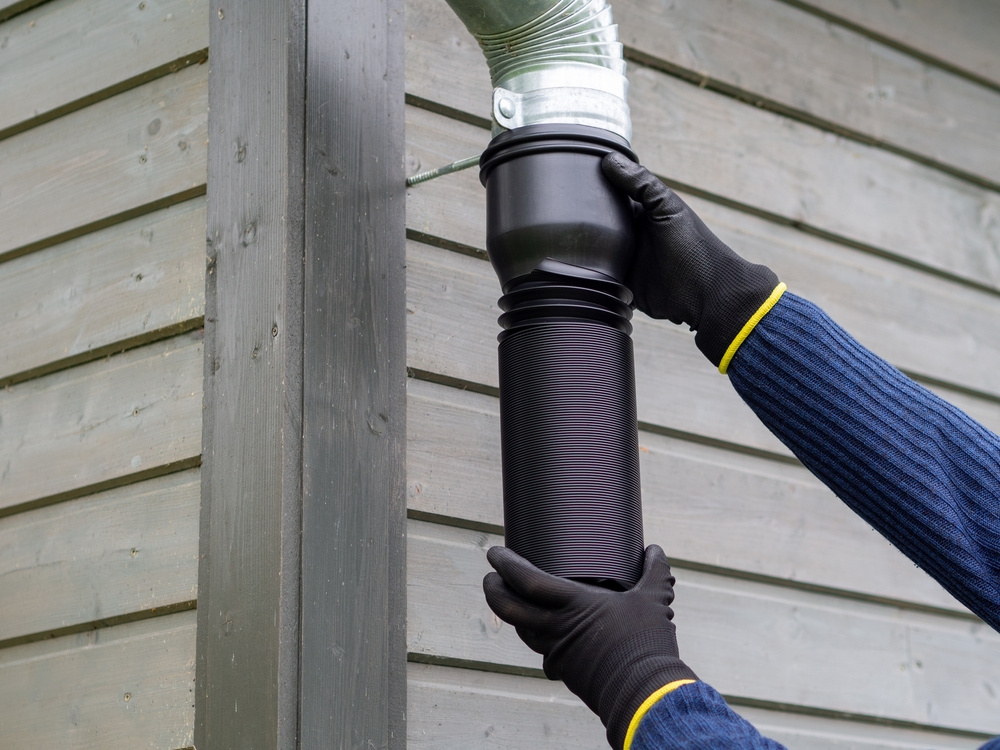
A gutter system can collect water perfectly, but if the downspout dumps that water at the base of your house, the entire system has failed. We regularly see downspouts that terminate just inches from the foundation wall.
During a storm, this directs hundreds of gallons of water into the soil right where it can do the most harm. The saturated ground puts pressure on your foundation walls and can lead to cracks, leaks in your basement or crawl space, and soil erosion that causes the foundation to settle. A proper installation includes downspout extensions that carry water at least four to six feet away from the home, discharging it where the ground slopes away.
Mistake #3: Gutters That Are Too Small for Heavy Rain
Not all houses are the same, and not all gutters should be, either. Many installers use standard 5-inch K-style gutters on every job because it’s what they have on their truck. While 5-inch gutters are adequate for many smaller homes with simple rooflines, they can be easily overwhelmed here in the Midlands.
A large or steeply pitched roof sheds an immense volume of water at high velocity. If the gutters are too small, that water will simply shoot right over the edge. For homes with complex roof valleys or large surface areas, wider 6-inch gutters are often necessary to handle the water volume without overflowing during our intense summer thunderstorms.
Mistake #4: Poor Fastening That Causes Gutters to Pull Away
A 40-foot section of gutter filled with water and debris can weigh hundreds of pounds. The fasteners holding it to your house must be strong and correctly installed. A common shortcut is using cheap spikes and ferrules (long nails) that are simply hammered through the gutter and into the fascia board.
Over time, the weight and the natural expansion and contraction of the metal work these nails loose. The result is a gutter that sags or pulls away from the house, creating a gap for water to run behind it and rot the wood. Quality installation uses heavy-duty hidden hangers, which are screwed—not nailed—firmly into the solid wood of the rafter tails behind the fascia board, ensuring the system stays locked in place.
Mistake #5: Seams and Joints That Leak Over Time
Sectional gutters are installed in 10- or 20-foot pieces. Every place where two sections meet—at a joint or a corner—is a potential weak point. Many installers simply apply a thin bead of sealant to these seams.
Over a few seasons of hot summers and cool winters, the metal expands and contracts, breaking that weak seal. Leaking seams allow water to drip constantly, staining your siding and eroding the ground below. While seamless gutters are the best option, even sectional systems can be durable if the joints are properly overlapped, riveted, and sealed with a high-quality, flexible gutter sealant.
Mistake #6: Skipping Proper Water Flow Planning
A professional installer doesn’t just start hanging gutters. They first walk the property to create a water management plan. This involves deciding on the optimal number and location of downspouts to handle the water volume efficiently.
A lazy installation might only include one downspout on a very long run of gutter, which forces the system to handle too much water. It also fails to consider the landscape. A downspout should never empty onto a walkway where it can create a slippery ice patch, onto a driveway where it can cause staining, or into a heavily planted flower bed that will wash out. Proper planning ensures water is moved from the roof to a safe discharge point without creating new problems.
Mistake #7: Ignoring Roof Pitch and Roof Type
The type and steepness of your roof have a major impact on how water behaves . A steep-pitched roof sheds water much faster than a low-slope roof. A slick metal roof sends water flying off the edge, while asphalt shingles slow it down slightly.
An installer must account for this. On a steep roof, gutters may need to be installed slightly lower than the roofline to catch the fast-moving water without being damaged by sliding snow or ice. On a metal roof, wider gutters are almost always a good idea to capture the runoff. Ignoring the roof’s characteristics leads to overshoot, where water sails right over the gutter system.
Mistake #8: Poor Placement Along Fascia and Roof Edge
The exact vertical placement of the gutter is critical. If it’s hung too high, it can block water from shedding off the roof, causing it to back up under the shingles and rot the roof deck. This also creates a shelf that traps leaves and debris.
If it’s hung too low, water coming off the roof will shoot over it, especially during heavy rain. The gutter should be positioned so the front lip is slightly lower than the back, and the entire gutter sits just below the extended line of the roof sheathing. This allows water to flow in but prevents it from backing up onto the roof.
Mistake #9: Using Low-Quality Materials That Don’t Last
To offer a low price, some contractors cut corners on materials. They might use thin-gauge aluminum that dents easily or vinyl gutters that become brittle and crack under the southern sun. They may also use untreated steel screws that rust and fail within a few years.
Quality materials, like heavy-gauge aluminum and durable fasteners designed for exterior use, are essential for a long-lasting system. While they may cost slightly more upfront, they prevent the need for premature repairs and replacement. A system made from quality components will stand up to ladders, branches, and years of harsh weather.
Mistake #10: No Final Inspection or Water Test
Once the gutters are hung, the job isn’t finished. A professional crew will clean up all debris, including any stray screws or metal shards. Most importantly, they will perform a final inspection and water test.
This involves running a hose in the furthest part of the gutter from the downspout to confirm that the water flows freely and at the correct speed. It also reveals any leaks at seams or end caps that need to be addressed. Skipping this final quality check is a sign of a crew that is just trying to get to the next job, not one that stands behind its work.
How We Correct These Gutter Installation Mistakes
When we are called out to fix a failing system, our approach is to diagnose the root cause, not just treat the symptoms. If gutters are sagging, we don’t just add more nails; we determine if the slope is wrong, if the fasteners have failed, or if the fascia board itself has rotted.
Our repair process involves bringing the system up to professional standards. This can mean re-pitching entire sections, replacing cheap fasteners with heavy-duty hangers, adding new downspouts for better flow, and sealing all joints correctly. In cases where the system is undersized or extensively damaged, a full replacement is often the most cost-effective solution .
Getting Gutter Installation Right the First Time
The best way to avoid these expensive and frustrating problems is to ensure your gutters are installed correctly from the beginning. A professionally installed system is engineered to protect your home’s foundation, roof, and siding for decades.
At Cola City Roofing, we treat gutters as the essential water management system they are. We take the time to plan, measure, and install every component with precision. If you are dealing with the fallout from a bad installation or want the peace of mind that comes with a job done right, we are here to help. An honest assessment is the first step toward a dry and stable home .