When most homeowners think about their gutters, they think about the roof. It makes sense—that’s where they are attached, and that’s where the water comes from. But after years of inspecting homes across the Midlands, we know that the real story often happens much lower down, right at the base of your house.
Your foundation is the most critical structural component of your home. It supports everything else: the walls, the floors, the roof, and your family inside. What many people don’t realize is that the biggest threat to that foundation isn’t usually earthquakes or settling soil—it’s water mismanagement starting twenty feet above your head.
At Cola City Roofing, we see this connection all the time. A homeowner calls us because they have cracks in their brick or a wet crawl space , thinking they have a structural issue. Often, the root cause isn’t the ground; it’s a gutter system that isn’t doing its job. Understanding this connection can save you from some of the most expensive repairs a homeowner can face.
Why Foundation Problems Often Start at the Roofline
It seems counterintuitive that a metal trough on your eaves could break concrete at ground level, but it comes down to volume. A typical 2,000-square-foot roof can shed over 1,000 gallons of water during a single inch of rainfall. In a heavy South Carolina summer storm, that number skyrockets.
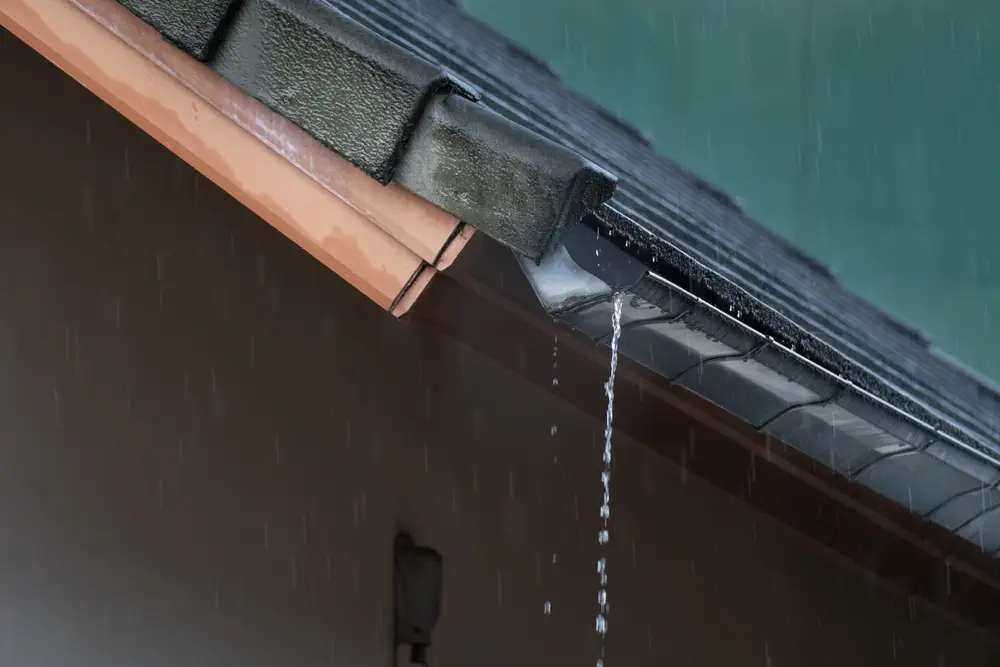
If your gutters are working correctly, all that heavy, destructive water is collected and channeled safely away to a drainage area where it can’t do any harm. But if the installation is poor—if the gutters are undersized, sloped wrong, or simply not there—that water takes the path of least resistance.
Gravity pulls it straight down. Instead of being moved ten feet away from your house, those thousands of gallons dump directly onto the soil surrounding your foundation. This creates a concentrated "splash zone" that saturates the ground immediately next to your footings. That saturation is the beginning of the end for a dry, stable foundation.
What Happens When Gutters Don’t Direct Water Away Properly
Water is a powerful force. It can carve canyons through stone given enough time, so it can certainly undermine the soil around your house. When gutters fail to control the flow, two specific things happen that put your foundation at risk.
Water Pooling Around the Base of the Home
The immediate effect of a bad gutter system is pooling. You might see this as standing water in your flower beds or soggy patches of grass right next to the wall after a rain.
When water pools against the foundation, it creates hydrostatic pressure. This is the pressure exerted by a fluid at rest. As the soil gets heavy and waterlogged, it pushes against your foundation walls. Concrete is strong, but it isn’t waterproof, and it doesn’t flex. Under constant pressure, water will find a way in—through microscopic pores in the concrete, through the joint where the wall meets the footing, or through small cracks that develop over time.
Soil Erosion That Weakens Foundation Support
The longer-term, and arguably more dangerous, issue is erosion. Your foundation relies on the soil underneath it to provide firm, even support. When water dumps off the roof unchecked, it washes away the topsoil and eventually destabilizes the subsoil.
This doesn’t happen overnight. It’s a slow process where the dirt is literally washed out from under your house. As the soil erodes or becomes overly saturated and soft, it loses its load-bearing capacity. The foundation footing may start to settle or sink into this soft ground. If one corner of the house settles faster than the others—a process called differential settlement—that is when structural damage occurs. The rigid concrete can’t bend, so it cracks.
Common Installation Issues That Cause Long-Term Damage
It is rare for a gutter system to fail completely all at once. Usually, the damage is caused by specific installation errors that prevent the system from handling the water volume effectively. These are the mechanical failures we look for when diagnosing water issues.
Improper Gutter Slope and Poor Water Flow
Gutters rely entirely on gravity to move water. They must be installed with a precise slope—typically about a quarter-inch drop for every ten feet of gutter run. This slope needs to be consistent.
If an installer hangs the gutters perfectly level because they think it looks better, the water won’t move. It sits there, collecting weight and eventually spilling over the sides. Conversely, if the slope is inconsistent, you get low spots where water pools and mosquitoes breed. In both cases, the water isn’t making it to the downspout fast enough to keep up with a heavy rain, leading to overflow that dumps right onto the foundation.
Downspouts That Empty Too Close to the House
This is perhaps the most common mistake we see. A gutter system catches all the water perfectly, channels it to the downspout, and then… dumps it six inches from the foundation wall.
Ideally, downspouts should extend at least four to six feet away from the home . Dropping thousands of gallons of water right at the corner of the house creates a concentrated point of failure. The soil in that corner becomes super-saturated, often leading to corner settlement where you see stair-step cracks in brick or block walls .
Loose or Undersized Gutters During Heavy Rain
Size matters when it comes to gutters. Standard 5-inch gutters are sufficient for many homes, but if you have a steep roof or a large surface area, they might be easily overwhelmed by a typical Columbia thunderstorm.
If the gutter is too narrow, fast-moving water shoots right over the top (overshoot). If the downspout outlet is too small, the gutter fills up like a bathtub and spills over the front and back.
Additionally, gutters that aren’t secured into the rafter tails or solid fascia will pull away under load. A gap of even half an inch between the gutter and the roof edge allows water to run behind the gutter, dripping straight down the siding and onto the foundation, bypassing the drainage system entirely.
How Foundation Damage From Gutters Shows Up Over Time
Because foundation damage happens underground first, you usually don’t see the problem until the symptoms travel up the house. By the time you spot these signs, the issue has likely been developing for months or years.
Cracks in Walls, Brick, or Interior Drywall
When a foundation settles unevenly due to soil erosion, the house shifts. Rigid materials like brick, mortar, and drywall cannot handle this movement.
- Exterior: Look for "stair-step" cracks in your brickwork, usually starting near the corners of the house or around windows and doors.
- Interior: You might notice diagonal cracks in the drywall extending from the corners of door frames or windows.
- Doors and Windows: As the frame of the house shifts, doors and windows may start to stick, jam, or fail to latch properly.
These aren’t just cosmetic flaws; they are the building screaming that its support system is moving.
Moisture Problems in Crawl Spaces and Basements
Here in the Midlands, many homes are built on crawl spaces. If your gutters are dumping water near the foundation, that water will inevitably migrate into the crawl space.
You might notice a musty smell in the house, buckling hardwood floors (caused by humidity rising from below), or visible mold growth on the floor joists. In homes with basements, hydrostatic pressure can force water through the walls, leading to active leaks or damp spots. A wet crawl space is often the first indicator that your exterior drainage system is failing.
Why Quick Fixes Don’t Solve Gutter-Related Foundation Problems
When homeowners notice water pooling or a small leak, the instinct is often to try a quick DIY fix. We see a lot of silicone caulk smeared over leaking joints or splash blocks placed haphazardly under downspouts.
While splash blocks are better than nothing, they rarely move water far enough away to make a real difference. Caulking a joint might stop a drip for a season, but it doesn’t fix the improper slope or undersized downspout that caused the backup in the first place.
Foundation damage is a systemic issue. It’s caused by the overall failure of the water management system. Patching a hole in a gutter that is pitched the wrong way is like putting a band-aid on a broken leg. It doesn’t solve the underlying mechanical problem. To protect your foundation, you need to control the water from the moment it hits the roof until it is safely discharged away from the home.
How Professional Gutter Installation Helps Prevent Foundation Damage
Professional installation is about engineering, not just hanging aluminum. When we design a gutter system, we are doing math based on your specific home.
- Capacity Planning: We calculate the square footage of your roof and the pitch to determine how much water needs to be moved. This tells us if you need 5-inch or 6-inch gutters and how large your downspouts need to be.
- Strategic Placement: We look at the grade of your land. We place downspouts where the ground naturally slopes away from the house, or we recommend underground drainage extensions if the grade is flat or slopes toward the foundation.
- Secure Attachment: We install hangers every two feet (or closer) using heavy-duty screws that bite into solid wood. This ensures the gutters don’t sag or pull away, keeping the water inside the channel where it belongs.
By getting the physics right, we ensure that even in a torrential downpour, the soil around your foundation remains stable and dry.
When to Have Your Gutters and Drainage Evaluated
You don’t have to wait for cracks in your drywall to act. The best time to address drainage is before damage occurs.
If you notice any of the following, it’s time for an evaluation:
- Water spilling over the gutters during rain.
- Deep trenches in the mulch or dirt under your roofline.
- Downspouts that dump water directly onto the driveway or near the house.
- Persistent dampness or standing water in the crawl space.
A professional evaluation looks at the whole picture—roof, gutters, downspouts, and ground drainage—to find the weak link in the chain.
Stopping Water Damage Before It Reaches the Foundation
Your home is a system. The roof protects the interior, the foundation supports the structure, and the gutters connect the two. When that connection is broken or poorly installed, the whole system suffers.
At Cola City Roofing, we believe that good roofing isn’t just about shingles; it’s about protecting the entire envelope of your home. We install gutter systems designed to handle our local weather and protect your biggest investment from the ground up.
If you are worried about where your rainwater is going, or if you suspect your current gutters aren’t up to the task, let’s take a look. It is far easier to upgrade a gutter system than it is to repair a foundation. We’ll give you honest, practical advice on how to keep your home dry and stable for years to come.