It’s natural to think of your roof and your gutters as two separate things. The roof keeps the rain out, and the gutters catch what runs off. While that’s true, it’s a bit too simple. In reality, your roof and gutters form a single, integrated system designed to manage water. How well that system works depends entirely on how well its two main components are matched to each other.
At Cola City Roofing, we see firsthand how a mismatch between the roof material and the gutter design can lead to persistent problems. A gutter solution that works perfectly on a standard shingle roof might be completely overwhelmed by the runoff from a slick metal roof. The type of roof you have dictates how water behaves—its speed, its volume, and its path—and your gutters must be chosen and installed to account for these specific behaviors.
Thinking about your roof and gutters as a compatible pair is essential for long-term home protection. This isn’t about complex engineering; it’s about understanding that different roof materials create different challenges. Getting the combination right from the start prevents countless headaches, from overflowing troughs to serious water damage.
Why Roof and Gutter Compatibility Matters
Compatibility is about performance. A successful gutter system doesn’t just catch water; it controls it. The material, pitch, and size of your roof all determine the "load" that your gutters will be asked to handle. If the gutter system isn’t designed for that specific load, it will fail.
This failure often looks like a simple gutter problem—overflowing, leaking, or pulling away from the house. Homeowners might blame the gutters themselves or assume they are clogged. In many cases, however, the gutters are simply the wrong tool for the job. They were never designed to handle the sheer velocity or volume of water coming off that particular roof. A professional assessment always starts by looking at the roof first, because the roof defines the problem that the gutters need to solve.
How Roof Pitch Changes Water Speed and Volume
Before we even get to the roofing material, the pitch, or steepness, of your roof is a primary factor. As we’ve discussed before, pitch dictates the speed of the water. A low-slope roof allows rain to run off slowly and gently. A steep roof acts like a slide, accelerating water to high speeds before it ever reaches the gutter.
This high-velocity runoff can easily "overshoot" a standard gutter. The water comes down so fast that it skips right over the edge and crashes onto the ground. This effect is magnified by certain roofing materials. Therefore, both the pitch and the material must be considered together when designing the gutter system. A steep metal roof presents a much greater challenge than a low-slope shingle roof, and the gutter system must be robust enough to handle it.
Asphalt Shingle Roofs and Standard Gutter Systems
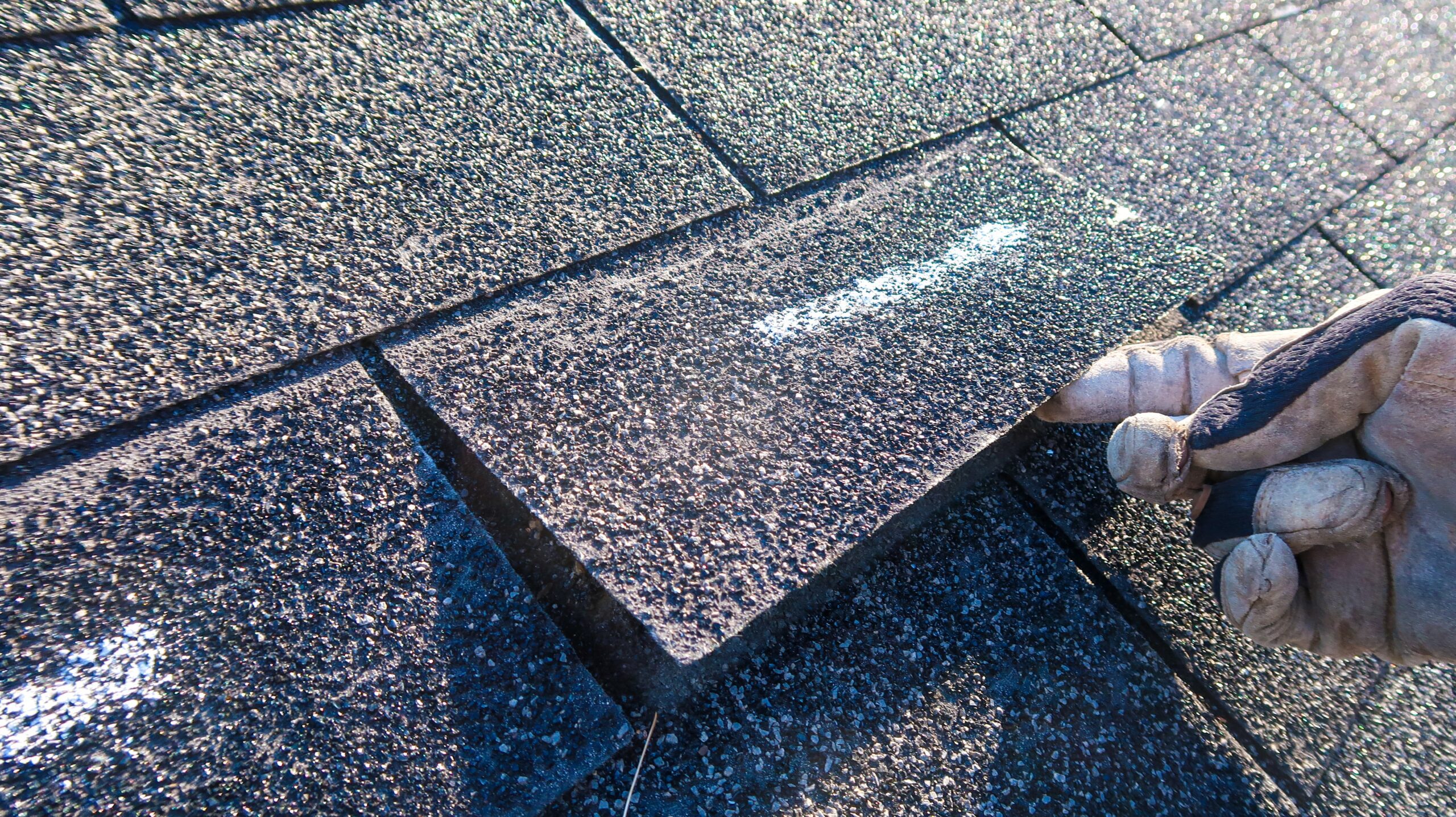
Asphalt shingle roofs are the most common type on residential homes in Columbia and across the country. They have a granular, textured surface that creates a bit of friction, which helps to slow down rainwater slightly as it flows toward the edge.
For most homes with standard asphalt shingle roofs and moderate roof pitches, a well-installed 5-inch or 6-inch K-style gutter system is perfectly adequate. The key is to size the system correctly based on the roof’s total square footage. Because the water flow is relatively predictable, standard gutter placement and sizing calculations work well. However, one specific challenge with shingle roofs is the shedding of granules, especially on new roofs. These heavy, sand-like particles can accumulate in gutters and need to be cleaned out to prevent clogs.
Metal Roofs and High-Flow Water Challenges
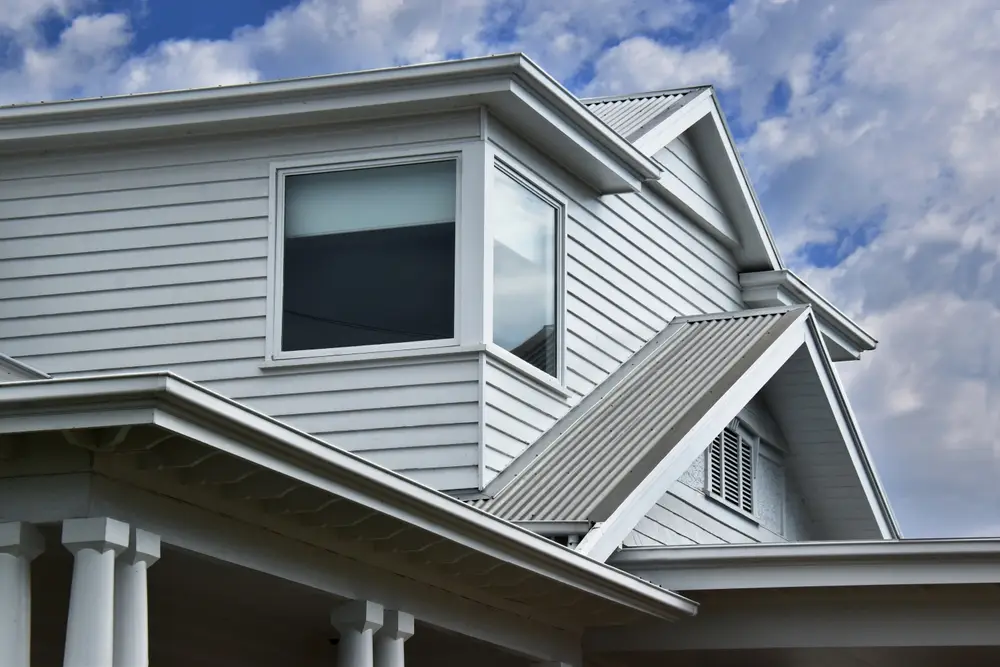
Metal roofing has become increasingly popular for its durability and modern aesthetic. However, it presents a unique and significant challenge for gutter systems. Unlike asphalt shingles, a metal roof has an extremely smooth, non-porous surface. There is virtually zero friction to slow down the water.
As a result, rainwater flies off a metal roof at a very high velocity. This creates two main problems:
- Overshooting: The fast-moving sheet of water can easily shoot right over a standard-sized or poorly placed gutter.
- "Sheet Flow": In heavy rain, water comes off a metal roof not in drips, but in a solid, powerful sheet that can overwhelm a system in seconds.
To combat this, gutter systems for metal roofs often require specific modifications. Upgrading to 6-inch gutters is almost always necessary to provide a wider target. In some cases, installers may need to place the gutters slightly lower than the roofline to ensure they catch the fast-moving water. Special diverters or splash guards may also be needed in valleys or on long runs to manage the intense flow.
Tile and Slate Roofs: Weight, Overhang, and Drainage Considerations
Tile and slate roofs are beautiful and can last a lifetime, but they require specialized gutter solutions. The individual tiles or slates are not flat; they have curved or uneven profiles. This means water doesn’t flow in a uniform sheet but is channeled in complex ways.
Furthermore, these materials often have a significant overhang past the edge of the fascia board. If gutters are installed in the standard position against the fascia, the water running off the tiles may miss them completely. The installation must be customized. This often involves using specialized hangers or brackets that can extend the gutter out to meet the edge of the tile.
The weight and fragility of tile and slate also mean that ladders cannot be leaned against the roof edge during installation or cleaning, which adds complexity to any gutter work. A contractor must have experience with these specific roofing systems to avoid causing damage.
Flat and Low-Slope Roofs: Different Drainage Needs
Flat or very low-slope roofs, common on some modern homes and commercial buildings, don’t use traditional pitched gutter systems. Because there is not enough slope for gravity to move water effectively along a trough, these roofs require a different approach.
Most low-slope roofs have an internal drainage system. This involves one or more drains located in the center of the roof surface, which connect to pipes that run down through the interior of the building. These systems are effective but require diligent maintenance to ensure the drains do not become clogged with leaves and debris, which can lead to catastrophic pooling and leaks.
Some low-slope roofs may use scuppers—openings in the exterior wall—that drain into a downspout or a decorative leader head. In these cases, the "gutter" is essentially a small collection box rather than a long trough. The key is that the roof itself is sloped toward these drainage points.
Why Overhang and Roof Edge Design Matter
The design of the roof edge, specifically the overhang and the presence of a drip edge, plays a crucial role in how water transitions from the roof to the gutter. The drip edge is a piece of metal flashing installed at the edge of the roof that directs water away from the fascia and into the center of the gutter.
Without a properly installed drip edge, water can cling to the underside of the shingles and run down behind the gutter. This leads to water damage and rot on the fascia board—the very wood the gutters are attached to. This problem is known as "capillary action."
The amount of shingle overhang is also critical. Too little overhang, and water can miss the gutter. Too much overhang, and it can create a shelf for debris to build up or allow water to overshoot the trough. A professional installer will assess the roof edge and ensure the gutters are placed in the optimal position to catch the water as it comes off the drip edge.
Common Gutter Problems Caused by Roof Mismatch
When the roof type and gutter system are not compatible, a predictable set of problems arises. Homeowners often report:
- Constant Overflow: The gutters spill over in anything more than a light rain, even when they appear to be clean. This is a classic sign that the system is undersized for the roof’s runoff volume or velocity.
- Splash-Back Damage: Water overshooting the gutters crashes against the siding and windows, leading to water stains, peeling paint, and potential leaks around window frames.
- Erosion Below: A tell-tale trench in the mulch or soil below the gutter line indicates that water is consistently missing or overflowing the trough.
- Ice Dams in Winter: On some roof types, an improper gutter setup can contribute to the formation of ice dams, where melting snow refreezes at the roof edge, creating a blockage that forces water back up under the shingles.
These are not gutter failures; they are system design failures. The solution isn’t just to clean the gutters, but to re-evaluate the entire roof-to-gutter relationship.
Adjusting Gutter Size and Placement for Different Roof Types
A professional addresses compatibility issues by customizing the gutter system to the roof. This goes beyond simply choosing a color.
- For Metal Roofs: The default is often a 6-inch gutter to provide a larger opening. The placement might be adjusted to sit slightly lower and further out from the fascia to effectively catch the high-velocity sheet of water.
- For Steep Roofs: Regardless of material, a steeper pitch calls for a larger gutter. The increased speed of the water demands a wider target.
- For Tile Roofs: The focus is on placement. Specialized brackets or roof-mounted hangers might be used to position the gutter correctly under the tile overhang, ensuring it catches the runoff without being damaged by sliding snow or ice.
- For Large Roofs: Simple square footage calculations dictate the need for larger gutters and, just as importantly, more or larger downspouts to handle the immense volume of water.
Why Professional Assessment Prevents Compatibility Issues
A homeowner isn’t expected to be an expert in hydrology or roofing systems. That’s our job. A professional assessment is the key to preventing these compatibility problems from the start. When we look at a home, we’re not just measuring for gutter length. We are analyzing the entire system:
- What is the roof material?
- What is the roof’s pitch?
- What is the total square footage draining into each gutter run?
- Is there a properly installed drip edge?
- Are there complex valleys or features that will concentrate water flow?
Only after answering these questions can we recommend a gutter system that is truly tailored to the home. This proactive, diagnostic approach is what separates a standard installation from a long-term, high-performance water management solution.
Designing a Roof-and-Gutter System That Works Together
Your home’s exterior is a single system working to protect you from the elements. The roof is the shield, and the gutters are the drainage network. For the system to be effective, both parts must be in sync. The most expensive, high-end gutter in the world will fail if it’s not the right match for the roof above it.
At Cola City Roofing, we approach every project with this systems-thinking mindset. We understand how the specifics of your roof in our unique Columbia climate will impact water flow. Our goal is to design and install a gutter system that doesn’t just hang on your house but works in perfect harmony with your roof. It’s this commitment to compatibility that ensures your home stays dry and protected, storm after storm, year after year.