Most homeowners see clogged gutters as a simple, annoying chore. You notice leaves spilling over the edge, you sigh, and you add "clean the gutters" to a weekend to-do list. It feels like a minor tidiness issue, something you will get to eventually. But what many people don’t realize is that a clogged gutter is not just an eyesore; it’s an active threat to your home. It’s a quiet problem that can lead to some of the most expensive and stressful repairs a homeowner can face.
At Cola City Roofing, our work gives us a unique perspective. We see the chain of events that starts with a handful of wet leaves and ends with a rotten roof structure or a cracked foundation. The real dangers of clogged gutters are often hidden from view until the damage is significant.
We believe in giving our neighbors in the Columbia area the straight facts so they can protect their homes. This is not about causing alarm; it’s about connecting the dots. Understanding the hidden risks allows you to see gutter maintenance not as a chore to be avoided, but as a critical, preventative step in safeguarding your biggest investment. That’s why professional gutter services in South Carolina focus heavily on prevention before structural damage begins.
Why Clogged Gutters Are More Than Just a Maintenance Issue
A functioning gutter system is your home’s first and most important line of defense against water. It’s designed to capture the immense volume of rain that hits your roof and direct it safely away from your house. When gutters become clogged with leaves, pine needles, and shingle grit, that entire system breaks down.
The problem is that the gutter stops being a channel for water and becomes a reservoir. It holds gallons of water right up against the most vulnerable parts of your home’s exterior. This isn’t just a maintenance task you have neglected; it is a ticking clock. The constant presence of trapped water initiates a slow but steady process of decay and destruction that can compromise your home from the roofline all the way down to the foundation.
How Water Overflow From Gutters Starts Bigger Problems
When a gutter is full, the water has to go somewhere. During a typical heavy rainstorm in the Midlands, it will spill over both the front and the back of the trough. This water overflow is the catalyst for a whole host of more serious issues.
Persistent overflow should never be ignored, as it often signals deeper structural risk.
Water that spills over the front can erode your landscaping, wash away mulch, and damage flower beds. It can even create ruts in your lawn or crack concrete patios and walkways over time.
However, the overflow that goes over the back of the gutter is far more dangerous. This water runs directly onto the wooden components of your roof edge—the fascia and soffit—and down your home’s siding. This is where the most significant hidden damage begins, as water starts to penetrate parts of your home that were never meant to be wet.
Damage to Roof Edges, Fascia, and Soffits
The fascia board is the long, straight board that runs along the lower edge of the roof. It’s what your gutters are mounted to. The soffit is the underside of the roof overhang. These components are usually made of wood, and they are the first victims of a clogged gutter.
When water constantly overflows from the back of the gutter, it soaks the fascia board. Wood that is perpetually damp will inevitably begin to rot. This rot is more than just a cosmetic problem.
- Weakened Support: As the fascia rots, the fasteners holding your gutters in place begin to lose their grip. The gutter will start to sag and pull away from the house, making the overflow problem even worse. Eventually, the gutter can collapse entirely.
- Pathway for Pests: Rotted, soft wood is an open invitation for pests like termites and carpenter ants. They are drawn to the moisture and the easily chewable material, creating an infestation right at your roofline.
- Roof Deck Damage: The water doesn’t just stop at the fascia. It can wick its way up under the edge of your shingles and begin to rot the plywood roof decking. This can lead to a spongy, weak roof structure and is an extremely expensive repair, often requiring a partial roof replacement.
Foundation and Crawl Space Issues Caused by Overflow
Perhaps the most dangerous and costly risk associated with clogged gutters is the damage they can do to your home’s foundation. When water overflows, it falls in a concentrated sheet directly against the base of your house.
Our heavy clay soil in South Carolina is particularly susceptible to this. When it becomes saturated, the clay expands. When it dries out, it shrinks. This constant cycle of expansion and contraction puts immense hydrostatic pressure on your foundation walls. Over time, this pressure can cause:
- Foundation Cracks: You may start to see horizontal or stair-step cracks in your foundation blocks or concrete slab. These are serious structural issues that can be very expensive to stabilize and repair.
- Settling and Shifting: Uneven moisture around the house can cause parts of the foundation to settle or sink, leading to sloped floors, doors that stick, and cracks in your interior drywall.
- Crawl Space Moisture: For homes with crawl spaces, the constant saturation of the ground will lead to high humidity and standing water underneath your house. This is a perfect environment for mold, mildew, and wood rot in your floor joists and subfloor.
A few hundred dollars spent on gutter maintenance can prevent tens of thousands of dollars in foundation repair work.
Interior Water Damage That Begins Outside
It can be baffling for a homeowner to find a water stain on an interior ceiling or wall when the roof itself isn’t leaking. Often, the culprit is the gutter system.
When water backs up in a clogged gutter, it can be forced up under the roof shingles. Capillary action can draw this water several inches uphill, past the drip edge and onto the roof decking. From there, it can find a seam in the plywood and begin to drip into your attic.
Once in the attic, the water can soak insulation, making it ineffective and promoting mold growth. It can then drip onto the drywall of your ceiling below, creating those familiar brown stains. By the time you see a stain on your ceiling, the damage to your roof structure and attic could already be significant. This is a prime example of a hidden danger—the problem appears far from its source.
Pest and Insect Problems Linked to Standing Water
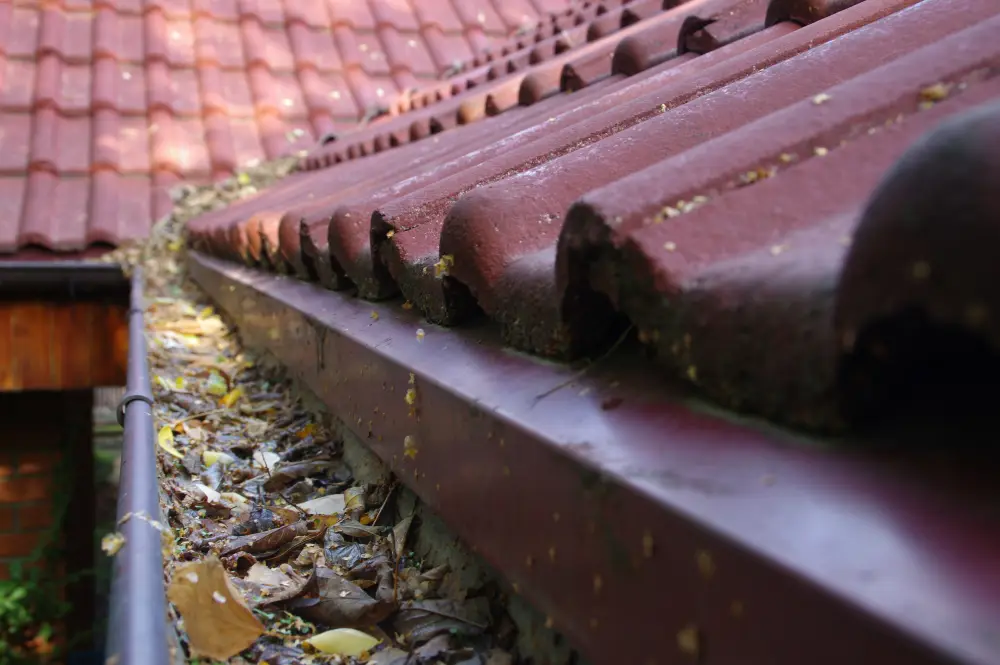
A clogged gutter is an ideal ecosystem for pests. The combination of stagnant water and decomposing organic material creates a welcoming habitat for all sorts of unwanted guests.
- Mosquitoes: A gutter holding even a small amount of standing water is a perfect breeding ground for mosquitoes. If you have a persistent mosquito problem in your yard, your gutters could be the source.
- Termites and Carpenter Ants: As mentioned, these wood-destroying insects are attracted to the moisture and rotted wood that clogged gutters create. They can establish a colony in your fascia board and then move into the main structure of your home.
- Rodents and Birds: Mice, squirrels, and birds can see a gutter full of dry leaves as a pre-built nest. They may take up residence, adding to the clog and potentially trying to find a way into your attic from there.
Keeping your gutters clean and dry makes your home far less attractive to these pests.
Why Clogged Gutters Wear Out Systems Faster
Gutters are designed to handle water, but not to hold it permanently. A gutter full of heavy, wet debris is under constant stress.
- Excess Weight: Water is heavy, weighing over eight pounds per gallon. A 40-foot section of clogged gutter can easily hold hundreds of pounds of weight. This strain pulls on the hangers, stretches the metal, and can cause the gutter to bend and sag. Once a gutter sags, it creates a low spot that collects even more water, accelerating its failure.
- Corrosion: The decomposing leaves and pine needles create an acidic sludge that sits against the metal. Even on rust-resistant aluminum gutters, this can eat away at the finish and corrode the metal over time, leading to pinhole leaks and premature failure.
- Ice Damage: In the winter, the wet debris in a clogged gutter can freeze into a solid block of ice. As this ice expands, it can warp, split, and even break the gutter itself.
A clean gutter will last for its full expected lifespan of 20-30 years or more. A clogged gutter might fail in less than half that time.
Signs Your Gutters May Be Clogged Right Now
You don’t have to climb a ladder to know there might be a problem. You can often spot the tell-tale signs of a clog from the ground. Many homeowners first notice small warning signals before realizing the system is already compromised. Be on the lookout for:
- Water spilling over the edges of the gutter during rain.
- A lack of water coming out of a downspout during rain.
- Dark, vertical "tiger stripe" stains on the face of the gutters.
- Sagging or gutters pulling away from the fascia board.
- Plants, weeds, or small trees growing out of the gutters.
- Birds, wasps, or other pests congregating around the roofline.
- Damp or discolored siding below the gutter line.
- Puddles or eroded areas on the ground directly below the gutters.
If you see any of these signs, it’s time to take action before the hidden damage gets worse.
How Regular Maintenance Prevents Hidden Damage
The good news is that nearly all of these hidden dangers are preventable. A consistent maintenance schedule is the key. By regularly cleaning your gutters—typically twice a year in the late spring and late fall—you remove the fuel for the fire.
Establishing a proper cleaning schedule significantly reduces the risk of overflow-related damage.
When gutters are kept clear, water flows freely. It doesn’t have a chance to sit against your fascia, back up under your shingles, or pour down against your foundation. The system works as intended, protecting your home rather than threatening it. Regular cleaning is the most cost-effective insurance policy you can have against water damage.
When Gutter Guards Can Help Reduce the Risk
For homes in areas with many trees, especially pines, keeping up with a cleaning schedule can feel like a losing battle. In these cases, a professional gutter guard system is an excellent way to reduce the risk of clogs.
These systems cover the gutter, allowing water to enter but preventing leaves and debris from getting in. While no system is completely "maintenance-free," a quality leaf protection system can reduce the need for cleaning by 90% or more. This dramatically lowers the risk of clogs forming and causing the hidden damage we’ve discussed. It is a proactive investment in preventing problems before they ever have a chance to start.
Stopping Small Gutter Problems Before They Become Costly
A handful of leaves in a gutter seems like a small thing. It’s easy to ignore. But that small thing can set off a chain reaction that results in thousands, or even tens of thousands, of dollars in damage to your home.
Understanding the hidden dangers—the rot, the pests, the foundation damage—changes your perspective. It reframes gutter cleaning from a cosmetic chore into an essential act of home preservation. By staying ahead of the problem with regular maintenance or a quality gutter guard system, you can ensure your gutters are always protecting your home, not silently harming it.
If you’ve seen some of the warning signs around your home or are concerned about the state of your gutters, don’t wait for the problem to become more obvious. Give Cola City Roofing a call. We can provide a thorough, honest inspection and help you find the right solution to keep your home safe and dry for years to come.