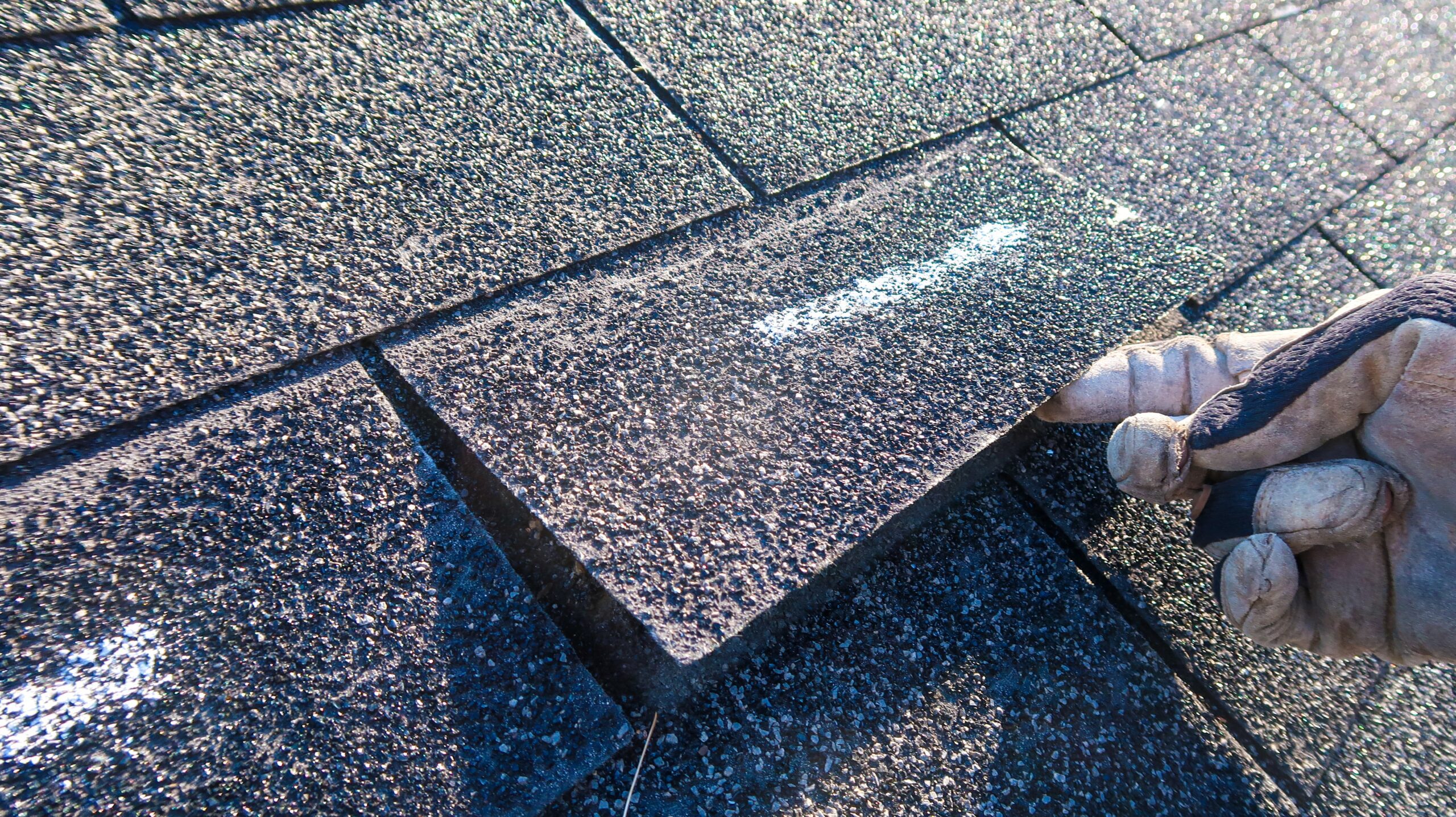
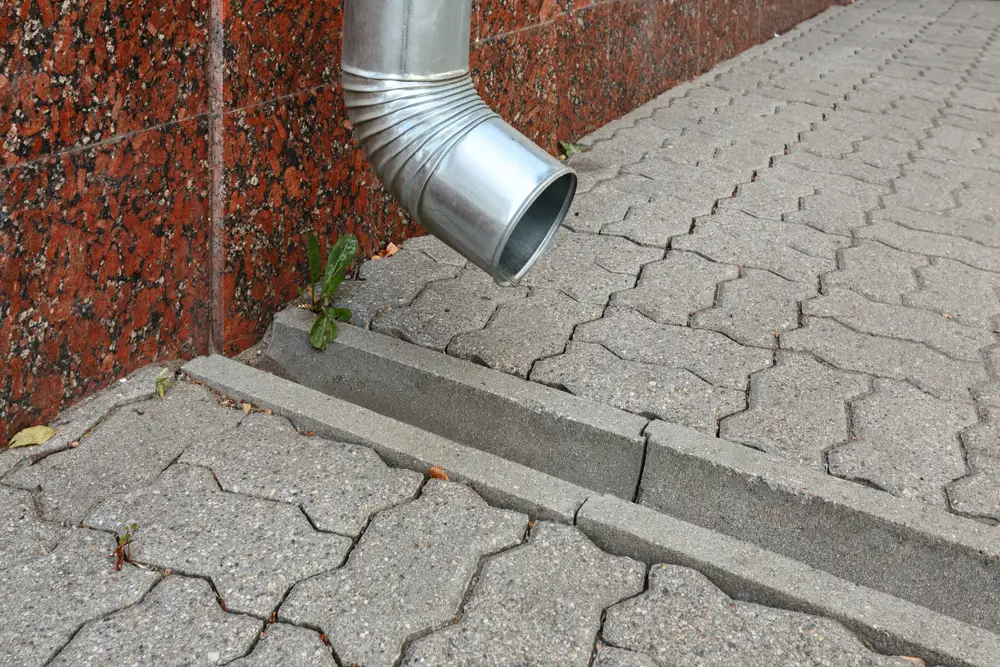
Water is one of nature’s most powerful forces. It carved the Grand Canyon, it shapes our coastlines, and if left unchecked, it can slowly dismantle the structural integrity of your home. While a rainstorm might seem like a simple weather event, the way water interacts with your roof and property involves complex physics. Understanding the science behind proper water drainage is not just academic—it is essential for protecting your biggest investment.
Effective water management is about more than just bolting metal troughs to the edge of your roof. It involves calculating flow rates, understanding gravitational pull, analyzing surface tension, and accounting for hydraulic capacity. When these scientific principles are applied correctly, your home remains dry and stable. When they are ignored, water finds the path of least resistance, which is often right through your ceiling or into your foundation.
In this deep dive into the physics of drainage, we will explore why water behaves the way it does, how gutter system design influences performance, and why specific architectural features like roof pitch dictate the solutions you need. Whether you are dealing with the humid, storm-prone climate of Columbia, SC, or just want to understand your home better, this guide covers the essential mechanics of keeping water where it belongs: away from your house.
The Physics of Water Flow on Roofs
To understand drainage, we must first understand gravity. When rain hits your roof, gravity immediately pulls it downward. However, the speed and volume of that water depend heavily on the geometry of your roof.
The Role of Roof Pitch
Roof pitch is the angle or slope of your roof, typically expressed as a ratio (e.g., 4:12 means the roof rises 4 inches for every 12 inches of horizontal run). The pitch is the primary accelerator of water.
- Low-Slope Roofs: On a flatter roof, water moves slower. This slower movement gives water more time to find imperfections in shingles or flashing. It also means water enters the gutter system at a lower velocity, which reduces the risk of overshooting but increases the risk of pooling if the gutters aren’t pitched correctly.
- Steep-Slope Roofs: A steep roof acts like a slide. Water accelerates rapidly as it descends. By the time it reaches the eave, it has significant kinetic energy. If your gutter system design doesn’t account for this velocity, the water can shoot right over the edge of a standard gutter, rendering it useless.
Understanding pitch is critical for effective water drainage. A professional assessment will calculate the velocity of runoff to determine not just the size of the gutter, but the height at which it should be hung to catch the water trajectory effectively.
Surface Area and Volume
It’s a simple equation: the larger the roof, the more water it catches. But it’s not just about the footprint of your home; it’s about the "catchment area" of each roof plane.
During a heavy downpour in Columbia, SC, a 1,000-square-foot roof section can collect over 600 gallons of water in just one inch of rain. That is nearly three tons of water weight hitting your drainage system. If your gutters are too small (e.g., standard 5-inch width) for the surface area they serve, the hydraulic capacity is breached, and overflow occurs. This is why professional gutter installation services often recommend 6-inch gutters for larger homes—they provide the necessary volume to handle peak flow rates.
Surface Tension and Cohesion
Water molecules are cohesive; they stick together. They also exhibit adhesion, sticking to surfaces. This is why water tends to curl around the edge of a roof drip edge rather than falling straight down.
Proper drainage systems utilize this science. A drip edge is a metal flashing installed at the roof’s edge that uses surface tension to guide water directly into the gutter rather than letting it wick back up under the shingles or run down the fascia board. Without this mechanical intervention, capillary action—the ability of water to flow in narrow spaces without the assistance of external forces—can draw moisture into your roof decking, leading to rot.
The Mechanics of Gutter System Design
Gutters are not passive buckets; they are active channels. Their design must facilitate the continuous movement of fluid against friction and turbulence.
The Importance of Slope (Pitch)
For water to move laterally toward a downspout, the gutter itself must be angled. This is known as the "pitch" or "slope." If a gutter is hung perfectly level, water will stagnate. Standing water is heavy, causing the gutter to sag, and it becomes a breeding ground for mosquitoes and algae.
However, the science of the pitch requires precision.
- Too Little Pitch: Water moves too slowly, allowing sediment and debris to settle at the bottom, creating sludge that eventually causes clogs.
- Too Much Pitch: The water moves efficiently, but the gutter looks crooked against the roofline, ruining the aesthetic of the home. Furthermore, a steep pitch effectively reduces the capacity of the gutter at the lower end.
The industry standard is typically about 1/4 inch of drop for every 10 feet of gutter run. This subtle angle uses gravity to keep water moving at a velocity that makes the system "self-cleaning," washing small debris toward the downspout.
Friction and Material Choices
As water flows through a channel, friction against the walls of the gutter slows it down. The material of the gutter affects this friction coefficient.
- Vinyl: Often has seams and a slightly rougher texture over time as it degrades from UV exposure. Seams create turbulence, acting as speed bumps for the water.
- Seamless Aluminum or Copper: These materials offer smooth, uninterrupted channels. This reduces friction and turbulence, allowing water to flow more efficiently. This is why seamless systems are the gold standard for Columbia SC water management.
Furthermore, seams are the weakest link in the chain. Every seam relies on a sealant that will eventually degrade due to thermal expansion and contraction. Once the seal breaks, the physics of the system fails, and water leaks out before reaching the downspout.
Profile Aerodynamics
Believe it or not, wind plays a role in gutter science. During a storm, wind can blow water out of a shallow gutter or prevent it from entering the trough effectively.
Different gutter profiles (K-style vs. Half-Round) have different aerodynamic properties.
- K-Style: The flat bottom and back allow it to sit flush against the fascia, and the decorative front adds rigidity. Its deep trough holds a large volume of water.
- Half-Round: The curved shape is excellent for water flow as there are no corners for debris to get stuck in. The smooth bottom promotes faster velocity, which is helpful in areas with heavy tree coverage where self-cleaning is prioritized.
Choosing the right profile isn’t just an aesthetic choice; it’s a functional decision based on the flow dynamics required for your specific environment.
The Critical Role of Downspouts
If the gutter is the highway, the downspout is the off-ramp. If the off-ramp is blocked or too narrow, traffic jams (overflows) occur instantly.
Capacity Matching
The capacity of your downspout must match or exceed the capacity of your gutter. A common mistake in DIY installations is pairing a high-capacity 6-inch gutter with a standard 2×3-inch downspout. This creates a "bottleneck."
Imagine trying to drain a bathtub through a drinking straw. The pressure builds up, but the flow is restricted. The water backs up into the gutter, adding immense weight to the hangers. Scientifically, maximizing flow rate requires a larger aperture. upgrading to 3×4-inch downspouts significantly increases the gallons per minute (GPM) that can be evacuated from the system.
Placement Strategy
Water seeks the shortest path to the ground. If downspouts are spaced too far apart, the water has to travel a long distance to exit. This increases the load on the gutter and the time water spends in the system.
Engineering a gutter system involves calculating the maximum run length. typically, a downspout is needed every 30 to 40 feet. However, complex rooflines with valleys (where two roof planes meet) concentrate huge volumes of water in specific spots. In these high-volume zones, downspout placement must be strategic to handle the surge. Failing to place a downspout near a valley is a primary cause of system failure.
Energy Dissipation at the Exit
When water exits the downspout, it has kinetic energy. If it shoots straight out into the dirt, it will erode the soil, creating a trench. This trench can expose your foundation and allow water to pool against the concrete.
Effective water drainage requires energy dissipation. Splash blocks, downspout extensions, or underground drainage pipes are used to absorb the impact of the falling water and guide it gently away from the structure. Ideally, water should be deposited at least 4 to 6 feet away from the foundation to prevent hydrostatic pressure from building up against your basement walls.
Consequences of Drainage Physics Failure
When the science is ignored, the consequences are physical and expensive. Understanding these failure points highlights why professional design is non-negotiable.
Hydrostatic Pressure
When water pools around your foundation, the soil becomes saturated. This creates hydrostatic pressure—the pressure exerted by a fluid at equilibrium due to the force of gravity. This pressure pushes against your foundation walls.
Concrete is porous. Under enough pressure, water will be forced through tiny capillaries in the concrete, leading to damp basements and crawl spaces. In severe cases, this pressure can crack the foundation walls themselves, compromising the structural stability of the entire house.
Ice Dams (Thermodynamics)
In winter, drainage involves thermodynamics. Heat escapes from your home into the attic, warming the roof deck and melting snow. The water runs down the roof until it hits the cold eaves (overhangs), where it refreezes.
If your gutters are clogged or not draining correctly, this refreezing creates a dam of ice. Water pools behind this dam, and since it can’t flow down, it flows up—backing under the shingles and leaking into the attic insulation and drywall. This is a classic example of how temperature differentials and poor drainage mechanics combine to cause damage.
Erosion and Soil Mechanics
Soil supports your home. When gutter water is dumped directly onto the ground, it alters the soil mechanics. Clay soils swell when wet and shrink when dry. Constant saturation from a leaking gutter causes the soil to expand and contract dramatically, shifting the foundation. Sandy soils simply wash away, leaving voids under footings.
Proper gutter repair services don’t just fix a leak; they restore the equilibrium of the soil around your home by ensuring water is diverted appropriately. If you notice soil erosion near your home, it is a sign that the physics of your drainage system is failing. Contact us immediately via our contact page for an assessment.
Advanced Drainage Concepts
For homeowners looking for the ultimate in protection, we look at advanced hydraulic concepts.
Leaf Guards and Filtration Physics
Adding a leaf guard changes the physics of the gutter. Some guards rely on mesh filtration, allowing only water to pass while blocking debris. Others rely on surface tension (liquid adhesion).
"Helmet" style guards curve over the gutter nose. They rely on the scientific principle that water adheres to the curved surface and flows into the slot, while leaves (which don’t adhere) fly off the edge. However, in extremely heavy downpours, the velocity of the water can sometimes overcome the surface tension, causing water to overshoot the guard. Choosing the right guard requires balancing filtration needs with flow rate requirements.
Underground Drainage Integration
The most effective water drainage systems don’t stop at the ground. They integrate with French drains or catch basins. This involves piping the downspout output underground to a dispersal point far from the home or into a municipal storm drain (where permitted).
This removes the variable of surface slope near the foundation. It ensures that gravity carries the water away regardless of how your flower beds are graded. It is the most robust application of drainage science available for residential properties.
The Impact of Climate on Design
Physics is constant, but weather is variable. A gutter system designed for the drizzle of the Pacific Northwest will fail in the subtropical storms of Columbia, SC.
Rainfall Intensity (The "Design Storm")
Engineers use a metric called the "Design Storm" to size drainage systems. This looks at historical weather data to determine the maximum rainfall intensity expected for a specific duration (e.g., a 10-year storm event).
In South Carolina, we experience sudden, intense thunderstorms where rain falls at a rate of several inches per hour. This requires systems with higher hydraulic capacity—larger gutters and more downspouts—than might be required in a drier climate. We design for the worst-case scenario to ensure your home is protected when nature is at its most violent.
Thermal Expansion
Materials expand when hot and contract when cold. An aluminum gutter can expand significantly on a 100-degree summer day. If the gutter is installed without accounting for this movement (expansion joints or proper hanger spacing), the metal can buckle or pull the hangers out of the wood.
Professional installation accounts for the coefficient of thermal expansion of the material being used. This ensures the system remains secure and watertight through the dramatic temperature swings of the seasons.
Why Professional Diagnosis Matters
You cannot fight physics, but you can engineer around it. Trying to install a gutter system without understanding these principles is a gamble.
A professional roofer doesn’t just look at the roof edge; they look at the entire hydraulic system. They calculate:
- Roof Surface Area: To determine volume load.
- Roof Pitch Factor: To determine velocity.
- Rainfall Intensity: Based on local climate data.
- Drainage Pathways: Where the water goes after it leaves the downspout.
This scientific approach results in a system that works in harmony with nature rather than struggling against it. If your current system is overflowing, sagging, or leaking, it is likely violating one of these scientific principles. Our gutter repair services can diagnose the specific mechanical failure—whether it’s pitch, capacity, or blockage—and restore proper function.
Conclusion: Engineering Peace of Mind
The science behind proper water drainage is a blend of physics, meteorology, and engineering. It turns a chaotic natural event—a thunderstorm—into a controlled process. By managing velocity, capacity, and direction, a well-designed gutter system renders water harmless.
Ignoring these principles leads to the slow, silent destruction of your home through rot, mold, and foundation instability. Embracing them ensures your home stands strong for generations.
Don’t leave your home’s protection to chance. If you are building a new home or upgrading an old one, rely on the science of professional gutter installation services . Let us calculate the flow, manage the pitch, and secure the perimeter of your property.
Water is a force of nature, but with the right science, it is a force you can control.