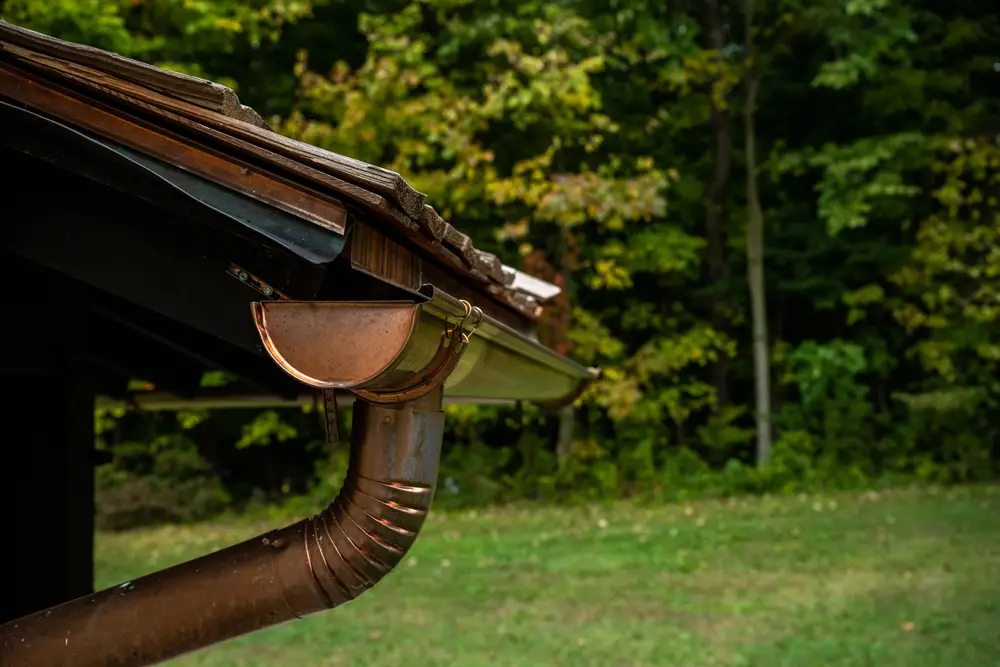
When you drive through some of Columbia’s most established neighborhoods—whether it’s the historic homes in Shandon, the estates near Lake Murray, or the custom builds in forest-lined cul-de-sacs—you might notice something distinct catching the sunlight along the rooflines. It’s not the standard white or beige aluminum you see everywhere else. It’s copper.
Copper gutters are undeniably beautiful. They add a level of elegance and architectural detail that standard gutters simply cannot match. For many homeowners, they represent the gold standard of curb appeal.
But curb appeal doesn’t stop water from damaging your foundation. And it certainly doesn’t pay the bills.
At Cola City Roofing, we get asked about copper gutters frequently. Usually, the conversation starts with admiration ("I love how those look") and quickly moves to practicality ("But are they actually worth the money?"). It’s a fair question. Copper is a significant investment, often costing three to four times as much as a standard aluminum system.
We believe in giving our neighbors the straight facts, not a sales pitch. We aren’t here to convince you to upgrade to the most expensive option on the menu. We are here to help you understand what you are paying for, so you can decide if it makes sense for your home and your budget.
Why Homeowners Consider Copper Gutters in the First Place
Most people don’t start thinking about copper gutters because they are worried about flow rates or bracket spacing. They think about them because of how they look.
Copper is a "living" material. Unlike painted aluminum, which looks exactly the same on day one as it does on day 1,000 (hopefully), copper changes. It starts as a bright, shiny penny color. Over time, as it is exposed to the oxygen and humidity in our Midlands air, it deepens into rich browns and eventually develops that classic Verdigris green patina.
For historic homes, this isn’t just a nice feature; it’s often a requirement to maintain architectural integrity. A bright white aluminum gutter on a 1920s brick bungalow can look out of place, like wearing sneakers with a tuxedo. Copper fits. It looks like it belongs.
Beyond aesthetics, there is the durability factor. Homeowners who plan to stay in their "forever home" often look at copper as a "one-and-done" investment. They want a system they will never have to replace again.
Understanding the Real Cost of Copper Gutters
Let’s address the elephant in the room immediately: price.
If you are accustomed to the cost of standard aluminum gutters, the quote for a copper system can be a shock. You aren’t just paying for a different color; you are paying for a fundamentally different raw material and a much more labor-intensive installation process.
Material Cost: Copper is a precious metal compared to aluminum. Its price fluctuates with the global market, but it is always significantly higher.
Labor Cost: Installing copper is not like installing aluminum. You cannot simply screw it in and caulk it. Copper requires specialized skills. The joints aren’t sealed with silicone; they are soldered together with lead-free solder and a torch. This takes time, patience, and a high level of craftsmanship. A crew might install an aluminum system in half a day, while a copper system on the same house could take two or three days to fabricate and install correctly.
The "Accessories" Cost: It’s not just the trough. Every hanger, every downspout bracket, and every end cap must also be copper or brass. You cannot mix metals (like using steel screws on copper) or you will get galvanic corrosion, where the copper eats the other metal. These specialized components add up quickly.
When you ask "Are copper gutters worth it?", you have to weigh this premium price against the lifespan and value they add to the property.
Copper Gutter Pros and Cons to Think Through Carefully
To make a smart decision, you need to look at the full picture. Here is the honest breakdown of what you get—and what you give up—with copper.
The Pros
- Extreme Durability: Copper doesn’t rust. Ever. It doesn’t crack in the cold or warp in the heat. It is incredibly resilient.
- The Look: Nothing else looks like it. It signals quality and craftsmanship instantly.
- Lifespan: A well-installed copper system can easily last 50 to 80 years, or even longer. It is likely the last gutter system you will ever buy.
- Property Value: For high-end homes, copper gutters are a selling point that differentiates the property from others on the market.
The Cons
- The Cost: As mentioned, it is a major upfront expense.
- Installation Difficulty: You cannot hire a handyman for this. You need a specialist. If the soldering is done poorly, the joints will crack and leak.
- Theft Risk: It sounds strange, but it happens. Because scrap copper is valuable, thieves have been known to strip downspouts off homes, especially during renovations when the house is vacant.
- Staining: As copper patinas, water runoff can sometimes carry green staining onto light-colored stucco or concrete driveways if the water isn’t managed properly.
How Copper Gutters Perform Over Time
In the roofing industry, we talk about "service life." This is how long a product does its job before it fails.
Standard aluminum gutters have a service life of about 20-30 years. Vinyl might last 10-15 years in our sun. Copper? You are looking at 60 to 100 years.
There are copper gutters on churches and government buildings in downtown Columbia that have been in place for nearly a century. They work because copper is a noble metal. It doesn’t react with water to break down. Instead, the oxidation process creates a protective layer (the patina) that actually shields the metal from further corrosion.
This performance holds up even in our specific Midlands climate. The humidity that causes steel to rust and wood to rot actually helps copper build its protective shell faster.
Maintenance Expectations for Copper Gutter Systems
There is a misconception that because copper is expensive, it is maintenance-free. That is not true.
Debris is still the enemy. Copper gutters do not repel leaves. If you have pine trees, oaks, or maples, you will still need to clean your gutters. In fact, keeping them clean is even more important with copper. While the metal won’t rust, wet debris sitting in the trough can cause the soldering at the seams to oxidize differently or discolor unevenly.
Avoid harsh chemicals. You have to be careful how you clean them. You cannot just blast them with a pressure washer or use heavy-duty gutter cleaners, as this can strip the patina you’ve waited years to develop.
Check the brackets. While the copper itself lasts forever, the structure of the house moves. Over decades, heavy storms can loosen the brass hangers or brackets. Periodic inspections are needed to ensure the system is still securely attached to the fascia.
How Copper Gutters Handle Heavy Rain and Storms
When a massive summer thunderstorm rolls through Lexington or Irmo, dumping inches of rain in an hour, copper performs exceptionally well.
Structural Strength: Copper is a dense, strong metal. When properly formed, it is rigid. It is less likely to dent from a falling branch than aluminum, and it won’t sag under the weight of a heavy water load as easily as vinyl.
Soldered Seams: This is a key performance difference. In a sectional aluminum system, seams are sealed with caulk. Caulk eventually dries out and leaks. In a copper system, the seams are soldered. The metal is fused together. It creates a watertight bond that is far stronger than any sealant. This means that at the corners and downspouts—the most common leak points—copper is virtually leak-proof if installed correctly.
However, capacity still matters. A 5-inch copper gutter holds the same amount of water as a 5-inch aluminum gutter. If the roof is huge and the gutter is too small, it will still overflow, regardless of the material. That’s why sizing the system correctly is just as important as choosing the material.
Appearance, Patina, and Curb Appeal Considerations
This is the emotional part of the decision, but it’s valid. You have to love the look, because you’re going to have it for a long time.
You need to understand the timeline of the patina.
- Day 1: Bright, shiny bronze/orange. Like a new penny.
- Month 3-6: The shine fades to a duller, uneven brown. This is often the "awkward phase" where it can look blotchy.
- Year 1-5: A deep, rich, uniform chocolate brown. This is where it stays for a long time in most residential settings.
- Year 10-20+: Depending on the environment, hints of green and turquoise (Verdigris) begin to appear, eventually covering the surface.
If you want that bright shiny look to stay forever, copper is not for you. If you want the green look immediately, you can buy pre-patinated copper, but it costs even more.
You also need to consider your home’s style. Copper looks incredible on brick, stone, stucco, and cedar shake homes. It can look a bit stark or mismatched on a standard vinyl-sided house. It’s about balance.
Copper Gutters vs Other Gutter Materials
Let’s do a quick comparison to see where copper fits in the hierarchy of gutter materials.
- Copper vs. Aluminum: Aluminum is the practical, budget-friendly workhorse. It does the job well for 90% of homes. Copper is the luxury, lifetime option. Aluminum is for today; copper is for the next generation.
- Copper vs. Steel: Galvanized steel is strong but will eventually rust. Galvalume (steel coated with aluminum/zinc) lasts longer but still has a limited lifespan compared to copper. Copper wins on longevity every time.
- Copper vs. Zinc: Zinc is another high-end metal that is popular in Europe and gaining traction here. It patinas to a charcoal gray. It is similar in cost and longevity to copper, so the choice usually comes down to color preference (brown/green vs. gray).
When Copper Gutters Make Sense for a Home
So, who should actually buy these?
- The "Forever" Homeowner: If you are in your dream home and plan to pass it down to your children, copper makes sense. You pay once, cry once, and never worry about replacing gutters again.
- The Historic Homeowner: If you live in a designated historic district or own a period home, copper might be the only material that respects the architecture. It maintains the authenticity of the structure.
- The Curb Appeal Perfectionist: If you have invested heavily in landscaping, a slate roof, or custom masonry, standard white gutters can cheapen the look. Copper acts as jewelry for the home, tying all those high-end finishes together.
- The Coastal/High-Humidity Resident: While we are inland, the salt air and humidity of the wider region destroy lesser metals. Copper is impervious to salt corrosion.
When a More Practical Gutter Option May Be Better
Conversely, when should you walk away from the copper quote?
- You are moving soon: You will likely not recoup the full cost of copper gutters in resale value if you sell in two years. Buyers will think they are pretty, but they won’t necessarily pay $20,000 extra for the house because of them.
- You are on a strict budget: If choosing copper means you have to skimp on roof repairs or insulation, don’t do it. A watertight roof is more important than fancy gutters.
- Dense Tree Coverage: If your gutters are completely hidden by trees, or if they are going to be filled with wet leaves 24/7, you are paying for aesthetics no one sees and creating a maintenance chore. Aluminum with high-quality gutter guards might be a smarter functional choice.
- The House Style doesn’t fit: On a modern, minimalist home, or a standard ranch with vinyl siding, copper can sometimes feel forced.
Making the Right Gutter Investment for Your Home
At Cola City Roofing, we install both seamless aluminum and custom copper systems. We make money either way, so our goal isn’t to push you toward one or the other. Our goal is to make sure you are happy with the result ten years from now.
If you have the budget and the right style of home, copper gutters are a breathtaking addition that offers unmatched durability. They are a statement that you care about quality and longevity.
However, if you look at the numbers and decide that seamless aluminum is the better fit for your family, that is also an excellent choice. Aluminum provides fantastic protection and durability at a fraction of the cost.
The most important thing is that your gutters work. Whether they are shiny copper or painted aluminum, they need to capture the water and move it away from your foundation. If you are debating the upgrade, or just want to see samples of what these materials look like in person, give us a call. We’ll walk the perimeter of your home with you, discuss your goals, and give you honest numbers for both options so you can make the decision that feels right for you.