If you live anywhere in the Midlands of South Carolina, you know our weather isn’t for the faint of heart. The air gets so thick in July you can practically swim through it, and a calm afternoon can turn into a torrential downpour with little warning. It’s just a part of life here. While we adapt by turning up the air conditioning, our homes have to sit outside and take the full force of this climate, day in and day out.
One of the most vulnerable parts of your home’s exterior is the gutter system. It’s easy to think of gutters as only being affected by obvious things, like falling leaves or a big storm that drops a branch on the roof. But at Cola City Roofing, we see firsthand how the quiet, persistent forces of our local climate—namely, high humidity and frequent, intense storms—are often the real culprits behind gutter failure.
This isn’t about one single event; it’s about the slow, steady wear and tear that our Midlands weather inflicts on your home’s water management system. Understanding how this process works is the key to choosing the right gutters and preventing expensive damage before it starts.
Why Midlands Weather Is Tough on Gutter Systems
The combination of intense heat, oppressive humidity, and high-volume rainfall makes the Midlands a uniquely challenging environment for any exterior building material. Gutters sit right at the intersection of all three.
First, there’s the humidity. For much of the year, the air is saturated with moisture. This means that even when it isn’t raining, your gutters are often damp. Leaves and debris that fall into the gutter don’t dry out and blow away; they sit there, get soggy, and start to decompose into a thick, water-retaining sludge.
Then, there are the storms. We don’t just get gentle showers. We get sudden, powerful thunderstorms that can dump an inch or more of rain in less than an hour. This high-velocity runoff puts immense stress on the entire gutter system, from the metal trough itself to the fasteners holding it to your house. This one-two punch of constant dampness followed by sudden, violent water loads is what makes our local weather so tough on gutters.
How High Humidity Accelerates Gutter Wear
Humidity is a quiet enemy. It doesn’t make a loud noise like a hailstorm, but its effects can be just as destructive over time.
The core problem is that high humidity prevents things from drying out. A gutter in a dry climate might see leaves and pine needles dry up and get brittle, eventually getting blown out by the wind. Here in the Midlands, that same debris gets damp and stays damp. This creates a perpetually moist environment inside your gutter trough.
This constant moisture does two things:
- Accelerates Corrosion: For older galvanized steel gutters, this is a death sentence. The protective zinc coating is designed to handle rain, but it’s not meant to be submerged in a wet, acidic slurry of rotting leaves 24/7. The humidity speeds up the rusting process, eating through the metal from the inside out. Even aluminum, which doesn’t rust, can be affected by galvanic corrosion if it’s in contact with other metals (like steel screws) in a constantly wet environment.
- Promotes Wood Rot: The moisture in the gutter doesn’t stay in the gutter. It soaks into the fascia board that the gutter is attached to. Wood that is constantly damp will inevitably begin to rot. As the wood softens, the gutter screws or spikes lose their grip, leading to sagging and eventual detachment.
The Impact of Frequent Storms and Heavy Rainfall
While humidity weakens the system over time, our frequent storms are what deliver the knockout blow. The impact is both immediate and cumulative.
When a typical Midlands summer storm hits, a massive volume of water rushes off your roof. A 2,000-square-foot roof can shed over 1,200 gallons of water from just one inch of rain. Your gutters have to handle that volume instantly.
The first impact is the sheer weight . Water is heavy, weighing over eight pounds per gallon. A 40-foot section of 6-inch gutter can hold over 30 gallons of water, adding more than 250 pounds of stress to the hangers and fascia board. If the system is already weakened by humidity-induced rot, this sudden load is often what causes it to pull away from the house.
The second impact is velocity . The water isn’t just trickling into the gutter; it’s crashing into it. This can cause "overshooting," where the water flows so fast it jumps right over the gutter, especially on steep-pitched roofs. This high-velocity flow also pounds against seams and corners, testing the integrity of the sealant with every storm.
Common Gutter Problems We See After Midlands Storms
After a big storm system moves through Columbia, Lexington, or the surrounding areas, our phones start to ring. The problems homeowners report are almost always the direct result of the storm overwhelming a system that was already compromised.
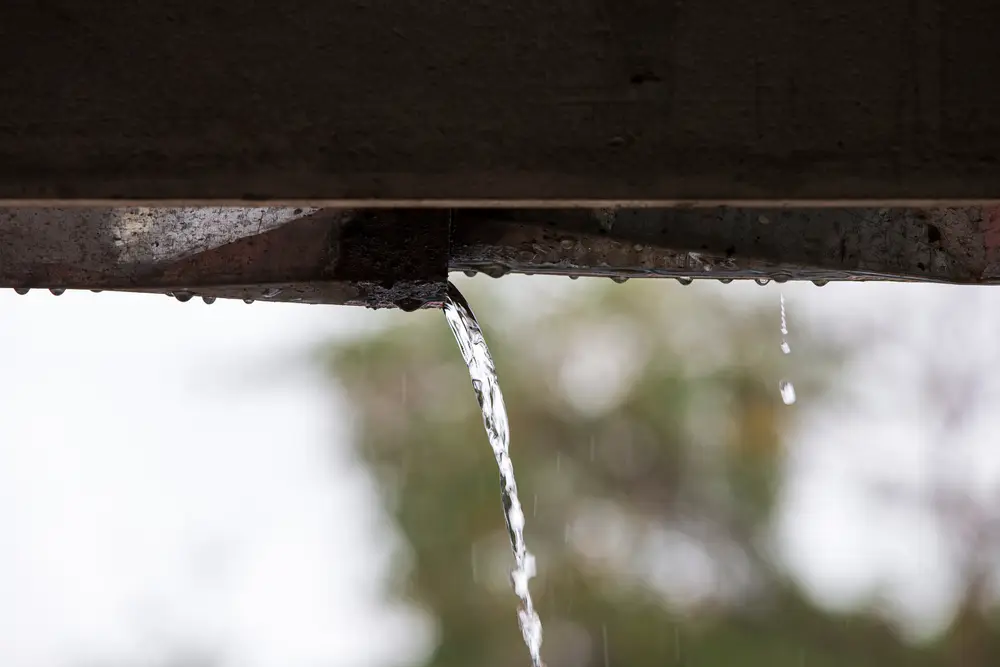
- Overflowing Gutters: The most common call is about "waterfalls" pouring over the sides. This is usually caused by a downspout that is clogged with debris that was washed into it by the heavy rain. The gutter trough fills up in seconds and has nowhere to go but over the edge.
- Gutters Pulling Away from the House: Homeowners will notice a visible gap between the gutter and the roofline. This is a classic sign that the weight of the water was too much for the fasteners, often because the fascia wood behind it has become soft and rotten from years of moisture exposure.
- Leaking Seams and Corners: The force of the rushing water can bust open weakened sealant at the joints of sectional gutters. A corner that used to have a small drip might suddenly become a steady stream during a storm.
- Erosion and Landscape Damage: When gutters overflow or detach, that concentrated stream of water hammers the ground below, digging trenches in mulch beds, exposing foundation walls, and flooding landscaping.
Why Some Gutter Materials Handle Midlands Conditions Better
Given our climate’s specific challenges, material choice is critical. What works in a dry, arid state might not last five years here.
Aluminum is, by far, the most practical choice for the Midlands. Its primary advantage is that it is rust-proof. It simply does not corrode in our high-humidity environment. When you use a professional-grade seamless aluminum system, you eliminate both the risk of rust and the weakness of seams, directly combating the two main effects of our weather. A properly installed, thick-gauge aluminum gutter system is built to withstand both the long-term humidity and the short-term stress of storms.
Galvanized Steel , on the other hand, struggles here. While it is strong, its reliance on a zinc coating makes it vulnerable. Once that coating is scratched or worn away, the constant moisture will cause it to rust. We often see steel systems failing prematurely in our area due to corrosion.
Copper is the ultimate choice for longevity in a wet climate. Like aluminum, it does not rust. It is a lifetime material that handles moisture beautifully. While its cost is higher, it is an investment in permanent performance.
How Poor Drainage Makes Storm Damage Worse
The problems caused by humidity and storms are made ten times worse if the water has nowhere to go. This is a critical point that many homeowners miss. Your gutter system doesn’t end at the bottom of the downspout; it ends wherever the water is finally discharged.
If your downspouts empty right next to your foundation, all that storm water just pools around your house. This leads to immense hydrostatic pressure on your foundation walls, which can cause cracks, leaks, and settling. In homes with crawl spaces, this creates the damp, musty environment that leads to mold growth and wood rot in your floor joists.
Proper drainage means getting the water far away from your home. This involves using splash blocks and downspout extensions to carry the water at least 4-6 feet away from the foundation, or even better, connecting the downspouts to an underground drainage system like a French drain that carries the water safely to a lower point on your property.
Signs Your Gutters Are Being Affected by Humidity or Storms
You don’t have to wait for a gutter to fall off your house to know there’s a problem. Your home will give you early warning signs that the Midlands weather is taking its toll.
- "Tiger Stripes": Look for dark, vertical streaks on the face of your gutters. This is a clear sign that water has been regularly overflowing.
- Peeling Paint: Check the paint on your fascia boards and soffits near the gutters. If it’s blistering, peeling, or flaking, it’s a sign that moisture is getting behind it.
- Green Algae or Mildew: If you see green or black growth on the fascia or siding right below the gutter, it means the area is staying consistently damp.
- Sagging or Bowing: A gutter should be a straight line. If you see a noticeable sag or bow in the middle of a run, it’s holding water and the fasteners are failing under the weight.
- Loose Spikes: If you have an older system with gutter spikes, check to see if the heads are pulling away from the fascia. This is a sure sign the wood is losing its grip.
Preventing Midlands SC Gutter Damage Before It Starts
The best way to combat our weather is with a proactive approach. Prevention is always cheaper than repair.
First, keep your gutters clean . A clean, empty gutter is less likely to hold moisture against the fascia and has the full capacity to handle a sudden storm. In our climate, this often means cleaning them more than once a year.
Second, ensure proper drainage . Walk around your house during a rainstorm. See where the water is going. If it’s pooling near your foundation, add extensions to your downspouts. This simple, inexpensive step can save you thousands in foundation repairs.
Third, choose the right system . If you are replacing your gutters, invest in a system designed for our climate. This means seamless aluminum or copper, properly sized for your roof, and installed with modern, secure hangers.
Why Professional Installation Matters in Storm-Prone Areas
In a place like the Midlands, a DIY gutter job with parts from a big-box store is a recipe for failure. A professional installer who understands our local weather builds a system designed for resilience.
A professional installation ensures:
- The fascia is inspected: We check for rot before we hang anything. We won’t install a new system on bad wood.
- Proper fastener use: We use heavy-duty screws, not nails, and space them closely (every 18-24 inches) to handle the heavy water loads from our storms.
- Correct pitch: We use a level to ensure the gutter has the proper slope to drain quickly, so water doesn’t sit and stagnate.
- Seamless construction: By forming the gutters on-site, we eliminate the weak points that are guaranteed to fail under the stress of heavy rain.
Keeping Your Gutters Ready for the Next Storm Season
Living in the Midlands means accepting that storm season is practically year-round. Being prepared isn’t about panicking before a hurricane; it’s about having a home that is ready to handle a typical Tuesday thunderstorm without issue.
Your gutters are your first line of defense. By understanding how our unique combination of persistent humidity and intense storms affects them, you can make smarter decisions about maintenance and replacement. A strong, well-maintained gutter system isn’t a luxury here; it’s a necessity for protecting the long-term health and value of your home.
If you’ve noticed any of the warning signs or are worried your current system isn’t up to the task, give Cola City Roofing a call. We can provide an honest assessment and help you ensure your home is ready to handle whatever our South Carolina climate throws at it.