When you think of gutter maintenance, your mind likely jumps to water damage, rotting wood, or the annoyance of cleaning out soggy leaves. Rarely do homeowners associate their gutters with something arguably more unsettling: pest infestations.
Yet, your open gutters are essentially a five-star hotel for the unwanted critters of the animal kingdom.
High above the ground, safe from predators, and filled with a constant supply of water and nesting materials, clogged gutters are the perfect ecosystem for pests. From the high-pitched whine of mosquitoes to the scratching sound of squirrels in the attic, many household infestations start at the roofline.
This biological hazard is often overlooked until it is too late. Once pests establish a foothold in your gutters, the leap into your home’s interior—through rotted fascia or roof vents—is a short one.
The good news is that there is a structural solution to this biological problem. Gutter guards and pest control go hand-in-hand. By sealing off the entry point, you can effectively deter a wide range of insects and rodents. In this comprehensive guide, we will explore the hidden ecosystem living in your gutters and how installing protection is one of the most effective pest control measures you can take for your home in Columbia, SC.
The Gutter Ecosystem: Why Pests Love Your Roof
To understand how to stop them, we must first understand the attraction. Why do pests flock to gutters?
In nature, animals look for three things: food, water, and shelter. An open, clogged gutter provides all three in abundance.
- Water: Even a small amount of debris can trap water. Stagnant water is essential for mosquitoes and thirsty rodents.
- Shelter: decomposing leaves create warmth (through the composting process) and cover. This makes it an ideal nursery for insects and a warm bed for mammals during winter.
- Food: For some insects, the rotting organic matter is food. For larger predators like birds or snakes, the insects living in the muck are the buffet.
By leaving your gutters open and prone to clogging, you are essentially hanging a "Vacancy" sign on your home. Installing gutter guards effectively closes the hotel.
The Mosquito Menace: Stopping the Breeding Ground
In South Carolina, mosquitoes are more than just a nuisance; they are a public health concern. We spend hundreds of dollars on sprays, candles, and yard treatments, often forgetting that the source of the problem is right above our heads.
The Stagnant Water Problem
Mosquitoes require stagnant water to breed. They don’t need a lake; a bottle cap full of water is enough for a female mosquito to lay hundreds of eggs. A clogged gutter is basically a linear pond running the length of your house. Because the debris prevents drainage, water sits there for days or weeks after a rainstorm.
This warm, shallow, nutrient-rich water is the perfect incubator. If you have been fighting a losing battle against mosquitoes in your backyard, look up. Your gutters might be producing thousands of new mosquitoes every week.
How Gutter Guards Help
Prevent pests in gutters by removing the water source. Gutter guards function by keeping debris out of the trough. When leaves and pine needles are blocked, water flows freely down the downspout and away from the home. It never has a chance to pool or stagnate.
By ensuring your gutters dry out completely between rainstorms, gutter guards break the mosquito breeding cycle. It is a chemical-free, permanent solution to reducing the mosquito population around your home.
Rodents in the Roof: Squirrels, Rats, and Mice
While insects are annoying, rodents are destructive. Squirrels, chipmunks, rats, and mice are excellent climbers. They use downspouts as ladders and overhanging branches as bridges to access your roof.
The Attic Highway
Once on the roof, an open gutter is a convenient highway. It provides a secure ledge to travel along. But the real danger lies in what the gutter rests against: the fascia board.
When gutters are clogged with wet debris, that moisture rots the wooden fascia board behind it. Rodents have strong teeth but prefer soft targets. Rotting wood is easy to chew through. A squirrel can gnaw through water-softened fascia in minutes, granting them access to your attic. Once inside, they tear up insulation, chew electrical wires (a fire hazard), and contaminate your home.
The Barrier Method
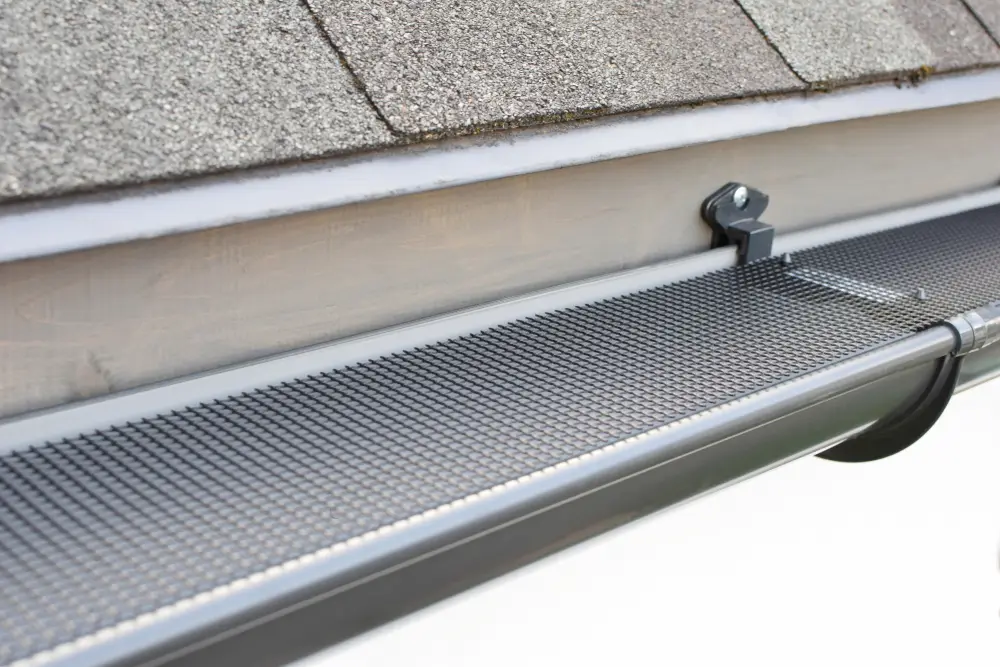
High-quality gutter protection from rodents acts as a physical shield. Metal gutter guards—specifically aluminum or stainless steel mesh—cap the gutter trough.
- Denial of Shelter: Guards prevent the accumulation of soft nesting materials (leaves and twigs) inside the gutter.
- Physical Blockade: A properly installed guard covers the top of the gutter, making it difficult for rodents to access the roof edge or chew on the lip of the fascia.
- Material Strength: Rodents struggle to chew through metal. By installing a robust metal guard, you "harden" the perimeter of your roof.
If your fascia is already compromised by rot, simply adding guards isn’t enough. You need to repair the damage first. Our Gutter Repair Services can replace rotted wood and secure loose gutters before we install the protective guards.
The Termite Connection
Termites cause billions of dollars in damage annually, and they love moisture. You might think of termites as ground dwellers, but clogged gutters create the perfect conditions for them to attack your home from the top down or the bottom up.
The Moisture Bridge
Subterranean termites need moisture to survive. When gutters overflow, they saturate the soil around your foundation. This constant dampness attracts termite colonies to the very base of your home.
Additionally, "dampwood" termites or secondary colonies can establish themselves in the rotting wood of your roof eaves if the moisture problem is severe enough. The wet mulch in a clogged gutter acts as a bridge, allowing termites to move from the debris into your roof trusses.
Drying Out the Perimeter
Effective Columbia SC gutter services focus on water management. Gutter guards ensure that water is directed away from the house via the downspouts, rather than spilling over onto the foundation. This keeps the soil around your home drier, making it less attractive to termites. By eliminating the rotting sludge in the gutters, you also remove the food source and moisture bridge at the roofline.
Birds and Nests
Birds are beautiful to watch, but you don’t want them nesting in your drainage system. Starlings, sparrows, and pigeons often view the sheltered, U-shaped channel of a gutter as an ideal nesting site.
The Blockage Risk
A bird’s nest is a dense structure made of mud, twigs, and grass. It is essentially a deliberate clog. A single nest can completely block a gutter or downspout, causing massive overflow during the next storm. Furthermore, bird droppings are acidic and can corrode aluminum and steel gutters over time. Birds also carry mites and fleas, which can migrate into your home if the nest is close to a vent or window.
The "No Vacancy" Sign
Gutter guards place a lid on the gutter. Birds simply cannot get in to build a nest. The flat or slightly curved surface of a guard is not suitable for nesting, forcing birds to find a more appropriate tree for their home. This protects the birds (from being washed away in a storm) and protects your home from water damage.
Stinging Insects: Wasps, Bees, and Hornets
Few things are more terrifying than climbing a ladder to clean a gutter and disturbing a hornets’ nest.
The Danger Zone
Wasps and yellow jackets love the underside of gutters, but they also build nests inside the trough if it is dry and filled with debris, or under the protection of a clogged downspout. The decaying organic matter generates heat, which can be attractive to colonies in the cooler autumn months.
Because gutters are high up, you often won’t notice a nest until it is large. Disturbing a nest while you are perched precariously on a ladder is a recipe for a dangerous fall.
Safety Through Prevention
Gutter guards eliminate the cavernous space inside the gutter that attracts nesting insects. While wasps may still build small paper nests under the eaves (which requires separate pest control), guards prevent them from taking over the gutter channel itself. This ensures that water flow is never blocked by a hive and reduces the likelihood of an angry swarm surprising you during maintenance.
Snakes and Lizards
In the warm climate of Columbia, reptiles are active. Snakes, in particular, are skilled climbers. They are drawn to gutters for two reasons:
- Thermoregulation: The metal gutter warms up in the sun, providing a basking spot.
- Hunting: If your gutters are full of mice, frogs, or insects, snakes will follow the food source.
We have encountered many surprised homeowners who found a snake living in their gutter debris. By installing guards, you eliminate the prey (the bugs and rodents) and the cover. A snake is unlikely to hang out on a slick, exposed metal guard with no food nearby.
Choosing the Right Gutter Guard for Pest Control
Not all gutter guards are created equal when it comes to pest exclusion. To maximize gutter protection from rodents and insects, the design and material matter.
1. Material: Metal vs. Plastic
For pest control, metal is superior.
- Aluminum and Stainless Steel: These materials are chew-resistant. A determined squirrel can chew through cheap plastic guards in an afternoon. Metal mesh holds the line.
- Durability: Metal won’t warp or crack in the sun, ensuring the seal remains tight year after year.
2. Design: Mesh vs. Helmet vs. Brush
- Micro-Mesh (Best for Insects): These guards have holes so small that even mosquitoes cannot enter the gutter. They are the ultimate barrier against all pests, from pine needles to bugs.
- Solid Covers/Helmets: These act as a roof for the gutter with a small slit for water. They are effective against birds and rodents, though small insects might still find a way in.
- Brush Guards (Worst for Pests): These look like giant pipe cleaners. While easy to install, they are actually bad for pest control. The bristles catch leaves and create a perfect, protected matrix for insects and spiders to nest in. We generally advise against these if pest control is a priority.
3. Professional Installation vs. DIY
The effectiveness of a gutter guard as a pest barrier depends on the seal. If there are gaps at the corners or end caps, pests will find them. Professional installation ensures a custom fit. We screw the guards securely to the gutter lip and the fascia, leaving no wiggle room for a mouse to squeeze through or a bird to pry open.
At Cola City Roofing , we use high-grade materials and precision installation techniques to ensure your system is fortified against intrusion.
The Secondary Benefit: Protecting Your Health
The connection between pests and human health is well documented.
- Mosquitoes carry West Nile Virus and Zika.
- Rodents carry Hantavirus and Salmonella.
- Cockroaches (which love damp, rotting leaves) trigger asthma and allergies.
By sanitizing the perimeter of your roof—turning a rotting swamp into a clean, dry metal channel—you are actively reducing the biological load around your home. It is a form of preventative healthcare for your family.
Signs You Might Have a Gutter Pest Problem
How do you know if your gutters are already infested? Look and listen for these signs:
- Swarming Insects: Clouds of mosquitoes or gnats hovering near the roofline.
- Scratching Sounds: Noises coming from the eaves or attic, especially at night.
- Bird Activity: Birds constantly flying back and forth to a specific spot on the gutter with twigs in their beaks.
- Snake Skins: Finding shed skins near downspouts.
- Droppings: Seeing rodent pellets or bird guano on the siding or walkways under the gutters.
If you notice these signs, do not ignore them. The pests are knocking on the door. It is time to clear the infestation and seal the entry points.
Steps to Take: Clean, Repair, Protect
You cannot simply install guards over an existing infestation. That just traps the pests inside (or worse, forces them into your attic). The process must be methodical:
Step 1: Deep Cleaning The gutters must be stripped of all debris, nests, and sludge. This removes the current inhabitants and their food source.
Step 2: Inspection and Repair We check for damage. Did the squirrels chew the end caps? Did the weight of the wet nests cause the gutter to sag? Is the fascia rotted? All structural issues must be fixed. Visit our Gutter Installation Services page to learn about replacing damaged sections.
Step 3: Installation of Guards Once the system is clean and sound, we install the protective guards, sealing the system for the future.
Conclusion: A Fortified Home
Your home is your castle. A castle needs a moat, but it shouldn’t be a stagnant, pest-filled one hanging from your roof.
Gutter guards offer a sophisticated solution to a primitive problem. By denying pests the food, water, and shelter they crave, you force them to move on to easier targets. You protect your wood from rot, your attic from invasion, and your backyard from swarms of biting insects.
Don’t let your gutters become a wildlife sanctuary. Take control of your home’s perimeter.
If you are concerned about pests in your gutters or are tired of the constant maintenance that attracts them, reach out to the experts at Cola City Roofing . We can inspect your current setup, identify vulnerability points, and recommend the best protection system for your specific needs.
Visit our Contact Us page today to schedule a consultation. Let’s make your roof boring for pests and beautiful for you.