Your home’s gutter system is its first line of defense against rainwater. When functioning correctly, gutters collect water from the roof and channel it safely away from your house. However, when gutters are installed improperly, they can fail at this crucial task, leading to a cascade of problems that often culminate in significant interior water damage. Many homeowners underestimate the precision required for a successful gutter installation, viewing it as a simple weekend project. The reality is that a flawed installation can be more damaging than having no gutters at all.
This comprehensive guide will explore the direct link between improper gutter installation and interior water damage. We will detail the specific installation errors that cause system failure, identify the warning signs of a faulty setup, and explain how these issues allow water to penetrate your home’s defenses. Understanding these risks is essential for protecting your property’s structural integrity and value. For homeowners in Columbia, SC, recognizing the importance of professional installation can save thousands in future repairs.
The Critical Role of a Properly Installed Gutter System
Before diving into the problems caused by poor installation, it’s important to understand what a correctly installed gutter system does. It’s more than just a metal trough on the edge of your roof; it’s an engineered water management system designed to protect your entire home, from the roofline to the foundation.
A professional installation ensures several key factors are addressed:
- Correct Sizing: Gutters and downspouts are appropriately sized to handle the volume of rainfall typical for your region and the surface area of your roof.
- Proper Pitch: Gutters are angled precisely (or "pitched") to use gravity, ensuring water flows smoothly towards the downspouts instead of stagnating.
- Secure Fastening: The system is attached securely to the fascia boards with hangers spaced correctly to support the weight of water, ice, and debris.
- Seamless Connections: Seams between gutter sections are sealed watertight to prevent leaks.
- Strategic Downspout Placement: Downspouts are positioned to efficiently drain water from the gutters and direct it a safe distance away from your home’s foundation.
When all these elements are executed correctly, your gutter system effectively shields your home from the destructive power of water. When even one is done incorrectly, the system’s integrity is compromised, leaving your home vulnerable.
Common Gutter Installation Mistakes and How They Cause Damage
A DIY approach or hiring an inexperienced handyman for gutter installation in Columbia SC can lead to several common but critical errors. Each mistake creates a unique pathway for water to infiltrate your home.
The Dangers of Incorrect Pitch
One of the most frequent and damaging installation errors is setting an improper pitch. Gutters may look level from the ground, but they must have a slight, consistent downward slope toward each downspout. The standard recommendation is a slope of about one-quarter to one-half inch for every 10 feet of gutter.
What Happens When the Pitch is Wrong?
- Standing Water: If gutters are perfectly level or, worse, pitched away from the downspout, water will pool in them instead of draining. This standing water is heavy, putting constant strain on the gutter hangers and fascia board. Over time, the weight can cause the gutters to sag or pull away from the house entirely. Stagnant water is also a breeding ground for mosquitoes, mold, and algae, which can corrode the gutters.
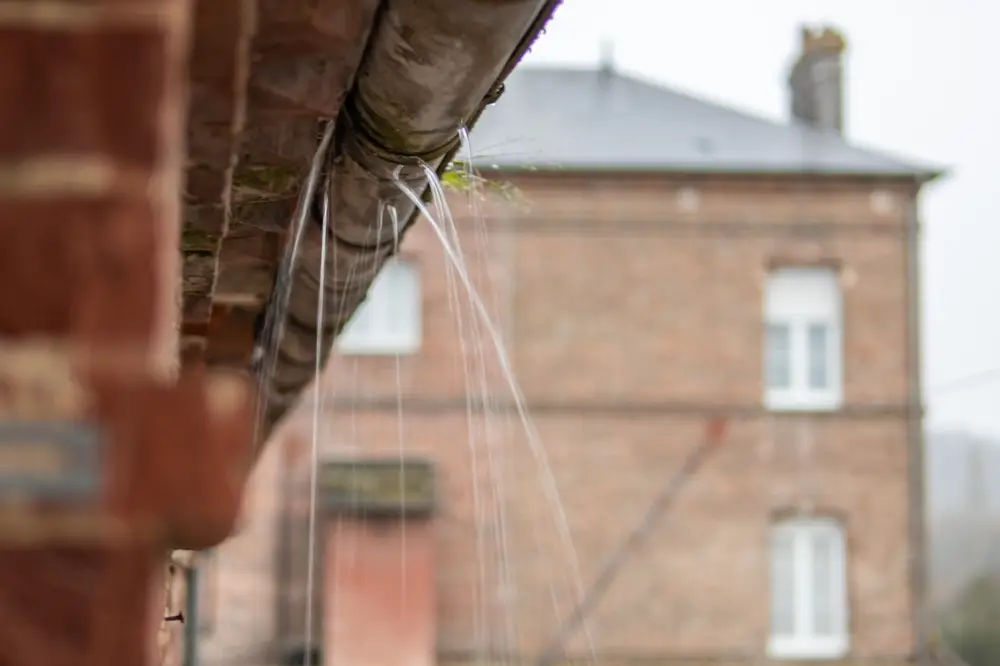
- Overflow and Backflow: During a heavy downpour, pooled water quickly fills the trough. The excess water has nowhere to go but over the edges. It will spill over the front, which causes landscape erosion, but more critically, it will overflow against the back, running down the fascia board and siding. This constant exposure to moisture leads to wood rot, paint peeling, and eventually, water seeping into the wall cavity.
- Ice Dams in Winter: In colder climates, standing water freezes into solid blocks of ice. As more water melts from the roof and reaches this blockage, it backs up under the shingles, where it can refreeze. This process, known as ice damming, forces water directly underneath your roof’s primary protective layer and into your attic, causing ceiling stains, ruined insulation, and interior leaks.
Improperly Spaced or Weak Hangers
Gutters are held in place by hangers or fasteners that attach them to the fascia board. These hangers must be strong enough and spaced correctly to support the weight of the gutter system, especially when it’s full of water or snow.
The Consequences of Poor Fastening:
- Sagging Gutters: When hangers are spaced too far apart (typically more than three feet), the gutter section between them will sag under the weight of water. These low spots become areas where water and debris collect, exacerbating the problem and leading to overflow.
- Detachment from the Home: Weak or incorrectly installed fasteners can fail. Nails or screws that are too short or don’t bite into solid wood will pull loose. A gutter that detaches from the house creates a massive gap where water can pour directly against the exterior walls and foundation. In a severe storm, a detached gutter can become a projectile, causing further damage to your home or property.
- Fascia Board Rot: Water that overflows from sagging gutters or leaks from loose attachment points constantly soaks the fascia board. This wooden board is not designed to withstand perpetual moisture. It will begin to rot, soften, and lose its ability to hold the fasteners, leading to a complete system failure. Rotted fascia is a direct entry point for water into the eaves and attic.
Leaky Seams and End Caps
Sectional gutters are installed in pieces, creating seams that must be meticulously sealed with high-quality sealant. The same applies to end caps and corners. A failure at any of these connection points turns a small drip into a major problem.
How Leaks Lead to Interior Damage:
- Concentrated Water Flow: Unlike general overflow, a leak at a seam creates a concentrated stream of water. This stream acts like a tiny but persistent hose aimed directly at your home’s exterior. It soaks the siding, window frames, and door frames below.
- Soffit and Fascia Destruction: Leaks from seams often drip directly onto the soffits (the underside of your roof’s overhang). This leads to wood rot, peeling paint, and provides an inviting entry point for pests like insects and rodents. As the soffit and fascia decay, water can travel into the attic and along wall studs.
- Foundation Erosion and Basement Leaks: A steady drip from a leaky gutter seam that lands near the foundation will erode the soil over time. This erosion can create negative grading, where the ground slopes toward your house instead of away from it. Water will then pool against your foundation walls, building up hydrostatic pressure that can force it through cracks and into your basement or crawl space.
Incorrect Downspout Size and Placement
Downspouts are the final and most important part of the gutter system. Their job is to get the collected water away from your home. Errors in their size or placement render the entire system ineffective.
The Fallout from Downspout Errors:
- Overwhelmed System: If downspouts are too small for the roof area they serve, they cannot drain water fast enough during heavy rain. The gutters will fill up and overflow along their entire length, causing the widespread water damage described earlier.
- Water Dumping at the Foundation: The most common and destructive downspout error is terminating it right next to the foundation. Without an extension or splash block to carry water at least 4-6 feet away, all the runoff from a large section of your roof is deposited in one concentrated spot. This guarantees soil saturation, foundation pressure, and eventual water intrusion into your basement or crawlspace. This is a primary cause of cracked foundations and chronic basement dampness.
The Domino Effect: How Exterior Issues Become Interior Nightmares
It can be difficult to visualize how a small gutter problem on the outside of your house leads to a stained ceiling in your living room. The process is a slow but steady invasion, a domino effect where one failure leads to another.
- Initial Gutter Failure: The problem begins with an installation flaw—improper pitch, a loose hanger, or a poorly sealed seam.
- Water Overflows or Leaks: During the next rainstorm, water does not follow its intended path. It spills over the gutter’s edge, drips from a seam, or backs up under the roof shingles.
- Exterior Components are Compromised: This misdirected water saturates the fascia, soffits, and siding. Wood begins to rot, paint peels, and the protective exterior shell of your home is breached.
- Water Enters the Structure: Once the exterior is compromised, water finds its way inside. It can seep into the attic, run down the interior of walls, or soak insulation. The insulation becomes compacted and useless, and the moisture promotes mold growth on drywall and wooden studs.
- Visible Interior Damage: The final stage is when the damage becomes visible inside your home. This appears as brown or yellow stains on ceilings and walls, peeling paint or wallpaper, a musty odor from mold and mildew, or outright dripping during rain. By the time you see these signs, the underlying structural damage is often extensive and expensive to fix.
If you suspect your gutters are failing, it might be time for a professional assessment. A prompt gutter repair service can often prevent small issues from becoming catastrophic failures.
Signs Your Gutters Were Installed Improperly
You don’t have to wait for a ceiling stain to know you have a problem. Be proactive and look for these telltale signs of a faulty gutter installation:
- Visible Sagging or Pulling Away: Look along the roofline. Do you see any dips, sags, or sections of the gutter pulling away from the fascia board?
- Waterfalls and Overflow: During a rainstorm, watch your gutters. Is water pouring over the sides like a waterfall instead of flowing to the downspout?
- Peeling Paint or Stains on Siding: Look for streaks, stains, or peeling paint on the siding directly below your gutters or on the fascia boards themselves.
- Drips and Leaks: On a dry day after a rain, check for persistent drips from seams or corners.
- Erosion Lines in Your Landscaping: Do you see channels or trenches carved into your mulch or garden beds directly below the gutters?
- Pooling Water Around the Foundation: After it rains, inspect the area around your home. Large puddles near the foundation are a clear sign that water is not being channeled away properly.
- Mildew or Mold on the Foundation: Green or black patches of growth on your foundation walls indicate constant moisture exposure.
- Cracks in Your Foundation: While cracks can have many causes, water pressure from poor drainage is a leading contributor.
Spotting any of these signs warrants immediate action. Don’t ignore them. What seems like a minor issue today can quickly escalate.
Why Professional Gutter Installation is a Non-Negotiable Investment
Given the severe risks associated with improper installation, trusting this job to professionals is not a luxury—it’s a necessity. A reputable company like Cola City Roofing provides more than just labor; they provide expertise that protects your most valuable asset.
Here’s what a professional gutter installation service offers:
- Expert Assessment: A professional will measure your roof, assess its pitch, and calculate the water runoff volume to determine the correct size and type of gutters and downspouts your home needs.
- Precision and Proper Tools: Professionals have the experience and equipment to ensure the correct pitch is set, hangers are securely fastened into solid wood, and all seams are perfectly sealed.
- Knowledge of Local Conditions: A local company understands the specific weather patterns in Columbia, SC, and can recommend materials and designs best suited to handle the region’s rainfall.
- High-Quality Materials: Reputable installers use durable, high-quality materials that resist rust, corrosion, and damage, ensuring a longer lifespan for your system.
- Safety: Gutter installation involves working at heights on ladders. Professionals are trained and insured, eliminating the risk of injury to you or damage to your property.
- Warranty and Accountability: A professional installation is typically backed by a warranty on both materials and workmanship. If an issue arises, you have a reliable partner to call. You can contact us to learn more about our commitment to quality and customer satisfaction.
Investing in professional gutter services is an investment in prevention. The cost of a professional installation is a fraction of the cost of repairing a rotten roof structure, mold-infested walls, or a cracked foundation.
Protecting Your Home Starts at the Roofline
The connection between improper gutter installation and interior water damage is undeniable. A flawed system actively works against your home, channeling water to its most vulnerable points. From the roof deck to the foundation, no part of your home is safe from the consequences of a poorly managed water flow.
Take a moment to inspect your gutters. Look for the warning signs and don’t dismiss them as minor cosmetic flaws. They are indicators of a system that is failing to protect your home. By understanding the critical importance of proper installation and recognizing the dangers of cutting corners, you can take the necessary steps to safeguard your property.
If you have any concerns about your current gutter system or are planning a new installation, prioritize professional expertise. Ensure your home is protected by a system designed and installed to handle the elements effectively. For homeowners seeking reliable gutter installation in Columbia SC , partnering with an experienced team is the best way to prevent water damage and secure your peace of mind for years to come.