Noticing puddles and standing water around the perimeter of your house after a rainstorm can be unsettling. While it might seem like a simple drainage issue, water pooling near your foundation is a serious red flag. Your home’s foundation is its most critical structural element, and prolonged exposure to excess moisture can lead to catastrophic damage, costing tens of thousands of dollars to repair. Understanding the source of this water is the first step toward protecting your investment.
Often, the culprit is not as complex as you might think. More often than not, the problem originates from the very system designed to prevent it: your gutters. A malfunctioning or poorly installed gutter system fails to properly manage rainwater, allowing it to saturate the soil directly surrounding your foundation. This guide will walk you through the primary causes of water pooling near your foundation, with a special focus on gutter-related failures. We will detail the severe risks this water poses and explain how professional gutter services are the key to safeguarding your home’s structural integrity.
The Critical Link Between Your Gutters and Your Foundation
Before diving into the problems, it’s essential to understand the intended relationship between your gutters and your foundation. Your roof is a massive, non-absorbent surface. During a one-inch rainstorm, a 2,000-square-foot roof can shed approximately 1,240 gallons of water. The purpose of a gutter system is to capture every gallon of that water, contain it, and channel it through downspouts to a safe discharge point far away from your home.
When functioning correctly, your gutters ensure the soil around your foundation remains at a stable moisture level. This is crucial because the soil acts as the platform supporting your entire house. A properly working gutter system is, therefore, one of the most important protective features of your home, silently defending your foundation from the relentless force of water. However, when this system fails, it actively contributes to the problem, dumping those thousands of gallons of water in the worst possible place.
1. Clogged Gutters: The Most Common Culprit
The most frequent cause of water pooling near a foundation is also the most straightforward: clogged gutters. Gutters are open troughs that are highly effective at catching not just water, but also leaves, pine needles, twigs, shingle grit, and other airborne debris. Over time, this debris accumulates and creates blockages.
How Clogs Lead to Foundation Pooling
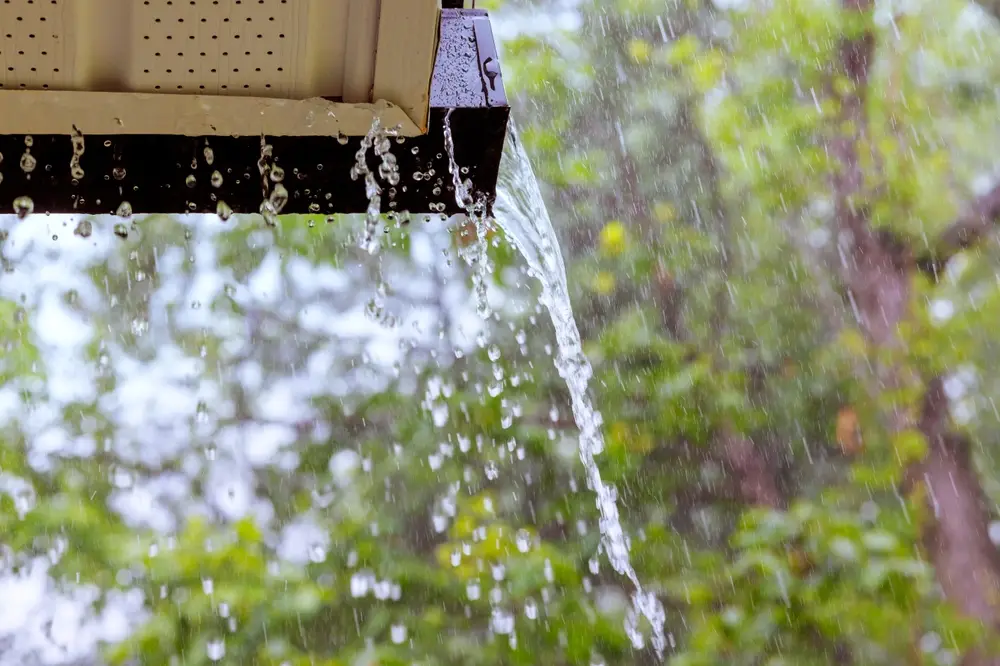
When a gutter is clogged, rainwater flowing from the roof has nowhere to go. The trough fills up, and the water is forced to spill over the sides.
- Overflowing Gutters: Instead of being neatly channeled to a downspout, the water cascades over the front and back of the gutter like a waterfall. This torrent of water falls directly onto the ground below, immediately saturating the soil next to your foundation.
- Overwhelmed Downspouts: Debris often gets washed down into the downspouts, creating clogs within the vertical pipes or at the elbow joints. A blocked downspout is just as bad as a clogged gutter. Water will back up the entire system, leading to overflows, or it may find a way to leak out from seams in the downspout itself, creating a concentrated stream of water against your wall.
- Sheet Flow Off the Roof: In some cases, gutters can become so packed with heavy, dense debris that water from the roof "sheets" right over them, barely entering the gutter at all. This creates a wide curtain of water that drenches the ground below.
The result of any of these scenarios is the same: a massive volume of water is deposited in a narrow band of soil along your foundation wall. This is precisely the area that must be kept as dry as possible. Regular gutter cleaning is essential maintenance, but if you’re experiencing persistent clogs, it might be time to consider professional gutter repair services to ensure the system is functioning optimally.
2. Improper Downspout Placement and Termination
Even if your gutters are clean and flowing perfectly, your foundation can still be at risk if the downspouts are not correctly configured. The entire purpose of the gutter system is to move water away from the house. The downspouts are the final, critical step in this process.
Common Downspout Errors
- Terminating Too Close to the Foundation: This is an incredibly common and destructive mistake. If your downspout ends with an elbow that dumps water right at the base of your foundation wall, it completely defeats the purpose of the gutter system. All the water collected from a large section of your roof is being concentrated and directed to the most vulnerable spot. Building codes and best practices recommend that water be discharged at least four to six feet away from the foundation, and preferably up to ten feet.
- Missing or Ineffective Splash Blocks: A splash block is a simple concrete or plastic channel placed under the downspout to help direct water flow. However, if the splash block is too small, cracked, or angled incorrectly, it won’t be effective. A common issue is a splash block that has settled into the ground, creating a small basin that collects water right next to the foundation instead of dispersing it.
- Lack of Downspout Extensions: The best solution is often a downspout extension. These can be flexible corrugated pipes or rigid PVC pipes connected to the downspout elbow. They are designed to carry the water a safe distance away from the home before discharging it onto a sloped surface or into a landscape drainage system. An installation that omits these extensions on a flat or negatively graded property is a recipe for foundation trouble.
If you see water gushing from your downspouts and forming pools just a foot or two from your wall, you have an urgent problem. Correcting downspout termination is a relatively simple fix that can save you from devastating repair costs down the line. For a professional assessment of your drainage needs, it’s best to contact us .
3. Flawed Gutter Installation
Sometimes, the problem isn’t a lack of maintenance but a fundamental flaw in the initial installation. A cheap or rushed gutter installation service can create a system that is doomed to fail from day one.
Installation Mistakes That Cause Pooling
- Incorrect Gutter Slope (Pitch): Gutters must be slightly sloped toward the downspouts to allow gravity to drain the water. If gutters are installed perfectly level or, worse, with a negative slope away from the downspout, water will stand in the troughs. This leads to overflows during the next rain, sending water down to your foundation.
- Insufficient Number of Downspouts: A house needs enough downspouts to handle the expected volume of water from the roof. An installer trying to cut costs might use only one downspout on a long gutter run that requires two. During heavy rain, a single downspout cannot handle the flow, causing the entire gutter to back up and overflow.
- Undersized Gutters: Different roof sizes and pitches require different gutter sizes. A large, steep roof generates a high volume of fast-moving water. Installing standard 5-inch gutters on a house that needs 6-inch gutters will cause the system to be perpetually overwhelmed and lead to constant overflows.
- Leaky Seams and Corners: In sectional gutter systems, all the joints must be perfectly sealed. A poor installation with bad sealant will result in leaks. While some leaks may only drip onto a patio, others can run down the siding and contribute to water pooling at the foundation level.
If you suspect your gutters were installed incorrectly, you may need a professional evaluation. An expert from a reputable company like Cola City Roofing can measure the pitch, assess the downspout capacity, and identify any other installation flaws that are contributing to your water pooling issues.
4. Negative Grade and Landscaping Issues
While gutters are the most common cause, issues with your property’s grading and landscaping can also lead to water pooling around the foundation. "Grading" refers to the slope of the land on your lot.
How Grading Affects Drainage
Ideally, the ground around your home should slope away from your foundation on all sides. This is called a "positive grade." It ensures that rainwater and runoff naturally flow away from your house. A drop of at least six inches over the first ten feet is recommended.
A "negative grade" is when the ground slopes toward your house. This is a serious problem because it directs all surface water on your property directly to your foundation walls. Even with a perfect gutter system, a negative grade can cause significant water pooling. Often, this issue is created over time by:
- Soil Settling: The soil that was backfilled against your foundation after construction can settle over the years, creating a shallow trench around your house that traps water.
- Landscaping Changes: Adding new garden beds, patios, or walkways without considering drainage can alter the grade and inadvertently direct water toward your home. Planting large flowerbeds right against the foundation, which require frequent watering, can also contribute to soil saturation.
If your gutters and downspouts are working correctly but you still have water pooling, the problem likely lies with your property’s grade. Fixing a negative grade can be a significant landscaping project, but it is absolutely essential for the long-term health of your foundation.
The Severe Dangers of Water Pooling at Your Foundation
Water pooling around your foundation is far more than a temporary puddle or a messy lawn. It represents a direct and persistent threat to the structural integrity of your home.
1. Hydrostatic Pressure and Foundation Cracks
Soil, especially clay soil common in many areas, expands significantly when it becomes saturated with water. When the soil around your foundation is constantly wet, it swells and exerts immense lateral (sideways) pressure on your foundation walls. This is known as hydrostatic pressure.
Foundation walls are designed to handle the vertical load of the house, but they are not designed to withstand thousands of pounds of constant, inward pressure from saturated soil. Over time, this pressure will cause the walls to bow inward and crack. You may see horizontal cracks in a basement wall or "stair-step" cracks in a brick or block foundation. These are not cosmetic issues; they are signs of structural failure.
2. Foundation Settling and Upheaval
Water can also cause the soil under your foundation’s footings to become unstable.
- Settling: Excess water can erode and wash away the soil that supports the foundation, causing sections of your house to sink or "settle."
- Upheaval: In expansive clay soils, the cycle of saturation and drying can cause the ground to swell and shrink dramatically. This can lift sections of the foundation, a process known as "upheaval."
Both settling and upheaval are incredibly destructive. The signs within your home include sloping floors, doors and windows that stick or won’t close properly, and cracks appearing in interior drywall, especially over doorways and windows.
3. Basement and Crawl Space Flooding
The most immediate and obvious consequence of water pooling is water intrusion. Under pressure, water will exploit any path of least resistance to get into your basement or crawl space. It can seep through porous concrete, penetrate the joint where the walls meet the floor, and flow directly through any cracks that have formed.
A wet basement or crawl space is a major problem, leading to:
- Property Damage: Ruined flooring, furniture, and stored belongings.
- Mold and Mildew: A damp environment is a perfect breeding ground for toxic black mold, which poses serious health risks and requires expensive remediation.
- Pest Infestations: Damp, dark spaces are highly attractive to termites, carpenter ants, rodents, and other pests.
The Professional Solution: Protecting Your Foundation
The best way to deal with water pooling at your foundation is to prevent it from ever happening. The solution almost always begins at the roofline with a professionally installed and maintained gutter system.
A professional assessment from Cola City Roofing involves a comprehensive look at your entire water management system. Our experts will:
- Inspect Your Gutters: We check for clogs, damage, and signs of wear.
- Analyze Your Downspouts: We ensure you have enough downspouts and that they are correctly placed and discharging water a safe distance from your home.
- Measure Gutter Pitch: We use levels to verify that your gutters have the proper slope for effective drainage.
- Evaluate Your Grading: We look at the slope of the land around your home to identify any grading issues that may be contributing to the problem.
Based on this thorough evaluation, we can recommend the right course of action, whether it’s a thorough cleaning, a targeted gutter repair service , or a complete new gutter installation with properly sized gutters and an adequate number of downspouts.
Don’t ignore the warning signs. The puddle you see today could be the source of a four-figure foundation repair bill tomorrow. Protect your most valuable asset by ensuring your home’s water management system is functioning flawlessly. Contact Cola City Roofing today for a free, no-obligation consultation and take the first step toward a dry, stable, and secure foundation.