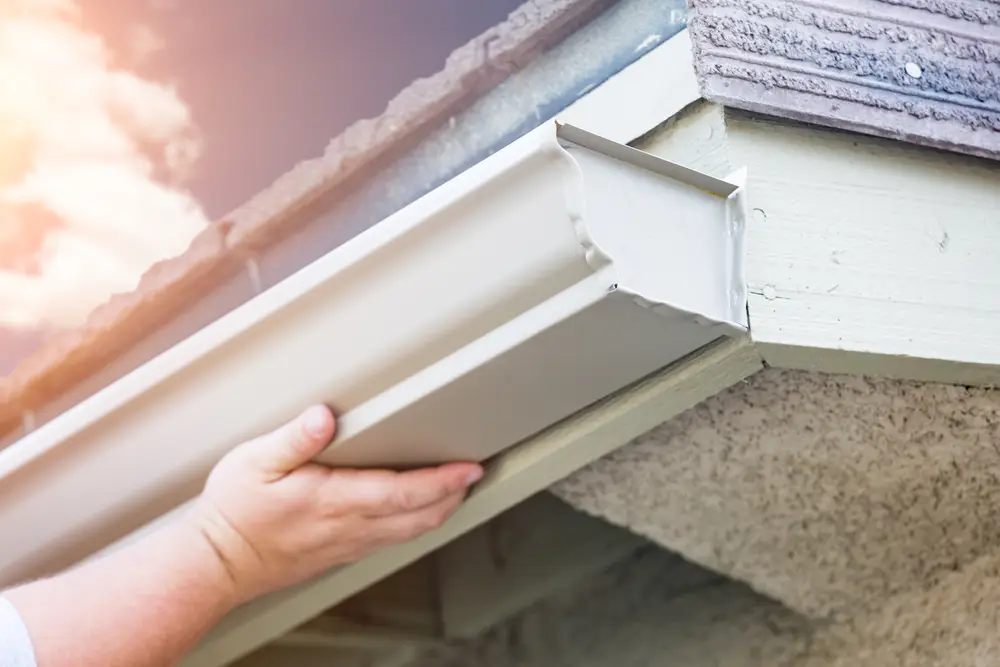
Your home’s gutter system is a critical line of defense against water damage. It’s designed to capture rainwater from your roof and channel it safely away from your foundation, walls, and landscaping. When installed correctly, gutters protect your home’s structural integrity and prevent a host of expensive problems. However, a seemingly straightforward gutter installation can quickly go wrong if not handled with expertise. Many well-intentioned homeowners attempting a DIY installation, or even hiring an inexperienced contractor, fall victim to common mistakes that render their gutter system ineffective or even harmful.
These errors can lead to everything from minor leaks to catastrophic foundation damage. Understanding the pitfalls of improper gutter installation is the first step toward safeguarding your investment. From selecting the wrong materials to setting an incorrect pitch, small miscalculations can have significant consequences. This guide will walk you through the most frequent and damaging gutter installation mistakes homeowners make. We will explore why these errors occur, the damage they can cause, and how you can ensure your gutter system is installed for maximum performance and longevity. For a flawless installation, sometimes the best solution is to trust the professionals.
1. Choosing the Wrong Gutter Type and Size
One of the most fundamental mistakes in gutter installation happens before a single tool is picked up: selecting the wrong type or size of gutters for your home. It’s easy to assume that all gutters are created equal, but this couldn’t be further from the truth. The size, style, and material of your gutters must be appropriate for your home’s specific needs, which are dictated by your roof’s size and pitch, as well as the typical rainfall patterns in your area.
The Importance of Correct Sizing
Gutters are not a one-size-fits-all product. They are most commonly available in 5-inch and 6-inch widths. While a 5-inch K-style gutter is standard for many residential homes, it may be completely inadequate for a house with a large or steep roof. A larger roof surface area collects a greater volume of water during a storm. If the gutters are too small, they will be quickly overwhelmed, causing water to overflow and spill down the side of your house, defeating their purpose entirely.
Similarly, the downspouts must be sized correctly to handle the volume of water collected by the gutters. A 6-inch gutter system will be ineffective if paired with small, 2×3-inch downspouts that can’t drain the water fast enough. This creates a bottleneck, causing water to back up and overflow. Professional installers perform calculations based on your roof’s square footage and the maximum rainfall intensity for your region to determine the appropriate gutter and downspout dimensions.
Material Matters
Gutters are available in various materials, each with its own set of pros, cons, and price points. Choosing incorrectly can lead to a shorter lifespan and more frequent repairs.
- Aluminum: This is the most popular choice due to its affordability, rust-proof nature, and lightweight design. It comes in various colors and is relatively easy to install. However, aluminum can be dented by ladders or hail.
- Vinyl: The most budget-friendly and DIY-friendly option, vinyl gutters are lightweight and won’t corrode. Their primary drawback is a lack of durability. They can become brittle in cold weather, crack under impact, and may fade over time from sun exposure.
- Steel: Galvanized steel is strong and durable, making it a great choice for areas with heavy snow or extreme weather. However, it is heavier and more susceptible to rust if the protective coating is scratched.
- Copper: The premium option, copper gutters are extremely durable, will never rust, and develop an attractive patina over time. They are, however, the most expensive material and require professional installation by experts familiar with soldering the joints.
Selecting a material that isn’t suited for your climate or failing to account for its maintenance needs is a recipe for premature failure.
2. Incorrect Gutter Slope or Pitch
Perhaps the most critical technical mistake in gutter installation is setting the wrong slope, or pitch. Gutters are not meant to be perfectly level. They need to be angled slightly toward the downspouts to allow gravity to do its job and guide water to where it needs to go. Without the correct pitch, water will pool in the gutters instead of draining, leading to a cascade of problems.
The Consequences of a Flawed Slope
- Too Little Slope: If the gutter is too level, water will stagnate. This standing water becomes a breeding ground for mosquitos, attracts other pests, and promotes the growth of algae and mold. The weight of the pooled water also puts immense strain on the gutter hangers and fasteners, causing them to sag and pull away from the fascia board over time. In winter, this standing water can freeze, creating heavy ice dams that can damage both the gutters and your roofline.
- Too Much Slope: On the other hand, an excessively steep pitch can also be problematic. While the water will certainly drain, it will move too quickly. During a heavy downpour, fast-moving water can overshoot the downspout opening altogether, splashing over the edge of the gutter. This can cause erosion to the ground below and soak the foundation. A dramatically sloped gutter is also aesthetically jarring and can look unprofessional.
The Golden Rule of Gutter Pitch
The generally accepted rule for proper gutter slope is a drop of at least a quarter-inch for every 10 feet of gutter run. For longer runs (over 40 feet), it is often recommended to pitch the gutter from the middle down toward a downspout at each end. Achieving this precise, subtle angle requires careful measurement and experience. A professional installer uses a level and chalk line to snap a perfectly graded guideline, ensuring a consistent and effective slope along the entire length of the roofline. Trying to "eyeball" the pitch is a common DIY error that almost always leads to drainage issues. If you suspect your gutters are not draining correctly, it’s a clear sign that professional gutter repair services may be needed to correct the pitch.
3. Using Inadequate or Improperly Spaced Fasteners
The fasteners, or hangers, are what secure your gutter system to the fascia board of your home. They bear the entire weight of the gutters, the water flowing through them, and any debris that accumulates. Using the wrong type of fasteners or spacing them too far apart is a critical mistake that leads directly to sagging, collapsing gutters.
The Problem with Short Fasteners
Many DIY kits come with standard spikes or screws that are simply too short to provide a secure anchor. These fasteners need to penetrate through the fascia board and bite firmly into the underlying rafter tails for maximum holding power. If the fasteners are only gripping the 1-inch thick fascia board, they will eventually pull loose under the weight of the gutters, especially when filled with water or ice. This is a common cause of sagging and eventual gutter failure. Professional installers use long, heavy-duty screws or hangers specifically designed for this purpose, ensuring the system is anchored to the home’s solid structural frame.
Correct Spacing is Non-Negotiable
Just as important as the type of fastener is their spacing. Hangers should be spaced no more than three feet apart along the entire gutter run. In regions that experience heavy snowfall or ice, installers often reduce this spacing to two feet or even 18 inches for added support. Placing hangers too far apart creates long, unsupported sections of the gutter. These sections will sag under their own weight, creating low spots where water will pool. Over time, this strain will cause the gutter to bend, warp, and pull away from the house, leading to leaks and potential damage to the fascia and soffit. A qualified installer understands that proper fastener spacing is essential for a durable system that can withstand the elements for years to come.
4. Improper Sealing and Joint Management
Sectional gutter systems, which are common in DIY installations, are made of 10- or 20-foot lengths that must be joined together. Each joint, corner, and end cap represents a potential weak point where leaks can occur if not sealed properly. This is an area where cutting corners or using the wrong materials will almost certainly lead to drips and water damage.
The Dangers of Leaky Seams
A dripping gutter seam may seem like a minor annoyance, but it can cause significant damage over time. Water that leaks from joints will run down the fascia board, causing it to rot and deteriorate. This rot can spread to the soffit and even the underlying roof decking, leading to expensive and complex repairs. If the leak is above a window, door, or walkway, it can cause damage to the framing or create a slippery hazard below.
The key to preventing leaks is meticulous preparation and the use of high-quality sealant. All surfaces must be clean and dry before applying a generous bead of gutter-specific sealant or silicone. Simply applying a thin layer will not be enough to withstand the expansion and contraction that occurs with temperature changes. Many DIY-ers rush this step, resulting in failed seals within the first year.
The Seamless Gutter Advantage
To eliminate the problem of leaky seams almost entirely, many homeowners and all reputable professionals opt for seamless gutters. As the name implies, seamless gutters are custom-formed on-site from a single piece of metal to match the exact dimensions of your roofline. The only joints are at the corners and downspout outlets. This drastically reduces the number of potential leak points, creating a stronger, more reliable, and more attractive system. While the initial investment for a professional gutter installation services of a seamless system is higher than a sectional DIY kit, the long-term benefits of avoiding leaks and frequent repairs make it a far superior choice.
5. Incorrect Downspout Placement and Extension
Downspouts are the final, crucial component of the gutter system. Their job is to take the collected water and discharge it a safe distance away from your home’s foundation. Mistakes in downspout placement, quantity, and extension can lead to some of the most severe water damage a homeowner can face.
Too Few Downspouts
A common error is trying to save money by installing too few downspouts. Each downspout can only handle a certain volume of water, typically from about 40 feet of gutter. If you have a long run of guttering served by a single downspout, it will be easily overwhelmed in a heavy rainstorm. The water will back up in the gutter and overflow, creating the very problem the system was meant to prevent. A professional will calculate the number of downspouts needed based on the roof size and gutter capacity to ensure efficient drainage.
Discharging Water Too Close to the Foundation
This is arguably the most damaging gutter-related mistake. A downspout that simply ends at the base of your house is directing a concentrated flow of water directly to the area where your home is most vulnerable: the foundation. This oversaturation of the soil around the foundation can lead to several disastrous outcomes:
- Foundation Cracks: The immense hydrostatic pressure from the water-logged soil can cause cracks in your foundation walls.
- Basement or Crawlspace Flooding: Water will exploit any cracks or seams, leading to a wet basement or crawlspace, which in turn promotes mold growth and structural rot.
- Soil Erosion: The constant flow of water can erode the soil that supports your foundation, leading to settling and instability.
- Landscape Damage: Flowerbeds, shrubs, and mulch located near the foundation will be washed away.
To avoid this, downspouts must have extensions that carry water at least four to six feet away from the foundation. For a more permanent and aesthetically pleasing solution, underground drainpipes can be installed to channel the water even further away, often to a storm drain or a gentle slope in the yard.
6. Neglecting Gutter Guards and Regular Maintenance
Finally, even a perfectly installed gutter system will fail if it is not properly maintained. Gutters are natural collectors of leaves, twigs, shingle grit, and other debris. If this debris is not cleared out regularly, it will form clogs that block the flow of water.
The Inevitability of Clogs
Clogged gutters are just as bad as having no gutters at all. Water that cannot drain will pool, overflow, and cause all the problems mentioned earlier: sagging gutters, fascia rot, foundation damage, and ice dams. Cleaning your gutters at least twice a year—once in the spring and once in the late fall—is essential maintenance. For homes surrounded by tall trees, more frequent cleaning may be necessary.
The Role of Gutter Guards
To drastically reduce the burden of maintenance, installing a quality gutter guard system is highly recommended. Gutter guards are covers that fit over the top of your gutters, allowing water to enter while blocking leaves and larger debris. While no gutter guard is completely maintenance-free, a good system can reduce the need for cleaning from several times a year to once every few years. There are many types of gutter guards, from simple mesh screens to more advanced surface-tension systems. A professional can help you choose the best option for your home and budget. Viewing gutter guards not as an optional add-on but as an integral part of your water management system is key to long-term success.
Trust the Professionals for a Flawless Installation
While a DIY gutter installation might seem like a way to save money, the potential for costly mistakes is high. The precision required for setting the correct pitch, the knowledge needed to select the right materials, and the experience to ensure every component is securely fastened and sealed are skills that come from professional training. An improperly installed gutter system is not just ineffective; it’s a liability that can cause thousands of dollars in damage to your roof, siding, and foundation.
By investing in a professional gutter installation from a trusted company like Cola City Roofing , you are ensuring that the job is done right the first time. Our experts have the tools, knowledge, and experience to design and install a gutter system tailored to your home’s specific needs, protecting it from water damage for years to come. If you’re considering a new gutter system or need to correct the mistakes of a past installation, don’t hesitate. Contact us today for a consultation and ensure your home has the protection it deserves.