Most homeowners see their gutters as a simple, functional part of their house—a trough that catches rain. They might worry about cleaning out leaves in the fall, but few understand the profound and costly dangers that arise from a system that was poorly installed in the first place. A faulty gutter installation isn’t just an inconvenience; it’s a slow-acting poison to your home, creating a domino effect of destruction that often goes unnoticed until the damage is severe and expensive.
The truth is, the biggest threats from bad gutters are the ones you can’t see. These hidden dangers silently compromise your home’s structural integrity, foster unhealthy living conditions, and attract unwanted pests. From a rotting foundation to toxic mold growth inside your walls, the consequences extend far beyond a bit of overflowing water. This guide will uncover the secret hazards of improper gutter installation, revealing why what you don’t know can absolutely hurt your home and your wallet. Understanding these risks is the first step toward protecting your property with a system that actually does its job.
Beyond the Obvious: Why Gutter Installation is a Science
To appreciate the dangers of a bad installation, it’s crucial to understand what a good installation entails. It’s a process rooted in physics, engineering, and an understanding of water dynamics. A truly effective gutter system is precisely calibrated to protect every part of your home, from the roof’s edge down to the soil around your foundation.
A professional installation from a team like Cola City Roofing accounts for several critical factors that a DIY enthusiast or general handyman might overlook:
- Load Calculation: Experts calculate the maximum volume of water your roof will shed during a heavy South Carolina downpour. This determines the necessary size for the gutters (e.g., 5-inch vs. 6-inch) and the number and size of downspouts required to handle that load without overflowing.
- Pitch Precision: Gutters must be sloped, or "pitched," at a specific angle—typically between 1/16 and 1/8 inch per foot. This precise slope uses gravity to guide water smoothly toward the downspouts, preventing stagnation. A level gutter is a failed gutter.
- Structural Integrity: Hangers must be spaced no more than three feet apart and fastened securely into the fascia board’s solid wood structure, not just the decorative trim. This ensures the system can support immense weight from water, ice, or debris without pulling away.
- Water-Tight Sealing: Every seam, corner, and end cap is a potential failure point. Professionals use high-grade, durable sealants and meticulous techniques to ensure these connections remain water-tight for years, preventing the drips that lead to disaster.
- Strategic Water Diversion: The system’s purpose isn’t just to get water off the roof, but to get it far away from the house. Proper downspout placement and extensions are non-negotiable elements that protect your foundation.
When any one of these scientific principles is ignored, the gutter system transforms from a protective shield into an active threat.
Hidden Danger 1: The Silent Attack on Your Foundation
This is perhaps the most critical and costly danger of a faulty gutter system. When gutters are improperly pitched, clogged, or undersized, water spills over the edge and saturates the ground directly beside your house. Similarly, if downspouts terminate at the base of your home without extensions, they are essentially injecting thousands of gallons of water into the soil around your foundation.
How it Unfolds:
- Soil Erosion and Grading Issues: The constant flow of water erodes the soil around your foundation. This erosion can change the "grade" or slope of the land. The ground, which should slope away from your house, can become level or even slope inward, creating a bowl that collects water.
- Hydrostatic Pressure: As the soil becomes saturated, the water builds immense hydrostatic pressure against your foundation walls. This pressure is powerful enough to exploit any existing hairline crack, forcing its way into your basement or crawl space.
- Foundation Cracks and Failure: Over months and years, this relentless pressure can create new cracks in the concrete or block walls. Water enters, freezes, and expands, widening the cracks in a destructive cycle. In the most severe cases, this can lead to bowing walls and major structural failure, a repair that can cost tens of thousands of dollars.
- Sinking and Settling: When certain types of soil, like clay, become oversaturated, they can lose their ability to support the weight of the house. This can cause sections of your foundation to sink or settle, leading to cracked drywall, sticking doors and windows, and slanted floors throughout your home.
This entire catastrophic process begins with a simple, unseen gutter flaw. By the time you notice a damp spot in the basement or a crack in the drywall, your foundation has been under assault for a long time.
Hidden Danger 2: The Rotting of Your Home’s Skeleton
Poorly installed gutters initiate a process of wood rot that can compromise the very frame of your house. This happens when water is allowed to make continuous contact with wooden components that are not meant to be wet.
The Pathway of Destruction:
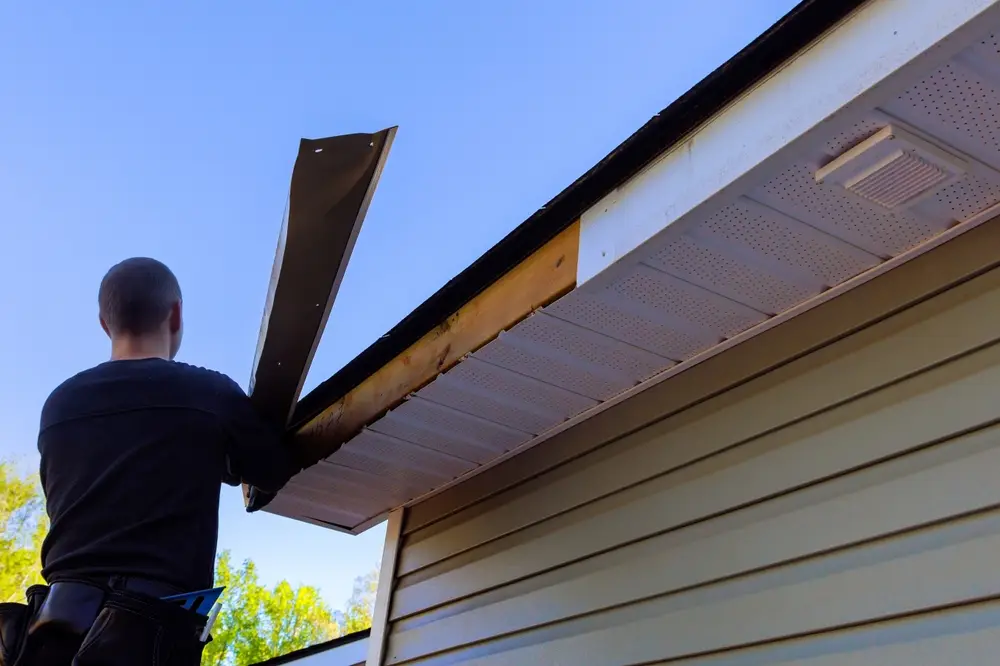
- Fascia and Soffit Decay: The first victims are the fascia boards (the boards the gutters are attached to) and the soffits (the underside of the roof overhang). When gutters overflow or leak from poorly sealed seams, this wood becomes perpetually damp. It begins to soften, rot, and lose its structural integrity. Rotted fascia can no longer hold the gutter fasteners, causing the system to sag and pull away, which worsens the overflow.
- Infiltration into the Rafters and Sheathing: As the fascia and soffits decay, they create a direct entry point for water into your roof structure. Water wicks its way up into the rafter tails and soaks the roof sheathing (the plywood or OSB deck under your shingles). This leads to widespread rot that can compromise the stability of your roof. A spongy or soft roof deck is a major red flag indicating extensive damage.
- Damage to Walls and Framing: Water that runs behind a detached gutter or down the siding can seep behind the protective layers and into the wall cavity. There, it soaks the wall studs, headers above windows and doors, and the sill plates that connect your walls to the foundation. This hidden rot weakens the entire frame of your house, turning solid wood into a soft, pulpy mess.
A professional offering gutter repair in Columbia SC , knows that visible fascia rot is often just the tip of the iceberg. The real damage is usually hidden within the structure, a secret that only a thorough inspection can reveal.
Hidden Danger 3: An Invitation for Pests and Vermin
A faulty gutter system creates an ideal habitat for a wide variety of pests. The combination of moisture, decaying organic matter, and easy entry points turns your roofline into a pest sanctuary.
Who Are the Unwanted Tenants?
- Insects: Standing water in improperly pitched gutters is a perfect breeding ground for mosquitoes. More destructively, the moisture and wood rot caused by gutter overflows attract wood-destroying insects like termites and carpenter ants. They thrive in damp, soft wood and can move from a rotting fascia board directly into the frame of your home, causing massive damage.
- Rodents: Debris-filled gutters provide a sheltered "highway" for mice, rats, and squirrels to travel around your roofline. The rotted holes in the soffits and fascia, created by water damage, then become perfect, pre-made entry doors for these rodents to get into your attic. Once inside, they chew on wiring (a fire hazard), destroy insulation, and create unsanitary conditions.
- Birds and Wasps: Gutters clogged with leaves and twigs are an attractive nesting spot for birds. Wasps and hornets also frequently build their nests in the sheltered space behind gutters that have pulled away from the fascia.
Effectively, a poorly installed gutter system hangs out a "Vacancy" sign for every pest in the neighborhood, providing them with water, shelter, and a direct path into your home.
Hidden Danger 4: The Cultivation of Toxic Mold
Of all the hidden gutter dangers , mold is the most direct threat to your family’s health. Mold spores are everywhere, but they need moisture and an organic food source (like wood or drywall) to grow. A faulty gutter system provides both in abundance.
How Gutters Fuel Mold Growth:
- Attic Infestations: When water backs up under your shingles from ice dams or overflowing gutters, it soaks your attic insulation and the wooden trusses. This dark, damp, and often undisturbed environment is a perfect incubator for mold. The mold can grow unseen for years, releasing spores into your home’s air.
- Growth Inside Walls: Water that seeps into wall cavities creates a similar ideal environment. It dampens the drywall paper and wooden studs, allowing toxic black mold (Stachybotrys chartarum) and other species to flourish.
- Basement and Crawl Space Contamination: Water intrusion into your basement or crawl space due to foundation pressure leads to widespread mold growth on concrete, stored items, and floor joists. This mold releases a musty odor that permeates the entire house.
The health risks associated with indoor mold are serious, including chronic respiratory issues, asthma attacks, allergic reactions, headaches, and fatigue. The remediation process is invasive and costly, often requiring the removal of large sections of drywall, insulation, and flooring. This serious health hazard can be traced directly back to a gutter system that failed to keep water out.
The Financial Drain: The True Cost of a Bad Installation
Many people opt for a cheap installation to save money upfront. This is a classic example of being "penny wise and pound foolish." The long-term costs associated with fixing the damage from a bad installation dwarf the initial savings.
Consider the potential expenses:
- Foundation Repair: $5,000 – $25,000+
- Mold Remediation: $2,000 – $10,000+
- Roof Sheathing and Rafter Replacement: $3,000 – $15,000+
- Pest Extermination and Repair: $500 – $5,000+
- Interior Drywall and Paint Repair: $1,000 – $4,000+
- Landscape Re-grading: $1,500 – $5,000+
Suddenly, the extra cost for a professional gutter installation seems like a very wise investment. It’s an insurance policy against a flood of future bills. If your system is already showing signs of failure, investing in professional gutter repair services is an urgent damage-control measure that can save you a fortune.
Don’t Guess, Get It Assessed
You don’t have to climb a ladder yourself to diagnose your system. Look for the easy-to-spot warning signs from the ground:
- Waterfalls during rain: Is water pouring over the edges instead of exiting the downspouts?
- Stains on fascia or siding: Do you see dark streaks or peeling paint below the roofline?
- Erosion channels in flowerbeds: Are there trenches carved in your mulch or soil?
- Visible sagging or detachment: Can you see sections of the gutter pulling away from the house?
- Damp or flooded basement: Is there a musty smell or visible water in your basement after it rains?
If you see any of these signs, it’s time to call in a professional. Ignoring them is a gamble you can’t afford to lose.
Your Home’s First Line of Defense Deserves Professional Care
Your gutter system is far more than a piece of metal on the edge of your roof. It is a critical defense network that protects the health, safety, and value of your entire home. The hidden dangers of a poorly installed system—foundation damage, wood rot, pest infestations, and toxic mold—are severe and costly.
Entrusting this vital job to qualified experts is one of the most important decisions you can make as a homeowner. A professional gutter installation ensures that every component is correctly sized, pitched, and secured, creating a system that will protect your investment for decades. It’s about preventing problems, not just reacting to them.
If you have any doubts about the integrity of your current gutters or are planning a replacement, don’t leave it to chance. Contact us to have your system evaluated by experts who understand the science of water management and the hidden dangers that lurk in a faulty installation. Protect your home and your peace of mind by investing in a gutter system that is built to last.