
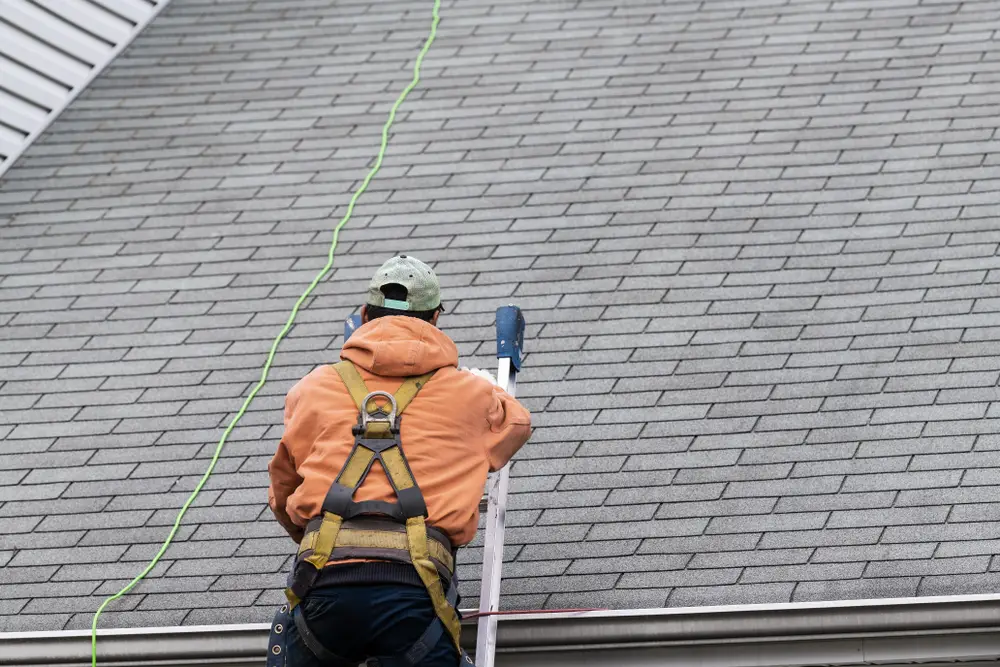
A roofing estimate is two things at once: a price and a description of the work that price buys. Most homeowners read the price and skim the description, which is backwards. Two bids with the same total can describe very different roofs, and two bids with different totals can describe nearly the same one. The only way to know which situation you are in is to read the estimate line by line.
This guide walks through a typical residential estimate in the order the lines usually appear, explains what each one means, and points out where South Carolina rules differ from what you might read on a national website. It also covers insurance estimates written in Xactimate, commercial low-slope bids, and the gap between an estimate and a signed contract. It deliberately contains no prices. Costs move with materials, labor and the shape of your roof; for what drives the number, see our roof replacement cost guide. This page is about reading what you have been handed.
The short version
- Ask for an itemized estimate. Quantities and units (squares, linear feet, each) are what make bids comparable. A single lump sum tells you almost nothing.
- Check the measurement first. One square is 100 square feet. If three bids list very different square counts for the same house, settle that before comparing anything else.
- Look for the named product line, not “architectural shingles” or “30-year shingles.” The same goes for underlayment, starter, ridge cap and vents.
- Read how rotten decking is handled. Hidden deck damage is a common reason a final bill differs from the estimate. A unit price per 4x8 sheet, written in advance, is the usual way to handle it.
- Know the South Carolina specifics. SC amended the code so drip edge on asphalt shingle roofs is required where the manufacturer requires it; kickout flashing is required where a roof eave meets a sidewall; a separate sales-tax line on a roofing contract is unusual and worth a question.
- Match the warranty to the installer. Enhanced manufacturer warranties require specific accessories and, for most tiers, a contractor with a specific credential. Confirm the credential on the manufacturer's own locator.
- If insurance is paying, South Carolina law gives you a five-business-day cancellation window after a written denial, bars the roofer from negotiating your claim, and bans deductible rebates.
Four kinds of roofing estimate
Not every “estimate” is the same kind of document. Knowing which one you are holding tells you how much weight to put on it.
The verbal or online ballpark
A number given over the phone, from a satellite measurement, or from an online calculator. It can tell you whether a project is in the range you expected, and nothing more. Nobody has seen your attic, walked the roof, counted layers or checked the deck. Treat it as a starting point for a conversation. Our article on how accurate online roofing estimate tools are goes into the limits, and our roof area calculator lets you run your own rough numbers.
The one-page price
A single total with a short description: “Remove and replace roof with architectural shingles, includes cleanup.” This is common, and it is not necessarily dishonest, but it makes comparison nearly impossible. You cannot tell how many squares were figured, which underlayment is included, whether flashing is replaced or reused, or what happens if the deck is rotten. If you like a contractor who hands you a one-pager, ask them to itemize it. A contractor who has done the math should be able to show it.
The itemized estimate
A list of line items, each with a unit (square, linear foot, each, lump sum), a quantity, and usually a price per line or a price per section. This is what you want. It lets you check the measurements, see what is included and excluded, and put three bids side by side. The rest of this guide assumes you have one.
The insurance estimate
If you have filed a claim, your insurer's adjuster will often produce an estimate in Xactimate, the estimating software made by Verisk. It uses standardized line codes, lists quantities and unit prices, and then applies depreciation, your deductible and sometimes overhead and profit. It is an itemized estimate with an insurance layer on top, and it has its own section below.
Free estimate vs. inspection report
A contractor's estimate is a sales document that proposes a scope and a price. An inspection report is a description of condition. They overlap, but they are not the same thing. If what you actually need is an honest read on whether the roof needs replacing at all, our roof inspection guide explains what a written inspection should cover.
Squares, pitch and waste
Almost every other quantity on a shingle estimate flows from three numbers: the roof area, the pitch, and the waste allowance. Get these right and the rest of the bid is easy to check.
Squares
Roofing is sold by the square. GAF defines it plainly: a square is 10 feet by 10 feet, or 100 square feet, and “the number of squares is derived by taking the total measured square footage and dividing by 100.” A roof with 2,640 square feet of surface is 26.4 squares. Note that this is the roof surface, which is larger than the footprint of the house because of slope and overhangs.
Shingles come in bundles, and the number of bundles per square depends on the product. For GAF Timberline shingles, the installation instructions state that three bundles “will cover 98.4 square feet.” Other lines differ, so if you want to check a materials count, use the coverage printed on the wrapper or instructions for the exact product named in your bid. Our materials estimator does the arithmetic.
If three contractors measured the same house and their square counts differ by more than a little, ask each how they measured: by hand on the roof, from an aerial measurement report, or from a satellite tool. Ask to see the measurement. It is a fair request and a good contractor will not mind.
Pitch
Pitch is written as rise over a 12-inch run: a 6:12 roof rises 6 inches for every 12 inches horizontally. It matters to an estimate in three ways. Steeper roofs have more surface area over the same footprint. Steeper roofs are slower and need more safety equipment, so some estimates carry a separate steep-roof labor line; if yours does, ask at what pitch it starts. And low slopes have code consequences: the South Carolina Residential Code allows asphalt shingles only on slopes of 2:12 or greater, and on slopes from 2:12 up to 4:12 “double underlayment application is required.” If part of your roof is in that range, the estimate should show it.
Not sure of your pitch? The pitch finder on our calculators page shows how to measure it safely from inside the attic or from the ground.
Waste
Shingles get cut at hips, valleys, rakes and around penetrations, and the offcuts are waste. So the materials quantity is always larger than the measured area. GAF says contractors “will usually include a 10-15% waste factor to help ensure they have enough shingles.” That is a rule of thumb, not a standard. A simple gable roof generally needs less; a cut-up roof with many hips, valleys and dormers needs more.
You will also hear that insurance estimating software uses 10 percent for gable roofs and 15 percent for hip roofs. That split is widely repeated, but we could not find it in any Verisk document. What Verisk does say is that Xactimate shingle items “do not include waste in their pricing,” so waste is added to the quantity separately, either by hand or with an automatic waste calculation. When you read an insurance estimate, look for a shingle quantity that is higher than the measured area, or a separate waste line. If the shingle quantity equals the measured area exactly, waste may be missing. The glossary entry on waste factor has more.
Quick check
Divide the shingle quantity by the measured squares. A result a little above 1 (for example, 1.10 to 1.15) is a normal waste allowance. A result well above that on a simple roof, or exactly 1.00 on any roof, deserves a question. Waste applies to materials; if the tear-off quantity is much higher than the measured area, ask why.
Tear-off, layers and the roof deck
Tear-off and disposal
A tear-off line is usually priced per square, sometimes per layer. The 2021 South Carolina Residential Code, which has been in force statewide since January 1, 2023, says that “roof replacement shall include the removal of existing layers of roof coverings down to the roof deck.” Disposal may be folded into the tear-off line or shown separately as a dumpster or haul-off charge. Either is fine, as long as you can tell it is there.
Layers and roof-overs
A roof-over (also called a recover or overlay) puts new shingles over the old ones. The code limits when that is allowed. A recover is not permitted where the existing roof “has two or more applications of any type of roof covering,” where the existing roof is water-soaked or has deteriorated to the point that it is not adequate as a base, or where the existing covering is slate, clay, cement or asbestos-cement tile. So if your house already has two layers, a roof-over is off the table, and your estimate should show tearing off both. More layers generally mean more labor and more debris, so the estimate should say how many layers were found.
Even where a roof-over is allowed, it has trade-offs: nobody sees the deck, and some manufacturer upgrades exclude it. CertainTeed's enhanced wind coverage, for example, applies only if shingles “are not applied over existing roof shingles (roof-overs are not permitted).” Our article on roof-over vs. tear-off walks through the decision.
The roof deck
The deck (or sheathing) is the wood the shingles are nailed to. The code says “asphalt shingles shall be fastened to solidly sheathed decks.” That has a practical consequence for older Columbia homes: if the house once had wood shakes over spaced boards, those gaps do not meet the solid-deck rule for asphalt shingles, so expect the estimate to include new sheathing over or in place of the boards.
Manufacturers publish their own minimums, and they are not all the same:
- GAF (Timberline instructions): “minimum 3/8" (10 mm) plywood or OSB decking as recommended by APA,” or board decks with a maximum 1/8" gap, minimum nominal 1" thick and maximum 6" wide.
- Owens Corning (Duration instructions): minimum 6-inch deck boards, minimum 3/8-inch plywood, minimum 7/16-inch OSB, spaced a minimum of 1/8 inch and a maximum of 1/4 inch.
You will see “7/16 inch” quoted online as the code minimum. It is Owens Corning's minimum for OSB, not a universal code number. The code points to a span table for wood structural panels; if the thickness of new decking matters to you, ask what the contractor will use and why.
How rotten decking should appear
Nobody can see the whole deck until the old roof is off, so almost every honest estimate has to deal with the unknown. There are three common ways to do it:
- A unit price per sheet. “Replace damaged decking at $ ___ per 4x8 sheet, installed.” A 4x8 sheet is 32 square feet. This is the clearest method: you know the rate in advance and pay only for what is used. Ask how many sheets, if any, are already included.
- An allowance. A set amount of decking (for example, a few sheets) built into the price, with a rate for anything beyond it. Ask whether unused sheets are credited back.
- Silence. No mention of decking at all. This is the one to push back on, because it leaves the price of any replacement open until the roof is already torn off.
Ask also how you will be told: a phone call, photos, a written change order before the work continues. Our article on what happens when rotten decking turns up covers the process from the homeowner's side.
Warranty fine print
Manufacturer warranties generally do not cover the deck. GAF excludes damage from defects in “the roof base over which the shingles ... were applied,” and Owens Corning lists wood decking among the non-OC products its warranty does not cover. Replacing bad wood is your protection, not the shingle maker's.
Drip edge, underlayment and starter
Drip edge: South Carolina is different
The national model code (the IRC) requires a drip edge at the eaves and rakes of shingle roofs, and many national articles repeat that. South Carolina amended that section. In the 2021 SC Residential Code, and again in the 2024 SC code that local jurisdictions implement from January 1, 2027, the text reads: “A drip edge shall be provided at eaves and rake edges of asphalt shingle roofs where required by the manufacturer.”
So in South Carolina, whether code requires drip edge depends on the shingle manufacturer's instructions. The major manufacturers' instructions build it in: GAF's say to put leak barrier on top of metal drip edge along the eaves and to put drip edge on top of the underlayment along the rakes, and Owens Corning's describe how far shingles should overhang the drip edge. We did not find a sentence in either set of instructions that calls drip edge mandatory in so many words, so the practical advice is simple: ask for drip edge at eaves and rakes, and expect to see it as a line in linear feet. If a bid leaves it out, ask why.
Underlayment
Underlayment is the layer between the deck and the shingles. Estimates list either felt (for example, 15-pound felt) or a synthetic underlayment, usually per square. The estimate should name the product, not just the type, because the product matters for manufacturer system warranties (see below). Remember the low-slope rule: from 2:12 up to 4:12, the code requires double underlayment.
Self-adhered membrane (ice and water shield)
Self-adhered membrane, often called ice and water shield or leak barrier, is a sticky rubberized sheet used in the places most likely to leak. The code requires an ice barrier at the eaves only where your local building department's code table calls for it (the table is marked “yes” where there is a history of ice forming along the eaves and backing up water); where it applies, the barrier must extend at least 24 inches inside the exterior wall line. We could not find a published entry for Columbia, Richland County or Lexington County, so ask the contractor or the permit office whether it applies to your address. For what it is worth, CertainTeed notes that waterproofing underlayment “is not typically applied at the eaves in climate areas not prone to snow and ice.”
Where you will commonly see membrane on a Midlands estimate is in valleys, around chimneys, skylights and pipes, and along walls; many Midlands roofers use it there regardless of any code requirement. That is common practice rather than a code line. Estimates usually show it in square feet, rolls or linear feet. A bid that includes it in the valleys and around penetrations is doing something useful; a bid that does not is worth asking about.
Starter strip
A starter strip is the first course of sealant-backed material along the eaves (and, on many systems, the rakes) that locks down the first row of shingles. It is billed in linear feet. It matters more than it looks: manufacturers tie their higher wind ratings to using their own starter at the eaves and rakes (details in the warranty section). A line that says “starter” without a product name, or starter at the eaves only, can mean a lower wind rating than you expected.
Shingles, ridge and ventilation
The shingle line
The shingle line should name the manufacturer, the product line and the color: “Owens Corning Duration” or “GAF Timberline HDZ” plus the color name, not “architectural shingles” or “lifetime shingles.” Different lines from the same maker carry different wind ratings, impact ratings and warranty eligibility. Without the name you cannot compare, and you cannot check that what shows up on your driveway is what you agreed to. Our roofing materials guide explains the main product categories.
Nailing belongs in the scope too. The code minimum is four fasteners per strip shingle, or more if the manufacturer requires it. Manufacturers publish a standard pattern and an enhanced one: GAF's instructions show a 4-nail standard pattern and a 6-nail enhanced pattern, the latter “required by some local codes and required for enhanced wind coverage on certain products.” If you want an enhanced wind warranty, the scope should say which nailing pattern the crew will use.
Hip and ridge
Hip and ridge cap shingles cover the peaks and hips. They are billed in linear feet and should be a named product (GAF Seal-A-Ridge or TimberTex, Owens Corning DuraRidge or ProEdge, CertainTeed Shadow Ridge, and so on), not cut-up field shingles. Manufacturer-branded ridge cap is also one of the accessories that counts toward system warranties.
Ventilation
Ventilation lines show up as ridge vent in linear feet, box or turtle vents each, power attic vents each, and sometimes soffit or intake vents. The code sets a minimum: net free ventilating area of 1/150 of the vented attic area, which can drop to 1/300 when 40 to 50 percent of the required area is provided by vents in the upper portion of the attic The idea is balance: intake low and exhaust high.
On an estimate, look for two things. First, whether the bid adds, removes or simply replaces vents: “remove 4 box vents, install 40 LF ridge vent” is a design change, and the contractor should be able to explain why. Second, whether intake is addressed at all; exhaust with no intake does not work well. Mixing exhaust types (for example, a ridge vent plus a power fan) is a question worth raising. Manufacturers care too: GAF's warranty excludes damage from “inadequate ventilation,” and CertainTeed limits the warranty on shingles applied to an inadequately ventilated deck. You can check the numbers with our attic ventilation calculator, and the roof ventilation guide explains the choices.
Flashing, valleys and penetrations
Many roof leaks start at a transition: where the roof meets a wall, a chimney, a pipe or another roof plane. Flashing is what keeps water out there, and it is where a thin estimate most often cuts corners. The code says that on a reroof, existing flashings, edgings, outlets and vents “shall be replaced where rusted, damaged or deteriorated,” and that flashings “shall be reconstructed in accordance with approved manufacturer's installation instructions.” An estimate that says “reuse existing flashing” everywhere should explain why each piece is in good enough shape to keep.
- Step flashing runs where a roof slope meets a sidewall, one piece per shingle course. The code requires sidewall base flashing to be continuous or step flashing, at least 4 inches high and 4 inches wide. GAF's instructions call for 2 nails per step flashing and leak barrier extending at least 5 inches up the wall. Billed in linear feet.
- Kickout flashing sits at the bottom of a roof-to-wall run and turns water away from the wall and into the gutter. The code requires it: “A flashing shall be installed to divert the water away from where the eave of a sloped roof intersects a vertical sidewall.” South Carolina did not amend this section, and metal flashing must be at least 0.019 inch (No. 26 galvanized). Billed each. Without one, water running down the roof-to-wall joint can end up behind the siding instead of in the gutter.
- Counterflashing covers the top edge of base or step flashing where it meets masonry, such as a brick wall or chimney. Ask whether it is being replaced, reused, or left to a mason.
- Headwall (apron) flashing runs where the top of a roof slope meets a wall. Billed in linear feet.
- Chimney flashing is often a lump sum per chimney. A wide chimney may need a cricket on the uphill side; if so, it should be a separate line.
- Pipe boots seal plumbing vent pipes. Billed each. Ask what type (rubber-collar, lead, split boot) and whether they are new. Owens Corning's warranty lists pipe boots among non-OC products it does not cover, which is one more reason to use a durable one.
- Valleys can be open (metal visible), closed-cut or woven. The estimate should say which, what goes underneath (membrane is common practice), and whether valley metal is included. Billed in linear feet.
Skylights, gutters, permit and cleanup
Skylights
If you have skylights, the estimate should say one of three things: reflash the existing unit with a new flashing kit, replace the unit, or leave it as-is. An old skylight left in place still depends on its flashing to keep water out, so ask how it will be tied into the new roof. Units and flashing kits are billed each.
Gutters and other detach-and-reset items
Gutters may be removed and reinstalled, replaced, or left alone. Satellite dishes, solar panels, antennas and snow guards may need to come off and go back on; estimates call this detach and reset. If new gutters are part of the job, they should be a separate section with size, material and linear feet, plus downspouts. Our gutter installation guide and gutter sizer explain what to look for.
Fascia and soffit
Rotten fascia can also turn up once the old roof and gutters come off. Like decking, they are best handled with a unit price per linear foot written in advance.
The permit line
The City of Columbia has a separate roofing permit application. It asks for the contractor's South Carolina license or registration number, the job value, the completion date, and whether the job is a tear-off and reroof or a reroof only. State law requires the building official to see proof of licensure or registration before issuing a permit for work that requires it, which is one reason the contractor, not the homeowner, normally pulls it. Whether a particular reroof needs a permit, and what it costs, depends on where you live (City of Columbia, Richland County, Lexington County or another town), so ask the contractor which office they will file with and whether the permit is in the price. Our article on roof permits in South Carolina has more background.
Cleanup and magnet sweep
The FTC's advice on hiring a contractor suggests the contract say whether site cleanup and trash hauling are included, and recommends asking for a “broom clause.” For a roof, cleanup should cover debris, protection of landscaping, and a magnet sweep of the yard and driveway for nails. Ask how often the crew sweeps and whether it happens at the end of each day or only at the end of the job.
Warranty lines
An estimate should say two separate things about warranties: which manufacturer warranty the job is expected to qualify for, by name, and what the contractor's own workmanship warranty covers and for how long. “Lifetime warranty” with no name attached tells you nothing. The good-better-best section below explains how manufacturer tiers work; the roofing warranties guide goes deeper.
Overhead, profit and SC sales tax
Overhead and profit
Every contractor's price includes the cost of running the business and a profit. On a retail estimate these are usually built into the line prices and not shown. On insurance estimates they often appear as a separate line called overhead and profit (O&P). Verisk, which makes Xactimate, says its unit prices are “not designed to be inclusive of sales tax, general O&P, or job-related O&P,” and that “the ultimate amount of overhead and profit ... is left to the discretion of the estimator.” Job-related overhead such as dumpsters and portable toilets “should be added as separate line items.”
You will hear “10 and 10,” meaning 10 percent overhead plus 10 percent profit, and you may hear that O&P applies only when three or more trades are involved. Both are common industry conventions. Neither is a Verisk rule, and carriers differ. If your insurance estimate leaves O&P off, it is fair to ask the adjuster how the carrier decides.
South Carolina sales tax
South Carolina treats a construction contractor as the consumer of the materials it buys. The Department of Revenue's policy manual says: “A construction contractor is the user or consumer of everything he buys,” and that “all purchases by construction contractors, including building materials, are retail purchases and are subject to South Carolina sales or use tax.” Roofing materials are listed as building materials. In other words, the roofer pays sales tax when buying the shingles, and that cost is part of what the roofer charges you.
That is why a separate “sales tax” line added to the bottom of a labor-and-materials roofing contract is unusual in South Carolina. It is not necessarily improper; for example, a business that operates as a retailer, selling materials and installing them, can be treated differently. But it is fair to ask: “Is this tax you will remit to the state, and on what?” Treat it as a question, not an accusation. The DOR manual (Chapter 16, Construction Contractors) is the source to read.
General information
The tax and legal points on this page are general information, not legal or tax advice. If a specific line on your contract turns on a legal question, ask the contractor to explain it in writing, and consult a professional if needed.
A sample estimate, annotated
Here is what an itemized estimate for a typical shingle replacement might look like. The house is made up: a hip-and-gable roof in the Midlands with one chimney, one wall where a lower roof meets siding, three plumbing vents and a set of box vents. The quantities are illustrative, and the price column is blank on purpose. The point is the structure: every line has a unit and a quantity you can check.
Sample itemized shingle estimate (illustrative quantities, no prices)
| # | Line item | Unit | Qty (example) | Price | What to check |
|---|---|---|---|---|---|
| 1 | Tear off existing shingles, 1 layer, incl. disposal | SQ | 26.4 | $ ___ | Matches measured area; says how many layers were found. |
| 2 | Replace damaged decking (material and thickness stated) | Sheet (4x8) | 0 incl.; unit price for extra | $ ___ / sheet | Unit price written in advance; how you are notified. |
| 3 | Drip edge, eaves and rakes, aluminum or galvanized | LF | 280 | $ ___ | Present at eaves and rakes; metal and color named. |
| 4 | Synthetic underlayment (named product) | SQ | 27 | $ ___ | Product named; double underlayment on any 2:12 to 4:12 area. |
| 5 | Self-adhered membrane, valleys and penetrations | LF / rolls | 48 LF valleys + penetrations | $ ___ | Where it goes; product named. |
| 6 | Starter strip, eaves and rakes (named product) | LF | 280 | $ ___ | Eaves and rakes, manufacturer's own starter if a wind warranty is promised. |
| 7 | Architectural shingles, (brand, line, color) | SQ | 30 (26.4 + waste) | $ ___ | Brand, line and color named; waste allowance reasonable. |
| 8 | Hip and ridge cap (named product) | LF | 120 | $ ___ | Named product, not cut field shingles. |
| 9 | Remove box vents; install shingle-over ridge vent | EA / LF | 4 EA / 40 LF | $ ___ | Why the change; intake at soffits addressed. |
| 10 | Step flashing, new | LF | 36 | $ ___ | New, not reused; leak barrier up the wall. |
| 11 | Kickout flashing | EA | 2 | $ ___ | Present wherever an eave meets a sidewall. |
| 12 | Chimney flashing (step + counterflashing) | EA | 1 | $ ___ | Who does the counterflashing; cricket if needed. |
| 13 | Pipe boots, (type) | EA | 3 | $ ___ | New; type named. |
| 14 | Valleys, closed-cut (or open metal) | LF | 48 | $ ___ | Method stated; metal named if open. |
| 15 | Permit | LS | 1 | $ ___ | Which office; included or extra. |
| 16 | Cleanup, landscaping protection, daily magnet sweep | LS | 1 | $ ___ | Frequency of sweeps; haul-off included. |
| 17 | Manufacturer warranty registration (tier named) | LS | 1 | — | Tier named; who registers and when. |
| 18 | Workmanship warranty | — | — years | — | Length and what it covers, in writing. |
SQ = square (100 sq ft). LF = linear foot. EA = each. LS = lump sum. Quantities are made up for illustration and are not a recommendation for any real roof.
Reading the sample
- Lines 1 and 7 tell you the waste allowance. 30 squares of shingles over 26.4 squares of roof is roughly 14 percent extra. Line 7 is also where the three bundles per square (for GAF Timberline) becomes 90 bundles on the delivery ticket.
- Line 2 is the one to read twice. “0 included, unit price for extra” is clear. A bid with a few sheets included is also clear, as long as the rate for more is written down.
- Lines 3 and 6 share a length because both run along the eaves and rakes. If the drip edge is 280 LF but the starter is only 160, starter is going on the eaves only, which matters for wind warranties.
- Line 9 is a design change. A contractor who swaps box vents for ridge vent should say why and should address intake.
- Lines 10 to 14 are where leaks start. “New” vs. “reuse” is the question on every one of them.
- Lines 17 and 18 are not money lines, but they belong on the estimate so the contract can repeat them.
For more on reading an itemized quote, see our article on how to read and understand a roof quote.
Allowances, unit prices, change orders
Every roof has some unknowns, and an estimate has to say how it will handle them. There are three tools, and a good estimate uses them openly.
- Unit prices fix the rate for work that cannot be counted in advance: per sheet of decking, per linear foot of fascia, per additional layer of tear-off. You pay for what is found, at a rate agreed before anyone climbs a ladder.
- Allowances set aside a budget for something not yet chosen or not yet known. The FTC's contractor guide lists allowances among the things a contract should spell out. Ask how an allowance is reconciled: is unused money credited back, and what happens if the real cost goes over?
- Change orders are how the scope changes after signing. The FTC defines a change order as “a written authorization to the contractor to make a change or addition to the work described in the original contract,” and says the contract should explain how they are handled.
The practical rule: nothing that changes the price should happen on a verbal “we found some bad wood, we'll take care of it.” Ask to be told before extra work proceeds, to see photos, and to sign a change order that states the quantity and the price. On a tear-off day, when the roof is open and weather is coming, that can feel like a formality. It is not; it is the only record of what you agreed to pay. Our article on avoiding hidden costs in roofing proposals lists the usual places surprises come from.
Comparing three bids apples to apples
Three bids are a common number to collect. More than that tends to add noise without adding information. Once you have them, resist the urge to compare totals first. Compare scope first, then price.
- Normalize the measurement. Write down each bid's squares. If they disagree by more than a little, find out why before going further.
- Line up the materials by name. Shingle line, underlayment, starter, ridge cap, membrane, vents. “Equivalent” is not a product name.
- Check the “reuse vs. replace” items. Drip edge, step flashing, kickout, chimney flashing, pipe boots, skylight flashing.
- Compare how unknowns are priced. Decking and fascia unit prices, extra layers, and whether any are included.
- Compare the warranties by name. Manufacturer tier, and the contractor's workmanship term.
- Then compare totals, adjusting mentally for anything one bid includes and another does not.
Bid comparison template (print or copy this)
| Item | Bid A | Bid B | Bid C |
|---|---|---|---|
| Measured squares / shingle squares | |||
| Layers to remove; disposal included? | |||
| Decking: included sheets / price per sheet | |||
| Drip edge (eaves, rakes, LF) | |||
| Underlayment (product) | |||
| Membrane (where, product) | |||
| Starter (eaves and rakes? product) | |||
| Shingle (brand, line, color) | |||
| Hip and ridge (product) | |||
| Ventilation (intake and exhaust changes) | |||
| Step / kickout / chimney flashing: new or reused | |||
| Pipe boots (type, new) | |||
| Skylights (reflash, replace, leave) | |||
| Gutters / detach and reset | |||
| Permit included; which office | |||
| Cleanup and magnet sweep | |||
| Manufacturer warranty tier (by name) | |||
| Contractor credential (verified on maker's site) | |||
| Workmanship warranty (years, in writing) | |||
| SC registration/license number; insurance certificates | |||
| Payment schedule and deposit | |||
| Total |
Leave a cell blank if the bid does not say. A blank is information: it means you need to ask.
NRCA's consumer advice is to “keep a healthy skepticism about the lowest bid.” That is not the same as assuming the highest bid is the best. Usually the spread between bids comes down to a few lines, and the comparison table will show you which ones. Our article on comparing roofing estimates in Columbia has more on this.
Good, better, best: what really changes
Many contractors present three options. Sometimes the difference is the shingle line. Often, though, the real difference between “good” and “best” is the warranty tier, and warranty tiers depend on two things you can check: which accessories are installed, and what credential the contractor holds with the manufacturer. The shingle itself may be identical across all three options.
Here is how the three largest shingle makers structure their residential warranties, from their own current warranty pages. Terms change, so treat this as a guide to what to ask, and read the sample warranty for the tier you are offered.
Residential shingle warranty tiers (as published by each manufacturer, checked September 2026)
| Warranty tier | Installer requirement | Accessory requirement | Non-prorated period | Workmanship coverage |
|---|---|---|---|---|
| GAF Shingle & Accessory Limited Warranty | None | None | 10 years (Smart Choice) for Timberline Lifetime shingles | None |
| GAF Roofing System Limited Warranty | No certified installer required | Timberline shingles + at least 3 qualifying GAF accessories | 10 years | None |
| GAF System Plus | GAF Certified, Certified Plus or Master Elite | At least 3 qualifying accessories | 50 years; tear-off and disposal covered when necessary | Not covered |
| GAF Silver Pledge | GAF Certified Plus or Master Elite | At least 4 qualifying accessories | 50 years | 10 years (Timberline NS, HDZ, HDZ RS); 15 years (AS II, UHDZ) |
| GAF Golden Pledge | GAF Master Elite | Any Timberline except NS + at least 5 qualifying accessories | 50 years | 25 years non-prorated (HDZ, HDZ RS); 30 years (AS II, UHDZ) |
| GAF President's Club | Current 3-Star President's Club award-winning Master Elite contractor | Timberline UHDZ or AS II only + 5 qualifying accessories | See sample warranty | 40 years non-prorated |
| Owens Corning Standard Product Limited Warranty | None (“anyone can install” following instructions and code) | Min. 3 OC components “for the additional coverage period to apply” | First 10 years (TRU PROtection); excludes tear-off and disposal | None |
| Owens Corning System Protection | OC Platinum or Preferred Contractor | Min. 3 OC components: 1 hip and ridge + 2 others | First 50 years; includes tear-off and disposal | None |
| Owens Corning Preferred Protection | OC Platinum or Preferred Contractor | Min. 4: hip and ridge, underlayment + 2 others | 50 years | First 10 years |
| Owens Corning Platinum Protection | OC Platinum Contractor only | Min. 4: hip and ridge, underlayment + 2 others | 50 years | Limited lifetime, reduced after 25 years based on roof age |
| CertainTeed SureStart (standard) | Any installer | None | 10 years for Landmark-family lifetime shingles | None |
| CertainTeed SureStart PLUS 3-Star | CertainTeed-credentialed contractor | Integrity Roof System | 50 years + tear-off and disposal | None |
| CertainTeed SureStart PLUS 4-Star | CertainTeed-credentialed contractor | Integrity Roof System | 50 years | 15 years |
| CertainTeed SureStart PLUS 5-Star | CertainTeed-credentialed contractor | Integrity Roof System | 50 years | 30 years |
Sources: GAF residential warranties, Owens Corning warranty, CertainTeed credentialing. “Non-prorated period” is GAF's Smart Choice, OC's TRU PROtection and CertainTeed's SureStart. Always read the sample warranty for exclusions and conditions.
Things the table does not show
- GAF's contractor tiers are now three: Certified, Certified Plus and Master Elite. Silver Pledge is no longer limited to Master Elite contractors; Certified Plus contractors can offer it too.
- GAF's qualifying accessories are its ridge cap shingles, starter strip shingles, leak barrier products, roof deck protection (underlayment) products and attic ventilation products. An estimate aiming at a GAF system warranty should name GAF products in each counted category.
- GAF's “lifetime” applies to a single-family detached home owned by individuals; for other owners, GAF sets the length at 40 years.
- GAF's Golden Pledge must be registered by the contractor within 45 days of installation, and GAF says the warranty “will not take effect unless ... your roofing contractor has been paid in full.”
- CertainTeed renamed its contractor credentials in 2025 to ShingleMaster, ShingleMaster PRO and ShingleMaster PREMIER (older articles still say “SELECT ShingleMaster”). CertainTeed's current page lists 5-Star workmanship at 30 years, not the 25 many contractor blogs still quote. We could not find a CertainTeed statement mapping each credential to each star level, so ask the contractor which star level they can register and confirm it with CertainTeed.
- CertainTeed's Integrity Roof System includes waterproofing underlayment, water-resistant underlayment, starter, shingles, ventilation, and hip and ridge. Whether every component is mandatory at every star level is something to confirm in the sample warranty.
- Owens Corning notes that Platinum contractors are “authorized, but not obligated” to provide an extended warranty.
Confirm the credential yourself
A contractor's claim to be “certified” is only as good as the manufacturer's own records. Before you pay for an enhanced tier, look the company up on the manufacturer's contractor locator (GAF, Owens Corning or CertainTeed), confirm the exact credential level, and ask for the sample warranty document for the tier named in your contract. If a contractor does not hold the credential a tier requires, that tier is not available on your job, no matter what the estimate says. A contractor without a manufacturer credential can still install to the manufacturer's instructions, and your roof still carries that maker's standard warranty, plus whatever the contractor offers in writing for workmanship.
Wind coverage depends on nails and starter
Wind warranty ratings on shingles are conditional, and the conditions show up (or fail to show up) on the estimate.
Shingle wind warranty conditions (manufacturer warranty documents, checked September 2026)
| Product | Standard wind coverage | Enhanced wind coverage | Enhanced requires |
|---|---|---|---|
| GAF LayerLock shingles (Timberline HDZ and others) | 110 mph | 130 mph | LayerLock shingles: 4 nails per shingle + GAF starter at eaves and rakes. Other GAF shingles: 6 nails + GAF starter at eaves and rakes. |
| GAF WindProven | No maximum wind speed, 15-year wind term | — | LayerLock shingles (4 nails) + at least 4 qualifying accessories including starter (eaves and rakes), ridge cap, roof deck protection, and attic ventilation or leak barrier. Remedy is reimbursing the cost of hand-sealing the shingles. |
| Owens Corning Oakridge | 110 mph (4 nails) | 130 mph | 6 nails + OC starter along eaves and rakes. |
| Owens Corning Duration Series | 130 mph | 160 mph (15-year wind period) | OC starter on eaves and rakes, OC hip and ridge, OC synthetic underlayment or full-deck OC ice and water, plus OC ice and water or VentSure ventilation, per OC's enhanced wind instructions. |
| CertainTeed Landmark family | 110 mph | 160 mph (first 15 years) | No roof-over, CertainTeed hip and ridge, CertainTeed starter along eaves and rakes. Nail count: check the instructions. |
Owens Corning says coverage starts only after the shingles thermally seal. Read the warranty for your exact product.
So if an estimate promises a 130 or 160 mph rating, look for three things on it: the manufacturer's starter at the eaves and rakes, the manufacturer's hip and ridge where required, and a nailing pattern that matches the requirement. If any of them is missing, the rating on the brochure may not be the rating on your roof.
Insurance estimates and Xactimate
If a storm damaged your roof and you filed a claim, you will likely receive an estimate from the insurer before you receive one from a roofer. It reads differently, so here is how to decode it. This section is general information, not legal advice; your policy language controls. Our roof insurance claims guide covers the claim process itself.
Line codes
Xactimate estimates use short codes for each item. A few you will see on roof estimates, from GAF's published crosswalk:
Common Xactimate roofing codes (GAF storm-restoration estimating legend)
| Code | What it means |
|---|---|
| RFG 300S | Laminated composition shingle roofing, without felt (GAF maps Timberline HDZ here) |
| RFG 300S- | Standard grade laminated (GAF maps Timberline NS here) |
| RFG 500S | Deluxe grade laminated (GAF maps Timberline UHDZ here) |
| RFG 400IS | Impact-resistant (GAF maps Timberline AS II here) |
| RFG FELT15 / RFG FELTSU | 15-lb. felt / synthetic underlayment |
| RFG ASTR- | Universal starter course |
| RFG RIDGCS | Hip and ridge cap, standard profile |
| RFG IWS | Ice and water barrier |
| RFG VENTR / VENTT / VENTB / PAV | Ridge vent (shingle-over) / turtle vent / turbine / power attic vent |
| RFG FLPJSB / FLPIPEL / FLPIPE | Pipe jack flashing: split boot / lead / standard |
| RFG BISA | Self-adhering modified bitumen (low-slope) |
The “S” in RFG 300S means the shingle line does not include felt; underlayment is a separate line. We did not find published codes for drip edge, step flashing, dumpsters or tear-off per layer in GAF's legend, so they are not listed here.
The most common misreading is RFG 300S. The “S” means without felt, so underlayment should appear as its own line (FELT15 or FELTSU). If it is not there, ask.
RCV, ACV and depreciation
- Replacement cost value (RCV) is the cost to repair or replace with like kind and quality, before any deduction.
- Depreciation, in Verisk's words, is “the difference between the actual cash value (ACV) of an item and the cost to repair or replace it.”
- Actual cash value (ACV) is RCV minus depreciation.
- Recoverable depreciation “may be recovered after certain replacement cost coverage requirements are met,” typically completing the work and documenting it. Non-recoverable depreciation “cannot be recovered.”
On a replacement cost policy, carriers commonly pay the ACV first and release recoverable depreciation after the work is done and documented, but the timing and paperwork vary by policy. South Carolina law requires insurers, at issuance and renewal, to explain the difference between replacement cost and actual cash value, the use of depreciation, and “that the policy may contain time limitations for repairs to be completed in order to receive full replacement cost” (S.C. Code § 38-75-755). So check your policy for a deadline.
The SC Department of Insurance also warns that even an RCV policy may pay only ACV on the roof: “In some cases, the policy may pay ACV on your roof, but RCV on the rest of your home and property.” Its example: for a 20-year-old roof, “an ACV policy may pay as little as 20% of the cost to replace the roof, since the useful life of a roof is usually about 25 years.” Read your declarations page for a roof-specific settlement provision or deductible before you compare an insurance estimate with a contractor's.
Code items and ordinance or law coverage
Sometimes a repair must meet current code even though the old roof did not. Many homeowners policies include ordinance or law coverage for that. The widely used ISO HO 00 03 form says you “may use up to 10% of the limit of liability that applies to Coverage A for the increased costs you incur due to the enforcement of any ordinance or law,” and an endorsement can raise it. Carriers' forms vary, so check yours. In South Carolina, remember that drip edge is tied to the manufacturer's instructions rather than a blanket code rule, so a drip-edge “code upgrade” discussion turns on the manufacturer's instructions.
Overhead and profit on a claim
As covered above, O&P is at the estimator's discretion under Verisk's own guidance. “10 and 10” is a convention, not a rule.
Hurricane and named-storm deductibles
Your policy may carry a separate hurricane, named-storm or wind/hail deductible. Check your declarations page. SC Regulation 69-56 says a named-storm deductible can be triggered only by a storm named by the National Weather Service or National Hurricane Center (a hurricane, tropical storm or tropical depression), and that a winter storm or weather event named by the news media “cannot be relied upon to trigger a named storm deductible.” Insurers must print a warning about the separate deductible on the policy and declarations page and include a worked example. If a tropical system's remnants damaged your roof, check which deductible the adjuster applied.
What South Carolina law says about roofers and claims
South Carolina has a statute written specifically for insurance-paid roof work, S.C. Code § 40-59-25. In summary:
- Five-business-day cancellation after a denial. If you sign a roofing contract to be paid from insurance proceeds and then receive written notice from the insurer that all or part of the claim is not covered, you may cancel the contract “prior to midnight on the fifth business day” after you receive the denial. The contract must include a bold notice of this right and a detachable cancellation form. See the glossary entry on insurance denial cancellation.
- No payment during the window. The contractor “shall not require any payments from an insured until the five-day cancellation period has expired,” except for emergency services you acknowledge in writing.
- No negotiating your claim. A residential roofer may not “represent or negotiate, or offer or advertise to represent or negotiate,” on your behalf on a roof insurance claim. You may, however, use the contractor's own evaluation or estimate in your own dealings with the insurer.
- No deductible rebates. A contractor may not “advertise or promise to pay or rebate all or any portion of any insurance deductible.” The ban covers discounts in exchange for a yard sign and gifts, credits or referral fees. It is a misdemeanor and grounds for license discipline. See deductible rebating.
If you want someone to negotiate the claim for you, that is the job of a licensed public adjuster or an attorney. South Carolina rewrote its public adjuster law in 2026 (Act No. 209): public adjusters must be licensed, their fee is capped at 10 percent of the settlement, and you can rescind a public adjuster contract within five business days of signing. The same Act says insurance policies may prohibit assigning claim benefits to a property repair contractor. Be cautious about signing any assignment of benefits or power of attorney that a roofer puts in front of you.
When the roofer's estimate and the adjuster's disagree
A roofer's estimate and an adjuster's estimate often differ: an underlayment line missing next to RFG 300S, starter on the rakes, a steep charge, a second layer, flashing. If yours do, what you can do is ask the roofer for their estimate and supporting photos and measurements, then send them to your adjuster yourself and ask for a response. A request for additional items is usually called a supplement. Under South Carolina law, the roofer can document; you (or a licensed public adjuster or attorney) do the negotiating.
Red flags on storm jobs
Be wary of anyone who offers to “cover” or “waive” your deductible, offers a discount for a yard sign, asks you to sign a contract before your adjuster has inspected, asks for payment before a denial window has run, or asks you to sign over your claim benefits. Each of these either conflicts with S.C. Code § 40-59-25 or deserves a hard look.
Commercial low-slope estimates
Flat and low-slope roofs on commercial buildings, churches and multifamily properties are estimated differently from shingle roofs. The unit is still usually the square, but the lines are about the whole assembly: membrane, insulation, attachment, edges and drains. Because systems vary so much, the most useful thing an estimate can do is describe the system specifically enough that two bids can be matched. Our commercial roofing guide covers the systems themselves.
- Membrane type and thickness. TPO, PVC, EPDM, modified bitumen or a coating, with thickness stated (usually in mils for single-ply). Two bids for “TPO” at different thicknesses are not the same bid.
- Attachment method. Mechanically attached, fully adhered or ballasted. Attachment affects wind performance and cost, and it must match what the manufacturer's warranty requires.
- Insulation and cover board. Insulation type, thickness and number of layers, and whether a cover board goes on top. If a bid is re-covering over existing insulation, it should say how wet insulation will be found and replaced.
- Tapered insulation and crickets. Standing water is the enemy of a flat roof. A tapered design moves water to drains and scuppers; the estimate should say whether one is included.
- Flashing heights and edges. Wall and curb flashing heights, edge metal, coping on parapets, and how drains and scuppers are handled.
- Tear-off vs. recover. The same code limit applies: no recover over two or more existing roof coverings, or over a water-soaked or deteriorated roof.
- Warranty type. Commercial manufacturer warranties vary a lot. Some cover materials only; others, often called NDL (no-dollar-limit) warranties, cover leak repair for materials and workmanship for a set term, and typically require an approved installer, a manufacturer inspection at completion and routine maintenance. Ask for the sample warranty and compare term, wind speed rating and exclusions.
Licensing is different too. For commercial work, South Carolina requires a Contractor's Licensing Board license when the total cost of construction is greater than $10,000, and license groups cap the size of job a contractor may take. Check that the license and group cover your project.
What the contract adds to the estimate
An estimate describes the work and the price. A contract makes them binding and adds the terms that protect you if something goes wrong. Sometimes they are the same document with a signature line; sometimes the estimate is attached to a separate agreement. Either way, NRCA's advice is to “insist on a written proposal and examine it for complete descriptions of the work and specifications, including approximate starting and completion dates and payment procedures.”
The FTC's guide to hiring a contractor lists what a contract should include. Adapted for a roof:
- The contractor's name, address, phone, and license or registration number.
- An estimated start and completion date.
- The payment schedule for the contractor, subcontractors and suppliers.
- The contractor's obligation to get all necessary permits.
- How change orders are handled.
- A detailed list of all materials, including each product's color, model, size and brand.
- Any allowances.
- Warranty information for materials and workmanship, with the names and addresses of who is honoring them (contractor, distributor or manufacturer), the length of each, and any limitations.
- What the contractor will and won't do, including whether cleanup and trash hauling are included (a “broom clause”).
- Any promises made in conversations or calls.
- A written statement of your right to cancel within three business days if you signed at your home or somewhere other than the seller's place of business.
Cancellation rights
The federal Cooling-Off Rule gives you three business days to cancel most sales made at your home (of $25 or more), including sales that follow an invitation from you. South Carolina's own three-day home-solicitation rule applies only to consumer credit sales. On insurance-paid roof work, the separate five-business-day right after a written denial applies as described above.
Deposits, payments and liens
We found no South Carolina statute that caps a roofing deposit, so the amount is whatever the contract says. The FTC's advice is to limit the down payment, tie payments to completed stages of work, and not pay in cash. On insurance-paid roof work, no payment may be required until the five-business-day window after a denial has run.
Liens are the reason to be careful with the final payment. In South Carolina, a subcontractor or supplier who is not paid can file a mechanic's lien on your property within 90 days after last furnishing labor or materials, and must sue to enforce it within six months. The statute caps the total of liens at the amount you still owe on the contract, which is one more reason not to pay ahead of the work. The FTC suggests asking the contractor, and every subcontractor and supplier, for a lien release or waiver before the final payment.
Registration, bonds and insurance
Residential roofers in South Carolina register with the Residential Builders Commission when a job exceeds $500, and must carry a bond on jobs for an individual owner that exceed $5,000. An unregistered contractor who is required to register cannot file a mechanic's lien or sue to enforce the contract. You can check a registration on the LLR license lookup. NRCA also advises asking for copies of the contractor's liability insurance and workers' compensation certificates; get them at signing. Our guide to hiring a roofer in South Carolina covers licensing and insurance in detail.
Warranty registration
If a manufacturer system warranty is part of the deal, the contract should name the exact tier, list the qualifying accessories by brand, and say who registers the warranty and by when. GAF's Golden Pledge sample requires registration within 45 days of installation. Owens Corning asks for the installation date, shingle type, shingle color and number of squares installed, and accepts the contractor's invoice as proof of purchase, so keep your final invoice.
Red flags and questions to ask
Red flags on an estimate
- A single lump sum with no quantities, and reluctance to itemize.
- “Architectural shingles” or “equivalent” with no brand or product line.
- No mention of decking, or “as needed” with no unit price.
- “Reuse existing flashing” across the board with no explanation.
- No kickout flashing where a roof eave meets a sidewall.
- A roof-over proposed on a house that already has two layers.
- A warranty tier the contractor's credential does not support, or “lifetime warranty” with no name attached.
- A wind rating promised without the matching starter, ridge or nailing lines.
- A large deposit demanded before any materials are ordered, or cash only.
- Any offer to cover, waive or rebate an insurance deductible, or a discount for a yard sign.
- An offer to “handle” or negotiate your insurance claim.
- A contract with no written cancellation notice when you signed at home.
Questions to ask before you sign
- How did you measure the roof, and how many squares did you get? Can I see the measurement?
- What waste allowance did you use, and why is it right for this roof?
- How many layers are on the roof now? Are you removing all of them?
- What happens if you find rotten decking or fascia? What is the unit price, how many sheets are included, and how will you tell me before you proceed?
- Which exact products are you using for shingles, underlayment, starter, ridge cap, membrane and vents?
- Where does self-adhered membrane go on this roof?
- Are drip edge, step flashing, kickout flashing, chimney flashing and pipe boots all new? If anything is reused, why?
- What are you changing about the ventilation, and how does intake work?
- Which manufacturer warranty will this job qualify for, and what credential do you hold with that manufacturer? Where can I verify it?
- What does your workmanship warranty cover, for how long, and is it in writing?
- Who pulls the permit, from which office, and is it in the price?
- Is there a separate sales-tax line, and if so, what is it for?
- What is the payment schedule, and will you provide lien waivers from suppliers and subcontractors before final payment?
- Can I have copies of your SC registration or license, liability insurance and workers' compensation certificates?
For more on vetting the company behind the estimate, see how to get an accurate roof estimate and the hiring guide.
Before you sign: a checklist
- The estimate is itemized, with units and quantities on every line.
- The square count is consistent with the other bids, or you understand why it is not.
- Shingle brand, product line and color are named.
- Underlayment, starter, ridge cap, membrane and vents are named products.
- Tear-off covers every existing layer, with disposal included.
- Decking and fascia have unit prices written in, with a clear notice process.
- Drip edge is included at eaves and rakes.
- Double underlayment is shown for any area between 2:12 and 4:12.
- Step, kickout, chimney and pipe flashing are new, or the reason for reuse is written.
- Ventilation changes are explained, with intake addressed.
- The permit, cleanup and magnet sweep are included.
- The manufacturer warranty tier is named, and you have confirmed the contractor's credential on the manufacturer's site.
- The workmanship warranty length and coverage are in writing.
- The payment schedule ties payments to work done, and the deposit is one you are comfortable with.
- The contract lists start and completion dates, change-order procedure, and your cancellation rights.
- You have the contractor's registration or license number and insurance certificates.
- If insurance is paying: the contract includes the § 40-59-25 cancellation notice, and nobody has offered to touch your deductible or negotiate your claim.
Want a second set of eyes on a bid?
If you have an estimate in hand and something on it doesn't make sense, Cola City Roofing is happy to walk through it with you, line by line, even if it's a competitor's. Call (803) 734-3700.