
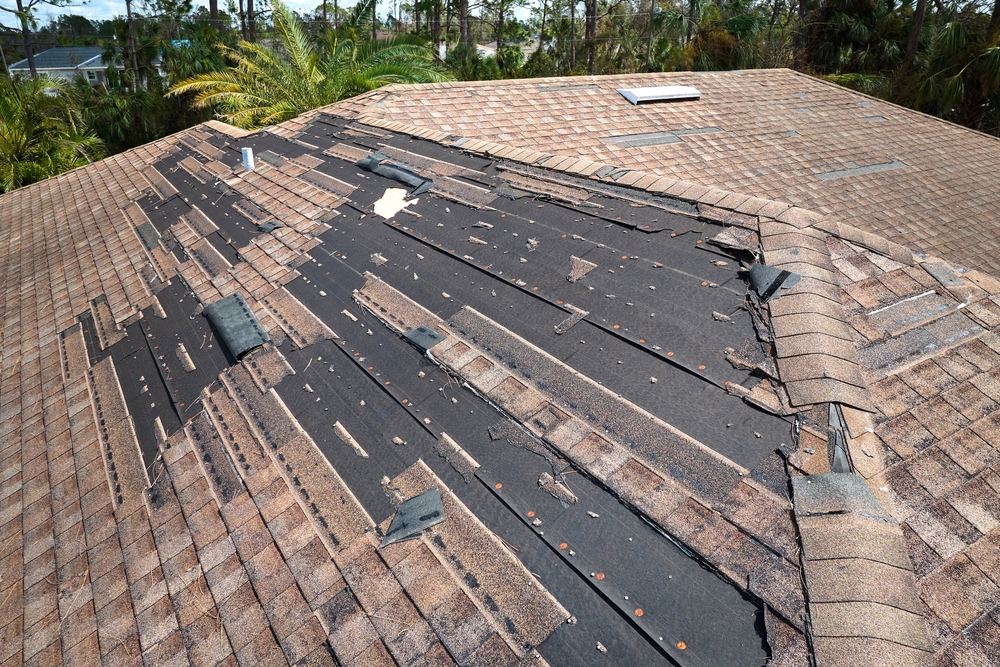
In the first 48 hours after a storm damages your roof, do five things in this order: make sure everyone is safe and stay off the roof; take dated photos and video of every bit of damage, inside and out; stop more water getting in with a tarp or other temporary cover, and keep every receipt; decide whether the damage is worth an insurance claim and, if it is, report it promptly; and don't sign a contract with anyone who knocked on your door until you've checked them out. Permanent repairs can wait. Making the damage worse, or losing the evidence, can't be undone.
This guide is the short, practical checklist for the hours and days right after the wind drops. It is written for homeowners in Columbia and the Midlands, where most roof damage comes from summer thunderstorms and from the tail ends of tropical systems during the June 1 to November 30 hurricane season. For the longer job of getting the roof properly repaired, see our storm damage roof repair guide; for the insurance process start to finish, see the roof insurance claims guide.
The 48-hour checklist at a glance
What to do, and when
| When | What to do | Why it matters |
|---|---|---|
| Right away | Check for downed lines, gas smells and structural damage. Get people and pets out of rooms with sagging or wet ceilings. | Injuries are the one loss insurance can't fix. |
| As soon as it's safe | Photograph and video the damage from the ground and inside. Note the date and time of the storm. | Your policy will likely require you to prove your loss, and debris gets cleared fast. |
| Right away if water is getting in | Cover openings with a tarp or other waterproof material, move belongings, catch drips. Keep receipts. | Standard policies make protecting the property from further damage your duty. |
| Within the first two days | Read your declarations page for your deductibles, then decide whether to report a claim. | A small repair below your deductible is often not worth claiming. |
| Before signing anything | Look up any roofer on the state registration database and read cancellation terms. | Out-of-town crews can arrive soon after a big storm. |
| Before permanent repairs | Talk to your insurer if you're claiming. Get the adjuster's inspection first. | Your insurer may not pay for permanent repairs it didn't get a chance to see or authorize. |
General information, not insurance or legal advice. Your policy wording controls.
Step 1: Is everyone safe, and is the house safe to be in?
Start with the hazards that can hurt someone. The SC Department of Insurance post-disaster claims guide puts it first: make sure there are no safety issues "like downed electrical lines or broken gas lines," and if there are, leave the home and wait for local authorities to say it is safe to return.
Downed power lines
Treat every downed line as live. Dominion Energy South Carolina tells customers to stay at least 30 feet away from downed lines and to report them by phone at 1-888-333-4465. Outages can also be reported through your account, the app or the outage map. If your power comes from an electric cooperative rather than Dominion, use the number on your co-op bill. A line lying across a gutter, a fence or a wet roof can energize all of it, so don't touch any of them until the utility says the line is dead.
Gas and structure
- If you smell gas, leave the house first and call from outside. Dominion's gas emergency number in South Carolina is 1-800-815-0083; customers of another gas provider should use that company's emergency number.
- A tree resting on the roof, a ceiling that is bowing or bulging with water, or cracked rafters you can see from the attic are reasons to keep everyone out of those rooms. A water-filled ceiling can come down without warning.
- Turn off power to rooms where water is running near light fixtures or outlets if you can do it safely at the panel without standing in water. If you can't, wait for an electrician.
- Watch your footing outside. The DOI guide warns about broken glass, sharp objects and trip hazards. Flashing and broken shingles have sharp edges, and nails end up in the grass.
Stay off the roof
A storm-damaged roof is the worst roof to walk on. Shingles are wet, granules act like ball bearings, decking may be cracked under a branch, and there may be debris you can't see from below. Do your looking from the ground, from a window, with binoculars, or from the attic with a flashlight. If something needs to be covered, that's work for someone with fall protection, or a short ladder job you can do from the ground side of the eave at most.
Step 2: Document the damage before anything moves
Photos taken in the first hours are the best evidence you will ever have. Once debris is cleared, tarps go on and the next rain falls, it gets much harder to show what the storm did. The SC Department of Insurance tells homeowners to "take photos or videos of the damaged areas and personal property" and to jot down notes about significant damage. Maryland's insurance regulator gives the same advice more bluntly for fallen trees: photograph everything before debris is removed "because your policy will likely require you to prove your loss."
A photo checklist
- Wide shots of each side of the house from the yard, so the adjuster can see where each close-up belongs.
- Close-ups of missing or lifted shingles, bent flashing, dented vents and gutters, broken skylights, and anything that hit the roof. Put a coin or tape measure in frame for scale.
- Hail on the ground, if any, photographed next to a ruler or coin, as soon as possible before it melts. Dents on mailboxes, car hoods, AC fins and soft metal tell the same story later.
- Inside: water stains, wet insulation in the attic, drips, damaged ceilings, floors and belongings. Video with narration is fine.
- Trees or limbs on the roof from several angles, including where the tree came from.
- Your temporary repairs, before and after, plus the receipt.
Record the storm itself
Write down the date and approximate time of the storm and keep any weather alerts you received. The National Weather Service treats a thunderstorm as severe when it produces hail one inch in diameter or larger or winds of 58 mph or more. The NOAA Storm Prediction Center publishes daily storm reports of hail, wind and tornadoes by date and location. They are preliminary, but a report near your address on your storm date is useful to keep with your photos.
Don't throw out the evidence. Keep a few damaged shingles, a piece of a dented vent, or a section of crushed gutter in a bag in the garage until the claim is settled, unless your insurer tells you otherwise.
Step 3: Stop more water getting in
If water is coming in, the most important thing you can do in the first 48 hours is stop it. This is not only common sense; it is in most homeowners policies. The widely used ISO homeowners form HO 00 03 lists "Duties After Loss," including to "protect the property from further damage" and, if repairs are required, to "make reasonable and necessary repairs to protect the property" and "keep an accurate record of repair expenses." The same section says the insurer has no duty to provide coverage if failing to do those things is prejudicial to it. Your own policy may word this differently, so read its Duties After Loss section.
The SC Department of Insurance says the same thing in plain language: "Try to prevent further damage by making essential repairs, like covering roofs, or windows with plywood, tarp, canvas, or other waterproof materials." And in capitals: "KEEP ALL RECEIPTS FOR EMERGENCY REPAIRS TO GIVE TO YOUR INSURANCE COMPANY."
What counts as a temporary repair
- A properly secured tarp over the damaged area, running over the ridge where possible so water can't get under the top edge, fastened through wood battens rather than loose on the shingles.
- Plywood over a hole from a limb, or over a broken skylight.
- Moving furniture, rugs and boxes out of the wet area, putting buckets under drips, and getting wet insulation and carpet drying.
- Clearing a gutter or downspout that is blocked by storm debris and overflowing against the house, if you can reach it safely from the ground or a short ladder.
A tarp is a stopgap, not a repair. Sun and wind break them down, and a poorly fastened tarp can flap loose and let water in again. Plan for the permanent repair to follow once the claim, or your own decision, is settled. Our emergency roof repair page explains what emergency service from a roofer involves.
What not to do yet
The DOI guide is clear on one limit: "Don't make permanent repairs before talking with your insurance agent or insurance company. Your company may not pay for repairs it didn't authorize." Temporary protection, yes. A full reroof before the adjuster has seen the damage, no.
Paying for emergency work on an insurance job
South Carolina's roofing statute, S.C. Code §40-59-25, generally stops a residential roofer from requiring any payment on an insurance-funded job until your five-business-day cancellation window after a coverage denial has passed. There is one exception: emergency services you acknowledge in writing were necessary to prevent damage to the house can be billed when they're done. So it is normal to be asked to sign for and pay for a tarp. It is not normal to be asked to sign a full replacement contract at the same time just to get the tarp.
Step 4: Should you call your insurer or a roofer first?
For most storm damage, the order is: protect the house, find out what's actually damaged, then decide about the claim. The SC DOI suggests finding out your deductible first. In its words, if the damage is minor, "for example, just a few shingles were damaged, you might decide you're better off paying for the repairs out of pocket instead of filing an insurance claim. But, remember you might not be able to see all the damage. You may want to have a contractor inspect your home." If the damage will cost more than your deductible, or there's a lot of it, "it's important to notify your insurance company as soon as you know there's damage and you decide to file a claim."
Who to call first
| Situation | Usually call first | Notes |
|---|---|---|
| Tree through the roof, open hole, water pouring in | Emergency tarping or tree service, then your insurer promptly | Protect the house first; keep receipts and photos. |
| Obvious widespread damage: many shingles gone, multiple leaks, neighbors with the same damage | Your insurer or agent | Ask the questions in the list below. A roofer's inspection helps you understand what the adjuster finds. |
| A few shingles off, no leak | A roofer for an inspection and a repair price | Compare the price with your wind/hail or all-peril deductible before deciding to claim. |
| You're not sure anything happened | A roofer or a careful look from the ground and attic | Hail damage can be hard to see. Don't let a door-knocker on your roof to find out. |
Small repairs below your deductible are often not worth claiming. The insurer would pay nothing, and some homeowners prefer not to have the call on record. Ask your agent how your insurer treats a reported loss that doesn't result in a payment before you call the claims line, if that matters to you.
Questions to ask when you report a claim
The DOI guide suggests asking for:
- The name and phone number of every person you talk to, and your claim or reference number.
- How long you have to file the claim, and whether you need repair estimates before you file.
- Whether there are separate deductibles for hail, hurricane or wind damage, and what they are.
- Whether your policy covers hotel costs if you can't stay in the house, for how much and for how long.
- When to expect the adjuster to call, and what other information the insurer will need.
If you can't live in the house, most homeowners policies include additional living expense coverage, but it is limited. Save every hotel and meal receipt. The roof insurance claims guide covers the adjuster meeting, scope of loss and supplements in detail.
Step 5: Handle storm chasers and door-knockers
After a big storm, people show up at the door offering free inspections, an insurance-paid roof and a start date this week. Some are legitimate local companies. Many are not from South Carolina, are not registered here, and will be gone before the warranty matters. The SC DOI warns that after disasters "fraudsters and scam artists often arrive quickly" and advises finding out where unfamiliar contractors are from, asking for references, never paying the full amount before the work is complete, and reporting suspected fraud to your insurer and the Department of Insurance.
Check them in five minutes
- Look up the person and the company on the Residential Builders Commission lookup. Residential roofers doing a job over $500 must be registered with the SC Residential Builders Commission (or hold a residential builder license). Registration belongs to a person, so search the owner's name too.
- Ask for a certificate of insurance and call the agent on it to confirm the policy is active.
- Ask for a local address and local references from earlier jobs, and check them.
- Read the contract's cancellation terms before signing anything, including a "contingency agreement" or "inspection authorization." Those are often contracts.
Your cancellation rights
- FTC Cooling-Off Rule. For most sales of $25 or more made at your home, you have until midnight of the third business day after the sale to cancel for a full refund. Saturdays count as business days; Sundays and federal holidays don't. The seller must refund within 10 days of your cancellation. See the FTC's explanation.
- The emergency waiver. The rule doesn't cover a sale where you contacted the seller for a bona fide immediate personal emergency and gave them a separate, dated statement in your own handwriting describing the emergency and waiving your right to cancel (16 CFR 429.0). Don't sign a waiver for anything beyond the genuine emergency work.
- South Carolina's insurance-denial right. Under §40-59-25, if a roof contract is to be paid from insurance and the insurer denies all or part of the claim in writing, you can cancel until midnight of the fifth business day after you receive that denial. The contractor must give you this notice in bold type with a detachable cancellation form.
Red flags that are illegal in South Carolina
- Offering to handle your claim. A residential roofer may not represent or negotiate on your behalf on an insurance claim for roof repair or replacement, or advertise that they will (§40-59-25(D)). They can inspect the roof and give you an estimate; you deal with your insurer. A licensed public adjuster is the person who can negotiate for you.
- Covering your deductible. Offers to waive, absorb or rebate your deductible, including a discount for a yard sign, are prohibited under the same statute.
- Price gouging after a declared emergency. When a state of emergency is declared, S.C. Code §39-5-145 makes charging an unconscionable price for goods and services, including materials and lumber, unlawful. Complaints go to the SC Attorney General.
For a full checklist on vetting a roofer, contracts, deposits and lien releases, see the roofing contractor guide.
If a tree is on the roof
A tree on the house is one of the few storm situations where speed really matters, because the opening lets water in and the weight can keep cracking framing. Get everyone out of the rooms below, keep clear of any lines tangled in the branches, and call a tree service with the equipment to lift it off in sections. Cutting a loaded tree on a roof yourself is how people get hurt.
On insurance, Maryland's insurance regulator explains how standard homeowners policies usually work: they cover damage to your home if a tree, "even if it is your neighbor's tree," falls on it, and may pay a limited amount, "usually between $500 and $1,000," to remove the tree. If the neighbor's tree was dead and the neighbor knew it, your insurer may seek reimbursement from them. That is another state's summary, not a rule for every South Carolina policy, so check your own policy's debris and tree removal wording and ask your agent. Either way, photograph the tree in place before it's removed, keep the tree service's invoice, and get the hole covered as soon as possible.
Once the tree is off, the roof needs a proper inspection: rafters and decking can crack well beyond the visible hole. Our blog post on tree and storm debris roof repair covers the repair side.
Hail or wind? What to look for
Hail and wind leave different evidence, and knowing which you have helps when you talk to a roofer or an adjuster. From the ground and the attic you can usually spot:
Common signs from the ground
| Wind damage | Hail damage |
|---|---|
| Missing shingles, or shingle tabs folded back or creased | Round dents in gutters, downspouts, vents, flashing and AC fins |
| Shingles scattered in the yard, often from one side of the house | Granules washed out of downspouts in larger amounts than usual |
| Ridge caps or hip shingles torn off | Dark, round spots on shingles where granules were knocked off (often only visible up close) |
| Lifted flashing, loose drip edge, damaged soffit or siding | Spatter marks on painted surfaces, dented car hoods or mailboxes |
| Daylight or fresh water stains in the attic | Cracked skylights or plastic vent covers |
These are clues, not a diagnosis. A roofer or adjuster has to confirm damage on the roof itself.
For a deeper explanation of what each kind of damage does to a shingle and how it ages a roof, see the roof damage guide.
What not to do in the first 48 hours
- Don't climb onto a wet or damaged roof, and don't let anyone you haven't checked out climb onto yours.
- Don't touch or move anything in contact with a downed line.
- Don't throw away damaged materials or clean everything up before you've photographed it.
- Don't make permanent repairs on a claim before your insurer has had a chance to inspect.
- Don't sign a contract, an "authorization" or an assignment of benefits at the door. The SC DOI warns that an assignment of benefits may give up "some, most, or even all of your rights" under your claim.
- Don't pay in full, or in cash, before work is done.
- Don't accept an offer to cover your deductible.
- Don't ignore a small leak because the sun came out. Wet insulation and decking keep rotting long after the storm.
After the first 48 hours
Once the house is dry and protected, the pressure is off and you can take your time. Get the adjuster's inspection if you've claimed, get one or more written repair estimates that describe the same scope, and compare the adjuster's scope with what the roofer found. If the roof was already near the end of its life, the storm may be the point to decide between a repair and a new roof; the repair or replace guide walks through that decision, and the storm damage roof repair guide covers the repair work itself.
If you want someone local to look at it, Cola City Roofing inspects storm-damaged roofs across Columbia and the Midlands. You can reach us here, and we'll tell you honestly if the damage isn't worth a claim.
General information, not insurance or legal advice
Insurance coverage depends on your policy wording, the cause and extent of the damage, and the adjuster's findings. Phone numbers and agency guidance were checked on October 6, 2026; confirm them before relying on them in an emergency.