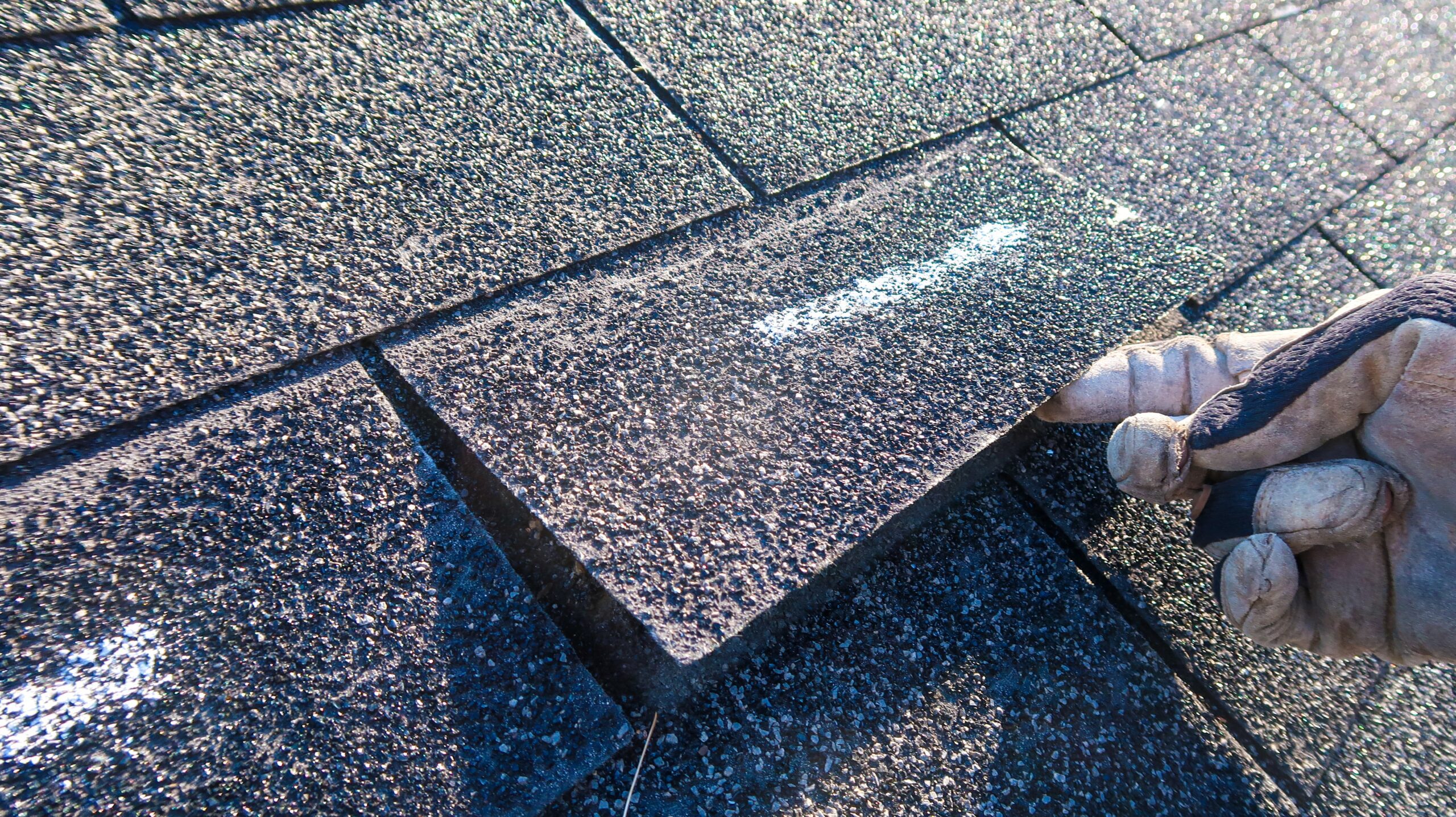
You agreed a price, the crew stripped the old roof, and now someone is at your door saying they have found bad decking and the job is going to cost more. It is the most common unhappy moment on a roof replacement, and it is worth understanding — because sometimes it is entirely legitimate and sometimes it is not.
Here is what decking actually is, why the condition of yours could not have been known in advance, and the specific thing to look for in an estimate so this never arrives as a shock.
What decking is, and why it matters
Under your shingles is a layer of underlayment, and under that is the roof deck: the structural wood skin nailed across the rafters or trusses. Everything above it is a weather layer. The deck is what holds the fasteners.
That last point is the whole issue. Shingles are held down by nails driven into the deck. If the wood has gone soft, the nail has nothing to bite. You can lay a beautiful new roof over rotten decking and it will look perfect on the day, then start losing shingles in the first serious wind because the fasteners were never anchored in sound material.
Why it cannot be quoted in advance
An inspection from on top of an intact roof tells you a great deal — the condition of the shingles, the flashing, the valleys, the vents. It cannot tell you the condition of wood sealed under two other layers. There are hints. A visibly sagging or spongy area underfoot is a strong one, and an attic inspection can reveal staining or daylight. But a slow leak around a chimney or a vent boot can rot a patch of deck for years while the ceiling below stays dry and the roof surface looks ordinary.
So any roofer who tells you before tear-off exactly how much decking needs replacing is guessing. The honest version is not a promise that there will be none. It is a number agreed in advance for what each sheet or board will cost if there is.
The one thing to check in your estimate
Before you sign anything, find the line about decking. A proper estimate states a unit rate — a set price per sheet of plywood or per linear foot of board — so that if the crew finds bad wood, the arithmetic is already settled and nobody is negotiating on your driveway with your roof open to the sky.
If there is no such line, ask for one before work starts. That single question is the difference between a known variable and a blank check. Our page on roof replacement covers what else the scope should spell out.
Plank decking: a Midlands quirk
Plenty of older homes around Columbia and the Midlands were not built with plywood at all. They have plank decking — individual boards, often one-by-six or wider, laid across the rafters with gaps between them. You can see it clearly from the attic, and you can see it during a tear-off.
Plank decking is not a defect. Much of it has held up for decades and will hold up for decades more. It does change a few things:
- Gaps between boards mean fasteners can miss. A nail landing in a gap holds nothing, which is one source of the nail pops discussed below.
- Individual boards rot individually, so a repair may mean cutting in one board rather than a whole sheet.
- Some crews prefer to overlay the whole plank deck with new sheathing to get a continuous nailing surface. That is a legitimate approach and a significant cost, so it should be discussed and priced, never assumed.
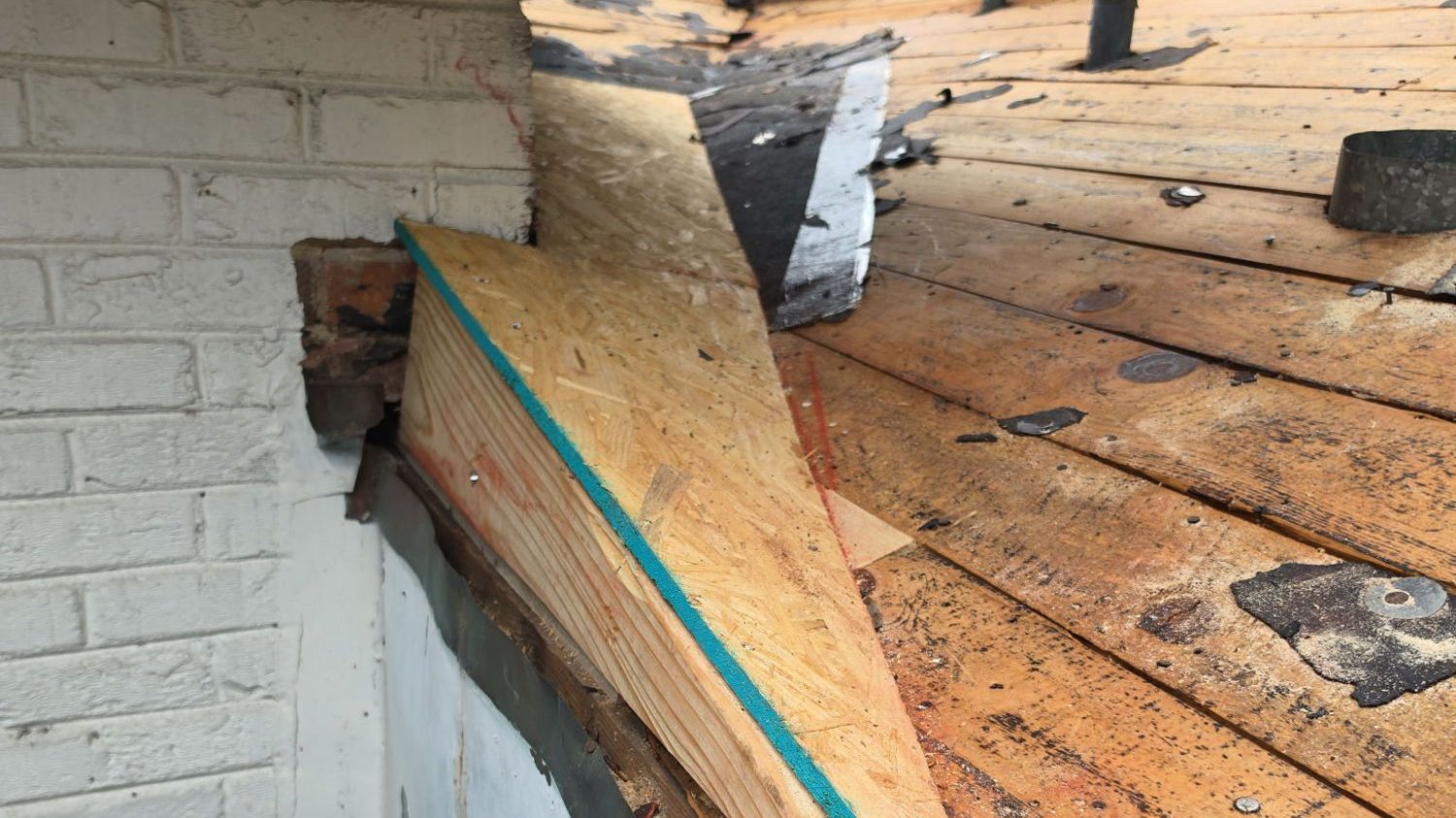
On a Forest Acres replacement this month we stripped a roof back to exactly this: original board decking, decades old, with a rotted section at the chimney wall where old flashing had been letting water in. Most of the deck was sound. A panel of new sheathing was cut in where it was not. You can see the tear-off in that project gallery.
How much is normal?
There is no honest average, and be wary of anyone who offers one. It depends entirely on the age of the house, how long the previous roof was left past its life, and whether there were leaks nobody chased down. Some roofs come off and every board is sound. Others give up a dozen sheets around the chimney, the valleys and the eaves — the three places water concentrates.
What you can reasonably expect is proportion. If a roofer reports that most of your deck needs replacing, ask to see it. Ask for photographs. Ask to look at it yourself from the ground with the roof open, or from the attic. A crew doing honest work will have no problem showing you soft wood, because soft wood is obvious once you are looking at it.
Can you just leave it?
You can decline the work. You should understand what you are buying with that decision.
- Fasteners in soft wood do not hold, so the new roof is only as good as the wood under it.
- Most workmanship warranties are written on the assumption that the roof was installed over a sound deck. Declining the repair can undo the cover you are paying for — our post on what voids roofing warranties goes into this.
- Rot does not stop. Wood that is wet enough to be soft is wet for a reason, and covering it up keeps it wet.
The reason to fix it is not that a roofer said so. It is that the deck is the only part of this assembly you cannot easily get back to. It is under everything, and the next chance to deal with it is the next tear-off, fifteen or twenty years out.
Keeping it from happening again
Deck rot is almost always the end of a story that started somewhere small: a split vent boot, a failed flashing detail at a chimney, a valley packed with debris that dammed water back under the shingles. None of those are expensive to deal with early, and all of them are expensive once they have been quietly wetting plywood for three years.
An annual look at the roof is inexpensive set against the deck replacement it prevents. A repair caught in year one costs a fraction of the deck replacement it prevents in year five.
If you are facing a replacement now and the decking has pushed it past what you planned to spend, financing through a third-party lender can spread it into fixed monthly payments with no prepayment penalty. Either way, ask us for a free inspection first, so you know what you are actually dealing with.