
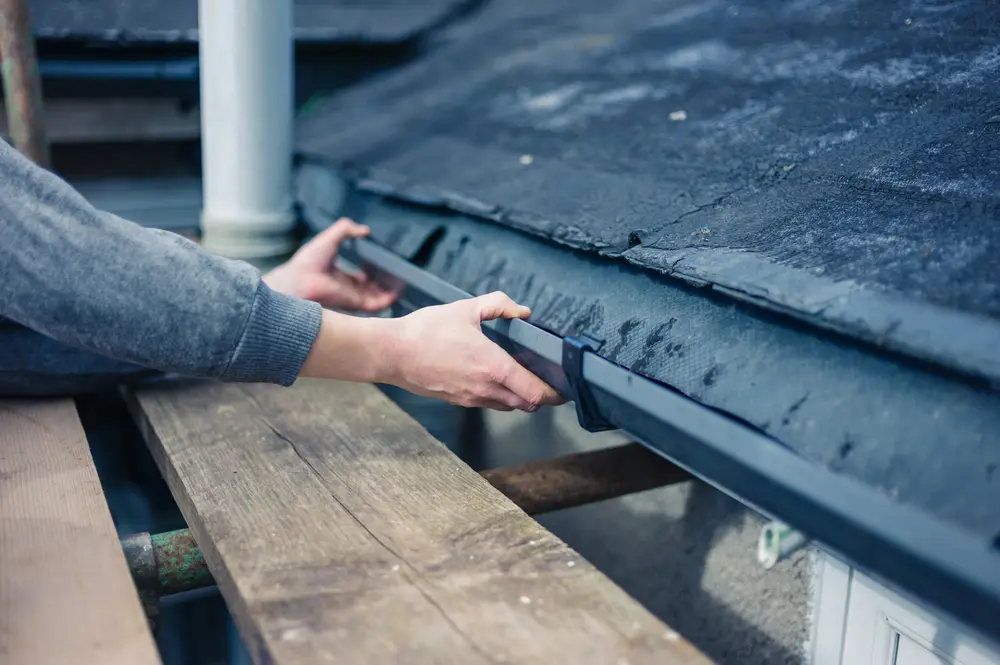
When homeowners in the Midlands think about home improvement, they often focus on interior renovations or perhaps a high-profile roofing replacement . However, there is a silent hero working around the perimeter of your home that is just as vital to your property’s structural integrity: your gutter system.
In Columbia, South Carolina—a city known for its sudden, torrential summer downpours and the heavy debris of its beautiful oak and pine canopies—a high-functioning gutter system isn’t just an accessory; it is your home’s primary defense against water damage. At Cola City Roofing , we have seen firsthand how failing gutters can lead to cracked foundations, rotted fascia boards, and flooded crawlspaces.
This 3,000-word gutter installation guide is designed to provide you with everything you need to know about choosing, installing, and maintaining a gutter system that will protect your home for decades.
Section 1: Why Gutters are Essential in the Midlands
The climate in Columbia and surrounding areas like Lexington and Irmo presents unique challenges. We don’t just get "rain"; we get "deluges."
1.1 Foundation Protection
The primary job of a gutter is to move water away from your home’s foundation. South Carolina soil, particularly the red clay common in many parts of the Midlands, can expand and contract significantly based on moisture levels. If water pools around your foundation, it can lead to hydrostatic pressure, causing basement walls to bow and foundations to crack.
1.2 Protecting the "Roof-to-Wall" Connection
When gutters overflow, water doesn’t just fall to the ground; it "wicks" backward. This moisture seeps into the fascia boards (the wood behind the gutter) and the soffit (the underside of the roof overhang). Over time, this leads to wood rot that can spread into your rafters. A proper gutter installation ensures this connection remains bone-dry.
1.3 Preserving Landscaping and Siding
Without gutters, water falls directly off the roof line, creating a "trenching" effect in your flower beds and splashing mud and debris onto your siding. In the humid SC climate, this constant moisture on your siding leads to mold, mildew, and premature paint failure.
Section 2: Seamless vs. Sectional Gutters – What’s the Difference?
If you go to a big-box hardware store, you will see "sectional" gutters. If you hire a professional like Cola City Roofing, you get "seamless" gutters. Understanding the difference is critical.
2.1 Sectional Gutters (The DIY Risk)
Sectional gutters come in 10-foot or 20-foot pieces that are joined together with connectors.
- The Problem: Every joint is a potential leak point. Over time, the sealant in these joints expands and contracts, eventually failing. Furthermore, the joints create small "lips" inside the gutter that catch pine needles and debris, leading to clogs.
2.2 Seamless Gutters (The Professional Standard)
Seamless gutters are custom-fabricated on-site at your home using a specialized machine. A single piece of aluminum is "rolled" to the exact length of your roof line—whether that is 10 feet or 60 feet.
- The Benefit: There are no seams except at the corners. This virtually eliminates the risk of leaks and provides a much cleaner, more aesthetically pleasing look for your home.
Section 3: Choosing the Right Gutter Material
Not all gutters are built for the long haul. Here is a breakdown of the best roofing materials and gutter materials for our region.
3.1 Aluminum (The Most Popular Choice)
Aluminum is the industry standard for a reason. It is lightweight, rust-proof, and comes in a wide variety of colors to match your home’s trim. At Cola City Roofing, we use heavy-gauge aluminum (.032 thickness) to ensure the gutters can withstand the weight of heavy snow or debris.
3.2 Copper (The Luxury Option)
For historic homes in downtown Columbia or high-end estates in Lake Murray, copper is the ultimate choice. Copper gutters develop a beautiful green patina over time and can last 50 to 100 years. They are an investment that adds incredible curb appeal.
3.3 Vinyl and Steel
- Vinyl: We generally advise against vinyl in South Carolina. The intense UV rays in Columbia make vinyl brittle, causing it to crack after just a few years.
- Steel: While strong, galvanized steel will eventually rust. Stainless steel is an option but is often prohibitively expensive compared to aluminum.
Section 4: Sizing Matters – 5-Inch vs. 6-Inch Gutters
In many parts of the country, 5-inch gutters are standard. In South Carolina, we are increasingly recommending 6-inch "K-style" gutters.
4.1 The "Rainfall Rate" Factor
Columbia frequently experiences "microbursts" where several inches of rain fall in an hour. A 6-inch gutter can hold significantly more water volume than a 5-inch gutter. More importantly, it can accommodate larger 3×4-inch downspouts, which allow debris like pine needles to flush through the system without clogging.
4.2 Large Roof Surfaces
If you have a steep roof (common in architectural styles like those featured in our roof replacement guide Columbia ), the water picks up more velocity as it travels down the shingles. A larger 6-inch gutter is more effective at "catching" that fast-moving water before it shoots over the edge.
Section 5: The Professional Installation Process
When you book an appointment with Cola City Roofing, we follow a precise process to ensure your system performs perfectly.
Step 1: Digital Measurement and Design
We don’t just "eyeball" it. We calculate the square footage of your roof to determine the necessary number and placement of downspouts. Proper downspout placement is essential to avoid "overloading" any single section of gutter.
Step 2: On-Site Fabrication
Our specialized "gutter truck" arrives with coils of flat aluminum. We run these through our machine to create custom-length gutters right in your driveway.
Step 3: Slope and Pitch Calibration
This is where most DIYers fail. Gutters must look level to the eye but actually possess a slight slope (usually 1/4 inch for every 10 feet) toward the downspouts. We use laser levels to ensure water never "pools" in the middle of a run.
Step 4: Secure Attachment
We use heavy-duty "hidden hangers" that are screwed directly through the gutter and into the rafter tails of your home. This is much stronger than the old "spike and ferrule" method, which often pulls out over time.
Step 5: Sealing the Corners
The only places we have seams are at the miters (corners). We use high-grade industrial sealant specifically designed for the South Carolina climate to ensure these joints remain watertight for decades.
Section 6: Gutter Guards – Are They Worth It?
In a city full of beautiful trees, gutter cleaning is a constant chore. This is where gutter guards (or leaf protection) come in.
6.1 The "Pine Needle" Challenge
If you live in an area with many pine trees (like Northeast Columbia), you need a micro-mesh guard. Standard screens have holes large enough for pine needles to poke through, creating a "shedge" that actually traps more debris.
6.2 The Benefits
- Safety: You no longer have to climb ladders twice a year.
- Pest Prevention: Clogged gutters are a primary breeding ground for mosquitoes and a "highway" for roaches and ants to enter your roof line.
- Longevity: By keeping debris out, you prevent the "wet mulch" effect that causes gutters to sag and rust.
Section 7: Integrating Gutters with Your Roof Replacement
If you are currently looking at the Columbia SC roof cost 2025 , it is the absolute best time to consider your gutters.
7.1 Why Do Both at Once?
When we perform a project/roof-replacement , we have full access to your roof’s edge. We can inspect the fascia boards and ensure the new "drip edge" (the metal flashing that directs water into the gutter) is installed perfectly. If you install gutters after the roof, you risk damaging the new shingles or the drip edge with ladders.
7.2 Matching Materials
We can coordinate the color of your gutters with your new GAF, Owens Corning, or CertainTeed shingles to create a cohesive, high-end look that boosts your home’s value.
Section 8: The Hidden Danger of Poor Gutter Installation
We often get calls for gutter repair services on systems that are only 2 or 3 years old. Usually, the issue is poor installation.
- Incorrect Pitch: If the gutter is flat, water sits. Standing water becomes heavy, causing the hangers to pull away. It also attracts mosquitoes.
- Too Few Hangers: To save money, some contractors space hangers every 4 or 5 feet. In a heavy South Carolina rain, that gutter will sag and eventually collapse. We space our hangers every 2 feet.
- Reusing Old Flashing: If a contractor tells you they can "work around" old, rusty flashing to save you money, they are setting you up for wood rot.
Section 9: Cost Factors for Columbia Gutter Installation
How much should you budget? The how to read and understand a roof quote guide applies to gutters as well.
- Linear Footage: The total length of your roof’s eaves.
- Number of Corners: Each miter (corner) adds to the labor and material cost.
- Height of the Home: A 3-story home in Shandon requires more safety equipment and labor than a single-story ranch in Rosewood.
- Downspout Complexity: If we need to navigate water around porches or into underground "pop-up" drains, the cost will adjust.
Section 10: DIY vs. Professional Installation
It is tempting to try and install gutters yourself, but there are several reasons why this is a high-risk project.
10.1 Safety
Ladder falls are a leading cause of home injuries. Working with long, flexible 40-foot sections of metal while perched 20 feet in the air is a task best left to professionals with the right safety harnesses.
10.2 The Seamless Advantage
You simply cannot buy seamless gutters at a retail store. By going the DIY route, you are forced to use sectional gutters, which will leak at the joints eventually.
10.3 Tools and Calibration
Getting the pitch exactly right requires specialized levels and an understanding of fluid dynamics. If you are off by even half an inch, the system will fail during the next storm damage roof repair in Columbia SC event.
Section 11: Local Expertise and Permits
Did you know that in some parts of the Midlands, significant exterior changes require homeowner roof permits SC ?
11.1 Historic Districts
If you live in a historic neighborhood like Elmwood Park or Cottontown, there may be strict rules about the color and material of your gutters. At Cola City Roofing, we know these local nuances and can help you navigate the approval process.
11.2 Service Locations
We aren’t a national "big box" installer. We are a local company with roots in the service locations we serve. We know the tree types, the rainfall patterns, and the architectural styles of Columbia. You can learn more about us and our commitment to the community here.