When it comes to home improvement, sometimes the smallest details make the biggest difference. You might spend months picking out the perfect shingle color for your roof, but the gutters that line the edge of it often get less attention. That is, until they start leaking, sagging, or overflowing during a heavy Columbia thunderstorm.
Choosing a gutter system isn’t the most glamorous part of owning a home, but it is one of the most important decisions you will make for your property’s long-term health. Gutters are your home’s first line of defense against water damage. They control where the rain goes, keeping it away from your siding, your landscaping, and most importantly, your foundation.
If you are looking to replace your gutters, you will quickly run into a fork in the road: should you go with sectional gutters or seamless gutters? It sounds like a minor technical detail, but the difference between these two systems affects everything from the cost and installation to how often you’ll be climbing a ladder to fix leaks.
At Cola City Roofing, we believe in giving homeowners the straight facts so they can make the best choice for their specific situation. We aren’t here to push you into a sale; we are here to help you protect your home.
Understanding the Two Main Gutter Types
Before we dive into performance and cost, let’s clarify what we are actually talking about. The terms "seamless" and "sectional" refer to how the gutter system is constructed and installed. While they perform the same basic function—catching water and moving it away—they do it in very different ways.
Think of it like the difference between a custom-tailored suit and one you buy off the rack. Both are suits, and both cover your body, but the fit, the finish, and the longevity are likely going to be very different.
What Are Seamless Gutters?
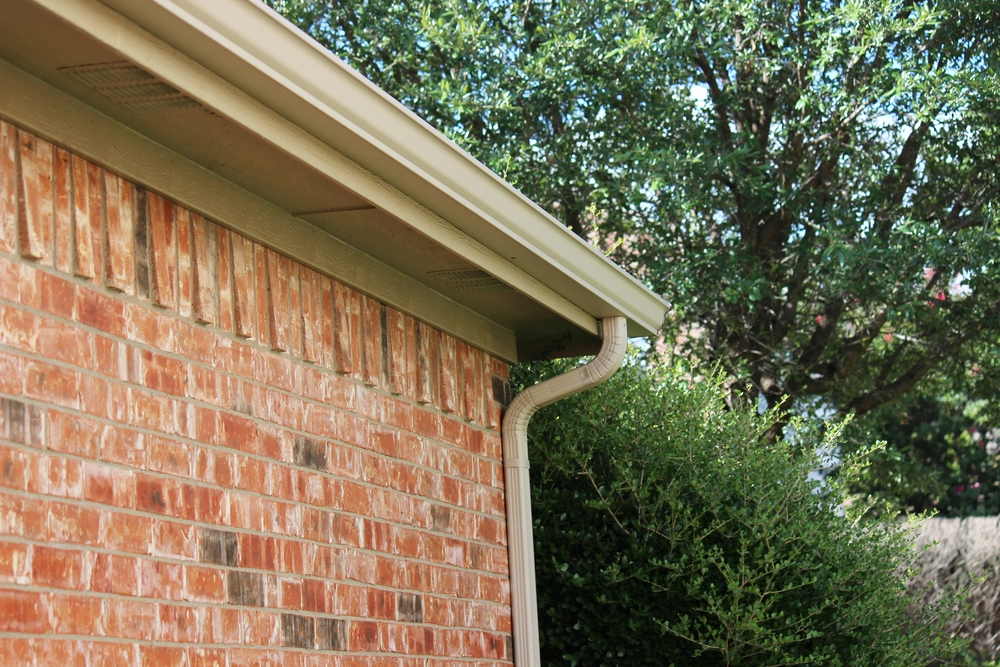
Seamless gutters are exactly what they sound like: continuous troughs of metal that run from one corner of your roof to the other without any breaks or joints in the middle.
They are not something you can buy in a box at a hardware store. Because every home is different, seamless gutters must be custom-fabricated on-site. A professional installer brings a specialized machine (essentially a metal-forming factory on wheels) to your home. They feed a coil of flat aluminum (or copper) into one end, and the machine rolls it into the gutter shape and extrudes it to the exact length needed for your roofline.
If the front of your house is 60 feet wide, the machine produces a single 60-foot piece of gutter. The only seams in the entire system are at the very corners (miters) and where the downspouts are attached.
What Are Sectional Gutters?
Sectional gutters, sometimes called DIY gutters or "stick" gutters, come in pre-cut lengths. You typically find these at big-box home improvement stores in 10-foot or 20-foot sections.
To install them, you (or a general handyman) hang one section, then hang the next one, overlapping them slightly or using a connector piece to join them together. You repeat this process until you reach the end of the roof.
If you have that same 60-foot run across the front of your house, a sectional system would require joining at least six separate pieces together. That means you have five seams along that one straight run, plus the seams at the corners.
Seamless vs Sectional Gutters: Key Differences That Matter
Now that we know the basic construction, let’s look at how that difference plays out in the real world. Why does it matter if your gutter comes in one piece or six?
It comes down to simple physics: water always tries to find a way out. Every time you cut a gutter and try to join it back together, you create a potential exit point for the water. You also create a ridge or a lip inside the trough that can snag debris.
Here is how the two systems stack up against each other in the areas that matter most to homeowners.
Leak Risk and Long-Term Performance
This is usually the deciding factor for most of our clients. The primary job of a gutter is to hold water. If it leaks, it fails.
Sectional Gutters: Every seam is a weak point. To join two sections of gutter, you have to use a special sealant or a rubber gasket. When the system is brand new, these seals usually work fine. However, gutters are exposed to extreme conditions. In the Midlands, they bake in the 100-degree sun and then freeze in the winter.
This temperature fluctuation causes the metal to expand and contract. Over time, this constant movement stresses the seals at every joint. Eventually—usually within a few years—the sealant cracks or the rubber dries out, and you get a drip. With a sectional system, you might have 20 or 30 of these joints around your house, meaning you have 20 or 30 potential leak spots.
Seamless Gutters: Because there are no seams along the straight runs, there is literally zero chance of a leak in the middle of the gutter. The metal is solid. The only places that require sealant are the corners and the end caps.
This dramatically reduces the number of failure points. Instead of 30 potential leaks, you might only have four or five corners to worry about. This structural integrity means seamless gutters perform reliably for decades, whereas sectional gutters often become a maintenance headache within the first five to seven years.
Installation Process and Fit
The installation process for these two systems is night and day.
Sectional Gutters: This is often marketed as a DIY-friendly project. While it is true that you don’t need expensive machinery, it is deceptively difficult to get right.
Getting the pitch (slope) correct over a long run when you are connecting multiple short pieces is challenging. If one section is slightly off-kilter, it can create a low spot where water pools. Furthermore, sectional gutters typically use lighter-weight materials (often vinyl or thin aluminum) to make them easier for a homeowner to handle. This lighter material is more prone to sagging and bending.
Seamless Gutters: This is strictly a professional job. You cannot DIY seamless gutters because you cannot transport a 50-foot piece of metal down the highway.
When Cola City Roofing installs seamless gutters, we measure the roofline precisely. We manufacture the gutter to the exact inch needed. Because it is one rigid piece, it is easier to set a consistent, proper slope for drainage. We also use heavy-duty hidden hangers that are spaced closely together, ensuring the system stays firmly attached to your fascia board even when full of water. The result is a clean, custom fit that looks like it belongs on the house, rather than something tacked on as an afterthought.
Maintenance, Cleaning, and Repairs Over Time
Nobody enjoys cleaning gutters. But the type of system you choose dictates how often you’ll have to do it and how difficult the job will be.
Sectional Gutters: Remember those seams we talked about? Inside the gutter, those connections create ridges. When leaves, pine needles, and shingle grit wash down the trough, they tend to get snagged on these ridges.
Once a small pile of debris forms, it acts like a dam, catching more debris. Soon, you have a clog in the middle of the run, not just at the downspout. Cleaning sectional gutters requires more care because if you are aggressive with a scoop or a hose, you can accidentally damage the sealant at the joints, creating a new leak.
Seamless Gutters: The inside of a seamless gutter is smooth. There are no ridges or bumps to catch debris. Water and leaves flow freely toward the downspout. While no open gutter is completely maintenance-free, seamless systems clog far less frequently than sectional ones.
When it comes to cleaning, you can be thorough without worrying about breaking a seal in the middle of the run. And in terms of repairs? With seamless gutters, you generally don’t have repairs. You might need to re-seal a corner every 10 or 15 years, but you won’t be out there with a caulking gun every spring trying to patch drips along the entire roofline.
How Each Option Handles Heavy Rain
We’ve talked about this in other blogs, but it bears repeating: South Carolina rain is heavy. We don’t just get drizzle; we get deluges.
Sectional Gutters: The joints in a sectional system create turbulence. As water rushes down the gutter, it hits those ridges and slows down slightly. In a light rain, this doesn’t matter. In a heavy thunderstorm, that turbulence can cause water to back up and overflow.
Additionally, because sectional gutters are often made of thinner materials and rely on the strength of the connectors, they are more likely to buckle or sag under the immense weight of a full trough of water. A sagging gutter holds water, which leads to mosquitoes and rot.
Seamless Gutters: The smooth path of a seamless gutter allows water to move at maximum velocity. This efficiency is critical during a flash storm. The water gets to the downspout faster, reducing the chance of overflow.
Furthermore, seamless gutters are typically made from thicker gauge aluminum (.027 or .032 gauge). This makes them structurally stronger. They can hold the weight of a heavy rain (or even a light snow) without bending or warping.
Cost Differences Between Seamless and Sectional Gutters
This is where the sectional gutter wins its only real victory—at least on paper.
Sectional Costs: If you buy the materials yourself at a big-box store and install them on a Saturday, sectional gutters are undoubtedly the cheapest option upfront. You are paying for materials only, and consumer-grade materials are inexpensive. If you hire a handyman to install them, it will cost more, but likely still less than a professional seamless installation.
Seamless Costs: Seamless gutters cost more upfront. You are paying for higher-quality materials, specialized equipment, and skilled labor.
The Real Cost Analysis: However, the "cheaper" option is often more expensive over time.
- Sectional: Low upfront cost + frequent sealant purchases + potential wood rot repair from leaks + earlier replacement (typically 10-15 years max).
- Seamless: Higher upfront cost + minimal maintenance + protects fascia better + lasts 20-30+ years.
If you plan to stay in your home for more than a few years, the cost-per-year of seamless gutters is actually lower than sectional gutters. You buy them once, and they work. With sectional gutters, you are essentially renting a solution that will need constant upkeep and eventual replacement.
Which Gutter System Makes Sense for Your Home
So, does anyone ever choose sectional gutters? Yes, and sometimes it makes sense. Here is how to decide.
Choose Sectional Gutters If:
- Budget is the only priority: If you are in a tight spot financially and need water control immediately for the lowest possible cash outlay.
- It’s a small outbuilding: For a garden shed or a detached garage where aesthetics and perfect performance aren’t critical.
- You are fixing up to sell immediately: If you are flipping a house and just need functional gutters to pass an inspection (though savvy buyers may spot the lower quality).
Choose Seamless Gutters If:
- You value your time: You don’t want to spend weekends caulking leaks.
- You want to protect your investment: You understand that a $3,000 gutter system protects a $300,000 house foundation.
- Aesthetics matter: You want a clean, continuous line along your roof edge that matches your home’s trim.
- You plan to stay: You want a permanent solution that you won’t have to worry about for decades.
Making a Long-Term Gutter Decision You Won’t Regret
At Cola City Roofing, we install seamless gutters for a reason. In our experience, they are the only solution that consistently meets the standards we set for protecting our neighbors’ homes. The Midlands climate is simply too tough on the weak points inherent in sectional systems.
We have replaced countless sectional systems that were only a few years old because the homeowner got tired of the drips, the sags, and the clogs. It’s frustrating to see people spend money twice to fix the same problem.
When you are weighing the options, look beyond the price tag on the shelf. Consider the heavy afternoon storms of July. Consider the pine needles of November. Consider the value of your fascia boards and your foundation.
If you want a system that you can install and essentially forget about, seamless is the answer. It’s a clean, strong, efficient upgrade that offers peace of mind every time the sky turns gray.
If you are still on the fence or want to see exactly what a seamless system would look like on your home, give us a call. We are happy to come out, measure your roof, and give you a clear, honest price so you can make the decision that’s right for your family.