Replacing a roof is one of the most significant investments you will make as a homeowner. It is a loud, messy, and expensive process, but the result is a secure, dry home and a massive boost in curb appeal. When you are in the thick of planning a roof replacement—picking out shingle colors, reviewing warranties, and scheduling contractors—it is easy to get tunnel vision and focus solely on the shingles.
However, there is another critical component of your home’s exterior that is staring you right in the face: your gutters.
Many homeowners treat roofing and gutters as separate projects, often spaced years apart. But is this the best strategy? At Cola City Roofing , we often advise our clients to consider the "whole system" approach. Your roof and your gutters are teammates in the battle against water damage. When one is replaced without the other, you may be missing out on significant opportunities for efficiency, cost savings, and structural integrity.
In this detailed guide, we will explore everything you need to know about coordinating gutter installation during a roof replacement. From the technical reasons why it makes sense to the financial benefits you might not have considered, we will help you decide if tackling both projects simultaneously is the right move for your home.
The Symbiotic Relationship Between Roofs and Gutters
To understand why replacing these two elements together is often recommended, you first have to understand how they work together. Your roof has one primary job: to shed water. It takes rain, snow, and sleet and uses gravity to push it down the slope to the eaves.
Once that water hits the edge of the roof, your roof’s job is technically done. This is where the gutter system takes over. The gutters catch that high-velocity water and channel it safely away from your foundation, siding, and landscaping.
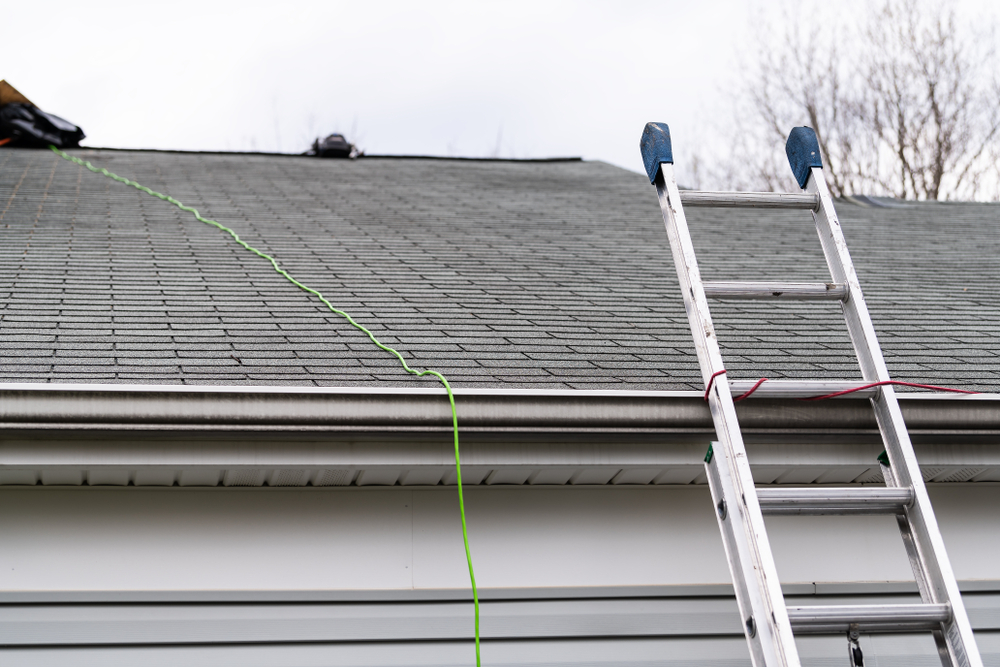
If you install a brand-new, high-performance roof but leave old, sagging, or undersized gutters in place, you are essentially putting a high-performance engine in a car with flat tires. The roof will shed water efficiently, but the gutters won’t be able to handle the load. This can lead to back-ups that force water under your brand-new shingles, potentially rotting the roof deck and voiding your new warranty before the first year is up.
The Top Benefits of Replacing Gutters and Roof Together
While it might seem daunting to add another line item to your home improvement budget, there are compelling reasons to combine these projects.
1. Significant Cost Savings
It might sound counterintuitive—spending more money now to save money later—but bundling roofing and gutter services is almost always cheaper than doing them separately.
When a roofing crew is already on-site, the logistical heavy lifting is done. They have the trucks, the dumpsters, the scaffolding, and the ladders set up. They are already dealing with waste disposal. If you hire a gutter company two years later, they have to mobilize their entire operation just for that small job. By combining the labor and logistics, contractors can often offer a better package deal.
2. Protecting the Roof Edge (The Drip Edge Factor)
This is a technical detail that many homeowners miss. The "drip edge" is a metal flashing installed at the edge of the roof to guide water into the gutter and prevent it from traveling back under the shingles.
Proper gutter installation often requires manipulating or working closely with this drip edge. If you install gutters after a roof is finished, the installers have to be extremely careful not to damage the new drip edge or lift the newly sealed shingles. Conversely, if you keep old gutters on during a roof replacement, the roofers have to work around them, which can make it difficult to install the drip edge perfectly.
By stripping everything off at once—shingles, drip edge, and gutters—the crew has a clean slate. They can install the new drip edge and the new gutters in the correct order, ensuring a watertight seal that is difficult to achieve when doing the jobs separately.
3. Convenience and Curb Appeal
Living through a construction project is stressful. There is noise, debris, and people walking around your property. Do you really want to go through that twice? By coordinating the projects, you rip the bandage off in one go.
Furthermore, aesthetics matter. Old, dented, or oxidized gutters can look even worse next to a pristine new roof. It is like wearing dirty sneakers with a tuxedo. Replacing both allows you to coordinate colors perfectly. You can match your gutters to your trim or choose a complementary color that highlights your new shingles, drastically improving your home’s curb appeal.
Examining the Fascia: The Hidden Backbone
One of the most critical reasons to replace gutters during a roof job involves the wood they are attached to: the fascia board.
The fascia is the long board running along the lower edge of the roof. It carries all the weight of your gutters. Over time, fascia boards often rot due to water exposure or age.
During a roof replacement, we often tear off the old roof down to the deck. This is the perfect—and sometimes the only —time to truly inspect the fascia board. If we discover rot, we replace the wood to ensure the roof has a solid foundation.
If you leave your old gutters up, replacing rotted fascia becomes a nightmare. The gutters have to be carefully detached (which often bends or damages them) to get to the wood, and then reattached. It is labor-intensive and risky.
If you are getting a new roof, it is highly likely you will need some fascia work. It is infinitely easier to install a new gutter system onto brand-new, solid fascia boards than to try to wrestle old gutters back onto new wood.
When Should You Keep Your Old Gutters?
We believe in honesty at Cola City Roofing. Just because you are getting a new roof doesn’t mean you are obligated to replace your gutters. There are scenarios where keeping your existing system makes sense.
The Gutters Are Relatively New
If you replaced your gutters three years ago but your roof is 20 years old, there is no need to tear down perfectly good aluminum. In this case, we would carefully protect the existing gutters during the roofing process.
You Have High-End Specialty Gutters
If your home boasts expensive copper or custom steel gutters that are in good condition, you likely want to preserve them. These materials can last 50+ years. We can work around them, though it requires extra care to ensure the flashing is integrated correctly.
Budget Constraints
We understand that a new roof is a major expense. If your budget simply cannot stretch to cover gutters right now, and the current gutters are functional (not leaking or falling off), it is okay to wait. The roof is the priority. Just be aware that you may pay a premium for labor when you eventually do the gutters later.
Choosing the Right Gutter System for Your New Roof
If you decide to proceed with a full replacement, you have several decisions to make. Modern gutter technology has improved, giving you more options than just standard white aluminum.
1. Seamless vs. Sectional
This is the most important choice you will make.
- Sectional Gutters: These come in pre-cut pieces (usually 10 to 20 feet long) that are snapped together with connectors. They are typical of DIY kits sold at big-box stores. The problem? Every seam is a potential leak point. Over time, the sealant at the seams breaks down, causing drips.
- Seamless Gutters: These are the industry standard for professionals. A machine on the truck forms the gutter from a continuous coil of metal to the exact length of your house. There are no seams along the long runs—only at the corners. This virtually eliminates leaks and looks much cleaner. We almost exclusively recommend seamless gutters for their durability.
2. Materials
- Aluminum: The most popular choice. It is lightweight, rust-proof, and comes in dozens of colors. It is cost-effective and lasts 20-25 years.
- Copper: The luxury option. Copper never rusts; instead, it develops a beautiful green patina over time. It is incredibly durable but significantly more expensive. It is often used on historic homes or as an accent feature.
- Galvanized Steel: Stronger than aluminum but prone to rust eventually. It is often used in areas with heavy snow loads or falling branches where aluminum might dent.
3. Style (Profile)
- K-Style: This is the shape you see on 90% of modern homes. It has a flat back and a decorative front that mimics crown molding. It holds a lot of water and is very rigid, making it less likely to bend.
- Half-Round: These look like a tube cut in half. They are smoother inside, which helps debris wash out easier, but they hold less water than K-style. They are popular on older, traditional-style homes.
4. Size Matters: 5-Inch vs. 6-Inch
Standard residential gutters are 5 inches wide. However, many homeowners are upgrading to 6-inch gutters. Why?
- Larger Roofs: If you have a large, steep roof, rain comes down with immense volume and speed. A 5-inch gutter might overflow during a torrential downpour.
- Better Flow: A 6-inch gutter holds 40% more water. This reduces the risk of overflow and helps clear debris faster.
- Fewer Clogs: The larger outlet allows leaves and twigs to pass through more easily into the downspout.
When we evaluate your roof for replacement, we calculate the square footage and pitch to determine if an upgrade to 6-inch gutters is necessary for proper water management.
The Financial Breakdown: ROI and Costs
Homeowners often ask: "Is it worth it?"
From a Real Estate perspective, a new roof and gutter system is a major selling point. It signals to buyers that the home has been well-maintained and that they won’t have to worry about water damage for decades. While you may not get a dollar-for-dollar return on the gutters alone, the combined curb appeal package can help the home sell faster and for a higher price.
Cost Factors
The cost of adding gutters to your roof project depends on several variables:
- Linear Footage: The total length of the roofline.
- Number of Downspouts: More downspouts mean more material and labor.
- Corners and Miters: Every corner requires hand-cutting and sealing, which adds labor time.
- Accessibility: Is your home a single-story ranch or a three-story Victorian? High work requires more safety equipment and time.
While we cannot give a specific price without an inspection, combining the projects typically eliminates the "trip charge" or "setup fee" associated with a standalone gutter job.
Selecting the Right Contractor for the Job
Not all roofing companies do gutters, and not all gutter companies do roofing. This can lead to a finger-pointing game if something goes wrong.
- Scenario: You hire Company A for the roof and Company B for the gutters. A year later, there is a leak at the eaves. The roofer says the gutter installer messed up the drip edge. The gutter installer says the roofer didn’t flash the edge correctly. You are stuck in the middle.
This is why hiring a single contractor who specializes in both is crucial. At Cola City Roofing , we take responsibility for the entire water management system of your roof.
What to Look for in a Contractor:
- Experience in Both Fields: Ensure they have dedicated crews or trained personnel for both trades.
- Unified Warranty: Ask if the workmanship warranty covers the interface between the roof and the gutters.
- Material Quality: Do they use thick-gauge aluminum? Do they use heavy-duty hidden hangers? Cheap gutters use spikes and ferrules that pull out over time; quality installations use screws and hidden hangers.
- Proper Licensing and Insurance: Never let anyone work on your roof without liability and workers’ comp insurance.
What to Expect During the Installation Process
If you decide to move forward with a combined roof and gutter replacement, here is what the timeline typically looks like:
Day 1: Demolition The crew arrives and tears off the old shingles. This is usually when the old gutters are removed as well. Removing them early allows the crew to place ladders against the fascia without worrying about denting the old gutters, and it makes tossing debris into the dumpster easier.
Day 1-2: Inspection and Roof Install Once the deck is bare, we inspect the fascia. Any rotted wood is replaced. Then, the new roof underlayment, drip edge, and shingles are installed.
Day 2-3: Gutter Installation Once the roof is largely complete (or at least the eaves are finished), the gutter crew steps in. They measure and fabricate the continuous seamless gutters on-site. They install the downspouts and ensure the pitch is correct so water flows toward the drains, not sits in the middle.
The Final Walkthrough We inspect the entire perimeter. We check that the drip edge is overlapping the back of the gutter properly. We ensure no roofing nails have fallen into the new gutters. We test the flow to ensure there are no leaks.
Protecting Your Investment: Gutter Guards
While you are upgrading your system, it is the perfect time to ask about gutter guards (also known as leaf protection). Installing guards on a brand-new system keeps them pristine from day one.
There are many types of guards, from simple screens to complex mesh systems. While they add to the upfront cost, they save you hours of dangerous ladder work in the future and ensure your new 6-inch gutters usually flow at maximum capacity.
Conclusion: A Smart Move for Long-Term Protection
Replacing your roof is a necessity; replacing your gutters at the same time is a strategy. It is a strategy that saves money, improves aesthetics, and ensures that the technical connection between your roof and your drainage system is flawless.
Don’t let worn-out gutters compromise the integrity of your new roof. By viewing your home’s exterior as a unified system, you make choices that protect your investment for the long haul.
If you are planning a roof replacement in the Columbia, SC area, let’s talk about your gutters too. We can provide a comprehensive quote that covers both, giving you peace of mind and a beautiful, water-tight home.
Ready to upgrade your home’s defense against the elements? Contact us today for a free consultation.
Frequently Asked Questions
Q: Will installing new gutters delay my roof replacement? A: Typically, no. Because gutter installation is much faster than roofing, the gutter crew can often finish their work as the roofers are doing the final cleanup. It rarely adds significant time to the project schedule.
Q: Can I change the location of my downspouts? A: Yes! A roof replacement is the perfect time to redesign your drainage. If you have a downspout that empties onto a walkway or driveway, we can re-pitch the gutters to move that water to a better location.
Q: What happens if I find rot behind the gutters during the project? A: This is common. We will document the damage with photos, inform you immediately, and replace the rotted wood before installing the new system. We never cover up rot.
Q: Do you offer financing for the combined project? A: Absolutely. We understand that home improvements are a major expense. We offer financing options that can cover the entire scope of work—roof, gutters, and repairs—often with low monthly payments.
Q: Does gutter color have to match the roof? A: No. Usually, homeowners match the gutters to the trim (fascia) color so they blend in, or they choose a color that matches the siding. Matching the roof color is less common but can be done if desired.