
Your roof works hard every day, protecting your home from intense summer sun, sudden downpours, and falling pine needles. Most of the time, we don’t think about it until something goes wrong. But being proactive is the secret to a long-lasting, healthy roof. A small issue caught early can save you thousands of dollars and prevent major headaches down the road.
This is where a simple roof inspection checklist comes in. You don’t need to be a roofing expert or climb a ladder to spot the early warning signs of trouble. By regularly checking a few key areas from the safety of the ground and inside your home, you can stay ahead of potential problems.
This guide provides a straightforward checklist tailored for Columbia homeowners. If you want to understand what a licensed roofer evaluates beyond this homeowner checklist, here’s what happens during a professional roof inspection in Columbia. We’ll cover what to look for, what those signs mean, and when it’s time to call in a professional. Think of it as a simple, preventative health screening for your home’s most important shield.
Why Every Homeowner Should Have a Roof Inspection Checklist
Regularly inspecting your roof is one of the smartest, most cost-effective habits you can develop as a homeowner and an essential part of maintaining professional roofing services in South Carolina. It empowers you to understand your home’s condition and act before minor issues become major disasters.
Here’s why keeping a simple checklist is so valuable:
- Extend Your Roof’s Lifespan: Just like regular maintenance on your car, proactive care for your roof helps it last longer. Catching a cracked shingle or clogged gutter early prevents the slow, silent damage that shortens your roof’s service life.
- Prevent Expensive Water Damage: Most major roof repairs start as small, unnoticed leaks. By the time you see a water stain on your ceiling, the damage to your attic, insulation, and drywall may already be extensive. Regular checks help you spot the initial vulnerability before water gets in.
- Improve Energy Efficiency: A compromised roof can lead to air leaks, making your HVAC system work harder to keep your home cool in the summer and warm in the winter. Identifying and fixing these issues can lower your energy bills.
- Simplify Insurance Claims: If you ever need to file an insurance claim after a storm, having a documented history of your roof’s condition is incredibly helpful. Photos with dates can prove that the damage was caused by a specific event, streamlining the claims process.
- Increase Home Value: A well-maintained roof is a huge selling point. A history of regular inspections demonstrates responsible ownership and gives potential buyers confidence.
For a deeper look at how routine evaluations protect your home long-term, read why annual roof inspections are worth it for Columbia homeowners.
What You Can Safely Check Yourself from the Ground
The most important rule of a DIY roof inspection is safety first. You can spot the vast majority of common roofing problems without ever setting foot on a ladder. All you need is a pair of binoculars (or the zoom feature on your phone) and a few minutes on a clear day.
Walk around the perimeter of your house and look up at all sections of your roof. Here’s what to look for.
Check for missing or cracked shingles
Shingles are your roof’s primary armor. When they are damaged or missing, the sensitive layers underneath are exposed to the elements.
- What to Look For: Missing Shingles: Are there any obvious empty patches on the roof? Pay close attention to areas around vents and chimneys and along the roof’s ridges.
- Cracked or Curled Shingles: Look for shingles that are bent, curled at the edges, or have visible cracks. South Carolina’s intense sun can bake asphalt shingles over time, causing them to become brittle.
- Blistering or Buckling: Do any shingles look like they are bubbling up or rippling? This can be a sign of trapped moisture or poor ventilation.
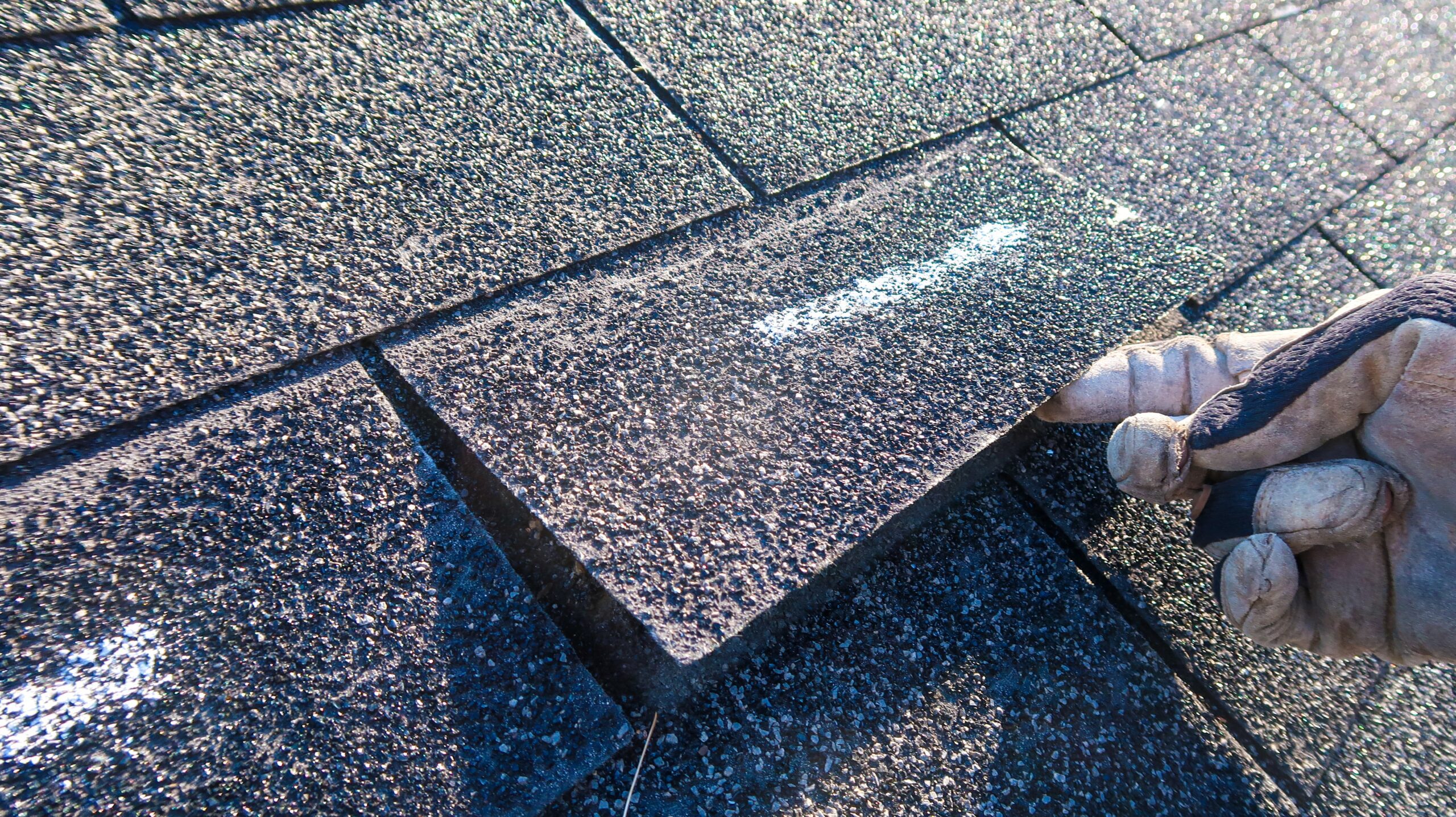
- Granule Loss: Check your gutters and the ground near your downspouts for an accumulation of black, sand-like granules. These granules protect the shingle from UV rays. When they wash away, the shingle is nearing the end of its life.
Watch for dark streaks, moss, and soft spots
Discoloration and organic growth can be more than just an eyesore; they can signal underlying moisture problems that are slowly damaging your roof.
- What to Look For: Dark Streaks: Long, black streaks running down your roof are typically caused by algae. While mostly a cosmetic issue, heavy algae growth can trap moisture against the shingles.
- Moss or Mold: Look for green, fuzzy patches, especially in shaded areas of your roof. Moss acts like a sponge, holding water against the roof surface. This can lead to shingle decay and rot in the underlying wood sheathing.
- Damaged Flashing: Flashing is the thin metal stripping that seals the joints around chimneys, vents, and skylights. Look for any signs of rust, cracks, or pieces that look bent or pulled away from the roof. Damaged flashing is one of the most common sources of leaks.
- Problems with Soffits and Fascia: The fascia is the board that runs along the roofline, and the soffit is the underside of the roof’s overhang. Check them for cracks, peeling paint, or signs of rot. Damage here can indicate water is not being properly diverted by the gutters.
Indoor Signs That Point to Roof Damage
Some of the most critical clues about your roof’s health are found inside your home. An interior inspection only takes a few minutes and can reveal a leak long before it becomes a catastrophe.
Many of these warning signs overlap with the most common roof failure indicators homeowners ignore.
Inspect ceilings for water stains or peeling paint
Water is tricky; it can travel a long way from the entry point on your roof before it finally shows up inside. That’s why a small stain on your ceiling can signal a much larger issue.
- What to Look For: Stains on Ceilings or Walls: Look for yellowish or brownish circles on the ceiling, especially in rooms on the top floor. Also, check for streaks running down exterior walls.
- Peeling or Bubbling Paint: Moisture seeping into the drywall will cause paint to blister, peel, or bubble. This is a sure sign that water is present.
- Visible Light in the Attic: On a sunny day, go into your attic (if it’s safe to access). Turn off the lights and look up at the underside of the roof deck. Do you see any pinpricks of light shining through? If light can get in, so can water.
- Damp Insulation or Wood: While in the attic, look for insulation that appears compressed, damp, or moldy. Check the wooden rafters and sheathing for dark, wet-looking spots or signs of rot.
- Musty Odors: A persistent musty smell in upper-level rooms or the attic often indicates the presence of mold or mildew caused by trapped moisture from a slow leak.
Galleries
Featured Work
Need proof of our skills? Check out our recent roof and gutter work!
What to Leave to a Professional Roofer
While your ground-level and indoor checks are invaluable, some tasks should only be performed by a trained and insured professional . Attempting to do these yourself can be extremely dangerous and may even cause further damage to your roof.
Always call a professional for:
- Walking on the Roof: This is the number one rule. Roofs can be slippery, and a fall can cause serious injury. Professionals have the training and safety equipment (like harnesses) to navigate a roof safely.
- Lifting Shingles to Inspect Underneath: Trying to lift shingles can easily break their sealant or crack them, creating a new problem.
- Repairing or Replacing Flashing: Properly sealing the joints around chimneys and vents is a precise skill. An improper seal is almost guaranteed to leak.
- Assessing Structural Damage: If you suspect damage to the roof deck or rafters from a fallen tree or long-term rot, a professional needs to evaluate the structural integrity.
- Comprehensive Damage Assessment After a Storm: After a hailstorm, for example, the damage can be subtle and widespread. A professional is trained to spot these patterns and provide the documentation needed for an insurance claim.
Seasonal Roof Inspection Tips for South Carolina Homes
Our Midlands climate presents unique challenges for roofs. A seasonal approach to your inspection checklist can help you stay prepared for whatever the weather brings.
- Spring (March – May): After the winter chill and before the summer storms, this is a great time for a thorough check. Clean out any remaining leaves and pine straw from gutters to prepare for heavy spring rains. Look for any damage that may have occurred over the winter.
- Summer (June – August): The primary focus is preparing for hurricane season and intense thunderstorms. Make sure your gutters are clear and your downspouts are directing water away from your foundation. After any severe storm, do a quick ground inspection for missing shingles or other visible damage.
- Fall (September – November): This is peak gutter-clearing season. As leaves and pine needles fall, keep your gutters free-flowing to prevent clogs and water backup, which can lead to fascia rot and ice dams in winter.
- Winter (December – February): While we don’t get much snow, the freeze-thaw cycles can still affect your roof. This is a good time to do an indoor check for any new leaks that have developed.
Schedule pro inspections before and after severe weather
While your own inspections are crucial, we recommend a professional inspection annually and especially before or after a major weather event. A trained eye can spot subtle issues you might miss, giving you a complete picture of your roof’s health and certified documentation for your records.
If your roof is older, it’s even more important to understand why older roofs need more frequent inspections.
How Cola City Roofing Helps Homeowners Stay Roof-Ready
At Cola City Roofing , we believe that an informed homeowner is a protected homeowner. We are committed to helping you understand your roof’s condition so you can make confident decisions. We treat your home as if it were our own, which means prioritizing preventative care and honest communication.
When you schedule a complimentary site visit with us , we don’t just look for problems to sell you on a repair. We provide a comprehensive assessment and take the time to walk you through our findings. We’ll show you photos, explain what we see in plain language, and give you a clear, honest recommendation—even if that recommendation is that your roof is in great shape and needs no work at all.
Your peace of mind is our top priority. Use this checklist to stay proactive, and don’t hesitate to call us for a professional opinion . You can also explore our complete roof maintenance checklist for a more detailed year-round plan. We’re here to be your trusted partner in keeping your home safe and secure for years to come.