When it comes to home improvement projects, choosing the right materials is half the battle. This is especially true for your gutter system—a critical component that protects your roof, siding, and foundation from water damage. If you are in the market for new gutters, you have likely narrowed your choices down to the two most popular contenders: aluminum and vinyl. If you’re exploring professional gutter services in South Carolina, understanding material differences is the first step toward making the right decision.
Both materials have their champions. You might see vinyl touted for its rock-bottom price tag at local hardware stores, while aluminum is often praised by professional contractors as the industry standard. But which one is truly right for your home in Columbia, SC?
In this comprehensive guide, we will break down the "Aluminum vs. Vinyl" debate. We will compare them head-to-head on cost, durability, installation, aesthetics, and maintenance so you can make an informed decision that protects your investment for years to come.
The Basics: Understanding the Materials
Before we dive into the pros and cons, it is helpful to understand exactly what we are comparing.
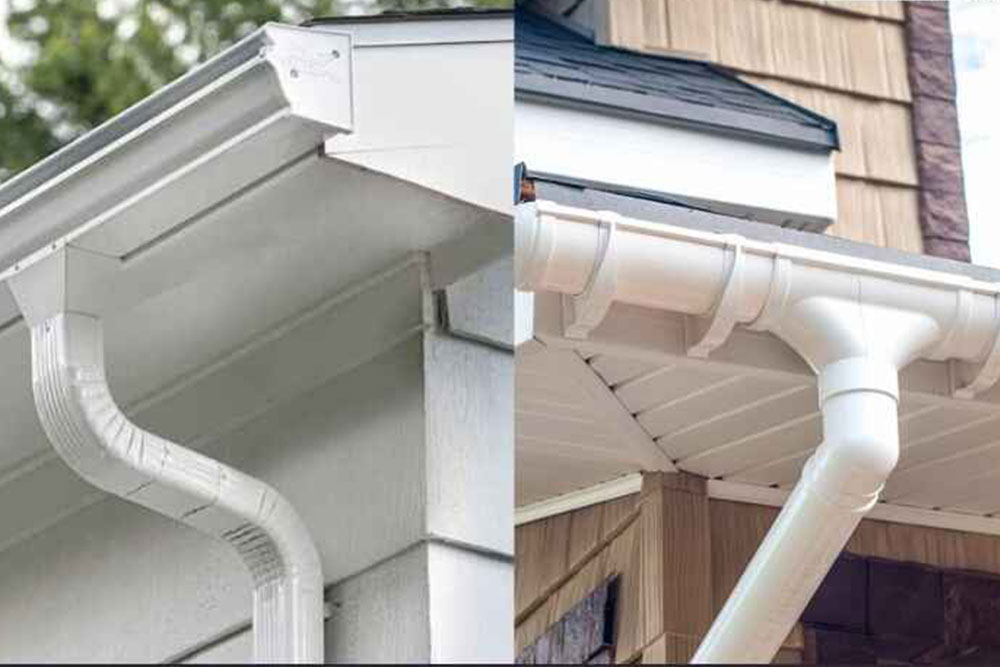
Vinyl Gutters: These are made from PVC (polyvinyl chloride) plastic. They are lightweight, resistant to corrosion, and are typically sold in pre-cut sections at home improvement stores. They are the darling of the DIY community because they snap together easily.
Aluminum Gutters: These are made from lightweight aluminum metal. They are also rust-resistant and lightweight but offer significantly more structural strength than vinyl. While you can buy sectional aluminum gutters, they are most commonly installed as "seamless" systems by professionals.
Both serve the same basic function—channeling water away from your home—but they perform very differently over time. If you want to see how aluminum and vinyl stack up against copper, steel, and other options, review our full comparison of gutter materials.
Round 1: Durability and Lifespan
When you invest in your home’s exterior, you want it to last. The climate in South Carolina can be tough on building materials, with intense summer heat, humidity, and occasional heavy storms.
Vinyl Gutters: The Fragility Factor
Vinyl gutters have one major enemy: the weather. While PVC plastic is immune to rust, it is highly sensitive to temperature fluctuations and UV radiation.
- Brittleness: Over time, exposure to the sun causes vinyl to become brittle. In colder months (or even just after years of sun exposure), a stray branch or a heavy ladder leaning against them can cause the plastic to crack or shatter.
- Sagging: Vinyl is not a rigid material. In heavy rain, the weight of the water can cause the gutters to bow or sag between hangers. Once a vinyl gutter sags, water pools in that spot, adding more weight and worsening the problem.
- Lifespan: You can typically expect vinyl gutters to last 10 to 15 years in a mild climate. However, in areas with intense sun or weather shifts, that lifespan can be significantly shorter.
Aluminum Gutters: The Long-Term Warrior
Aluminum is designed to endure. It offers the strength of metal without the heavy weight of steel.
- Weather Resistance: Aluminum stands up remarkably well to all weather conditions. It does not become brittle in the cold or soft in the heat. It can handle heavy downpours without losing its shape.
- Rust-Proof: Like vinyl, aluminum does not rust. This gives it a huge advantage over steel gutters, which eventually succumb to corrosion.
- Lifespan: A high-quality aluminum gutter system can last 20 to 30 years or more, especially when you consider the full benefits of aluminum gutters in long-term performance. If you opt for seamless aluminum gutters, you eliminate the weak points (seams) that often lead to failure in other systems.
Winner: Aluminum. Its ability to withstand the elements without degrading makes it the clear choice for longevity.
Round 2: Installation and Leak Potential
How your gutters are installed plays a massive role in their performance. This is where the difference between "sectional" and "seamless" becomes critical.
The Problem with Seams (Vinyl)
Vinyl gutters are almost exclusively sold in 10-foot sections. To cover a 50-foot roofline, you have to snap five separate pieces together using connectors.
- Leak Points: Every seam is a potential leak. Over time, the rubber seals in the connectors degrade, or the plastic warps slightly, allowing water to drip through.
- Debris Traps: Seams create ridges inside the gutter trough. These ridges catch leaves, pine needles, and twigs, leading to clogs.
- DIY vs. Pro: While vinyl is easy for a homeowner to install themselves, it is difficult to get the pitch (slope) perfect with sectional pieces. Poor pitch leads to standing water.
The Seamless Advantage (Aluminum)
While you can buy sectional aluminum, the gold standard—and what we recommend at Cola City Roofing—is seamless aluminum.
- Custom Fit: Professional gutter installation services involve bringing a machine to your home that forms the gutter from a continuous coil of aluminum. This means one solid piece runs the entire length of your roof.
- No Leaks: Without seams every 10 feet, there are simply fewer places for water to escape. The only seams are at the corners (miters).
- Better Flow: A smooth interior channel means water and debris flow freely toward the downspouts, reducing maintenance needs.
Winner: Aluminum. The option for seamless installation provides superior protection against leaks that vinyl simply cannot match.
Round 3: Aesthetic Appeal
Curb appeal matters. Your gutters are a visible "frame" on your house, and you want them to look good.
Vinyl: The "Budget" Look
Vinyl gutters have a distinct appearance that can sometimes look "cheap" or plasticky, which might not suit a higher-end home or a historic property.
- Color Limitations: Vinyl typically comes in white or brown. While you can paint it, it is difficult. Paint does not adhere well to PVC, and it is prone to peeling over time.
- Fading: The color of vinyl gutters tends to yellow or fade unevenly after years of sun exposure, leaving your home’s exterior looking tired.
Aluminum: The Designer’s Choice
Aluminum offers versatility that architects and designers love.
- Color Variety: Aluminum gutters come in dozens of baked-on enamel colors. You can match them perfectly to your siding, trim, or roof. Because the finish is baked on at the factory, it is incredibly resistant to chipping and peeling.
- Paintability: If you change your house color in 15 years, aluminum is easy to repaint.
- Styles: Aluminum holds its shape well, allowing for crisp, clean lines. It is available in the standard "K-style" (which looks like crown molding) or "half-round" for a more traditional aesthetic.
Winner: Aluminum. With more colors, better finishes, and a higher-quality appearance, aluminum enhances your home’s look rather than detracting from it.
Round 4: Cost Comparison
This is often the deciding factor for homeowners. Is the higher quality worth the higher price?
Vinyl: The Initial Savings
There is no denying it: vinyl is the cheapest material on the market.
- Material Cost: Per linear foot, vinyl is very inexpensive. If you are on an extremely tight budget and need a temporary solution, vinyl is accessible.
- Installation Cost: Because it is lightweight and snaps together, labor costs can be lower, or you can save money by doing it yourself.
Aluminum: The Better Investment
Aluminum costs more upfront than vinyl, but the price difference is often less than people expect.
- Mid-Range Price: Aluminum sits in the middle of the price spectrum—more expensive than vinyl but far cheaper than copper or zinc.
- Cost Over Time: This is where aluminum wins. Because vinyl often cracks or leaks within a decade, you may end up buying and installing vinyl gutters two or three times in the lifespan of a single aluminum system. When you factor in the longevity, aluminum is actually more cost-effective in the long run.
Winner: Tie (sort of). Vinyl wins on initial price, but Aluminum wins on long-term value . If you plan to stay in your home for more than a few years, aluminum is the smarter financial move.
Round 5: Structural Strength
Gutters have to support a lot of weight. A gallon of water weighs over 8 pounds. In a heavy storm, your gutters could be holding hundreds of pounds of water. If you add wet leaves or snow to the mix, the strain is immense.
Vinyl’s Weakness
Vinyl is not a structural material.
- Snow and Ice: While snow is less common in Columbia, SC, than in the north, we do get ice storms. Vinyl becomes brittle in freezing temps and can easily crack under the weight of ice.
- Ladder Damage: If you lean a ladder against a vinyl gutter to clean it, there is a real risk of crushing or cracking the plastic.
Aluminum’s Resilience
- Weight Bearing: Aluminum gutters, especially in the standard .027 or thicker .032 gauge, are strong enough to handle heavy rain loads and the weight of a ladder without deforming.
- Hanger Strength: Because aluminum is rigid, the hangers (brackets) can hold it securely against the fascia board. Vinyl’s flexibility often causes it to pull away from hangers over time.
Winner: Aluminum. For reliable performance under stress, metal beats plastic every time.
Summary: Which Should You Choose?
Let’s recap the pros and cons to help you decide.
Vinyl Gutters
Pros:
- Lowest upfront cost.
- Easy for DIY installation.
- Rust-proof.
Cons:
- Becomes brittle and cracks over time.
- Prone to sagging and leaking at seams.
- Limited color options and prone to fading.
- Short lifespan (10-15 years).
- Can look "cheap."
Aluminum Gutters
Pros:
- Durable and long-lasting (20-30+ years).
- Can be installed seamlessly (fewer leaks).
- Available in many colors.
- Will not rust.
- Strong enough to withstand heavy rain and ladders.
- Excellent long-term value.
Cons:
- Higher upfront cost than vinyl.
- Can dent if struck by heavy objects (though high-quality aluminum resists this).
The Verdict for Columbia SC Homeowners
For the vast majority of homeowners in South Carolina, aluminum gutters are the superior choice. If you’re specifically comparing options for our region, here’s a deeper look at the best gutter materials for Columbia, SC.
While the low price of vinyl is tempting, the frustrations of leaks, sagging, and frequent replacements usually outweigh the savings. Aluminum offers a "set it and forget it" solution. It looks better, lasts longer, and does a better job of protecting your home from water damage.
Think of your gutters as an insurance policy for your foundation. You want that policy to be reliable. Vinyl is a gamble; aluminum is a guarantee.
Why Professional Installation Matters
Regardless of the material you choose, the effectiveness of your gutter system depends heavily on installation. Even the best aluminum gutters will fail if they are not pitched correctly or if the downspouts are in the wrong locations.
At Cola City Roofing , we specialize in Columbia SC roofing and gutter solutions. We fabricate seamless aluminum gutters on-site to ensure a perfect fit for your home. Our team understands the local weather patterns and calculates the necessary gutter size and downspout capacity to handle our heavy summer storms.
If you are tired of dealing with leaky, cracked vinyl gutters, or if you are building a new home and want to do it right the first time, we are here to help.
Ready to upgrade? Check out our gutter installation services to learn more about our process. If you have questions or want a free estimate, simply contact us today. Let’s protect your home with a gutter system that lasts.
Frequently Asked Questions
- Is it worth paying extra for seamless gutters? Absolutely. Seams are the weakest point in any gutter system. They are where leaks start and where debris gets stuck. Eliminating seams eliminates the most common gutter headaches.
- Can I paint vinyl gutters to match my home? Technically, yes, but it is not recommended. Paint does not bond well to vinyl, and it will likely flake off quickly. Aluminum comes pre-finished in colors that last for decades.
- Do aluminum gutters dent easily? Standard aluminum gutters are quite durable. While a direct hit from a large tree branch or a baseball might cause a dent, they generally hold up well to everyday wear and tear. Choosing a thicker gauge aluminum can further reduce the risk of denting.
- How do I maintain aluminum gutters? Maintenance is simple: keep them clean! Clear out leaves and debris twice a year (spring and fall). Check that downspouts are clear. Because they don’t rust or crack, you won’t need to do much else.
- Are aluminum gutters eco-friendly? Yes! Aluminum is a highly recyclable material. When your gutters eventually reach the end of their life, they can be recycled rather than sitting in a landfill. Vinyl (PVC) is much harder to recycle and has a larger environmental footprint.