
When you schedule a roof inspection , you might expect the roofer to focus solely on the shingles, flashing, and vents. While these are critical components, an experienced professional knows that the roof’s biggest ally—or its worst enemy—is the gutter system. Gutters are the unsung heroes of your home’s exterior, quietly managing thousands of gallons of rainwater every year. But when they fail, the consequences can be disastrous for your roof, your foundation, and your peace of mind.
In the world of Columbia SC roofing , we frequently uncover serious gutter issues during routine roof check-ups. Often, homeowners are completely unaware these problems exist until we point them out. A gutter might look fine from the ground, but up close, it tells a different story of neglect, damage, or improper installation.
This guide will walk you through the most common gutter problems we encounter during inspections. We will explain why these issues happen, how they directly threaten your home’s structure, and what steps you can take to prevent water damage before it starts.
The "Silent" Threat: Clogs and Blockages
It is the most obvious problem, yet it remains the most frequent offender. Clogged gutters are not just a nuisance; they are a significant structural threat. During an inspection, we often find gutters packed tight with a compost-like sludge of decomposed leaves, pine needles, twigs, and asphalt granule runoff.
Why It Happens
Nature is persistent. Trees shed leaves, wind blows debris, and birds build nests. In South Carolina, pine needles are a particular menace. Unlike broad leaves that might sit on top, pine needles weave themselves into a dense mat that blocks water flow almost completely. Even if you don’t have trees directly over your house, wind can carry debris from surprisingly far away.
The Consequences
When water cannot flow through the gutter, it has to go somewhere.
- Overflow: Water spills over the sides, eroding the soil around your foundation and splashing dirty water onto your siding.
- Fascia Rot: This is a critical issue for your roof. As water backs up, it often spills over the back edge of the gutter, directly against the fascia board. This constant moisture rots the wood. Since your gutters are attached to this board, a rotting fascia eventually leads to the gutters falling off the house entirely.
- Roof Deck Damage: In severe cases, standing water in a clogged gutter can wick upward under the shingles, rotting the edge of the roof deck (the plywood base).
If you find yourself constantly battling clogs, it might be time to discuss solutions. Sometimes, a professional cleaning is enough, but in other cases, modifications or guards are necessary. Our team can assess if you need gutter repair services to fix damage caused by long-term blockages.
Sagging and Pulling Away from the Fascia
A gutter system relies on gravity to work, but it also fights against gravity every day. When we inspect roofs, we sight down the line of the gutter. A healthy gutter should be straight and tight against the house. A failing gutter looks wavy, dips in the middle, or shows a visible gap between the metal and the wood.
Why It Happens
- The Weight of Debris: A linear foot of water weighs about 8 pounds. Add wet leaves and muck, and a 20-foot section of gutter can easily weigh hundreds of pounds. Standard gutter hangers are not designed to support this static load for long periods.
- Spike and Ferrule Failure: Older gutter systems often used "spikes" (large nails) and "ferrules" (tubes) to hold the gutter up. Over time, the expansion and contraction of the wood fascia work these spikes loose.
- Rotting Wood: If the fascia board behind the gutter has begun to rot (often due to leaks), the screws or spikes have nothing solid to bite into, and the gutter naturally pulls away.
The Consequences
A sagging gutter creates a low spot where water pools instead of draining. This stagnant water is heavy, which pulls the gutter down even further, creating a vicious cycle. Furthermore, the gap created when a gutter pulls away allows water to run behind the gutter. This water runs down the side of your house, bypassing the drainage system entirely and leading to foundation issues and basement leaks.
Improper Pitch (Slope)
This is a subtle issue that is nearly impossible to spot from the ground but is immediately obvious to a trained inspector. Gutters look level to the naked eye, but they must actually have a slight slope towards the downspout to function. The standard rule of thumb is about a quarter-inch of drop for every 10 feet of gutter.
Why It Happens
- Poor Installation: This is the most common cause. An inexperienced installer might hang the gutters perfectly level, thinking it looks better.
- Settling: Over time, houses settle. This slight movement can shift the angle of the eaves enough to disrupt the pitch of the gutters.
- Damage: A falling tree limb or a heavy ladder leaned against the gutter can bend the metal and ruin the slope.
The Consequences
If the pitch is too flat, water sits still. Standing water is a breeding ground for mosquitoes and creates a heavy load on the hangers. It also accelerates rust in steel gutters. Conversely, if the pitch is too steep, water rushes towards the downspout with too much velocity, often overshooting the drain or causing splashing.
Correcting the pitch is a precise job. It involves detaching the gutter, measuring the correct drop, and re-securing it. This is a core part of our gutter repair services , ensuring that water flows exactly where it is supposed to go.
Leaking Seams and Joints
Before the advent of seamless gutters, gutter systems were pieced together in 10-foot sections. These sections were joined with connectors and sealed with a special caulk. Even today, corners (miters) and end caps are potential leak points. During an inspection, we look for drip marks or stains on the underside of these joints.
Why It Happens
- Sealant Breakdown: The mastic or sealant used to waterproof gutter seams has a lifespan. UV exposure from the sun and temperature fluctuations cause it to dry out, crack, and fail over time.
- Thermal Movement: Metal expands in the heat and contracts in the cold. This constant movement puts stress on the seams, eventually pulling them apart or breaking the sealant bond.
The Consequences
A leaking seam might seem minor—just a few drips, right? Wrong. A steady drip at a corner can act like a Chinese water torture on your home’s exterior. It can erode a hole in the ground below, crack a concrete driveway, or constantly saturate a specific spot of wood siding, leading to localized rot.
The most effective solution to this problem is often to upgrade to seamless gutters. Seamless gutters are custom-fabricated on-site to fit the exact length of your roofline, eliminating the joints along the straight runs. If you are tired of chasing leaks, explore our gutter installation services to see how seamless technology can protect your home.
Inadequate Downspouts
The gutter trough collects the water, but the downspout is the engine that moves it away. A common problem we find is that the downspouts are either too small, too few in number, or poorly placed.
Why It Happens
- Original Builder Grade: Many builders install the minimum standard to save money. This often means using 2×3 inch downspouts on large roofs that really require 3×4 inch downspouts to handle the volume.
- Aesthetic Choices: Sometimes downspouts are placed where they look best visually, rather than where they are needed hydraulically.
- Roof Complexity: A roof with many valleys concentrates a massive amount of water into small areas. If a downspout isn’t positioned to handle that specific load, the system will fail.
The Consequences
During a light rain, undersized downspouts work fine. But during a heavy South Carolina thunderstorm, they act like a bottleneck. The water enters the gutter faster than the downspout can drain it. The gutter fills up and overflows, rendering the system useless when you need it most.
Upgrading to larger, "oversized" downspouts is a relatively inexpensive modification that can drastically improve the performance of your entire roof drainage system.
Granule Accumulation
This is a specific issue that tells us less about the gutters and more about the health of the roof itself. When we inspect gutters, we look at what is sitting in the bottom of the trough. If we find a thick layer of black sand-like particles, we know there is trouble brewing above.
Why It Happens
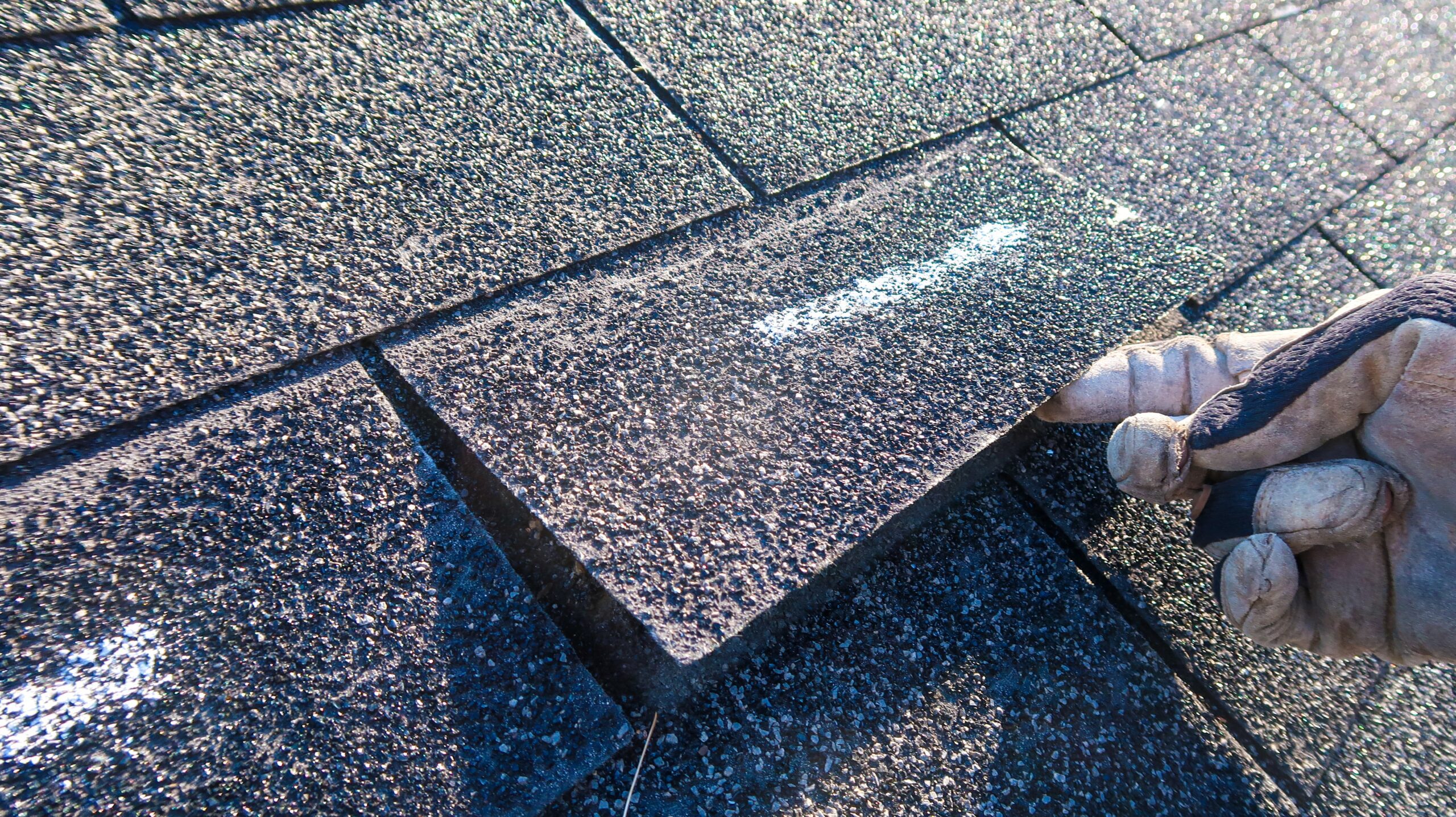
Asphalt shingles are covered in mineral granules that protect the asphalt from the sun’s UV rays. As shingles age, they dry out and lose their grip on these granules. Rain washes them down into the gutters. While a small amount is normal for a new roof (installation leftovers), a large amount on an older roof indicates the shingles are deteriorating.
The Consequences
- Gutter Weight: Wet granules are incredibly heavy, adding to the strain on the gutter hangers.
- Flow Restriction: The granules create a sludge that slows down water flow and traps other debris.
- Roof Failure: Most importantly, this is a sign that your shingles are nearing the end of their life. Once the granules are gone, the sun will rapidly destroy the shingles, leading to leaks.
Improperly Positioned Splash Blocks
The job isn’t done when the water leaves the downspout. It must be directed away from the house. We frequently see downspouts that terminate right at the foundation wall, dumping gallons of water exactly where it shouldn’t be.
Why It Happens
- Neglect: Splash blocks (the concrete or plastic pads) get moved by lawnmowers, kids, or dogs and are never put back.
- Poor Design: The downspout is simply cut off too high or lacks an extension (elbow) to guide water out.
The Consequences
Dumping water at the foundation is the leading cause of wet basements and crawlspaces. It creates hydrostatic pressure that pushes water through cracks in your foundation walls. It can also cause the soil to settle unevenly, leading to structural cracks in the house itself. An inspection will identify where extensions or buried drain lines are needed to move water at least 4-6 feet away from the home.
Damaged or Missing Gutter Guards
Many homeowners install gutter guards or screens to reduce maintenance. However, these devices are not foolproof. During inspections, we often find guards that are crushed, dislodged, or actually contributing to the problem.
Why It Happens
- Weather Damage: Falling branches can crush aluminum screens.
- Squirrels and Pests: Rodents often chew through plastic guards or pry them up to build nests inside the gutter.
- Wrong Type: Installing a screen with large holes in an area with pine needles is ineffective; the needles stick in the holes like arrows, creating a "porcupine" effect that traps debris on top of the gutter.
The Consequences
A damaged guard is worse than no guard. It can trap debris inside the gutter while preventing you from easily cleaning it out. If the guard is caved in, it creates a dam that causes immediate overflow. We assess the condition of existing guards and can recommend whether they need to be replaced, removed, or upgraded.
Why These "Gutter Problems" Are Actually "Roof Problems"
You might wonder why a roofing company cares so much about gutters. The answer is simple: they are physically connected.
- Drip Edge Integration: The metal flashing at the edge of your roof (drip edge) should overlap the back of the gutter. If the gutter is hung too low, water can get behind it. If it is hung too high, it can interfere with the shingle overhang.
- Ice Dams: In winter, clogged gutters cause ice dams that force water up under your shingles.
- Wood Rot: The fascia board is the anchor for the gutters. If gutters cause the fascia to rot, the edge of your roof becomes unstable.
A comprehensive roof inspection must look at the system as a whole. You cannot certify a roof as healthy if the drainage system attached to it is failing.
Preventing Water Damage: The Proactive Approach
The best way to deal with gutter problems is to catch them before they cause damage. This is why regular inspections are vital. We recommend having your roof and gutters inspected at least once a year, or after any major storm event.
Here is a checklist of what you can do as a homeowner:
- Look Up: periodically walk around your home. Do you see vegetation growing in the gutters? That’s a sure sign of a clog (soil has to accumulate for plants to grow).
- Look Down: Check your downspouts. Is water coming out during a rainstorm? Is it flowing away from the house?
- Listen: During a rain, do you hear water slapping the ground? That usually means a gutter is overflowing.
However, for a true assessment of pitch, seal integrity, and fastener security, you need a professional on a ladder.
When to Repair vs. When to Replace
During an inspection, we help homeowners decide on the most cost-effective path forward.
Repair is likely if:
- The damage is localized to one section.
- The gutters are relatively new but have a loose hanger or a single leak.
- The issue is simply a matter of cleaning or pitch adjustment.
Replacement is likely if:
- There is widespread rust (on steel gutters).
- The gutters are dented, bent, or warped beyond reshaping.
- You have old sectional gutters with multiple leaking seams.
- The gutters are undersized for the roof area.
If replacement is the answer, we can provide modern, seamless aluminum or copper options that enhance your home’s curb appeal while providing superior protection.
Conclusion
Your gutters are the gatekeepers of your home’s structural integrity. While they are easy to overlook, problems like clogs, sagging, improper pitch, and leaks can lead to devastating consequences for your roof and foundation. By understanding these common issues, you are better equipped to protect your investment.
Don’t wait for a wet basement or a rotting roof deck to get professional help. A thorough inspection can identify these "silent" threats and neutralize them before they become expensive repairs.
At Cola City Roofing, we understand the unique challenges of Columbia SC roofing and drainage. Whether you need a simple tune-up, a comprehensive repair, or a full system replacement, we have the expertise to keep your home dry and secure. If you suspect your gutters aren’t performing as they should, or if it’s just been a while since anyone checked, visit our contact page today to schedule an inspection. Your roof—and your wallet—will thank you.