When you look at your home, you probably see the roof and the gutters as two separate systems. The roof covers the top, and the gutters line the edge. While they are distinct components, they work together in a critical partnership. Without functioning gutters, your roof—specifically your shingles and roof edges—are left vulnerable to a host of destructive forces.
Many homeowners assume that gutters are primarily there to protect the foundation or keep the basement dry. While those are major functions, the role gutters play in preserving the integrity of the roof itself is often overlooked. Water is the enemy of building materials, and without a directed path off your roof, that water will find ways to rot wood, degrade asphalt, and compromise the structural edges of your home.
In this comprehensive guide, we will explore exactly how gutters protect shingles and roof edges, the specific mechanics of water damage, and why professional gutter installation and maintenance are non-negotiable for a healthy roof.
The Critical Relationship Between Roofs and Gutters
To understand how gutters protect your roof, you first need to understand how water behaves on a roof. When it rains, water sheets down the slope of your shingles. Ideally, it hits the edge, drops into the gutter trough, and flows down the downspout away from the house.
However, if that flow is interrupted—by a clog, a misalignment, or a lack of gutters entirely—water doesn’t just disappear. It backs up. It splashes. It lingers.
The edge of your roof, known as the eave, is the most vulnerable part of the entire roofing system. It is where the roof deck ends and the fascia board begins. It is the transition point where materials are most exposed to the elements. Gutters are the shield for this sensitive area.
Preventing Water Back-Up and Shingle Deterioration
One of the primary ways gutters protect shingles is by preventing water back-up. When gutters are clogged with leaves and debris, water can fill the trough and sit stagnant. During heavy rains, this water has nowhere to go but up and over the edges—or worse, backward.
When water backs up onto the roof, it can seep underneath the bottom row of shingles. Asphalt shingles are designed to shed water downward, not to be submerged in standing water. When moisture gets underneath them, it can cause the granules to loosen and the asphalt to deteriorate prematurely. This is often referred to as "shingle rot," though it is technically a degradation of the substrate and adhesive.
By ensuring water flows freely away from the roofline, gutters keep the shingles dry and functioning as intended. If you are noticing constantly wet shingles at your roof’s edge, it might be time to investigate our gutter repair services to ensure proper flow is restored.
Protecting the Fascia and Soffit
Directly beneath the roof edge are the fascia (the vertical board the gutter attaches to) and the soffit (the horizontal board under the eave). These wooden or composite components are crucial for the structural integrity of your roof edge.
Without gutters, or with failing gutters, water rolls off the shingles and curls back underneath the edge due to surface tension. This is called "wicking." This water drips constantly onto the fascia and soffit. Over time, this leads to:
- Wood Rot: Soft, rotting wood cannot support the weight of the roof edge or the gutter system itself.
- Paint Peeling: Constant moisture causes paint to bubble and peel, exposing raw wood to further damage.
- Mold and Mildew: Damp, shaded areas under the eaves are perfect breeding grounds for fungi.
A well-installed gutter system breaks this surface tension, catching the water before it can curl back and damage these vital structural elements.
The Mechanics of Water Damage on Roof Edges
Water is persistent. It will find the path of least resistance. When gutters fail to protect the roof edge, several specific types of damage can occur. Understanding these mechanics helps highlight why gutter protection is synonymous with roof protection.
Ice Dams: A Winter Nightmare for Shingles
In colder climates or during unexpected freezes, clogged gutters are the primary culprit behind ice dams. An ice dam forms when heat escapes from your home, melting the snow on your roof. This meltwater runs down to the cold eaves. If the gutters are clogged with frozen debris, the water cannot drain. instead, it refreezes at the edge.
As this cycle repeats, a ridge of ice builds up. Behind this dam, pools of water form. Since the water cannot flow off the roof, it backs up under the shingles. This trapped water can leak into your attic, soak insulation, and rot the roof deck.
Even in areas like Columbia, SC, where deep freezes are less common, the principle remains: stagnant water at the roof edge is dangerous. Keeping gutters clean ensures that water—liquid or melting—always has an escape route.
Erosion of Shingle Granules
Have you ever seen a splash block under a downspout that has been worn smooth by dripping water? That same erosive force happens to your shingles if gutters are overflowing.
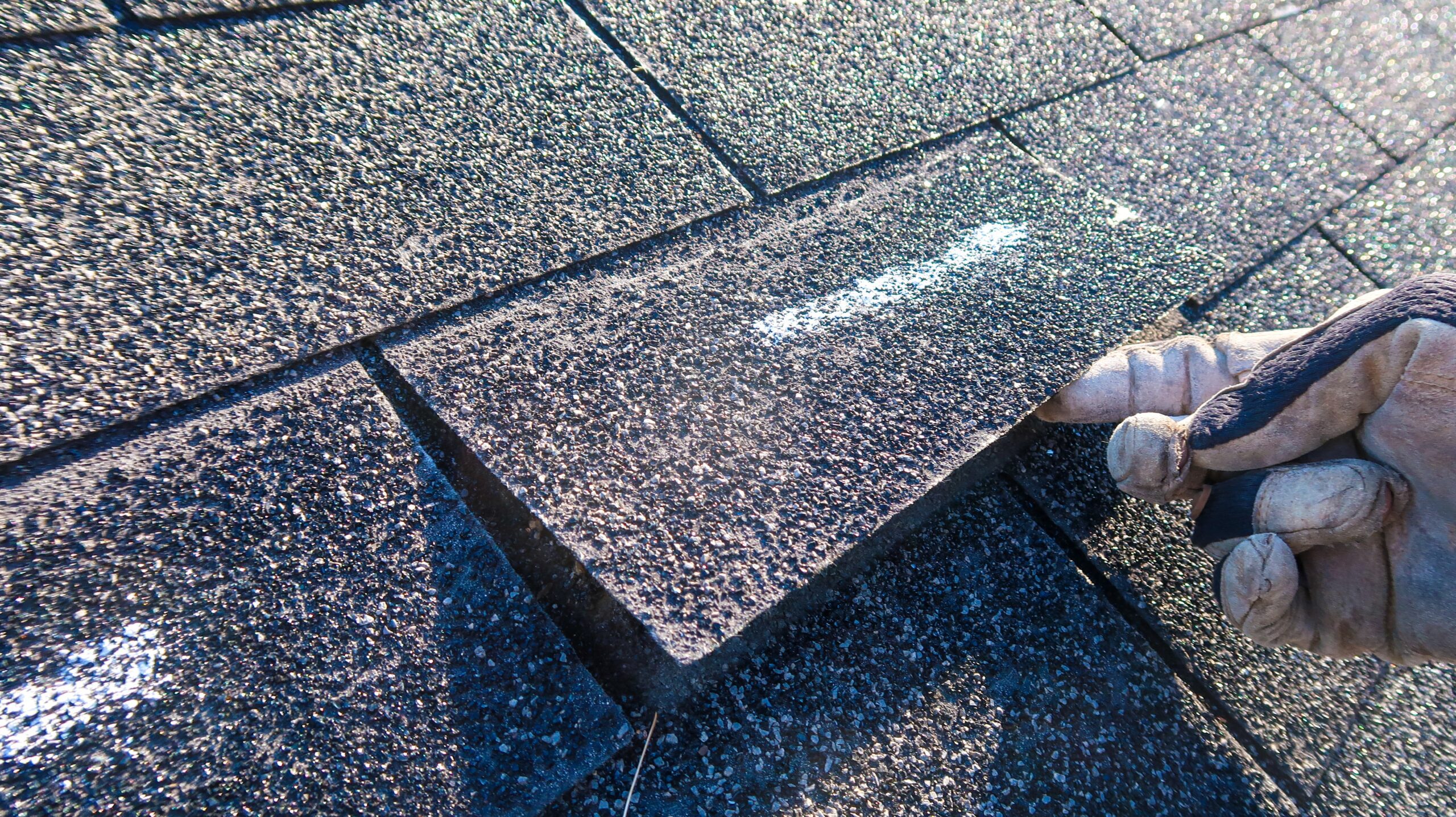
When gutters are full, water splashes over the sides violently during heavy storms. This "splash back" can hit the lower courses of shingles with significant force. Over time, this repetitive impact washes away the protective granules on asphalt shingles.
These granules are not just cosmetic; they protect the asphalt from UV rays. Once the granules are gone, the sun dries out the asphalt, leading to cracking, curling, and eventual failure of the shingle. Proper roof edge safety relies on managing this water flow gently.
The Threat to Roof Decking
The roof deck is the layer of plywood or OSB (Oriented Strand Board) that sits on top of your rafters. Your shingles are nailed into this deck. If water bypasses the gutters and wicks under the edge, the edge of the roof deck begins to rot.
Rotten decking is a severe structural issue. It means the nails holding your shingles and your gutters have nothing solid to bite into. You might notice your gutters starting to pull away from the house or sagging. This is often a sign that the wood behind them has been compromised by years of poor drainage.
If you suspect your roof decking may be compromised, don’t wait. Contact us immediately for an inspection. Catching rot early can save you from a complete roof replacement.
Why Professional Gutter Installation Matters
Many homeowners view gutters as a simple DIY project or a cosmetic addition. However, the engineering behind effective water management is precise. Preventing water damage requires more than just hanging a metal trough on the side of the house.
Proper Pitch and Slope
For gutters to protect your shingles effectively, they must be pitched correctly. If they are perfectly level, water will stand still. If they are pitched too steeply, water will rush too fast and overshoot the downspouts.
Professional installers calculate the precise slope needed based on the length of the gutter run and the roof’s surface area. This ensures that water moves efficiently toward the downspouts, keeping the roof edge dry.
Correct Placement Relative to the Roof Edge
The position of the gutter relative to the roof edge is critical.
- Too High: The gutter may block water from leaving the roof or trap debris against the shingles.
- Too Low: Water may shoot right over the gutter during heavy rain (overshooting).
- Too Far Out: The gap between the fascia and the gutter allows water to drip behind the system.
At Cola City Roofing, our experts ensure that gutters are tucked properly under the drip edge flashing. This flashing is a small metal strip that bridges the gap between the shingle and the gutter, ensuring water cannot wick backward.
Seamless vs. Sectional Gutters
While sectional gutters (the kind you buy in pieces at a hardware store) are popular for DIYers, they pose risks to your roof. Every seam is a potential catch point for debris and a potential leak point.
When a seam leaks, water drips directly onto the area below, often splashing back up onto the fascia or foundation. Seamless gutters, manufactured on-site to fit your home’s exact dimensions, eliminate these weak points. This ensures a smooth, uninterrupted path for water, maximizing gutter protection .
If you are considering upgrading your system, our gutter installation services offer high-quality, seamless options tailored to your home’s specific architecture.
Signs Your Gutters Are Failing Your Roof
How do you know if your gutters are currently putting your shingles at risk? You don’t always need a ladder to spot the warning signs.
1. Tiger Striping on Gutters
Dark vertical streaks on the face of your gutters (often called tiger striping) are usually caused by dirty water overflowing the edge. This indicates that the gutter is not handling the volume of water, either due to a clog or improper sizing. If water is flowing over the front, it’s likely backing up onto the roof too.
2. Sagging or Pulling Away
If your gutters look uneven or are pulling away from the fascia, the wood behind them may be rotting. This is a "chicken and egg" scenario: the failing gutter caused the rot, and the rot is now causing the gutter to fail further.
3. Granules in the Downspout
Check the splash blocks at the bottom of your downspouts. If you see a large accumulation of shingle granules, it could mean that water is splashing back against the roof or that the gutters are holding water, causing the shingle edges to degrade.
4. Peeling Paint Near the Roofline
Look at the exterior walls just below the gutters. Peeling or bubbling paint is a classic sign of moisture intrusion. This suggests that water is escaping the gutter system and running down the wall, threatening both your siding and your roof edge.
5. Mold in the Attic
Sometimes the damage is visible from the inside. Go into your attic and look at the underside of the roof deck along the eaves. If you see dark spots, mold, or water stains, it is highly likely that your gutters are allowing water to back up under the shingles.
Maintenance: The Key to Longevity
Even the best gutter system cannot protect your shingles if it is neglected. Maintenance is the bridge between having gutters and having functional gutters.
Seasonal Cleaning
In Columbia, SC, we have our fair share of pine needles and deciduous leaves. These are the enemies of flow. We recommend cleaning gutters at least twice a year: once in late spring (after the pollen and seeds fall) and once in late autumn (after the leaves drop).
Keeping the trough clear ensures that when a summer thunderstorm hits, the water can evacuate instantly, keeping your roof edge safe from submersion.
Installing Gutter Guards
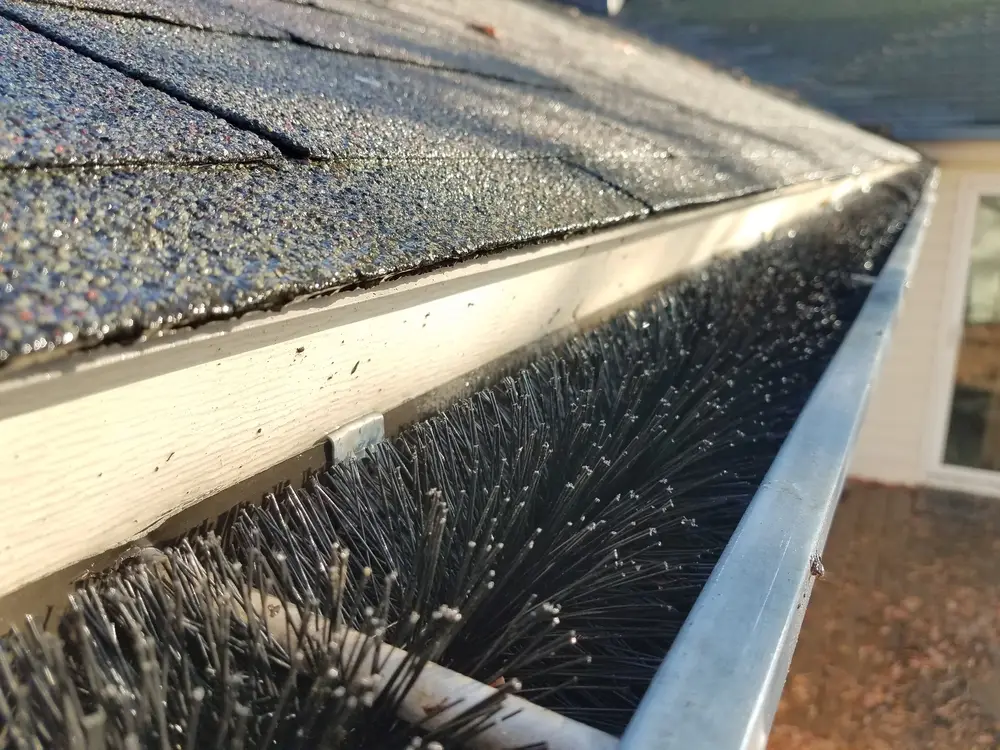
For many homeowners, the hassle of cleaning gutters leads to neglect. This is where gutter guards can be a game-changer for roof edge safety . By installing a mesh or solid cover over the gutter, you prevent large debris from entering the trough while still allowing water to flow through.
This ensures that your system works year-round, protecting your shingles even if you haven’t climbed a ladder in months. While guards reduce maintenance, they don’t eliminate it entirely, but they dramatically lower the risk of dangerous clogs.
Inspecting Flashing
During gutter maintenance, it is vital to check the drip edge flashing. This metal strip should overlap the back edge of the gutter. If it is rusted, bent, or missing, water will run behind the gutter and rot the fascia. A quick visual inspection can save you thousands in carpentry repairs later.
The Financial Impact of Ignoring Gutters
It is easy to push gutter maintenance to the bottom of the to-do list. However, the cost of neglect is high.
Replacing a roof is a significant investment. You want that investment to last its full lifespan—typically 20 to 30 years for asphalt shingles. Chronic gutter issues can cut that lifespan effectively in half for the edges of your roof.
Repairing rotted fascia, soffit, and roof decking is labor-intensive and expensive. It often involves removing the gutters, removing the bottom rows of shingles, cutting out the rotten wood, installing new lumber, and then putting everything back together.
Compared to the cost of regular cleaning or a professional gutter installation, the cost of water damage repair is astronomical. Think of gutters not as an accessory, but as an insurance policy for your roof.
Cola City Roofing: Your Partner in Home Protection
At Cola City Roofing, we understand that a roof is a system. It is not just shingles; it is flashing, decking, ventilation, and drainage. When one part fails, the whole system suffers.
We treat your family home as if it were our own. That means we don’t just slap a roof on and leave. We look at how the water leaves that roof. We inspect the gutters, the downspouts, and the eaves to ensure that your new roof will be protected for decades to come.
Whether you need a complete roof replacement or a targeted solution for drainage issues, we are here to help.
Our Approach to Gutter Services
We offer comprehensive services designed to keep your home dry and safe:
- Assessment: We inspect your current system to identify pitch problems, leaks, or capacity issues.
- Custom Installation: We fabricate seamless gutters on-site to ensure a perfect fit for your home’s dimensions.
- Integration: We ensure proper integration with drip edge flashing to prevent fascia rot.
- Repair: If your system is salvageable, we fix leaks, re-secure loose hangers, and correct slope issues.
Don’t let a small drainage problem turn into a major structural nightmare. If you are unsure about the state of your gutters or how they are affecting your roof, reach out to us.
Contact us today for a free consultation. Let’s ensure your gutters are doing their job so your shingles can do theirs.
Conclusion
The phrase "out of sight, out of mind" is dangerous when applied to home maintenance. Your roof edges and the gutters that protect them are high up and hard to see, but they are working hard every time it rains.
Gutters are the unsung heroes of roof longevity. They prevent water back-up that rots shingles. They stop wicking that destroys roof decking. They manage the flow that would otherwise erode granules and compromise the structural integrity of your home.
By prioritizing gutter protection , investing in quality installation, and maintaining clear pathways for water, you are actively extending the life of your roof. It is a simple equation: effective drainage equals a durable roof.
Take a look at your eaves the next time it rains. Is the water flowing freely? Or is it threatening your shingles? If you don’t like what you see, Cola City Roofing is ready to help you safeguard your home.
Key Takeaways
- Partnership: Gutters and roofs work as a system; failure in one leads to failure in the other.
- Water Damage: Clogged gutters cause water to back up under shingles, leading to rot and granule loss.
- Structural Risks: Poor drainage rots fascia boards and roof decking, compromising the roof’s stability.
- Ice Dams: In freezing conditions, clogged gutters create ice dams that force water into the home.
- Solution: Professional installation and regular maintenance are the best ways to ensure preventing water damage .
Don’t wait for a leak to tell you there is a problem. Be proactive about your roof’s drainage. Visit our gutter installation services page to learn more about how we can upgrade your home’s defense against the elements.