Here in Columbia, the arrival of spring brings a lot to look forward to—warmer weather, blooming azaleas, and longer days. But as every South Carolina resident knows, it also brings the start of storm season. Those sudden, intense thunderstorms can go from a light shower to a torrential downpour in a matter of minutes, putting your home’s exterior to a serious test.
While you might be thinking about your roof, the real frontline workers during a spring storm are your gutters. If they aren’t prepared for the onslaught of rain, wind, and debris, the consequences can be severe, leading to water damage that affects your roof, fascia, and even your foundation.
At Cola City Roofing, we believe that preparation is the best form of protection. Getting your gutters ready for spring isn’t just another chore; it’s one of the most important steps you can take to safeguard your home. A little attention now can prevent major headaches and expensive repairs later. This is a practical look at what spring gutter prep in Columbia really involves and why it’s so critical for protecting your home.
Why Spring Storms in Columbia Put Gutters to the Test
Spring weather in the Midlands is unpredictable. One day it’s sunny and mild, and the next we’re under a tornado watch with high winds and heavy rain. This volatility is precisely what makes spring so hard on gutter systems. It’s not just one factor, but a combination of issues that create a perfect storm for gutter failure.
What Makes South Carolina Spring Rain So Hard on Gutters
First, there’s the sheer volume of water. Spring storms often drop an immense amount of rain in a very short period. A standard roof can collect over a thousand gallons of water from just one inch of rain. When that water comes down all at once, your gutters have to handle a massive surge. If they can’t move that water out as fast as it’s coming in, they overflow.
Second, there’s the debris. Winter leaves behind a mess. Even if you cleaned your gutters in the fall, winter winds and ice can knock down dead branches, pine needles, and loose twigs that settle in your gutter troughs. Spring then adds its own layer of pollen, seed pods, and "tree helicopters." This combination creates a thick, heavy sludge that is particularly effective at blocking downspouts.
Finally, there are the high winds that often accompany our spring storms. These winds don’t just blow debris around; they put direct physical stress on the gutters themselves, testing the strength of every hanger and fastener. A system that was already weakened by the weight of winter debris is highly vulnerable to being pulled loose or damaged by a strong spring gust.
What Spring Gutter Prep Really Means for SC Homes
When we talk about "spring gutter prep," it’s more than just a quick scoop-out of last year’s leaves. It’s a comprehensive check-up to ensure your entire water management system is ready to perform under pressure. For homeowners in South Carolina, this involves a few key steps.
Clearing Winter Debris Before Spring Rain Hits
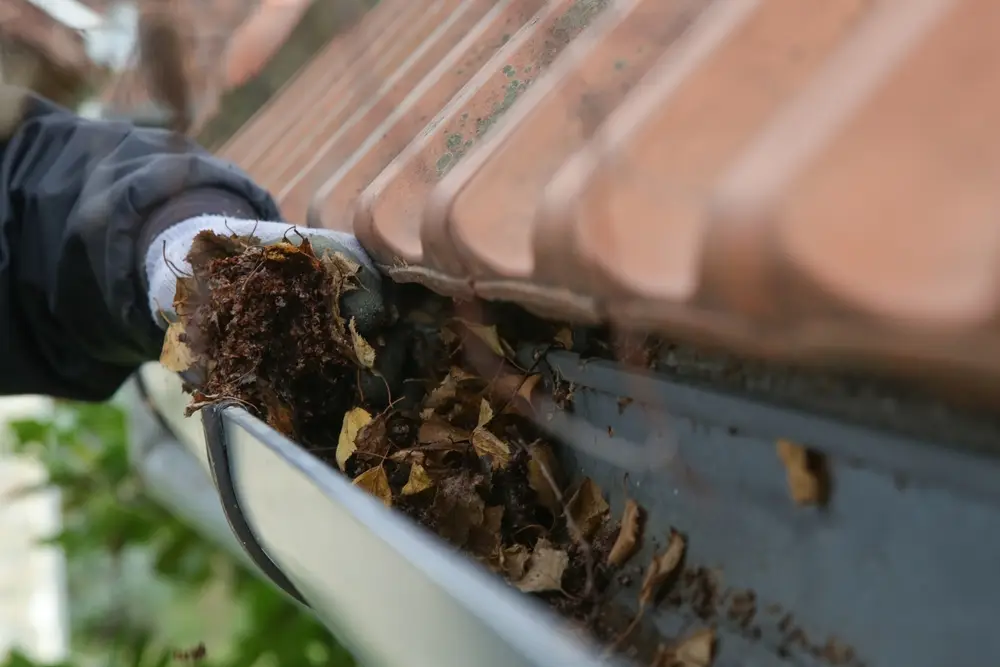
The first and most obvious step is a thorough cleaning. Over the winter, gutters collect a specific type of debris. It’s not just dry leaves; it’s often a damp, compacted mat of pine needles, dirt, and decaying organic matter. This winter layer is heavy and dense, and it’s the primary cause of spring clogs.
A proper spring gutter cleaning involves removing all of this heavy sediment from the troughs. It also means checking the downspouts. It’s common for a clump of leaves to get wedged in the elbow of a downspout, creating a blockage that you can’t see from the ground. Flushing the downspouts with a hose is the only way to be sure they are completely clear from top to bottom. If water backs up at the top when you run the hose, you know you have a clog that needs to be removed before the first big storm.
Checking Gutter Pitch and Downspout Flow
Once the gutters are clean, the next step is to check their function. This is something many homeowners overlook. Gutters are not meant to be level; they must have a slight slope, or "pitch," toward the downspouts to allow gravity to do its job.
Over the winter, the weight of ice and snow can cause gutters to sag, creating low spots where water will pool. A house can also settle, changing the original pitch of the system. A simple way to check this is to run water into the gutter at the end opposite the downspout. Watch how it flows. Does it move steadily toward the outlet, or does it sit stagnant in the middle?
Standing water is a red flag. Not only does it add weight and strain to the system, but it’s also a breeding ground for mosquitoes and a source of corrosion for the gutters themselves. Correcting the pitch is a critical part of spring prep that ensures water moves efficiently when the rain starts pouring.
Common Gutter Problems Homeowners See During Spring Storms
Spring is when underlying gutter problems are forced into the open. That first major downpour acts as a stress test, and if your system has a weakness, the storm will find it. These are the issues we see most frequently when homeowners call us after a storm.
Overflowing Gutters During Heavy Rainfall
This is by far the most common spring complaint. A homeowner looks out their window during a storm and sees a waterfall cascading over the edge of their gutter. In most cases, this is a direct result of a clog. The winter and spring debris has created a dam, and the sudden rush of rainwater has nowhere to go but over the side.
This overflow isn’t just messy; it’s destructive. It can erode your flower beds, saturate the soil around your foundation, and splash mud and dirt all over your siding and windows. More importantly, if the water is overflowing from the back of the gutter, it’s running down your fascia board, initiating a cycle of wood rot.
Loose Gutters and Fasteners After Windy Storms
After a particularly windy spring storm, you might look up and notice your gutter is sagging or has pulled away from the house. This is often a two-part problem. The weight of waterlogged winter debris has been putting a constant strain on the gutter hangers for months. Then, a strong gust of wind gets under the gutter and acts like a sail, putting enough force on the already-weakened fasteners to pull them loose from the wood.
A sagging gutter is a failing gutter. It immediately loses its proper pitch, causing water to pool and making the weight problem even worse. Once a gap opens between the gutter and the roofline, water can run directly behind it, damaging the fascia and soffit.
How Spring Gutter Issues Can Lead to Roof and Fascia Damage
It’s a mistake to think of gutter problems as being separate from your roof. Your roof and gutters form a single, integrated system. When the gutters fail to do their job, the roof is one of the first things to suffer. This is especially true during the intense, repeated storms of a South Carolina spring.
Water Backing Up Along the Roof Edge
The primary job of your gutters during a storm is to keep the water level safely below the edge of your roof. Your shingles and drip edge are designed to shed water downward, but they are not designed to sit in a pool of standing water.
When clogged gutters overflow during a spring storm, the water level rises and makes direct contact with the wooden roof decking and the fascia board. Wood is porous, and through capillary action, it will pull that water upward, under the first course of shingles. This trapped moisture, hidden from view, begins to rot the plywood sheathing from the bottom up. We often see gutter-caused roof damage that is concentrated entirely along the bottom one or two feet of the roof, a direct result of this backup effect.
Rot and Moisture Damage Around Fascia Boards
The fascia board is the trim that your gutters are attached to. It’s also a critical piece that seals the ends of your roof rafters. When gutters overflow, the fascia is the first component to get soaked.
During spring, when you might have a heavy storm every few days, the fascia board never gets a chance to fully dry out. This constant state of dampness is the perfect recipe for wood rot. The paint begins to peel and bubble, the wood darkens, and eventually, it becomes soft and spongy. As the fascia rots, it can no longer hold the gutter screws securely. This is why sagging gutters are so common—the wood they are attached to has failed. This rot can easily spread to the soffits and the ends of the rafters, turning a simple gutter issue into a major structural repair.
Simple Steps That Help Gutters Handle Spring Storms Better
The good news is that most of these catastrophic failures are preventable. Proactive maintenance is the key to ensuring your home sails through storm season without any water-related drama.
Why Spring Gutter Cleaning Is the First Line of Defense
We cannot overstate the importance of a thorough spring cleaning. It is the single most effective thing you can do to prepare for storm season. This cleaning should be part of a basic gutter prep checklist:
- Remove all leaves, pine needles, and sediment from the troughs.
- Visually inspect the gutters for signs of rust, cracks, or holes.
- Check that all hangers and fasteners are secure and tight against the fascia.
- Flush the downspouts to ensure they are completely clear.
- Run water through the system to confirm proper pitch and flow.
Completing this checklist before the first big storm of the season gives you peace of mind, knowing your system is empty, secure, and ready to handle whatever the weather throws at it.
When Gutter Guards Make Sense for SC Rainfall
For many homes in Columbia, especially those with heavy tree coverage from pines or oaks, gutter guards can be a game-changer for spring prep. A high-quality gutter protection system prevents debris from ever entering the trough in the first place.
This means your gutters remain clear and ready for action year-round. You avoid the problem of winter debris creating a foundation for spring clogs. For South Carolina rainfall, it’s important to choose a guard that is designed for high water flow. Some solid-cover guards can be overwhelmed by a torrential downpour, causing water to shoot over the edge. Mesh or perforated guards are often a better choice for our climate, as they allow water to filter through quickly while still blocking leaves and pine straw. While not a substitute for all maintenance, gutter guards can dramatically reduce the frequency of cleanings and provide reliable protection during our intense spring storms.
When Spring Storm Prep Signals You Need Gutter Repair or Replacement
Sometimes, during your spring inspection, you discover that the problems go beyond a simple cleaning. Age, storm damage, and wear and tear can take their toll. It’s important to recognize when you’ve moved past routine maintenance and into the territory of necessary repairs or a full replacement.
How to Tell If Your Gutters Are Past Routine Maintenance
Here are the clear signs that your gutter system is failing and needs professional attention:
- Visible Cracks or Holes: If you can see cracks, rust spots, or holes in the gutter troughs, they will leak. Patching is a temporary fix at best.
- Failed Seams: On older, sectional gutters, the sealant at the seams will eventually dry out and crack. If multiple seams are leaking, it’s a sign the whole system is at the end of its life.
- Widespread Sagging: If you have multiple sections that are pulling away from the fascia, it’s often a sign of both fastener failure and potential fascia rot. Simply hammering the spikes back in won’t solve the underlying problem.
- Dents and Damage: If your gutters are severely dented from ladders or fallen branches, it can impede water flow and create spots for debris to collect.
If you see these issues during your spring prep, it’s time to call a professional for a gutter repair or replacement quote. Investing in a new, seamless system is often more cost-effective than paying for repeated repairs and dealing with the water damage a failing system causes.
Spring Gutter Prep Now Helps Prevent Summer Water Problems
The work you do now pays dividends all year long. Getting your gutters in shape during the spring ensures they are ready not only for spring thunderstorms but also for the heavy rains that can come with hurricane season in the late summer and fall. It’s about establishing a reliable water management system that you don’t have to worry about every time the sky turns dark.
How Professional Gutter Service Prepares Columbia Homes for Storm Season
At Cola City Roofing, we help Columbia homeowners face storm season with confidence. Our professional gutter services go beyond a simple cleaning. We provide a complete inspection to identify potential issues with pitch, fasteners, and downspout capacity. We look for the subtle signs of fascia damage and check the roof edge to ensure your entire system is sound.
Whether it’s a thorough spring gutter cleaning, a targeted repair, or the installation of a new seamless gutter system with high-capacity downspouts, we provide practical solutions designed for the unique challenges of South Carolina weather.
Don’t wait for the first storm to find out if your gutters are ready. Be proactive. If you have any concerns about your home’s ability to handle the coming rains, give us a call. We’ll provide an honest assessment and a clear plan to make sure your home is protected, keeping your family safe and dry all season long.