When most homeowners think about gutters, they look up. They think about the roof, the fascia boards, and maybe the siding. It makes sense; the primary job of a gutter system is to capture rainwater shedding off the roof. However, the most destructive consequences of a failed gutter system often happen down below—right under your feet.
Your landscaping and your driveway are two of the most expensive exterior features of your home. You invest weekends planting flowers, mulching beds, and manicuring the lawn. You rely on your driveway for safe, everyday access. Yet, without a functioning gutter system, a single heavy storm can undo thousands of dollars in landscaping work and slowly destroy the concrete or asphalt of your driveway.
In this in-depth guide, we will look down instead of up. We will explore the critical relationship between your roof’s drainage system and the ground surrounding your home. From preventing soil erosion to stopping concrete from cracking, we will cover how gutters act as the silent guardians of your property’s curb appeal and structural integrity.
The destructive Power of Uncontrolled Water
To understand why gutters are necessary for ground-level protection, you have to respect the power of water. Water is heavy, persistent, and incredibly abrasive. When rain falls on your roof, it gathers speed and volume. Without gutters to intercept it, that water sheets off the edge of the roof, crashing down to the ground with significant force.
Imagine a pressure washer aimed at the same spot in your garden for an hour. That is essentially what happens during a heavy downpour without gutters. This concentrated "drip line" creates a trench around your home, splashing mud onto your siding and digging into the earth. But the damage goes far deeper than just a muddy mess.
The Physics of Erosion
Soil erosion is the process by which topsoil is worn away by water or wind. In a residential setting, roof runoff is the number one cause of accelerated erosion. When water hits the ground from a height of 10 or 20 feet, it displaces soil particles. Once displaced, these particles are carried away by the flowing water.
This process strips your yard of the nutrient-rich topsoil your plants need to survive. It exposes tree roots, destabilizes stone walkways, and creates unsightly ruts in your lawn. Properly installed gutters interrupt this physics experiment by catching the water before it falls and guiding it gently to a designated drainage point.
How Gutters Save Your Landscaping
Your garden is an ecosystem. It requires a delicate balance of water, sunlight, and nutrients. Uncontrolled roof runoff disrupts this balance violently. Here is how a quality gutter system protects your green investment.
1. Preventing "Trenching" and Soil Displacement
The most immediate sign of gutter failure is a trench line directly beneath the eaves of the roof. If you walk around a house with no gutters (or clogged ones), you will often see a divot in the ground that mirrors the roofline.
This trenching destroys flower beds. If you have planted delicate perennials, shrubs, or ground cover near the foundation, the force of the falling water can:
- Expose Roots: Roots need soil for stability and nutrient absorption. When soil washes away, roots dry out and the plant dies.
- Uproot Plants: Smaller plants can be completely washed out of the ground during a severe storm.
- Wash Away Mulch: Mulch is expensive. Without gutters, a heavy rain will lift your mulch and float it into the yard or driveway, leaving your beds bare and your money wasted.
By channeling water to downspouts, gutters preserve the soil structure and keep your mulch where it belongs.
2. Protecting Plants from Drowning
While some plants love water, very few love to be submerged. When roof runoff is allowed to pool around the foundation, it creates boggy, saturated soil conditions.
Most residential plants—like hydrangeas, roses, and boxwoods—suffer from "wet feet" if the soil doesn’t drain. This over-saturation leads to root rot, a fungal condition that kills the roots and eventually the entire plant. Signs of over-watering include yellowing leaves, wilted stems (even when the soil is wet), and stunted growth.
A functional gutter system, perhaps paired with gutter installation services to ensure proper capacity, directs this excess water away from your planting beds, ensuring your garden gets hydrated, not drowned.
3. preventing Fungal Diseases
Gardens are susceptible to fungus and mold, especially in humid climates. Many of these diseases are spread through splashing water. When rain hits the dirt violently, it splashes soil particles up onto the leaves of your plants.
Soil-borne pathogens (like blight on tomatoes or black spot on roses) rely on this splash mechanism to infect the foliage. By catching the rain at the roof edge, gutters eliminate the splash zone, keeping the foliage cleaner and significantly reducing the risk of disease transmission.
4. Preserving Hardscaping
Landscaping isn’t just about plants; it’s also about hardscaping—retaining walls, stone pathways, and decorative edging.
- Retaining Walls: Water is the enemy of retaining walls. When soil behind a wall becomes saturated with roof runoff, it becomes heavier (hydrostatic pressure). This added weight pushes against the wall, causing it to lean, crack, or collapse.
- Pavers and Walkways: Excess water washing over stone pavers can erode the sand base beneath them. Over time, this causes the pavers to sink, shift, and become uneven, creating a tripping hazard and ruining the aesthetic of your walkway.
The Concrete Connection: Gutters and Your Driveway
Your driveway is likely the largest hard surface on your property. Whether it is poured concrete or asphalt, it relies on a stable sub-base to remain flat and crack-free. Water is the primary destabilizer of this sub-base.
1. Understanding Sub-Base Erosion
Concrete is strong, but it is brittle. It cannot bridge a gap if the ground beneath it disappears. The gravel or dirt layer under your driveway is designed to support the weight of your vehicles.
If your downspouts discharge water right next to the driveway, or if overflowing gutters dump water along the driveway’s edge, that water seeps underneath the slab. As it flows through the sub-base, it carries sediment with it. Slowly, a void forms under the concrete.
Once a void exists, the concrete has no support. The next time you drive your car over that spot, the concrete cracks under the weight. This type of damage is often irreparable and requires cutting out and replacing sections of the driveway.
2. The Freeze-Thaw Cycle
In colder months, water becomes an even bigger threat. Concrete acts like a hard sponge; it is porous and absorbs small amounts of water.
If your gutters are clogged or draining improperly, water may pool on or near your driveway. When the temperature drops below freezing, that water turns to ice. Water expands by about 9% when it freezes. This expansion creates microscopic cracks in the concrete surface (spalling) or widens existing cracks.
Furthermore, if the soil under the driveway freezes while saturated, it heaves upward. This frost heave can lift entire slabs of concrete, creating dangerous trip hazards and uneven surfaces that interfere with snow shoveling or blowing. Preventing ice and water damage starts with keeping that water away from the concrete in the first place.
3. Preventing Algae and Moss Growth
Have you ever seen a driveway that is slick with green slime or covered in moss patches? That is a sign of chronic moisture.
When gutters overflow onto a driveway, that area stays wet long after the rain stops. This constant dampness is the perfect breeding ground for algae, moss, and lichen. Not only are these growths unsightly, turning your clean concrete a dingy green or black, but they are also incredibly slippery. A mossy driveway is a slip-and-fall lawsuit waiting to happen.
Proper drainage keeps the driveway surface dry, inhibiting organic growth and keeping the surface safe for walking.
4. Avoiding Driveway Stains
Roof runoff isn’t clean water. It picks up dust, pollen, bird droppings, and shingle granules as it travels down the roof. If this dirty water splashes onto your driveway consistently, it leaves behind difficult-to-remove stains. Over years, this can permanently discolor your concrete, making your home look aged and poorly maintained.
The Importance of Downspout Placement
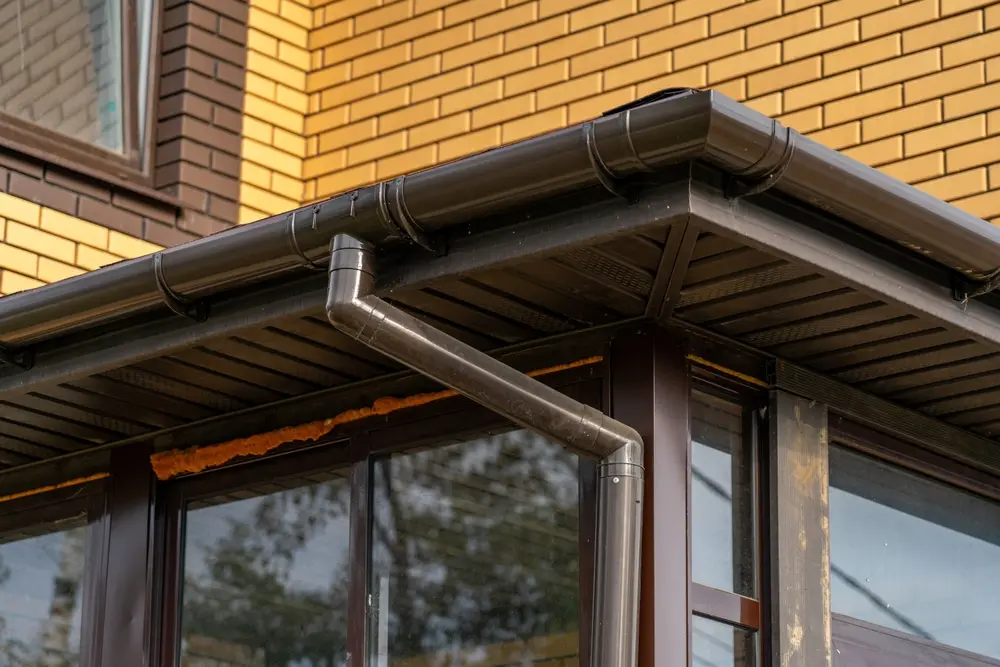
Having gutters is step one. Step two is ensuring the downspouts—the vertical pipes that carry the water down—are placed correctly. The goal is to move water from the roof to a location where it can drain harmlessly away from the house and hardscaping.
Extending the Flow
A common mistake is having a downspout that terminates right at the foundation or directly onto the corner of a driveway. This concentrates all the roof’s water into one dangerous spot.
- Splash Blocks: Simple plastic or concrete pads that sit under the downspout to disperse the energy of the water and direct it a few feet away.
- Flexible Extensions: Corrugated plastic tubes that can be bent and extended to carry water 4-6 feet away into the yard.
- Underground Drains: The gold standard for protection. The downspout connects to a solid PVC pipe buried underground, which carries the water far away to a pop-up emitter in the lawn or a storm drain. This keeps the water completely away from landscaping beds and driveways.
If your downspouts are currently dumping water onto your patio or driveway, contact a professional for gutter repair services . Re-routing a downspout is a simple fix that can save you thousands in concrete repair.
Landscaping Design that Works WITH Gutters
While gutters do the heavy lifting, your landscaping choices can assist in water management. This concept is often called "hydro-zoning" or smart drainage design.
1. Grading
The ground around your home should always slope away from the foundation. A good rule of thumb is a drop of 6 inches for the first 10 feet. This ensures that any water that does miss the gutter flows away from the house rather than back toward it.
2. Rain Gardens
If you have a low spot in your yard where gutter water naturally tends to flow, consider turning it into a rain garden. A rain garden is a planted depression that allows rainwater runoff to be absorbed into the ground.
Plant it with native, deep-rooted species that can tolerate "wet feet" and occasional flooding. This turns a drainage problem into a beautiful landscape feature that filters pollutants and supports local pollinators.
3. French Drains
For driveways that sit lower than the surrounding land, gutters alone might not be enough. Installing a French drain (a perforated pipe buried in gravel) along the edge of the driveway can capture surface water and gutter runoff, moving it swiftly away before it can saturate the sub-base.
4. Permeable Pavers
If you are redesigning your driveway or walkways, consider permeable pavers. These allow water to trickle through the joints between the stones and into the ground below, rather than running off in a sheet. This reduces the burden on your storm drains and prevents puddling.
Signs Your Gutters are damaging Your Landscape
You don’t need to be a structural engineer to spot trouble. Your yard will tell you if your water management system is failing. Look for these red flags:
- Mud Splatter on Siding: If the bottom two feet of your house siding are constantly dirty or muddy, it means rain is hitting the ground hard and splashing back up. This is a classic sign of no gutters or overflowing gutters.
- Exposed Roots: If you can see the tops of roots on your shrubs or trees near the house, soil is being washed away.
- Cracks in the Driveway: Look specifically at the edges of the driveway nearest the downspouts. Cracks or settling in these areas indicate sub-base erosion.
- Pooling Water: Puddles that remain for more than 24 hours after a rainstorm indicate poor drainage or saturated soil.
- Yellowing Plants: As mentioned, if plants near the drip line look sickly despite regular rain, they may be drowning.
Maintenance: The Key to Protection
Investing in a high-quality gutter system is useless if it is not maintained. A clogged gutter is arguably worse than no gutter at all, as it concentrates water flow over specific overflow points.
- Seasonal Cleaning: Clean your gutters at least twice a year—late spring (after pollen season) and late fall (after leaves drop).
- Check Downspouts: Ensure they are not clogged. A clear trough does no good if the pipe is blocked. Run a hose down the spout to verify flow.
- Inspect for Leaks: Check corners and seams for drips. Even a small leak can drill a hole in your flower bed over time.
For homeowners who want to avoid the ladder work, professional maintenance or the installation of gutter guards can keep the system flowing freely year-round.
Conclusion
Your home’s exterior is an interconnected system. The roof protects the interior, the siding protects the frame, and the gutters protect the ground. When you neglect your gutters, you aren’t just risking a wet basement; you are actively degrading the landscaping you love and the driveway you need.
Think of gutters as the traffic controllers of rainwater. They ensure that the massive volume of water hitting your roof travels safely, predictably, and harmlessly away from your property. By maintaining this system, you protect the soil, the plants, the concrete, and ultimately, the value of your home.
Don’t let a rainstorm ruin your hard work. If you notice signs of erosion, puddling, or driveway cracking, it is time to assess your drainage. Whether you need a simple tune-up or a full replacement, the team at Cola City Roofing is here to help. We specialize in comprehensive exterior solutions, ensuring your roof and gutters work together to protect every inch of your property.
Contact us today for an inspection, and let us help you keep your landscaping beautiful and your driveway solid for years to come.
Key Takeaways
- Erosion Control: Gutters prevent the "waterfall effect" that strips topsoil and exposes plant roots.
- Driveway Defense: Proper drainage prevents water from undermining the concrete sub-base, stopping cracks and settling.
- Plant Health: Directing water away prevents root rot and fungal diseases in your garden beds.
- Hardscape Protection: Gutters stop hydrostatic pressure from blowing out retaining walls and shifting pavers.
- Maintenance Matters: Clogged gutters cause overflows that can be more damaging than having no gutters at all.
Frequently Asked Questions
Q: Can I just use a splash block for my downspout? A: Splash blocks are better than nothing, but they often aren’t enough. They only move water about 2 feet away. Ideally, you want water discharged at least 4 to 6 feet away from the foundation and driveway to ensure safety.
Q: My driveway is already cracked near the downspout. Can gutters fix it? A: Fixing the gutters will stop future damage, but it won’t heal the concrete. You will need to repair the concrete separately. However, repairing the concrete without fixing the drainage issue first is a waste of money, as the new concrete will crack again.
Q: How do rain chains work compared to downspouts? A: Rain chains are decorative alternatives to downspouts. They guide water down chains or cups. While beautiful, they are generally less effective at handling heavy volume than a traditional pipe and can allow more splashing, so they are best used in areas away from the foundation or driveway.
Q: How often should I inspect my gutters for landscaping damage? A: It’s best to do a "perimeter check" during or immediately after a heavy rainstorm. Grab an umbrella and walk around your house. Look for where the water is going. If you see splashing, pooling, or overflowing, you have an issue to address.
Q: Do seamless gutters help with landscaping protection? A: Yes. Seamless gutters leak less than sectional ones. Leaks at seams often drip directly onto plants below, drilling holes in the soil. Seamless gutters eliminate these drip points, providing better protection for delicate flower beds.