In the high-stakes world of industrial roofing, productivity and profit margins often dominate the conversation. However, there is one metric that supersedes all others: safety. An industrial roof is a dynamic, hazardous environment. Between the height, the heavy machinery, the weather conditions, and the sheer scale of the structures, the potential for accidents is ever-present.
For facility managers and business owners, ensuring that your roofing contractor adheres to strict safety standards isn’t just about moral responsibility—it’s about operational continuity and liability management. A single accident can shut down a job site for weeks, trigger massive fines, and cause irreparable reputational damage.
At Cola City Roofing , safety is not a checklist; it is our culture. We believe that the only successful project is one where every crew member goes home safe at the end of the day. As Columbia, SC’s leading roofing experts, we adhere to rigorous safety protocols that meet or exceed industry standards.
In this guide, we will explore the critical landscape of industrial roofing safety. We will discuss common hazards, the role of OSHA guidelines, and why hiring a compliant contractor is the best business decision you can make. For a full overview of how safety integrates into large-scale systems and compliance planning, review our commercial and industrial roofing services in South Carolina.
Disclaimer: This article is for informational purposes only and does not constitute legal advice. Safety regulations are subject to change. Always consult with a qualified safety professional or legal counsel regarding specific compliance requirements.
The High Cost of Cutting Corners
Why does safety matter so much in industrial roofing? The answer lies in the statistics. Construction falls remain the leading cause of fatalities in the industry. But beyond the tragic human cost, the business impact of non-compliance is staggering.
Operational Disruption
If an accident occurs on your property, the project stops immediately. Investigations by regulatory bodies can freeze work for days or weeks. For an industrial facility trying to maintain production schedules while a roof is being replaced overhead, this downtime is disastrous.
Liability Concerns
While contractors carry insurance, property owners are not immune to liability. If you hire a contractor with a known history of safety violations, you could be drawn into legal battles regarding negligence. Hiring a compliant, fully insured partner like Cola City Roofing shields you from these risks.
Quality of Workmanship
There is a direct correlation between safety and quality. A crew that rushes, skips safety steps, and works in a chaotic environment is more likely to cut corners on the actual roofing installation. Safe crews are disciplined crews, and disciplined crews install superior roofs.
Learn more about our disciplined approach on our About Us page .
Understanding the Hazards: What We Are Up Against
To understand safety compliance, you must first understand the specific dangers inherent to industrial roofing. These aren’t just "slippery slopes"; they are complex environmental hazards. Roofing material selection directly impacts jobsite risk levels. Certain membranes perform better in high-heat or chemical environments. See our breakdown of industrial roofing materials to understand how material choice influences long-term safety.
1. Fall Hazards
This is the most obvious danger. Industrial roofs are often 20, 30, or 50 feet in the air. But the edge of the roof isn’t the only risk.
- Unprotected Edges: The perimeter of the roof requires strict control zones.
- Skylights: These are often fragile. A worker stepping on a skylight can fall through to the factory floor below.
- Roof Hatches: Open access points are essentially holes in the floor that people can stumble into.
2. Hazardous Substances
Industrial roofs often vent chemical byproducts from the manufacturing process below. Roofing crews may be exposed to fumes, dust, or residues that are toxic. Furthermore, older industrial buildings may still contain asbestos in the existing roofing materials or insulation.
3. Electrical Hazards
Industrial roofs are often home to high-voltage HVAC units, transformers, and conduits. Accidental contact with a live wire during a tear-off can be fatal. Additionally, overhead power lines near the building perimeter pose a risk to cranes and ladders.
4. Heat Stress
In South Carolina, the summer sun can heat a black EPDM or asphalt roof to over 150°F. Heat exhaustion and heat stroke are real threats. Compliance involves mandatory water breaks, shade stations, and monitoring crew health.
In storm-prone regions like South Carolina, heat stress planning must also account for rapid weather shifts and severe storm exposure. Our guide to industrial storm mitigation explains how facility design and roofing systems reduce weather-related risk.
5. Material Handling
Industrial roofing involves moving tons of material—heavy rolls of membrane, pallets of insulation, and buckets of adhesive. Back injuries and muscle strains from improper lifting are common if ergonomic protocols aren’t followed.
Large production environments such as distribution hubs and agricultural storage facilities require coordinated access planning. Explore how roofing strategy differs for agricultural and warehouse roofing systems.
OSHA and Industrial Roofing: The Framework for Safety
The Occupational Safety and Health Administration (OSHA) sets the federal standards for construction safety. For industrial roofing, these regulations are extensive and specific. A reputable contractor doesn’t just "know" these rules; they live by them.
Fall Protection (OSHA Standard 1926.501)
This is the big one. OSHA requires employers to provide fall protection systems for workers on walking/working surfaces with an unprotected side or edge which is 6 feet or more above a lower level.
Common Compliance Methods We Use:
- Personal Fall Arrest Systems (PFAS): This includes the full-body harness, the lanyard, and the anchor point. Every worker near an edge is tied off. If a fall occurs, the system arrests the fall before the worker hits the ground.
- Guardrail Systems: Temporary rails installed around the perimeter of the roof or around open hatches. This is a passive system that physically prevents a fall.
- Warning Line Systems: For low-slope roofs, we can set up a flagged warning line 6 feet (or more) from the edge. Workers inside the line don’t need to be tied off, but no work is permitted outside the line without a harness.
- Safety Monitors: In specific low-slope situations, a competent person is designated solely to monitor workers and warn them of fall hazards. This person has no other duties that could distract them.
Ladder Safety (OSHA Standard 1926.1053)
Ladders are a major source of injuries. Compliance involves:
- Extending the ladder 3 feet above the landing surface.
- Securing the ladder at the top and bottom to prevent slipping.
- Maintaining "three points of contact" while climbing.
Hazardous Communication (HazCom)
Workers have a "right to know" about the chemicals they are working with.
- Safety Data Sheets (SDS): We maintain a library of SDS for every adhesive, primer, and sealant used on the job.
- Training: Crews are trained on how to handle these chemicals safely and what to do in case of a spill or exposure.
The Cola City Roofing Safety Protocol
We don’t rely on luck. We rely on a system. Our safety protocol is integrated into every phase of our roofing services .
Phase 1: Pre-Job Hazard Assessment
Before a single ladder is set up, our project managers conduct a site walkthrough. We identify:
- Power line proximity.
- Skylight locations (and plan for caging them).
- Access points and staging areas.
- Traffic patterns of the client’s employees (to ensure we don’t drop debris on them).
This assessment creates a site-specific safety plan that every crew member must review and sign.
Phase 2: Daily Tool Box Talks
Every morning, before work begins, the crew gathers for a "Tool Box Talk." This is a briefing where we discuss the specific hazards for that day.
- Is it going to be exceptionally hot?
- Are we tearing off near the edge today?
- Is there a crane lift scheduled?
This keeps safety top-of-mind and combats complacency.
Phase 3: Equipment Inspection
A safety harness with a frayed strap is useless. A ladder with a bent rung is a trap. Our crews are trained to inspect their Personal Protective Equipment (PPE) daily. Any defective gear is immediately taken out of service and destroyed to prevent accidental use.
Phase 4: Ongoing Site Monitoring
Our site supervisors are empowered to stop work immediately if they see an unsafe practice. We have a "zero tolerance" policy for willful safety violations.
Protecting Your Facility and Your People
While we focus on protecting our crew, our safety protocols are also designed to protect you —your building, your employees, and your inventory.
Debris Containment
A roof tear-off generates massive amounts of waste. We use trash chutes and designated dump zones to ensure that old insulation and sharp metal fasteners don’t rain down on your parking lot or loading docks. We cordon off these zones with high-visibility tape and signage.
Interior Protection
Dust and debris can sift through the roof deck during replacement, potentially contaminating your production line. In sensitive industrial environments (like food processing or electronics manufacturing), we install interior containment tarps suspended from the ceiling to catch falling dust.
Fire Safety
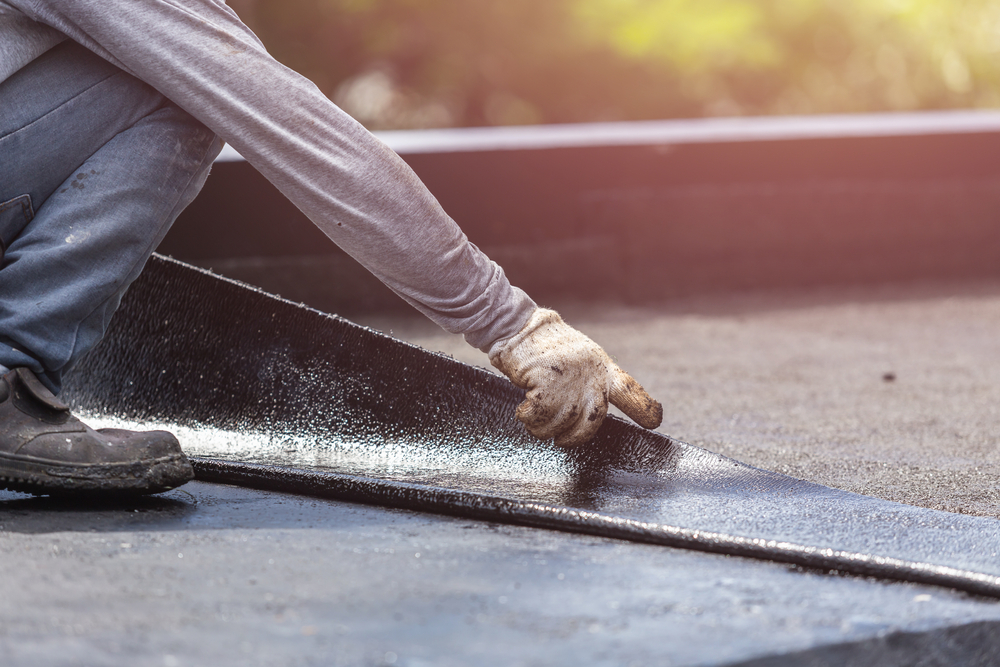
Many industrial roofing systems involve heat. Torch-down modified bitumen roofing uses open flame.
- Fire Watch: When using torches, we designate a "fire watch" personnel whose only job is to watch for sparks or smoldering material for at least one hour after work stops.
- Fire Extinguishers: We maintain fully charged extinguishers within easy reach of all work areas.
For more on how we handle complex projects, visit our projects before and afters page.
Skylight Safety: A Critical Focus
Skylights are one of the most dangerous features on an industrial roof. Over time, the plastic glazing becomes brittle and clouded with dirt. To a worker focusing on a task, a dirty skylight can look just like a patch of gray roof. Stepping on it results in an immediate fall to the interior.
Our Approach:
- Identification: We map all skylights during the initial survey.
- Protection: Before work begins nearby, we install skylight cages or screens that can support the weight of a worker. Alternatively, we build wooden curbs/covers over them.
- Replacement: Often, the best safety measure is to replace old, brittle skylights with modern, impact-resistant units. This improves safety and increases natural light in your facility.
In manufacturing facilities where ventilation and natural lighting are critical, roof layout planning must account for equipment density and worker pathways. Our guide to manufacturing facility roofing systems outlines how roof design supports both safety and performance.
Crane and Heavy Equipment Safety
Industrial roofing often requires lifting heavy loads—HVAC units, pallets of TPO, or rolls of insulation—using cranes. Crane operations are high-risk events.
Key Compliance Steps:
- Ground Stability: Ensuring the crane is set up on firm, level ground that can support the outriggers. We check for underground utilities that could collapse under the weight.
- Swing Radius: Marking off the area where the crane’s counterweight swings to prevent crushing injuries.
- Certified Operators: We only work with certified crane operators and qualified riggers who know how to strap loads securely.
If your project requires significant heavy lifting, rest assured we handle the logistics with precision. Contact us to discuss your project needs at our Contact Us page .
The Role of Training and Certification
Safety gear is only as effective as the person using it. Training is the backbone of compliance.
OSHA 10-Hour and 30-Hour Training
Our key personnel undergo OSHA safety training courses. This education covers the recognition, avoidance, abatement, and prevention of safety and health hazards in workplaces.
Specialized Competency
Certain tasks require specific certifications.
- Torch Safety: Certification for safe handling of propane torches.
- Forklift/Telehandler Certification: For operating material handling equipment.
- First Aid/CPR: Having crew members trained to respond in those critical first minutes after an incident.
Why "Cheapest Bidder" Often Means "Highest Risk"
When evaluating bids for an industrial roofing project, you will often see a wide spread in pricing. It is tempting to choose the lowest number. However, you must ask: What is being cut to reach that price?
Often, the cuts are in safety.
- The cheap bidder might not invest in guardrails.
- They might not replace worn-out harnesses.
- They might skip the drug testing or training programs for their crew.
- They might classify their workers incorrectly to avoid paying workers’ comp premiums.
If an accident happens on your property involving an uninsured or under-insured contractor, the legal and financial fallout lands on your desk. The "savings" from the low bid evaporate instantly.
Cola City Roofing provides competitive pricing, but we never compromise on the safety line items. Our bid includes the cost of doing the job right and doing it safely .
Storm Damage and Emergency Safety
After a hurricane or severe storm, the roof environment becomes even more hostile. Structural decks may be weakened, surfaces may be slippery, and debris may be unstable.
Emergency tarping and mitigation require a heightened level of safety awareness. We do not send crews onto a roof during active high winds or lightning. Once the weather clears, we perform a stability assessment before allowing workers to proceed with repairs.
If you have storm damage, prioritize safety. Do not send your own maintenance staff up to check it unless they are trained and equipped for roof access. Call the professionals.
Learn about our emergency response on our Storm Damage Consultations page .
Client Cooperation: A Partnership in Safety
Safety is a two-way street. As the facility owner, you play a role in maintaining a safe job site.
How You Can Help:
- Clear Access: Ensure our trucks and equipment have clear access to the staging areas.
- Communication: Inform your staff about the work schedule and areas to avoid.
- Lockout/Tagout: If we are working around exhaust fans or HVAC units, we may need your facility team to de-energize (turn off and lock) those units to prevent them from starting up while our hands are inside or near them.
We coordinate closely with your facility manager to ensure these protocols are followed with minimal disruption to your operations.
The Future of Roofing Safety
Technology is making industrial roofing safer.
- Drones: We use drones for initial inspections, reducing the need for humans to climb onto unknown or damaged roofs.
- Wearables: Smart helmets and vests are being developed that can detect heat stress or falls and alert supervisors.
- Better Materials: Lightweight roofing membranes reduce the physical strain on workers compared to heavy gravel ballasts.
At Cola City Roofing, we stay at the forefront of these advancements to protect our team and your property.
Conclusion: Safety is Our Promise
In the industrial sector, reliability is everything. You need a roof that performs, and you need a contractor you can trust.
When you see a Cola City Roofing crew on your building, you will see harnesses worn correctly. You will see warning lines set up. You will see a clean, organized job site. These are the visual indicators of a professional company that respects its workers and respects your business.
Don’t gamble with liability. Choose the partner that puts safety first.
Ready to start your project with a safety-focused team? Whether it’s a repair, a replacement, or a maintenance inspection, we are ready to serve you with excellence and integrity.
Contact Cola City Roofing Today Get Your Free Estimate
We proudly serve Columbia, SC, and surrounding areas. Check our service locations to see if we are in your neighborhood.
Related Resources
Cola City Roofing – Safety. Quality. Integrity. https://colacityroofing.com/
Detailed FAQ: Safety Questions for Facility Managers
Q: Do I need to vacate my building during the roof replacement? A: In most cases, no. We plan our safety zones and debris removal so that your operations can continue. However, for specific areas directly under heavy work, we might restrict access temporarily.
Q: Are your workers insured? A: Yes, absolutely. We carry full General Liability and Workers’ Compensation insurance. We are happy to provide a Certificate of Insurance (COI) upon request.
Q: What happens if a tool falls off the roof? A: We take extensive measures to prevent this (toe boards, tool tethers, debris netting). However, this is why we establish "controlled access zones" on the ground. No one is allowed in the drop zone without a hard hat and authorization.
Q: Can your crew work at night to avoid traffic? A: Yes, we can accommodate off-hours work. Night work requires additional safety lighting setups to ensure visibility meets OSHA standards.
Q: How do you handle asbestos? A: If we suspect asbestos in the existing roof, we stop and have it tested. If confirmed, we bring in licensed abatement specialists to remove it safely before we continue our work. We strictly follow all state and federal environmental regulations.