When managing an industrial facility, the roof overhead does far more than just keep the rain out. It protects millions of dollars in equipment, inventory, and personnel. Unlike residential homes, industrial buildings have unique structural requirements, vastly different footprints, and face specific environmental stressors. Choosing the right material isn’t just a construction decision; it is a critical business asset strategy. For facility owners evaluating long-term performance and compliance requirements, our commercial and industrial roofing services in South Carolina provide engineered solutions tailored to high-demand environments.
In this comprehensive guide, we will explore the landscape of industrial roofing materials. We will break down the most popular options, their specific advantages, and the applications where they shine brightest. Whether you are constructing a new manufacturing plant or looking to replace an aging warehouse roof, understanding these materials is the first step toward a secure facility.
At Cola City Roofing , we understand that every square foot of your industrial roof matters. As the #1 Roofing Company in Columbia, SC, we bring years of expertise to every project, ensuring your business stays covered no matter the weather.
The Unique Demands of Industrial Roofing
Before diving into specific materials, it is crucial to understand what makes industrial roofing different from commercial or residential roofing. Industrial facilities often include factories, warehouses, power plants, and distribution centers. These structures typically feature:
- Low Slope or Flat Designs: Most industrial roofs are flat or low-slope to accommodate HVAC units, exhaust fans, and other machinery.
- Large Surface Areas: Industrial roofs often cover tens or hundreds of thousands of square feet, making cost-per-square-foot a major factor.
- Chemical and Heat Exposure: Manufacturing processes often release chemicals, steam, or high heat that can degrade standard roofing materials.
Because of these factors, the materials used must be durable, flexible, and capable of withstanding rigorous conditions for decades.
Facilities with heavy exhaust systems or corrosive output often require specialized planning. Our guide to manufacturing facility roofing systems breaks down how ventilation, chemical discharge, and rooftop equipment impact material selection.
1. Thermoplastic Polyolefin (TPO)
TPO has rapidly become one of the most popular industrial roofing materials in the United States. It is a single-ply reflective roofing membrane made from polypropylene and ethylene-propylene rubber polymerized together.
Key Benefits of TPO
- Energy Efficiency: TPO membranes are typically white and highly reflective. This reflects UV rays away from the building, significantly lowering cooling costs during hot South Carolina summers.
- Durability: It is resistant to mold, dirt accumulation, and physical impact. The flexibility of the material allows it to handle building movement and thermal expansion without cracking.
- Cost-Effective: Compared to other rolled rubber roofing, TPO offers a compelling balance of performance and price.
Best Applications
TPO is an excellent choice for warehouses and distribution centers where temperature control is vital for inventory preservation. If your facility has a flat roof and you are looking to reduce HVAC strain, TPO is a top contender.
If your current TPO roof is showing signs of wear, our team can assess the damage. Learn more about our approach to maintaining these systems on our roofing services page .
2. Ethylene Propylene Diene Monomer (EPDM)
Often referred to as "rubber roofing," EPDM is a synthetic rubber roofing membrane that has been a staple in the industrial sector for decades. It is available in both black and white, though the black variety is most common.
Key Benefits of EPDM
- Longevity: A well-installed EPDM roof can last upwards of 30 years. It has an incredible track record of performance.
- Hail Resistance: Due to its rubber composition, EPDM absorbs impact energy better than rigid materials, making it resistant to hail damage—a crucial factor during storm season.
- Ease of Repair: If punctures occur, EPDM is relatively easy to patch, which helps minimize downtime for your facility.
Best Applications
EPDM is ideal for industrial facilities in cooler climates or where the primary goal is heating cost reduction (the black surface absorbs heat). However, in warmer climates like Columbia, SC, it is still widely used due to its sheer durability against UV radiation and thermal shock.
For facilities that have suffered storm damage, EPDM’s repairability is a major asset. Check out our storm damage consultations to see how we handle post-storm assessments.
3. Metal Roofing Systems
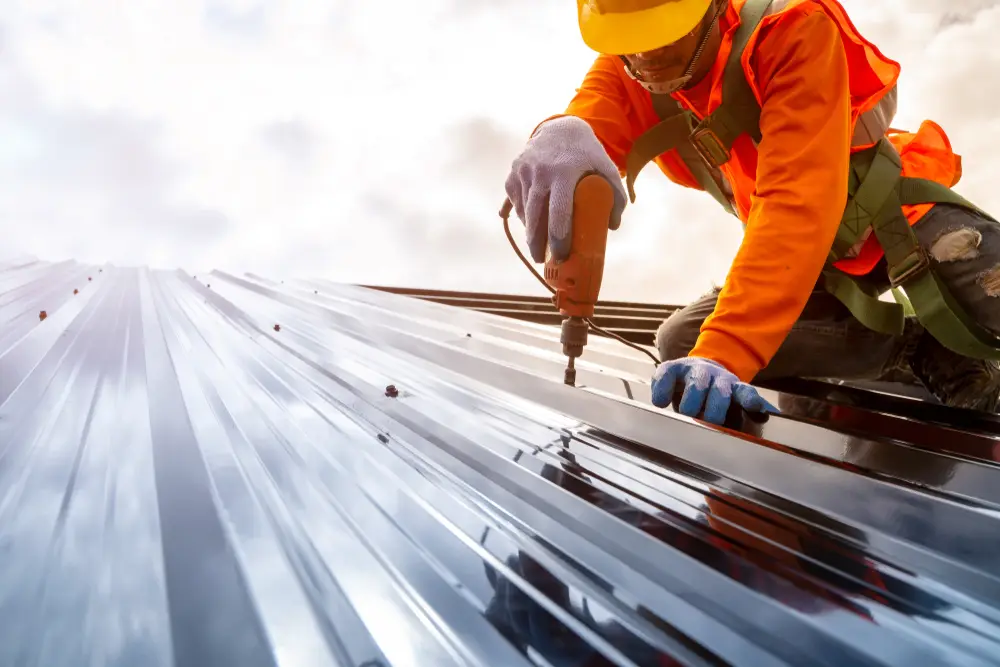
Metal roofing is a broad category that includes standing seam, corrugated panels, and metal shingles. In the industrial sector, metal is prized for its strength and structural integrity.
Key Benefits of Metal Roofing
- Extreme Durability: Metal roofs can last 40 to 70 years, often outlasting the business operations inside the building.
- Fire Resistance: Metal is non-combustible, making it a safer choice for manufacturing plants dealing with flammable materials or high heat.
- Low Maintenance: Once installed, metal roofs require very little upkeep compared to membrane roofs.
Best Applications
Metal is perfect for steep-slope industrial roofs or facilities with high aesthetic requirements. It is also excellent for manufacturing plants where fire safety codes are stringent. While the initial investment is higher, the lifecycle cost is often lower due to its longevity.
If you are considering upgrading from a traditional roof to a metal system, our team specializes in these complex installations. Visit our roof replacement services page to explore your options.
4. Modified Bitumen (Mod-Bit)
Modified Bitumen is an evolution of the old-school "built-up" roofing (BUR) systems (tar and gravel). It consists of asphalt reinforced with modifiers like fiberglass or polyester to improve durability and flexibility.
Key Benefits of Modified Bitumen
- Multi-Layer Protection: Unlike single-ply membranes, Mod-Bit is installed in multiple layers, providing a robust barrier against water intrusion.
- Tensile Strength: It is incredibly tough and resistant to foot traffic, which is beneficial if your roof houses a lot of HVAC equipment requiring frequent maintenance access.
- Flexibility: The polymer modification allows the asphalt to expand and contract without cracking in extreme temperatures.
Best Applications
This material is ideal for industrial roofs that see heavy foot traffic or have high-load mechanical equipment installed on top. It provides a thick, durable platform that resists punctures better than some thinner single-ply options.
5. Polyvinyl Chloride (PVC)
PVC roofing is another single-ply membrane, similar to TPO, but with a different chemical composition that offers distinct advantages, particularly regarding chemical resistance.
Key Benefits of PVC
- Chemical Resistance: PVC is highly resistant to chemical exposure, including acids, oils, and greases. This makes it unique among single-ply membranes.
- Fire Resistance: PVC is naturally fire-retardant. It is difficult to ignite and will self-extinguish when the flame source is removed.
- Strength: PVC membranes have a high breaking strength, making them very durable against wind uplift.
Best Applications
PVC is the gold standard for industrial facilities that vent oils, greases, or chemicals onto the roof, such as food processing plants, restaurants, and chemical manufacturing facilities. Standard roofs might degrade under these substances, but PVC holds strong.
For operations exposed to extreme weather in addition to chemical output, combining the right membrane with reinforced attachment systems is critical. Learn more about industrial storm mitigation strategies to protect high-value facilities.
6. Built-Up Roofing (BUR)
The traditional "tar and gravel" roof, BUR systems have been used for over a century. They consist of alternating layers of bitumen (asphalt or coal tar) and reinforcing fabrics, topped with a layer of aggregate (gravel).
Key Benefits of BUR
- Redundancy: The multiple layers mean that if one layer is punctured, the roof remains watertight.
- UV Protection: The top layer of gravel or mineral granules protects the underlying asphalt layers from UV degradation.
- Cost: It is often a very cost-effective solution for large surface areas.
Best Applications
BUR is still a solid choice for roofs with high foot traffic and for facilities where budget constraints require a proven, lower-cost material. However, the installation creates fumes, so it may not be suitable for occupied buildings sensitive to odors (like hospitals or schools).
The Importance of Proper Installation
Regardless of the material you choose—whether it’s TPO, Metal, or EPDM—the performance of the roof is entirely dependent on the quality of the installation. An industrial roof is a complex system of flashings, seams, drainage points, and insulation. A failure in any one of these areas can lead to catastrophic leaks.
At Cola City Roofing, we don’t just install roofs; we engineer solutions. Our installation process involves:
- Thorough Inspection: We analyze the existing structure to ensure the deck can support the new roof.
- Custom Design: We ensure drainage plans are optimized to prevent ponding water.
- Expert Craftsmanship: Our crews are trained in the specific installation techniques required for each material type.
If you are unsure about the state of your current installation or need a professional opinion on a new project, please contact us .
Industrial roofing projects also require strict compliance with OSHA protocols, fall protection planning, and coordinated scheduling around active production. Our overview of industrial roofing safety standards explains how these safeguards protect both workers and operations.
Maintenance: Protecting Your Investment
Industrial roofs are significant investments. To maximize the ROI (Return on Investment), proactive maintenance is non-negotiable. Neglect is the leading cause of premature roof failure.
Routine Inspections
We recommend semi-annual inspections—once in the spring and once in the fall—to catch minor issues before they become major leaks. During these inspections, we check for:
- Separated seams
- Punctures from debris
- Clogged drains and gutters
- Flashings pulling away from walls or curbs
Gutter Maintenance
Industrial buildings often have large box gutters or scuppers. If these clog, the weight of the water can cause structural damage. We offer specialized gutter repair services and gutter installation services to ensure water moves freely off your roof.
Cleaning
Dirt, debris, and biological growth (like algae or moss) can damage roof surfaces and reduce reflectivity. A clean roof is an efficient roof. We provide roof softwash and roof cleaning services that safely remove buildup without damaging the membrane.
When to Repair vs. When to Replace
One of the hardest decisions for facility managers is knowing when to stop repairing a roof and invest in a replacement.
Consider Repair When:
- The roof is less than 15 years old.
- Leaks are isolated to specific areas (flashings, seams).
- The insulation is dry.
- The roof has been well-maintained.
Consider Replacement When:
- The roof has exceeded its expected lifespan (20+ years for most membranes).
- Leaks are widespread and recurring.
- The insulation beneath the membrane is saturated (this feels "squishy" to walk on).
- Storm damage is extensive (affecting more than 25% of the roof area).
We provide transparent assessments to help you make this decision. If a repair is feasible, our roof repair services are second to none. If a replacement is necessary, we can guide you through financing options to manage the capital expenditure. Check our financing page for details.
Energy Efficiency and "Cool Roofs"
In the industrial sector, energy consumption is a massive line item. "Cool roofs" are designed to reflect more sunlight and absorb less heat than a standard roof.
How It Works
Standard dark roofs can reach temperatures of 150°F or more in the summer sun. A cool roof (like white TPO or PVC) can stay more than 50°F cooler. This reduces the heat transfer into the building, lowering air conditioning needs by 10-15%.
Environmental Impact
Beyond saving money, cool roofs reduce the "urban heat island" effect, where built-up areas are significantly warmer than surrounding rural areas. This contributes to better local air quality and lower peak electricity demand.
Navigating Storm Damage and Insurance
South Carolina is no stranger to severe weather. Hail, high winds, and hurricanes can wreak havoc on large industrial roofs. Damage isn’t always visible from the ground; micro-fractures in membranes or loosened metal fasteners can lead to slow leaks that rot decking over time.
If your facility is hit by a storm, immediate action is required.
- Document Everything: Take photos of any debris or visible damage.
- Mitigate: Use tarps to prevent water entry immediately.
- Call the Experts: Contact Cola City Roofing for a professional inspection.
We have extensive experience working with insurance adjusters to ensure your claim covers the full extent of the damage. For more insights on this, read our blog on storm damage roof repair in Columbia, SC .
Why Choose Cola City Roofing?
Choosing an industrial roofing partner is about trust. You need a company that understands safety compliance, minimizes operational disruption, and delivers projects on time and on budget.
- Local Expertise: We are deeply rooted in Columbia, SC, and understand the local climate challenges. Learn more about us on our About Us page .
- Proven Track Record: We let our work speak for itself. You can view our projects before and afters to see the quality we deliver.
- Customer Satisfaction: We are rated 5 stars by local owners. Read our reviews to hear from satisfied clients.
Industrial Roofing FAQ
Q: How long does an industrial roof installation take? A: This depends heavily on the size of the building and the weather. A 50,000 sq ft warehouse might take 2-3 weeks. We work efficiently to minimize disruption to your operations.
Q: Can we install a new roof over the old one? A: In many cases, yes. Building codes typically allow for up to two layers of roofing. A "lay-over" can save the cost of tearing off the old roof. We can determine if your structure qualifies during our inspection.
Q: Do you offer warranties? A: Absolutely. We offer comprehensive manufacturer warranties on materials and our own workmanship warranties.
For more answers to common questions, visit our Questions and Answers page .
Conclusion
Your industrial roof is a complex system that requires the right material choice and expert installation. Whether you opt for the energy efficiency of TPO, the chemical resistance of PVC, or the sheer toughness of Metal, ensuring it is installed by professionals is the key to longevity.
Don’t wait for a leak to disrupt your production line. Be proactive about your facility’s health.
Ready to secure your facility? Cola City Roofing is here to help. From minor repairs to full-scale industrial replacements, we have the team and the tools to get the job done right.
If you manage an industrial property in South Carolina and need a material recommendation backed by structural evaluation and lifecycle planning, contact our team to schedule a facility assessment.
We proudly serve Columbia and surrounding areas. Check our service locations to see if we are in your neighborhood.
Related Resources
- Shingle vs. Metal Roof: Storm Considerations
- Best Roofing Companies in Columbia, SC
- Visit our Main Blog
Cola City Roofing – We treat your business like our own. https://colacityroofing.com/
Choosing the Right Roofing Material for Your Industry
To further assist facility managers in making the right choice, let’s look at specific industries and which roofing materials typically serve them best.
Manufacturing and Heavy Industry
Facilities involved in heavy manufacturing often deal with exhaust, vibrations, and potential chemical fallout.
- Recommended Material: PVC or Reinforced TPO.
- Why: PVC resists chemicals found in industrial exhaust that might eat away at asphalt-based roofs. Reinforced membranes handle building vibrations better than rigid systems.
Warehousing and Logistics
These buildings have massive footprints where temperature control is the primary operating cost after labor.
- Recommended Material: TPO (White).
- Why: The high reflectivity of TPO significantly drops cooling costs for large, open spaces. It is also cost-effective for covering large square footages.
Food and Beverage Processing
Hygiene and contamination control are paramount. These facilities often vent animal fats or oils onto the roof.
- Recommended Material: PVC.
- Why: Animal fats and vegetable oils can dissolve asphalt and rubber (EPDM). PVC is resistant to these organic materials, preventing premature failure.
Data Centers and Tech Facilities
These buildings house millions of dollars in sensitive electronics. Water intrusion is not an option, and heat management is critical for servers.
- Recommended Material: Metal with high-quality insulation or Multi-Ply Modified Bitumen.
- Why: Metal offers the ultimate leak protection and durability. A multi-ply system offers redundancy—if the top layer fails, the bottom layers still protect the servers.
Retail and Shopping Centers
Aesthetics may play a role if the roof is visible, but durability against foot traffic (from HVAC technicians servicing multiple units) is key.
- Recommended Material: TPO with Walkway Pads or Modified Bitumen.
- Why: Retail roofs see a lot of maintenance traffic. TPO is clean and reflective, but it must be protected with walkway pads. Mod-Bit is naturally tougher against boots and tools.
The Role of Insulation in Industrial Roofing
The material on top keeps the water out, but the material underneath keeps the money in. Insulation is a critical component of the industrial roofing assembly.
Polyiso (Polyisocyanurate)
This is the most common insulation for flat roofs. It has a high R-value (thermal resistance) per inch of thickness. It is compatible with almost all roofing membranes.
EPS (Expanded Polystyrene)
Often used in roof systems where budget is a primary concern. It has a lower R-value per inch than Polyiso but is very resistant to moisture.
Cover Boards
Between the insulation and the membrane, we often install a "cover board" (like gypsum or high-density wood fiber). This board provides a hard surface that protects the soft insulation from being crushed by foot traffic or hail. It is a small addition that adds years to the roof’s life.
Why Local Matters for Industrial Roofing
When dealing with a project of this magnitude, the "who" is just as important as the "what." National chains often sub-contract work to the lowest bidder. At Cola City Roofing, we are your neighbors.
Local Climate Knowledge
We know that Columbia, SC, faces intense humidity, blistering summer heat, and sudden severe thunderstorms. We select adhesives and primers specifically formulated for our humidity levels—something out-of-state contractors might overlook, leading to membrane failure.
Rapid Response
If a storm tears a hole in your warehouse roof at 2 AM, you need a team that can be there immediately. We are local, meaning our response times are measured in minutes and hours, not days. We serve the Columbia area specifically; check our locations page for details.
Community Trust
We have built our reputation on honesty. We don’t upsell unnecessary replacements. If a repair will give you five more years of life, we will tell you.
Final Thoughts
Your industrial roof is the shield that keeps your business running. Don’t leave it to chance. Whether you need a high-tech TPO system for a new distribution center or a rugged Metal roof for a manufacturing plant, Cola City Roofing has the expertise to deliver.
Invest in quality. Invest in durability. Invest in Cola City Roofing.