For any business owner or facility manager in Columbia, SC, the words "roof replacement" usually come with a heavy sigh. It is a massive capital expense, a logistical nightmare, and a disruption to your daily operations. The noise, the debris, and the cost can be overwhelming.
But what if you didn’t have to replace your roof? What if you could restore it instead?
Enter the world of commercial roof coatings . This technology has revolutionized the roofing industry, offering a way to extend the life of an existing roof by decades for a fraction of the cost of a full tear-off.
At Cola City Roofing , we specialize in helping local businesses save money and protect their assets through advanced roof restoration. In this comprehensive guide, we will explore the power of commercial roof coatings in Columbia SC , specifically focusing on the two industry heavyweights: silicone and acrylic.
We will break down the science, the savings, and the strategy behind choosing the right system for your building.
The Problem: The Aging Commercial Roof
To understand the value of coatings, you first need to understand what happens to a roof as it ages. In the Midlands of South Carolina, our roofs endure a brutal cycle of weather:
- Intense UV Radiation: The summer sun breaks down the chemical bonds in roofing membranes (like TPO, EPDM, and Modified Bitumen), causing them to become brittle and crack.
- Thermal Shock: Temperatures can swing 40-50 degrees in a single day, causing rapid expansion and contraction that stresses seams and flashings.
- Moisture: Our high humidity and frequent storms test the waterproofing limits of any system.
Eventually, your roof reaches a tipping point. It isn’t necessarily "failed"—the structure underneath is sound—but the surface is worn out. This is the "sweet spot" for roof coatings.
If you catch the roof in this window—before the insulation becomes saturated—you can apply a coating system that creates a seamless, waterproof barrier over the existing roof. It effectively resets the clock on your roof’s lifespan.
What Exactly Is a Roof Coating?
A common misconception is that a roof coating is just "paint." While it is applied as a liquid (rolled or sprayed), a true elastomeric roof coating is a thick, high-performance membrane.
Once cured, it forms a monolithic (seamless) layer that is:
- Elastic: It stretches and moves with the building.
- Waterproof: It seals small cracks and pinholes.
- Reflective: It bounces UV rays away from the building.
This is often referred to as "Roof Restoration." It bridges the gap between endless repairs and a full replacement.
The Big Debate: Silicone vs. Acrylic
When considering commercial roof coatings in Columbia SC , you will generally choose between two primary chemistries: Silicone and Acrylic. Both have their place, but they perform very differently depending on your specific roof type and drainage situation.
1. Silicone Roof Coatings
Silicone has become the gold standard for restoring flat roofs, especially those with minor drainage issues. It is a moisture-cure chemistry that forms an impermeable barrier.
The "Ponding Water" Advantage This is the single biggest selling point for silicone. Unlike other coatings, silicone is inorganic. It does not break down when exposed to standing water. If your flat roof has areas where water sits for 48 hours or more (common on older buildings), silicone is the only viable coating option. It will not bubble, peel, or re-emulsify.
Silicone Roof Coating Benefits:
- Permanent Ponding Resistance: Ideal for low-slope roofs.
- UV Stability: Silicone does not chalk or degrade under UV exposure. It stays flexible indefinitely.
- High Solids Content: Most silicone coatings are "high solids," meaning you can apply a thick layer in a single pass, saving on labor costs.
- Adhesion: It sticks to almost anything—TPO, EPDM, metal, and modified bitumen—often without a primer (though we always test first).
The Downside: Silicone attracts dirt. Over time, the roof can look gray or dingy as dust sticks to the surface. While this slightly reduces reflectivity, it generally does not affect the waterproofing performance. Also, once you coat a roof with silicone, you can usually only recoat it with silicone in the future; nothing else sticks to it.
2. Acrylic Roof Coatings
Acrylic coatings are water-based elastomeric coatings. They have been around for decades and are a proven, cost-effective solution for the right roof.
The "Positive Drainage" Requirement Acrylics are essentially high-tech exterior paints reinforced for roofing. Because they are water-based, they will re-emulsify (turn back into liquid) if left under standing water for too long. Therefore, acrylics should only be used on roofs with excellent positive drainage or steeper slopes (like metal roofs).
Acrylic Benefits:
- Cost-Effective: The material cost is generally lower than silicone.
- Ease of Application: Cleanup is easy (water-based), and the product is user-friendly.
- Aesthetics: Acrylics hold their bright white color longer than silicone because they don’t attract as much dirt.
- Breathability: Acrylics are permeable to water vapor, allowing moisture trapped in the substrate to escape (breathe) without blistering the coating.
The Downside: They cannot handle ponding water. If you use acrylic on a flat roof that holds water, it will peel within a year. They also have a narrower temperature window for application; they cannot be applied if it might freeze or rain within 24 hours.
The Financial Argument: Why Coat Instead of Replace?
As a business owner, the bottom line matters. Roof restoration offers compelling financial advantages over replacement.
1. Significant Cost Savings
A full roof tear-off and replacement involves:
- Labor to remove the old roof.
- Dump fees for disposal (tons of waste).
- New insulation board.
- New membrane and flashings.
A coating system eliminates the tear-off and disposal costs entirely. You are simply paying for cleaning, minor repairs, and the new liquid membrane. On average, a restoration costs 50% to 70% less than a replacement.
2. Tax Advantages
This is a huge benefit that many CPAs overlook.
- Replacement: A new roof is considered a capital improvement. You typically have to depreciate that cost over 39 years.
- Restoration: In many cases, applying a roof coating is classified as "maintenance" or "repair." This means you can often expense the entire cost in the current tax year (Section 179 deduction). Always consult your tax professional, but the potential for immediate tax relief is significant.
3. Minimal Disruption
Tearing off a roof is loud and messy. It often requires closing parts of your parking lot for dumpsters and cranes. It exposes your building to potential leaks during the process. Applying a coating is quiet. There are no loud noises, no bad odors (with high-solids silicone), and your business can remain open with zero interruption.
Energy Efficiency: The "Cool Roof" Effect
In Columbia, SC, air conditioning is a major line item in your operating budget. Dark roofs (like black EPDM or asphalt) absorb the sun’s heat, reaching temperatures of 150°F to 170°F. This heat transfers through the insulation and into your building, forcing your HVAC system to work overtime.
Silicone and acrylic coatings are typically bright white. They are "Cool Roofs."
- Reflectivity: They reflect up to 85-90% of the sun’s UV rays.
- Emissivity: They release absorbed heat quickly.
By switching a black roof to a white silicone roof, you can drop the roof surface temperature by 50 to 80 degrees. This can result in a 15% to 30% reduction in cooling costs . For a large warehouse or retail center, this energy savings alone can pay for the coating system over time.
The Cola City Roofing Application Process
Applying a roof coating is not a DIY project. It requires precise preparation and application techniques to ensure the warranty is valid. Here is how our expert team handles the process.
Step 1: The Inspection
We start with a thorough evaluation. We walk the roof to identify:
- The type of existing membrane.
- The slope and drainage patterns (identifying ponding water).
- The condition of the seams and flashings.
Crucially, we check for wet insulation . We cannot coat over wet insulation. If moisture is trapped beneath the surface, it will try to evaporate when the sun hits it, causing the new coating to blister and pop. We may use infrared scans to identify wet spots.
Step 2: Roof Repair
Before we can coat, we must fix the underlying issues. A coating is not a structural repair; it is a surface restoration. We perform necessary roof repair services such as:
- Replacing wet insulation (cutting out the bad spots and patching them).
- Tightening loose fasteners on metal roofs.
- Reinforcing split seams with fabric and mastic.
Step 3: Cleaning and Preparation
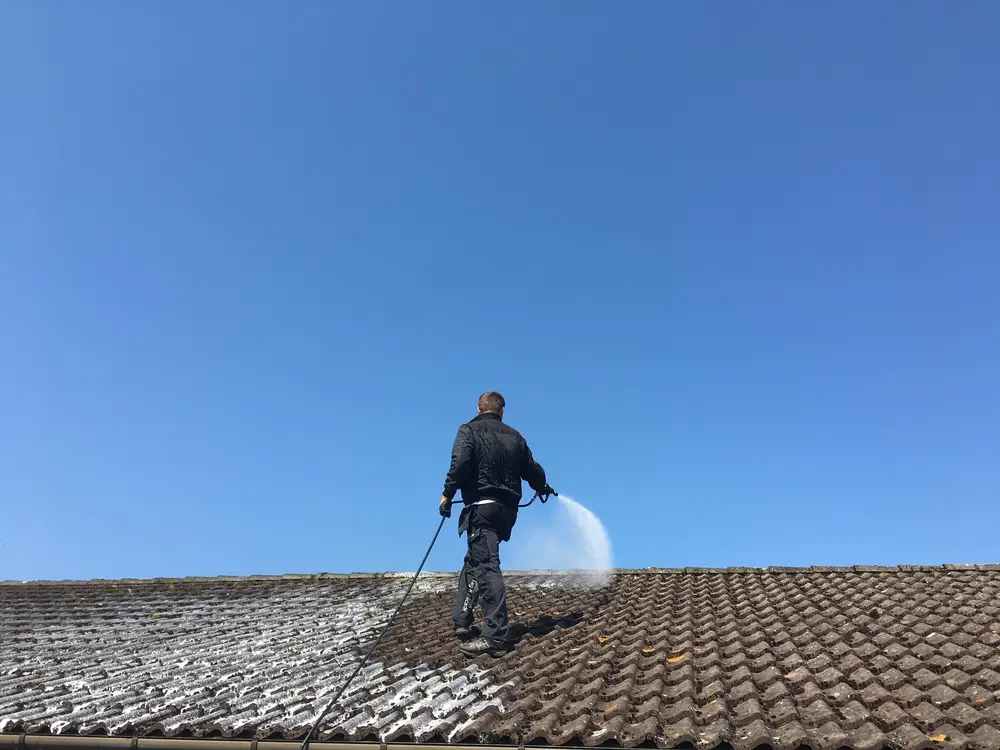
This is the most critical step. If the roof is dirty, the coating will stick to the dirt, not the roof. We utilize professional cleaning methods, often similar to our roof softwash and cleaning protocols, to remove oxidation, dirt, algae, and grease.
- Power Washing: We use high-pressure water (often 3,000+ PSI with a spinner tip) to scour the surface.
- Priming: Depending on the roof type (especially asphalt or single-ply membranes like TPO), we may apply a specialized primer to ensure maximum adhesion and to prevent "bleed-through" of oils.
Step 4: Seam Reinforcement
Leaks usually happen at the seams. Before applying the main coat, we detail the roof. We apply a thick bead of mastic or coating along every seam, screw head, and flashing. This is called "stripping in." It adds an extra layer of protection to the vulnerable areas.
Step 5: Application of the Base and Top Coat
Finally, we apply the coating. This is usually done by spraying or rolling.
- We monitor the "wet film thickness" (WFT) constantly using a gauge to ensure we are putting down enough material to meet the manufacturer’s warranty requirements.
- If we are using a two-coat system (base and top), we often use two different colors (e.g., gray base, white top). This ensures we get 100% coverage and don’t miss any spots.
Step 6: Inspection and Warranty
Once cured, we walk the roof again to check for pinholes or thin spots. Once approved, we issue the warranty documents. Manufacturer warranties for coatings typically range from 10 to 20 years.
Extending Roof Lifespan: The Renewable Roof
The beauty of a coating system is that it is renewable. Let’s say you apply a silicone coating with a 15-year warranty.
- Year 1-15: Your roof is protected, energy-efficient, and leak-free.
- Year 15: The coating has worn down slightly due to weathering.
- Action: Instead of tearing off the roof, you simply clean it and apply a fresh top coat.
By doing this, you can extend the warranty for another 10-15 years. Theoretically, if you maintain the coating schedule, you may never need to tear off the roof again. This is the ultimate sustainable roofing strategy.
Is Your Roof a Candidate?
Not every roof can be coated. Here is a quick checklist to see if your building might qualify for commercial roof coatings in Columbia SC :
Good Candidates:
- Metal Roofs: Especially those with surface rust or loose seams. Coatings stop rust in its tracks.
- Single-Ply (TPO/EPDM/PVC): That are 15-20 years old, showing signs of aging but not failing structurally.
- Modified Bitumen/Built-Up: That have "alligator cracking" but dry insulation.
Bad Candidates:
- Saturated Roofs: If more than 25% of the insulation is wet, it is usually more cost-effective to replace the whole roof.
- Ideally Brittle Roofs: If the existing membrane shatters when you walk on it, it may be too far gone to provide a stable base for the coating.
We can help you make this determination with a free assessment.
Why Choose Cola City Roofing?
Applying a coating system requires technical expertise. Mixing ratios, humidity levels, and surface preparation standards must be exact. If a contractor applies silicone over a wet surface, or fails to clean the TPO properly, the entire coating can peel off in sheets.
At Cola City Roofing, we are experienced installers for top-tier coating manufacturers. We understand the chemistry.
Our Commitment:
- Honest Assessments: We will not sell you a coating if your roof needs a replacement. If we find wet insulation, we will show you the proof.
- Local Focus: We know Columbia. We know how the pollen in spring affects adhesion and how the humidity in summer affects cure times. We adjust our application methods accordingly.
- Full Service: From the initial contact to the final inspection, we handle every aspect of the project.
Conclusion: A Smart Investment for Your Business
In the current economic climate, finding ways to reduce operating costs and defer large capital expenditures is vital. Commercial roof coatings offer a proven path to achieve both.
You get a waterproof roof, a cooler building, and a tax-friendly project, all while avoiding the nightmare of a tear-off. It is a win-win-win.
If your commercial roof is showing its age, don’t wait until it fails. A restoration today can save you tens of thousands of dollars tomorrow.
Ready to explore your options? Let’s determine if silicone or acrylic is the right choice for your facility.
- Call us: (803) 446-8633
- Connect Online: Visit our Contact Us page.
- Learn More: Read about our other roof repair services to see our full range of capabilities.
Protect your business with the advanced technology of roof coatings. Trust the experts at Cola City Roofing.
Frequently Asked Questions About Roof Coatings
1. How long does a roof coating last?
It depends on the thickness applied (measured in mils). A standard 20-mil system typically comes with a 10-year warranty. A 30-mil system can have a 20-year warranty. Silicone generally lasts longer than acrylic in ponding water situations.
2. Can I coat my tar and gravel roof?
Yes, but it is labor-intensive. We have to remove the loose gravel (spudding) to get down to a smooth surface before coating. It is possible, but we often recommend other options for gravel roofs depending on cost.
3. Will a coating stop all leaks?
A coating creates a seamless membrane that stops leaks through the roof surface . However, if you have leaks coming from HVAC units, windows, or masonry walls, a roof coating won’t fix those. That’s why our inspection covers the entire building envelope.
4. Is silicone slippery?
Yes, extremely. When wet, a silicone roof is like a sheet of ice. If your roof has high foot traffic, we must embed safety granules into the coating to create non-slip walkways for your maintenance staff.
5. Does the color matter?
White is the most popular for energy efficiency. However, coatings can be tinted to gray, tan, or even custom colors if your roof is visible from the ground or if you have specific architectural requirements.
6. Can I coat over an existing coating?
Generally, yes. You can coat silicone over silicone. You can coat silicone over acrylic. However, you usually cannot coat acrylic over silicone (it won’t stick). We always perform an adhesion test patch before starting a project.
Internal Links for Further Reading: