For any commercial building owner in Columbia, SC, the roof represents a massive investment and a critical asset. When that roof starts to fail—whether it’s due to age, storm damage, or persistent leaks—you are faced with a significant financial decision.
Do you tear everything off and start fresh (reroofing), or can you save money by installing a new roof over the existing one (recovering)?
This debate— commercial reroof vs recover in Columbia SC —is one of the most common discussions we have with our clients. The answer isn’t always straightforward. It depends on building codes, the condition of your insulation, your budget, and your long-term goals for the property. These decisions are part of a broader commercial and industrial roofing strategy that should align with your building’s long-term performance goals.
At Cola City Roofing , we believe in empowering our clients with the knowledge to make the right choice. A recover can save you tens of thousands of dollars, but it isn’t always legal or safe. A full reroof offers a clean slate, but it comes with a higher price tag and more disruption.
In this comprehensive guide, we will break down the differences between these two methods, explore the pros and cons of each, and help you navigate the decision-making process for your facility.
Defining the Terms: What is the Difference?
Before we dive into the financials and the physics, let’s clarify the terminology, as it can sometimes be confusing.
1. Reroofing (Full Tear-Off)
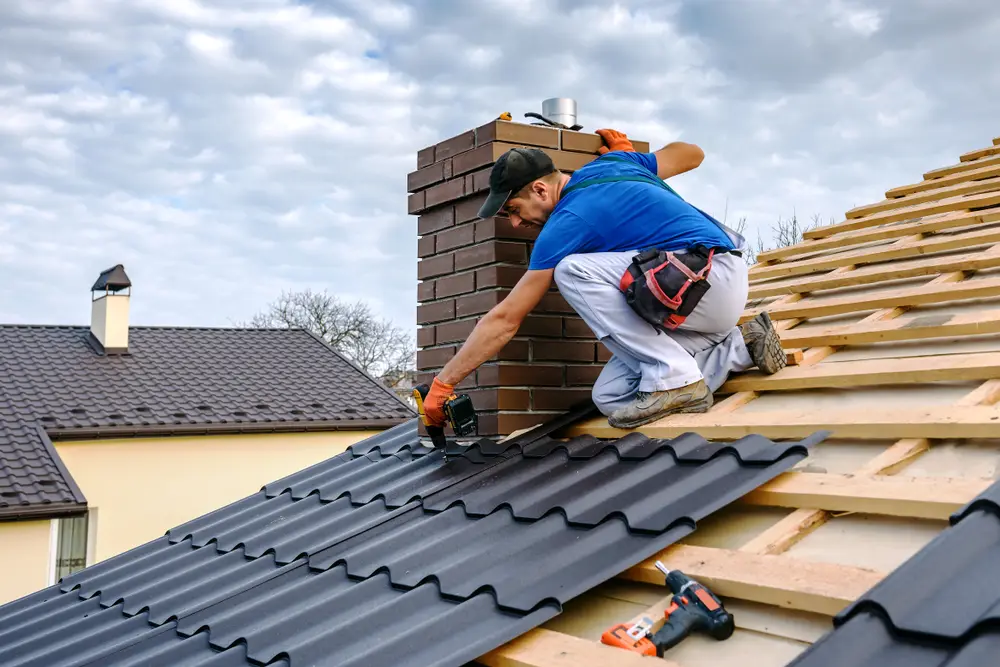
Reroofing, often called a "tear-off," is exactly what it sounds like. We remove every layer of the existing roof down to the structural deck (steel, wood, or concrete). Once the deck is exposed, we inspect it for damage, install new insulation, and then install a brand-new waterproofing membrane. The type of membrane selected plays a major role in performance and long-term durability, which is why understanding commercial roofing systems is critical before making a final decision.
Think of it like: Stripping the paint off a car down to the bare metal before repainting it.
2. Recovering (Overlay)
Recovering, or a "layover," involves leaving the existing roof in place. We prepare the surface of the old roof (cleaning it, cutting out blisters, etc.) and then install a new membrane directly on top of it. This new membrane might be mechanically attached (screwed through the old roof into the deck) or adhered (glued).
Think of it like: Installing new hardwood floors over existing linoleum.
The "Recover" Option: Pros and Cons
For many business owners, recovering is the preferred option because the numbers look very attractive upfront.
The Benefits of Recovering
- Cost Savings This is the driving factor. A recover is typically 20% to 40% cheaper than a full reroof. Why?
- Labor: You skip the labor-intensive process of tearing off the old roof.
- Disposal: You avoid dump fees. Commercial roofs generate tons of waste. Keeping that waste out of the landfill saves thousands in disposal costs.
- Materials: You might be able to reuse the existing insulation (if it’s dry), saving the cost of new ISO boards.
- Speed and Convenience Because we don’t have to tear off the old roof, the project timeline is significantly shorter. We can often start installing the new roof immediately.
- Less Disruption: There is less noise and less risk of debris falling into the building. Since the old roof stays on, your building remains watertight during the installation process, protecting your inventory from sudden pop-up storms common in Columbia.
- Added Insulation When we install a recover, we often add a thin layer of cover board or new insulation over the old roof to provide a smooth surface. This adds to the overall R-value (thermal resistance) of the roof, potentially lowering your energy bills.
The Drawbacks of Recovering
- Hiding Problems The biggest risk of a recover is that you might be trapping problems underneath. If the old roof has wet insulation or a rusting deck that wasn’t detected, you are simply covering it up. The moisture will eventually rot the deck from the inside out, potentially leading to catastrophic failure.
- Added Weight Commercial roofs are heavy. Adding a second layer of TPO, insulation, and fasteners adds significant dead load to the structure. Your building’s engineering must be checked to ensure it can support the extra weight.
- Shorter Lifespan Generally speaking, a recover roof doesn’t last quite as long as a full tear-off. The new roof will absorb heat from the old roof underneath it, which can accelerate aging. Additionally, if the old roof shifts or moves, it can stress the new membrane on top.
- Inspection Difficulties If a leak develops in the future, it is much harder to find the source on a double-layer roof. Water can enter the top layer, travel 20 feet between the layers, and then drip into the building through a hole in the bottom layer.
The "Reroof" Option: Pros and Cons
While more expensive, a full reroof (tear-off) is the gold standard for longevity and peace of mind.
The Benefits of Reroofing (Tear-Off)
- Inspection of the Deck This is the single biggest advantage. By stripping the roof to the deck, we can see exactly what condition the structure is in.
- Rust: We can treat or replace rusted steel decking.
- Rot: We can replace rotted wood joists.
- Safety: You get 100% confirmation that your building is structurally sound.
- Removal of Wet Insulation Wet insulation is a cancer for roofs. It destroys thermal efficiency and breeds mold. A tear-off guarantees that 100% of the wet material is removed from your building.
- Maximum Lifespan A brand-new system installed on a clean deck will always perform better than an overlay. You will get the maximum possible warranty (up to 25 or 30 years) and reroofing benefits like optimal energy efficiency.
- Code Compliance Building codes in South Carolina change. A full tear-off allows us to bring the entire roof assembly up to current standards for wind uplift resistance and R-value (insulation).
The Drawbacks of Reroofing
- High Cost It is labor-intensive and material-heavy. You are paying for demolition, disposal, and a complete rebuild.
- Disruption It is a construction zone. There will be noise. We will have dumpsters on-site. While we work hard to minimize impact, a tear-off is inherently more invasive than a recover.
- Weather Risk During the tear-off phase, parts of your building are exposed to the sky. We mitigate this by only tearing off what we can make watertight in a day, but the risk is higher than with a recover.
The Deciding Factors: Which One Can You Do?
Sometimes, the choice isn’t up to preference; it’s dictated by code or condition. Here are the "Deal Breakers" that force the decision of commercial reroof vs recover in Columbia SC .
1. The "Two-Layer" Rule (Building Code)
Most building codes (including the International Building Code adopted by South Carolina) state that a commercial building can have a maximum of two roof layers.
- Scenario A: Your building has one roof on it. Verdict: You are eligible for a recover (overlay).
- Scenario B: Your building already has two roofs (an original tar roof with a rubber roof over it). Verdict: You cannot do a recover. You legally must perform a full tear-off before installing a new system.
This is why we often take a "core sample" during our inspection. We cut a small plug out of the roof to see how many layers are there.
2. Moisture Saturation (The 25% Rule)
You cannot install a new roof over wet insulation. Moisture trapped inside a roof system will boil when the sun hits it, creating steam pressure that will blister the new roof and rot the fasteners.
If a moisture scan reveals that:
- Less than 25% of the roof is wet: We can cut out the wet spots, replace that insulation, and then proceed with a recover.
- More than 25% of the roof is wet: It is generally considered economically unfeasible to do spot repairs. A full tear-off is the only viable option.
3. Structural Integrity
If the roof deck is sagging, rusting, or showing signs of deflection, we cannot put more weight on it. A tear-off is required to fix the structural issues.
4. Roof Type Compatibility
Not all roofs can go over all roofs.
- Example: You generally cannot put a PVC roof directly over an asphalt roof without a special separator sheet, because the asphalt fumes will eat the plastic.
- Example: You cannot recover over a brittle, shattering PVC roof because it won’t provide a stable base for the new screws.
Moisture Scanning: The Science Behind the Decision
At Cola City Roofing, we don’t guess about moisture; we measure it. Before recommending a recover, we almost always recommend a moisture survey.
Using infrared (thermal) technology or nuclear density gauges, we can map the moisture content of the insulation under the membrane.
- Dry Insulation: Holds heat poorly (cools down fast at night).
- Wet Insulation: Holds heat well (stays warm longer at night).
By scanning the roof at sunset, we can "see" the wet spots. This data is critical. If your roof looks old but the scan shows it is 95% dry, a recover is a brilliant financial move. If the scan shows it is 40% wet, a recover would be a disaster.
Cost Comparison: Real-World Expectations
While every roof is different, here is a general idea of the cost difference between the two options in the Columbia market.
- Recover (Overlay): $4.00 – $8.00 per square foot.
- Reroof (Tear-Off): $6.00 – $12.00+ per square foot.
(Note: These are rough estimates. Variables include insulation thickness, attachment method, roof height, and complexity).
The ROI Calculation:
- A recover might cost $60,000 and last 20 years. ($3,000/year)
- A reroof might cost $100,000 and last 25 years. ($4,000/year)
In this simplified example, the recover offers a better annual value— provided the underlying roof is sound. If the recover fails in 10 years due to trapped moisture, the math changes drastically.
Reroof vs. Recover vs. Coating
There is actually a third player in this game: Roof Coatings (Restoration).
If your roof has only one layer, is structurally sound, and has dry insulation, you have three choices:
- Reroof: Most expensive, longest life.
- Recover: Moderate cost, long life.
- Coating: Lowest cost, moderate life (renewble).
A coating (silicone or acrylic) is a liquid applied recover. It is cheaper than a single-ply membrane recover but relies heavily on the condition of the existing surface. You can read more about this in our blog on Roof Coatings .
Environmental Impact
For businesses with green initiatives, the environmental impact of the decision matters.
Reroofing Waste: Tearing off a 20,000 sq. ft. commercial roof generates massive amounts of waste. The old insulation, the membrane, the gravel—it all goes to the landfill. Construction and demolition debris is a major environmental issue.
Recovering Sustainability: Recovering is the greener option. You are diverting tons of waste from the landfill by repurposing the existing insulation. Additionally, by adding a new layer of insulation, you are increasing the energy efficiency of the building, reducing your carbon footprint long-term.
However, many TPO and PVC manufacturers now have recycling programs for old membranes. If you must do a tear-off, ask us about recycling options for the old material.
The Cola City Roofing Process
How do we help you decide? We follow a strict protocol to ensure we are giving you the right advice.
Step 1: Visual Inspection
We walk the roof to check the condition of the membrane, flashings, and penetrations. We look for blisters, ridges, and soft spots that indicate wet insulation.
Step 2: Core Analysis
We take a core cut (a small sample through the roof) to determine:
- Number of layers.
- Type of insulation.
- Deck type.
- Moisture presence.
Step 3: Code Check
We verify the local building codes in Columbia, Lexington, or wherever your facility is located to see what the specific requirements are for wind uplift and insulation.
Step 4: The Proposal
We present you with options.
- Option A: Full Tear-Off (The "clean slate" option).
- Option B: Recover (The "budget-friendly" option), if eligible .
- Option C: Repair/Restoration (The "life extension" option).
We explain the warranties, the risks, and the costs of each.
Which Material Should You Choose?
Whether you reroof or recover, you need to choose a new membrane.
- TPO: Excellent for recovers because it is lightweight and reflective.
- PVC: Great for restaurants or chemical environments.
- EPDM: Good for hail resistance, but black EPDM can add heat load to the building.
- Metal: If you are recovering a metal roof, we can often install a "metal-over-metal" system or a TPO system specially designed to fit between the metal ribs.
Check out our guide to Commercial Roofing Systems for a deep dive into materials.
Financing Your Project
We understand that whether it is $50,000 or $150,000, a new roof is a big check to write. That is why offering financing options is part of our service.
Sometimes, financing allows you to choose the reroofing option (which might be better for the building long-term) rather than being forced into a recover due to immediate cash flow constraints.
Conclusion: Making the Smart Choice
There is no "one size fits all" answer to commercial reroof vs recover in Columbia SC .
- If you have two roofs already, you must tear off.
- If your roof is saturated with water, you must tear off.
- If you have one roof, dry insulation, and a tight budget, a recover is an excellent, code-compliant solution that can save you money.
In many cases, severe weather accelerates that saturation, which is where understanding the commercial storm damage insurance process becomes essential.
However, ongoing commercial roof maintenance is essential to ensure either system reaches its expected lifespan.
The key is accurate diagnosis through professional commercial roof inspections. You cannot make a million-dollar decision based on a guess. You need core cuts, moisture scans, and expert advice.
Don’t Guess. Know. At Cola City Roofing, we provide the forensic analysis you need to make the right call for your business.
- Call us: (803) 446-8633
- Visit us online: Contact Us
- Check our work: See examples of both tear-offs and recovers on our Projects Before and Afters page.
Protect your business with a roofing solution that fits your needs and your budget. Trust Cola City Roofing.
Frequently Asked Questions
- Does a recover come with a warranty? Yes. Major manufacturers (like GAF, Carlisle, Firestone) offer NDL (No Dollar Limit) warranties on recover systems, often for 15 or 20 years. However, the warranty covers the new roof, not the structure underneath.
- Can I recover a metal roof? Yes! This is very common. We can install insulation between the metal ribs to create a flat surface and then install a TPO membrane over the top. It stops leaks at the thousands of metal fasteners instantly.
- Will a recover fix my ponding water? It can help. When we install a recover, we can use "tapered insulation" (insulation cut at an angle) to create new slopes and direct water toward the drains, correcting drainage issues that the flat original roof had.
- How long does a recover take? It is much faster than a reroof. A 20,000 sq. ft. recover might take 7-10 days, whereas a tear-off might take 3 weeks.
- Is reroofing tax deductible? Commercial roof replacements (reroofing) are generally depreciated over 39 years. However, under the Tax Cuts and Jobs Act, some improvements might qualify for Section 179 expensing. Always talk to your CPA.
Internal Links for Further Reading: