Every homeowner knows the dread of hearing water splashing against the foundation during a heavy storm. It is the sound of money dripping away—money that will eventually be spent on landscaping repairs, basement waterproofing, or worse, foundation restoration. The culprit? Often, it is an outdated or failing gutter system.
When the time comes to replace your gutters, you are faced with a pivotal choice: Seamless Gutters or Traditional (Sectional) Gutters.
At first glance, they might look similar. They are both troughs attached to your roofline designed to catch rain. However, the difference in performance, longevity, and maintenance is stark. As the leading experts at Cola City Roofing , we have seen firsthand how the wrong choice can lead to headaches down the road.
In this comprehensive guide, we are pitting these two systems against each other. We will break down the mechanics, the costs, the installation processes, and the long-term realities of living with each. By the end, you will have a clear answer to the question: Which system is truly better for your home?
The Contenders: Defining the Systems
Before we dive into the battle of benefits, let’s clearly define what we are talking about.
What Are Traditional (Sectional) Gutters?
Traditional gutters are the "DIY special." They come in pre-cut sections, typically 10 to 20 feet long. To cover the length of a house, these sections are pieced together using connectors, snap-in-place joiners, and a generous amount of sealant. They are readily available at big-box home improvement stores and are made from materials like vinyl, aluminum, or steel.
Key Characteristic: They have seams every 10 to 20 feet, plus seams at every corner and downspout outlet.
What Are Seamless Gutters?
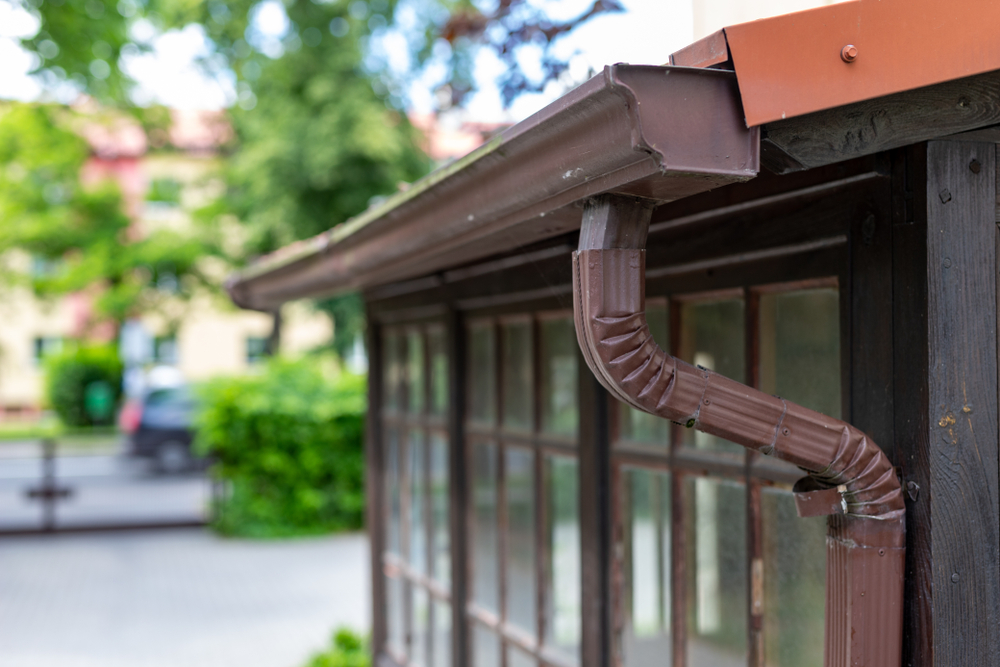
Seamless gutters are custom-manufactured to the exact dimensions of your home. Using a professional-grade machine, a continuous coil of metal (usually aluminum) is formed into a gutter trough that runs the entire length of your roofline without a single break. If your roof is 60 feet long, the gutter is one solid 60-foot piece.
Key Characteristic: They have no seams along the straight runs. The only joints are at the corners (miters) and where the downspouts connect.
If you’re new to the concept, start with our complete guide on what seamless gutters are and why homeowners love them.
Round 1: Leak Prevention and Water Management
The primary job of a gutter system is to control water. If it fails at this, nothing else matters.
Traditional Gutters: The Leaky Reality
The math here is unforgiving. If you have a 50-foot run of traditional gutters using 10-foot sections, you have four connection points along that single wall. That means four potential failure points.
Over time, the expansion and contraction caused by temperature changes (especially in the fluctuating South Carolina climate) stress these joints. The sealant eventually dries out, cracks, and fails. Once that happens, water starts dripping through the seams. Instead of being diverted to the downspout, water falls directly onto your flower beds, porch, or foundation.
See how seamless systems perform in South Carolina weather conditions.
Seamless Gutters: The Watertight Winner
Seamless gutters eliminate the problem at the source. By removing the seams along the horizontal runs, you remove the leak points. Water has nowhere to go but down the channel toward the downspout.
This efficiency is crucial during heavy downpours. Seamless gutters allow water to flow faster and smoother because there are no internal ridges or bumps from connectors to create turbulence. For homeowners tired of patching drips, our gutter installation services offer a permanent solution to the leak problem.
Winner: Seamless Gutters
For a deeper look at how seamless systems reduce failure points, read about seamless gutters and leak prevention.
Round 2: Maintenance and Clogs
No homeowner enjoys climbing a ladder to scoop out muck. Which system keeps you on the ground longer?
Traditional Gutters: The Debris Trap
The design of sectional gutters is inherently prone to clogging. Where two sections join, there is usually a connector inside the trough, often accompanied by a lip or a bead of sealant. This internal ridge acts like a speed bump.
When leaves, pine needles, and shingle grit wash down the gutter, they snag on these ridges. A small dam forms. Over weeks, more debris accumulates behind this dam, eventually blocking water flow entirely. This leads to overflowing gutters, which can rot your fascia boards and damage your roof deck.
Seamless Gutters: The Smooth Operator
The interior of a seamless gutter is smooth and unobstructed. There are no ridges to catch debris. While leaves can still accumulate (gravity affects us all), they are much more likely to be flushed out by the flow of rainwater.
This means significantly fewer clogs and less time spent cleaning them. While no open system is completely maintenance-free, seamless gutters are the closest you can get without adding gutter guards.
Winner: Seamless Gutters
Round 3: Installation Process and Difficulty
This is the one area where the two systems differ most drastically in terms of accessibility.
Traditional Gutters: The DIY Option
The biggest appeal of sectional gutters is that you can buy them today and hang them yourself tomorrow. You don’t need expensive machinery; you just need a ladder, a drill, a hacksaw, and some patience. For the handy homeowner on a strict budget, this accessibility is a major plus.
However, "do-it-yourself" often translates to "do-it-wrong." Proper gutter installation requires calculating the correct pitch (slope) to ensure water drains. Getting multiple 10-foot sections to line up perfectly with a consistent 1/4-inch slope over 40 feet is incredibly difficult for an amateur. Poor pitch leads to standing water, which breeds mosquitoes and causes rust.
Seamless Gutters: Professional Only
You cannot buy seamless gutters off the shelf. They must be fabricated on-site by a professional contractor with a specialized rolling machine. This makes them inaccessible for DIY projects.
However, this "drawback" is actually a benefit in disguise. When you hire professionals like Cola City Roofing, you aren’t just paying for the metal; you are paying for expert installation. We ensure the pitch is perfect, the hangers are spaced correctly for maximum strength, and the system is integrated properly with your roof’s drip edge. If you ever have issues, our gutter repair services are just a phone call away.
Winner: Traditional Gutters (for DIY accessibility) / Seamless Gutters (for quality assurance)
Round 4: Aesthetics and Curb Appeal
Your gutters are a prominent horizontal line on your home’s exterior. They should enhance the look, not detract from it.
Traditional Gutters: The Cluttered Look
Sectional gutters look… sectional. The seams are visible from the ground. Over time, as the sealant ages or the sections shift slightly, the line of the gutter can become uneven or wavy.
Furthermore, traditional gutters often use "spikes and ferrules" to attach to the house—large nails driven through the front of the gutter. These are visible and can rust, leaving unsightly streaks on the gutter face.
Seamless Gutters: The Clean Line
Seamless gutters offer a polished, finished appearance. The continuous line blends perfectly with the eaves of your home. Because they are custom-cut, there is no excess overhang or short pieces pieced together at the end of a run.
Modern seamless installations use hidden hangers—brackets that clip inside the gutter and screw into the fascia. These are completely invisible from the ground, giving the system a floating, clean look that boosts curb appeal. They come in dozens of baked-on enamel colors to match your trim or siding perfectly.
Winner: Seamless Gutters
Round 5: Durability and Lifespan
How long will your investment last?
Traditional Gutters: The Short-Term Fix
Vinyl sectional gutters become brittle in the sun and can crack in cold weather. Aluminum sectional gutters are often made from lighter-gauge metal to make them easier for DIYers to handle. This makes them susceptible to bending under the weight of wet leaves or leaning ladders.
The weak points are the seams. Even if the metal lasts, the sealant will not. You can expect to re-seal traditional gutters every 3-5 years, and the system itself might last 10-15 years before it starts looking ragged and functioning poorly.
Seamless Gutters: The Long-Term Investment
Seamless gutters are typically rolled from heavier-gauge aluminum or steel. Because they are one continuous piece, they have superior structural integrity. They are less likely to sag or pull away from the house.
A professionally installed aluminum seamless system can easily last 20 to 30 years with minimal maintenance. Copper seamless gutters can last 50 years or more. It is a "one-and-done" home improvement project.
Winner: Seamless Gutters
Round 6: Cost Comparison
This is often the deciding factor for homeowners.
Traditional Gutters: Lower Upfront Cost
If you are strictly looking at the price of materials, traditional gutters are cheaper. If you install them yourself, you save on labor costs entirely. For a small shed or a garage, this might be the most economical choice.
Seamless Gutters: Higher Upfront, Lower Long-Term
Seamless gutters cost more upfront because you are paying for custom fabrication and professional labor. However, when you factor in the cost of sealant, the time spent on repairs, and the shorter lifespan of traditional gutters, the price gap narrows significantly over time.
Think of it as the difference between buying cheap boots every winter versus buying one pair of high-quality boots that last a decade. Seamless gutters are the high-quality boots.
Winner: Traditional Gutters (Short Term) / Seamless Gutters (Long Term)
The Verdict: Why Seamless Is Superior
When you tally the wins, the result is clear.
Seamless gutters are the superior choice for residential homes.
While traditional gutters have their place—primarily for small DIY projects or outbuildings—they simply cannot compete with the performance, aesthetics, and longevity of a seamless system for your main residence.
The advantages of going seamless include:
- Zero leaks along straight runs.
- Custom fit for your specific home.
- Better curb appeal with hidden hangers.
- Stronger construction that resists sagging.
- Less maintenance due to fewer debris snags.
- Higher resale value for your property.
We also address common misunderstandings in our article on myths about seamless gutters.
Common Materials for Seamless Gutters
Once you have decided to go seamless, you still have choices to make regarding materials. Here is a quick breakdown of what is available:
1. Aluminum
This is the king of the seamless gutter market.
- Why it’s great: It is rust-proof, lightweight, and relatively inexpensive. It comes in a massive array of colors.
- The drawback: It can dent if a heavy branch falls on it.
- Best for: 90% of residential homes.
2. Galvalume / Steel
- Why it’s great: Extremely strong. It can hold heavy snow loads and resists denting.
- The drawback: It is heavier and harder to install. While coated to resist rust, it can eventually corrode if the coating is scratched deeply.
- Best for: Areas with severe weather or lots of overhanging trees.
3. Copper
- Why it’s great: It is the ultimate luxury statement. It never rusts and develops a beautiful green patina over time. It can last a lifetime.
- The drawback: It is significantly more expensive than aluminum.
- Best for: Historic homes, high-end luxury builds, or as an accent feature on porches.
Signs Your Current Gutters Need Replacing
Are you unsure if you need to upgrade yet? Walk around your home during the next rainstorm (or right after) and look for these warning signs:
- Dripping Seams: If water is falling from the middle of a gutter run, your seams have failed.
- Peeling Paint: If the paint on your siding is peeling near the roofline, it’s a sign of water splashing back or overflowing.
- Sagging: If the gutter looks like a smile (dipping in the middle), it is holding water and pulling away from the fascia.
- Rust: Orange specks or streaks mean the metal is corroding and holes are imminent.
- Soil Erosion: A trench in the dirt below your eaves means water is pouring over the top rather than going down the spout.
If you spot these issues, do not wait. Water damage is progressive—it gets worse and more expensive every time it rains. Contact us for an inspection.
Why Professional Installation Matters
We mentioned earlier that seamless gutters require professional installation, but it is worth emphasizing why that expertise is so valuable.
The Pitch Perfect Calculation
Water doesn’t move itself; gravity does. Gutters need a very subtle slope to guide water to the downspouts. If the pitch is too steep, it looks terrible. If it is too flat, water sits stagnant. Professionals use levels and experience to get this exactly right, ensuring the gutter drains completely after every rain.
Proper Downspout Placement
Where does the water go? A common DIY mistake is placing downspouts where they are easiest to install, rather than where they are most effective. We strategically place downspouts to move maximum water volume away from your foundation, often extending them into drain tiles or splash blocks to prevent erosion.
Fascia Protection
Gutters hang on the fascia board. If that board is rotting, the gutters will fall off. During our installation process, we inspect the fascia. If we find rot, we repair it before hanging the new metal. Hanging new gutters on bad wood is a waste of money—a mistake many DIYers make because they don’t know what to look for.
Making the Switch: What to Expect
If you decide to upgrade to seamless gutters with Cola City Roofing, here is a glimpse of the process:
- Measurement & Selection: We measure your roofline and help you choose the color and profile (usually 5-inch or 6-inch K-style) that best suits your home.
- On-Site Fabrication: On installation day, our truck arrives with the gutter machine. We spin out the gutters right in your driveway to the exact lengths required.
- Removal & Disposal: We take down your old, leaky sectional gutters and haul them away. You don’t have to worry about the mess.
- Installation: We secure the new gutters using heavy-duty hidden hangers, spaced closely together for maximum holding power.
- Final Check: We ensure all end caps are sealed, downspouts are secure, and the site is clean.
If you’re unsure whether seamless gutters make sense for your situation, review our guide on seamless gutters for new vs existing homes.
Conclusion: The Smart Choice for Your Home
The debate between seamless and traditional gutters isn’t really a debate anymore. Unless budget is your absolute only constraint, seamless gutters win in every category that matters: performance, durability, maintenance, and aesthetics.
Your home is your sanctuary. Protecting it from water damage is one of the most important things you can do to preserve its value. By choosing a seamless system, you are choosing peace of mind. You are choosing to stop the drips, stop the clogs, and stop the worry.
If you are ready to retire your old, leaky gutters and upgrade to a high-performance seamless system, we are here to help. The team at Cola City Roofing brings years of experience and a commitment to quality to every job.
Check out our gutter services in South Carolina to learn more, or visit our contact page to schedule your free estimate today. Don’t let another storm pass with inferior protection—make the seamless switch now.