
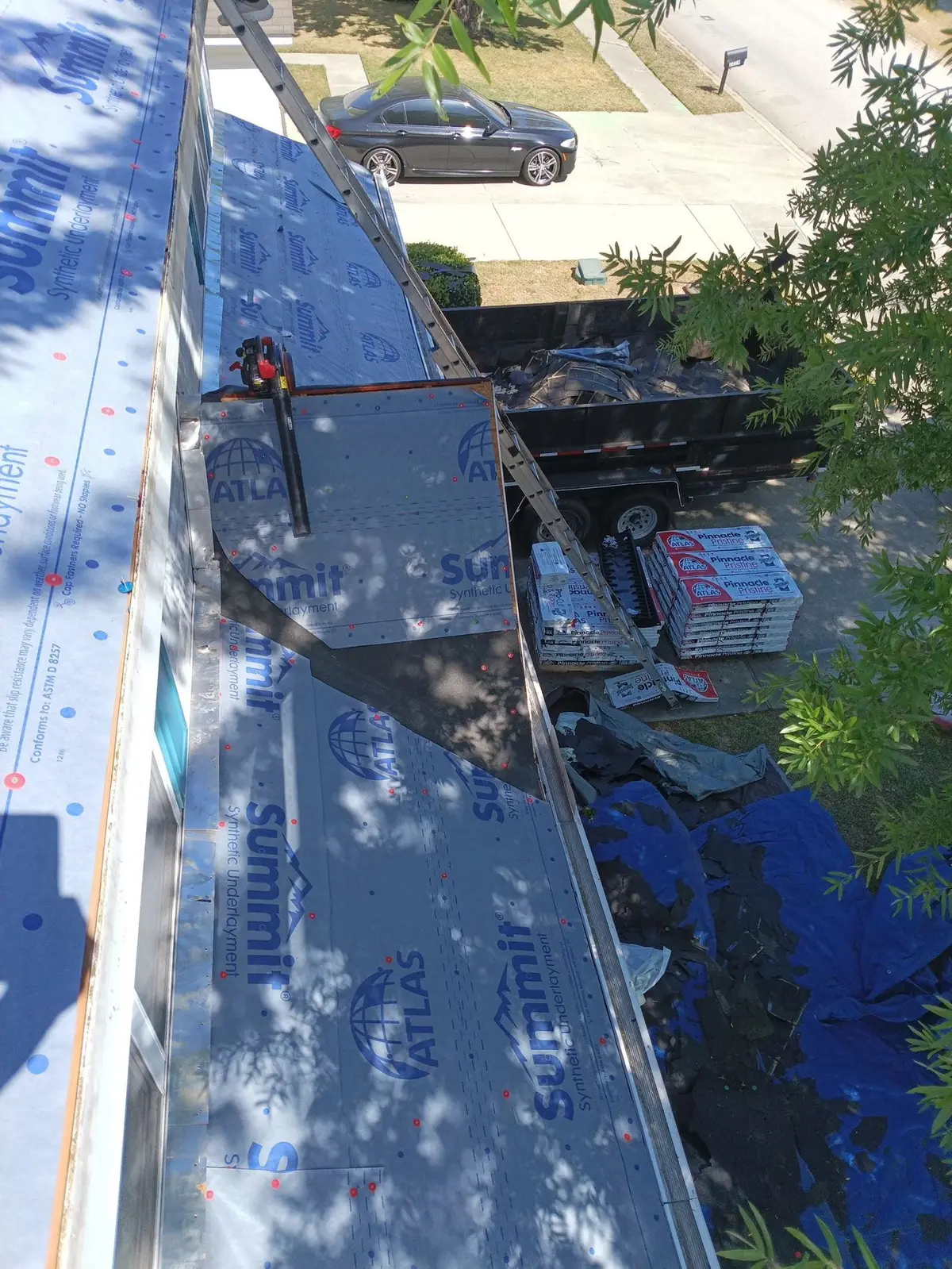
Yes. If your house is inside Columbia city limits, replacing the roof needs a permit from the City. The City's residential projects page says all regulated work in the city must have a permit. The City also keeps a dedicated Roofing Permit Application with two boxes: "tear off shingles and reroof" and "reroof (shingle install only)". Your roofer normally files it and schedules the inspection.
This page walks through the Columbia process in order. It covers who applies, the form, fees, the inspection, historic districts, flood zones, business licenses and owner permits. For the other Midlands offices, start at our Midlands roof permits hub.
Check the city limits first
A Columbia mailing address doesn't mean the City issues your permit. Many "Columbia" addresses are in unincorporated Richland or Lexington County. The City's City Information Viewer map shows parcels and overlay districts. If your home is in the county, see our Richland County roof permit guide.
Who can apply for a Columbia roof permit?
A licensed contractor, or the owner-occupant under the homeowner exemption. The roofing form asks for the contractor's SC license number, so the City expects a state-credentialed roofer on the application. In South Carolina, roofers are a residential specialty contractor category, and the state law applies to jobs over $500. You can look up a roofer on the LLR Residential Builders Commission lookup.
The contractor also needs a City of Columbia business license. The City's Business Licensing Division says every person doing business "in whole or in part within the limits of the city" must hold one. Its office is at 1339 Main Street, first floor, (803) 545-3345, open 8:30 a.m. to 5:00 p.m. on weekdays.
What the roofing permit application asks for
The Roofing Permit Application is a single page. It is short, but each line matters at review time.
- Job location and occupant. The address and who lives there.
- Flood hazard statement. The owner or owner representative confirms whether the property is or is not in a flood hazard area.
- Contractor information. Name, address, phone, email and SC license number.
- Job description. Tick "tear off shingles and reroof" or "reroof (shingle install only)".
- Job value and completion date. The value is equipment plus installation, which is what fees are based on.
- Signature. The signer agrees that misstatements or unapproved changes are grounds to revoke the permit.
The bottom of the form is for City staff. It carries the parcel TMS number, the zoning district and a zoning review sign-off, so zoning sees every roofing application.
How to apply: the Access portal
Licensed contractors can apply and pay online through the City's Access self-service portal, according to the permit applications page. The same portal is used to request inspections and is where inspectors post results. The Development Center takes applications in person and answers submittal questions at (803) 545-3420.
October 2026 outage notice
The City's permitting pages report "a network and system outage that is impacting access to permitting and other technology." It asks customers to use email: DevelopmentCenter@ColumbiaSC.gov and BuildingInspections@ColumbiaSC.gov. Its outage contact sheet lists phones: Building Inspections (803) 545-3422, Development Center (803) 545-3420, Zoning (803) 545-3333.
In-person payments go to the Development Center, third floor, 1401 Main Street, Columbia, SC 29201. Hours are 8:30 a.m. to 5:30 p.m. on weekdays, per the payments page. Older City forms, including the roofing application, still print the Development Center at 1136 Washington Street, so use the address on the payments page.
The payments page also warns about fake invoices. Legitimate City invoices come only from a columbiasc.gov email address, and payment goes through the official portal.
What does a Columbia roof permit cost?
The City bases building permit fees on the value of the work. Its residential fee schedule says fees "shall be based on the total contract price or total value of work to be done." That is why the roofing form asks for the job value. The schedule PDF is an older document, so ask the Development Center to confirm the current figure for your job.
Two other charges are published. Card payments in person carry a convenience fee of 1.5% for debit and 2.5% for credit, with a $1.95 minimum, per the payments page. Failed inspections also cost money. The inspections page charges $30 for failing the first re-inspection, and $50 for each further failure on the same request.
What inspection does a re-roof get in Columbia?
Roofing is on the City's list of work that needs a rough-in inspection before it is covered. The inspections page says rough-in inspections are required for work involving "insulation, roofing and framing," among other items, and tells builders: "Do not conceal any of these items until the rough-in and framing inspection is approved."
The City does not publish a separate re-roof checklist. Ask your roofer which inspection the permit carries and when it will be booked. The page also says work should not continue past an inspection point without a release from the previous inspection.
- Who books it: the contractor or the contractor's agent, through the Access portal. Each subcontractor requests its own inspections.
- Timing: requests made by 3:00 p.m. are scheduled for the next day. Same-day inspections are not available, and requests after 3:00 p.m. go to the day after next.
- Results: the inspector enters results in the Access portal.
- Questions: Building Inspections at (803) 545-3422. The residential inspection contacts list the Building Official, a residential plans examiner and three residential inspectors.
Historic and design districts: the Certificate of Design Approval
In a historic or design overlay district, a Certificate of Design Approval is required before a permit can be issued, per the residential projects page. It is usually handled during permit review. Planning staff can be reached at (803) 545-3222, and preservation questions go to Preservation@ColumbiaSC.gov.
Columbia has 15 historic district overlays, listed on the historic districts page:
- Cottontown/Bellevue Architectural Conservation District
- Earlewood Protection Area A & B
- Elmwood Park Architectural Conservation District
- Governor's Mansion Protection Area
- Granby Architectural Conservation District
- Landmark District
- Melrose Heights/Oak Lawn Architectural Conservation District
- Oakwood Court Architectural Conservation District
- Old Shandon/Lower Waverly Protection Area A & B
- Seminary Ridge Protection Area
- University Architectural Conservation District
- Wales Garden Architectural Conservation District
- Waverly Protection Area
- West Gervais Street Historic Commercial District & West Gervais Protection Area
- Whaley Street Protection Area
The type of district changes how much is reviewed. In an architectural conservation district, the City says "generally, all exterior work" is reviewed and materials are typically required to match the original. In a protection area, review "largely is limited to additions, new construction, demolition, and certain site improvements." More than 180 individual landmarks follow their own standards. The historic districts page explains both.
The urban design overlays are separate. The design districts page lists three: the Downtown Columbia Overlay District, the Five Points Design Overlay Districts and the North Main Corridor Design Overlay District. Downtown replaced the City Center and Innovista districts for applications after January 5, 2026. The five Community Character Areas, including Shandon and Heathwood, are not historic districts; their review covers demolition and new construction on newly subdivided lots.
Not sure? Check your parcel on the City Information Viewer or the City's district map. If you are in a district, call staff before you pick a new roof material. Our HOA roof approval guide covers neighborhood rules, which are a separate layer.
Flood zones
The roofing form asks you to state whether the property is in a flood hazard area. If it is, the City's flood plain checklist asks for the flood zone classification, elevation and flood zone boundaries. It also asks for the "total value of work to be done to determine Substantial Improvement threshold." Ask the Development Center which of these items a re-roof needs for your parcel.
Pulling the permit yourself: the Homeowner Affidavit
You can get the permit in your own name only by signing the City's Homeowner Affidavit. It certifies that you own and live in the single-family home. You will do the work yourself or through a named immediate family member. The affidavit repeats the state disclosure from S.C. Code Section 40-59-260.
- You must supervise the work yourself, and the home must be for your own use.
- Selling or renting within two years after the work is complete creates a legal presumption that you built it for sale or rent.
- You may not hire an unlicensed person as your builder or specialty contractor.
- After the work, you must file a notice with the register of deeds saying the work was done by the owner as an unlicensed builder. Failing to file revokes the exemption.
The affidavit also says any subcontractor you hire needs a separate permit. If a roofer asks you to sign this form for a job they are doing, that is a reason to stop and ask why. Our post on pulling your own roof permit covers the risks.
Which code edition applies, and the January 2027 change
Today the City enforces the 2021 International Residential Code with South Carolina modifications, per its building codes page. The City will adopt the 2024 editions effective January 1, 2027. Any permit request submitted after December 31, 2026 will follow the 2024 codes. If your re-roof is planned for late December or early January, ask your roofer which edition the application will fall under.
A Columbia re-roof permit, step by step
- Confirm the house is inside city limits and check for a historic or design overlay.
- If it is in a district, talk to Planning staff about a Certificate of Design Approval.
- The roofer completes the Roofing Permit Application with the job value and flood statement.
- The roofer applies and pays in the Access portal, or at the Development Center.
- Work starts after the permit is issued.
- The roofer books the roofing inspection by 3:00 p.m. the day before, and work isn't covered until it passes.
- Ask for the permit number and keep the final inspection result with your roof records.
If you want help working out whether your job needs review, or a second look at the roof itself, Cola City Roofing works across Columbia. You can contact us here.