Helene showed that in Forest Acres, the trees are the storm. When the remnants of the hurricane crossed the Midlands on September 26-27, 2024, the National Weather Service measured a 58-knot (67 mph) gust at Columbia Metropolitan Airport, and nearby gauges recorded roughly 9 to 11 inches of rain. In Forest Acres, more than 200 trees came down and more than 30 roads were blocked. The lesson for homeowners is to manage big trees near the house before a storm, keep roofs and gutters clear, and know what to do and who to call when one falls. For more on roofing in the city, see our Forest Acres roofing page.
What happened in Forest Acres
According to Carolina News and Reporter, Helene downed more than 200 trees in Forest Acres and blocked more than 30 roads. Forest Lake Country Club alone lost about 50 trees. More than 40% of the city's 6,226 power customers lost service. Fernwood, Pinebranch and Satchelford roads, Lakeshore Drive and Eastshore Road were among the hardest-hit streets.
The weather data explains why. NWS records show 10.76 inches of rain at a gauge 2.1 miles north-northwest of Columbia and 9.35 inches at a Dentsville gauge. Soil that wet loses its grip on roots, and a gust that a tree would shrug off in dry weather can bring it down.
Then, in July 2026, a storm toppled trees across a narrow swath of Forest Acres, WACH reported, including one that landed on a home near Dare Circle. It was a smaller, more local event, but it made the same point: a single strong cell over a wooded neighborhood can put a tree on a roof.
Lesson 1: The trees near your house are your biggest storm risk
Most homeowners think about shingles and wind ratings when they think about storms. In Forest Acres, the question is usually what is standing over the roof. A healthy tree can still fail in saturated ground, but dead limbs, decay, cracked trunks and storm-damaged crowns raise the odds. Have an arborist look at large trees within striking distance of the house, especially any that lost limbs in Helene.
If a tree needs to come down, Forest Acres requires a removal permit for any tree 12 inches or more in diameter at breast height (and for certain smaller species, trees near the main corridors and trees in the buffer), even on your own lot. The city lists dead or dying trees, structurally unstable trees and storm damage to 50% or more of the canopy among its grounds for approval, and says it approves more than 90% of applications. Approved removals must be done by a contractor licensed with the city. Our trees and your roof in Forest Acres page has the details.
Lesson 2: Not all damage comes through the ceiling
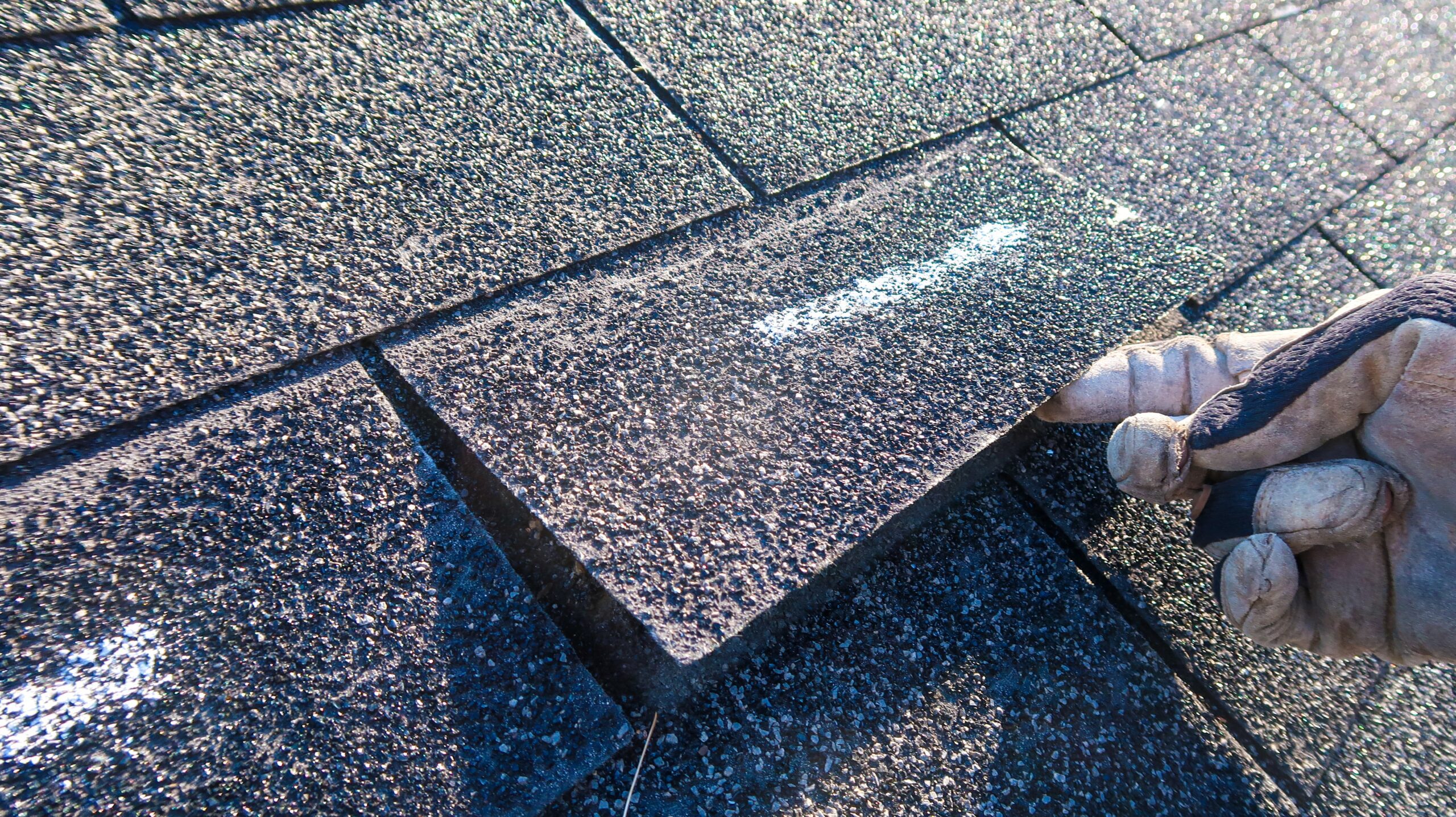
A dramatic tree strike is obvious. The quieter damage is easier to miss: a limb that cracks decking without breaking through, shingles torn loose at the fasteners, gutters bent under a branch, and valleys packed with leaves and twigs stripped by the wind. Weeks later, that shows up as a stain on a ceiling.
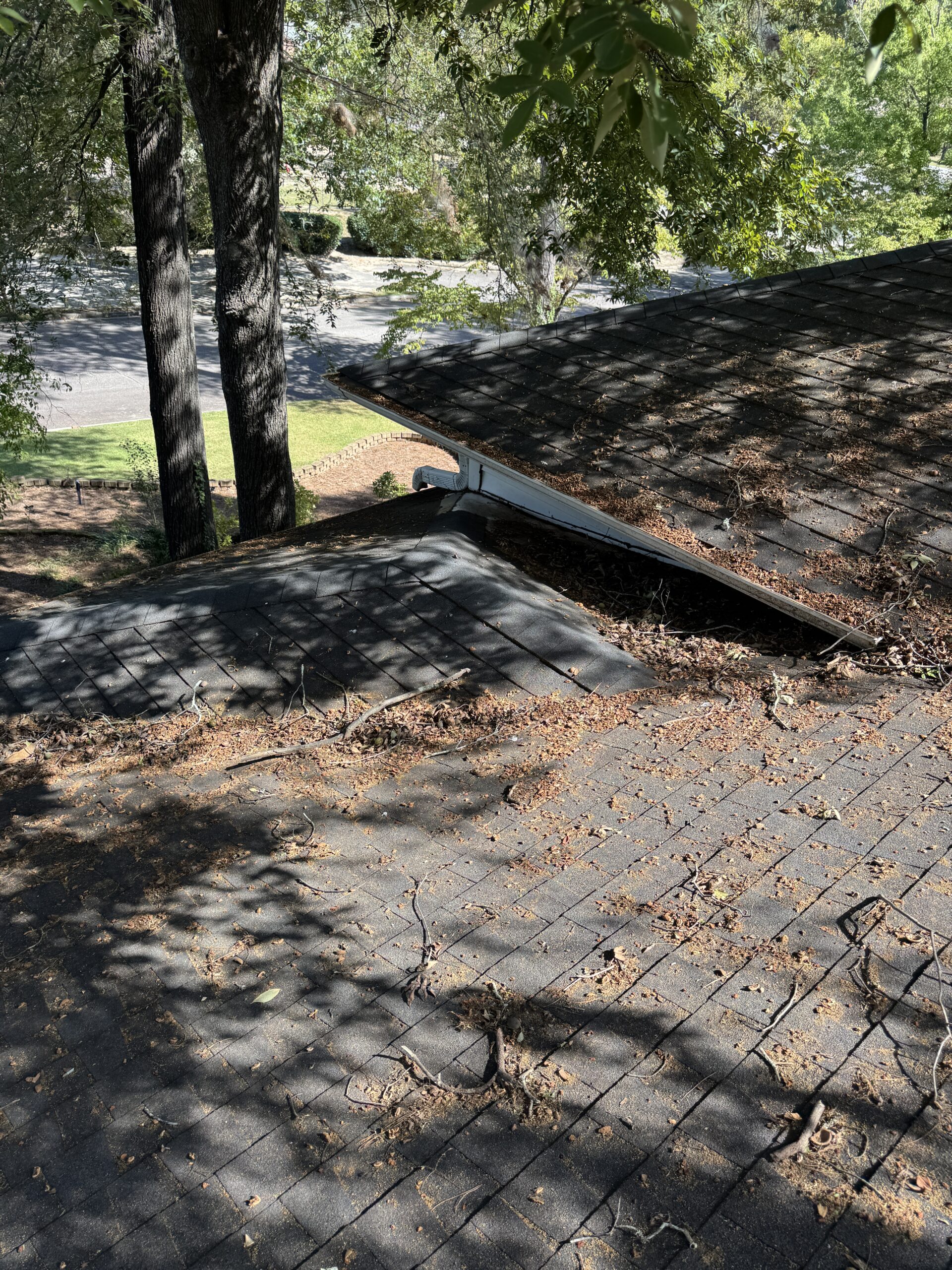
Our own Forest Acres jobs show how debris-related damage develops. On one repair, packed pine straw in a valley had pushed water under the shingles and down an interior wall. After any big storm, check your roof from the ground, look in the attic if you can, and have a roofer look if anything seems off.
Lesson 3: The first 48 hours set up everything else
- Get people clear of damaged rooms and stay away from downed power lines.
- Photograph and video everything before cleanup: the tree, the roof, ceilings, belongings.
- Limit further water damage with an emergency tarp once the tree is off the roof, and keep receipts.
- Call your insurer to open a claim if the damage is significant.
- Do not sign a contract on the spot with a door-to-door crew.
Our first 48 hours after storm damage guide covers each step, and our Forest Acres storm and tree damage page adds the local rules.
Lesson 4: Know your rights before the knock on the door
After a big storm, out-of-area contractors arrive quickly. In Forest Acres, contractors need SC LLR credentials and a City of Forest Acres business license, and only an LLR-licensed contractor can pull a building permit. If insurance is paying, S.C. Code §40-59-25 lets you cancel a roofing contract within five business days after a written claim denial, bars the contractor from demanding payment before then and prohibits deductible rebates, including "yard sign" discounts. A roofer may not negotiate your claim with your insurer. See roof permits and licensing in Forest Acres.
Lesson 5: Older roofs fare worse
The median Forest Acres home was built in 1965. An aging roof with worn shingles, tired flashing and decking softened by old leaks has less margin when a storm hits. If your roof was already near the end before Helene, it may make sense to plan a replacement rather than patch storm damage again, and roof age can affect how insurance treats it. Read roof age and homeowners insurance and the repair or replace guide.
Getting ready for the next one
- Have big trees near the house assessed, and apply for any removal permit well before storm season.
- Clear valleys and gutters after the fall leaf drop and in spring.
- Fix known problems, like split pipe boots or loose chimney flashing, before they meet a storm.
- Photograph your roof and attic now, so you have a before record for any claim.
- Keep your policy, your agent's number and a trusted roofer's number where you can find them.
Cola City Roofing works across Forest Acres. If you want your roof checked before the next storm, contact us or call (803) 734-3700. See also our storm damage repair service.