In Forest Acres, you need a city permit to remove most sizable trees, even on your own lot: any tree 12 inches or more in diameter at breast height, several smaller protected species, trees near the city's main corridors and trees in the 5-foot buffer. Approved removals must be done by a contractor licensed with the City of Forest Acres. For your roof, that means planning tree work ahead, keeping valleys and gutters clear of the debris those trees drop, and watching for limbs that rub or overhang the shingles.
This page summarizes the city's published tree rules as they apply to homeowners and explains what trees do to roofs here. It is a guide, not legal advice; the city's own tree removal permit information and tree removal page are the authority. It is part of our Forest Acres roofing page.
When you need a tree removal permit in Forest Acres
The city requires a tree removal permit for:
Trees that need a removal permit in Forest Acres
| Tree | Permit required at |
|---|---|
| Any tree | 12 inches or more diameter at breast height (DBH) |
| Sweet Bay, Eastern Redbud, American Holly, Flowering Dogwood | 4 inches DBH or more |
| Sourwood | 6 inches DBH or more |
| Any tree within 25 feet of the Forest Drive, Trenholm Road or Beltline Boulevard right-of-way | Any size |
| Any tree in the 5-foot residential or commercial buffer | Any size |
Source: City of Forest Acres, Tree Removal Permit Information. Check the current version before you apply.
Diameter at breast height is measured on the trunk at about chest height. If you are close to a threshold, measure carefully or ask the city.
What the city will approve
The city lists grounds for approving a removal, including:
- The tree is dead or dying.
- The tree is structurally unstable. A lean by itself does not count as instability.
- Storm damage to 50% or more of the tree's canopy.
"Unsightly" alone is not a ground for removal. The city says it approves more than 90% of applications. If yours is denied, you can appeal to the Zoning Board of Appeals or bring in a certified arborist.
How to apply
- Check whether your tree is covered using the table above.
- Take clear photos of the whole tree, the trunk, any damage and its position relative to your house.
- Apply through the city's GovWell portal.
- Hire a tree contractor licensed with the City of Forest Acres to do the approved work, and ask to see that license.
- Keep the approval with your records, especially if the removal is related to an insurance claim.
A state license is not enough
For approved removals, Forest Acres requires a contractor licensed with the city. A tree service with only a state license does not meet that requirement.
Pruning: ask first
The city's published materials we reviewed are clear on removal but do not clearly say whether pruning requires a permit, or how much pruning is treated as removal. Before major pruning, especially cutting back large limbs over a roof, call the City of Forest Acres at City Hall and ask. Getting a yes or no in writing is cheap insurance.
Good pruning for roof health is usually modest: removing dead wood, cutting back limbs that touch or rub the roof, and lifting branches that drop debris straight into valleys. A certified arborist can tell you what a tree can safely lose.
What trees do to Forest Acres roofs
Debris in valleys and gutters
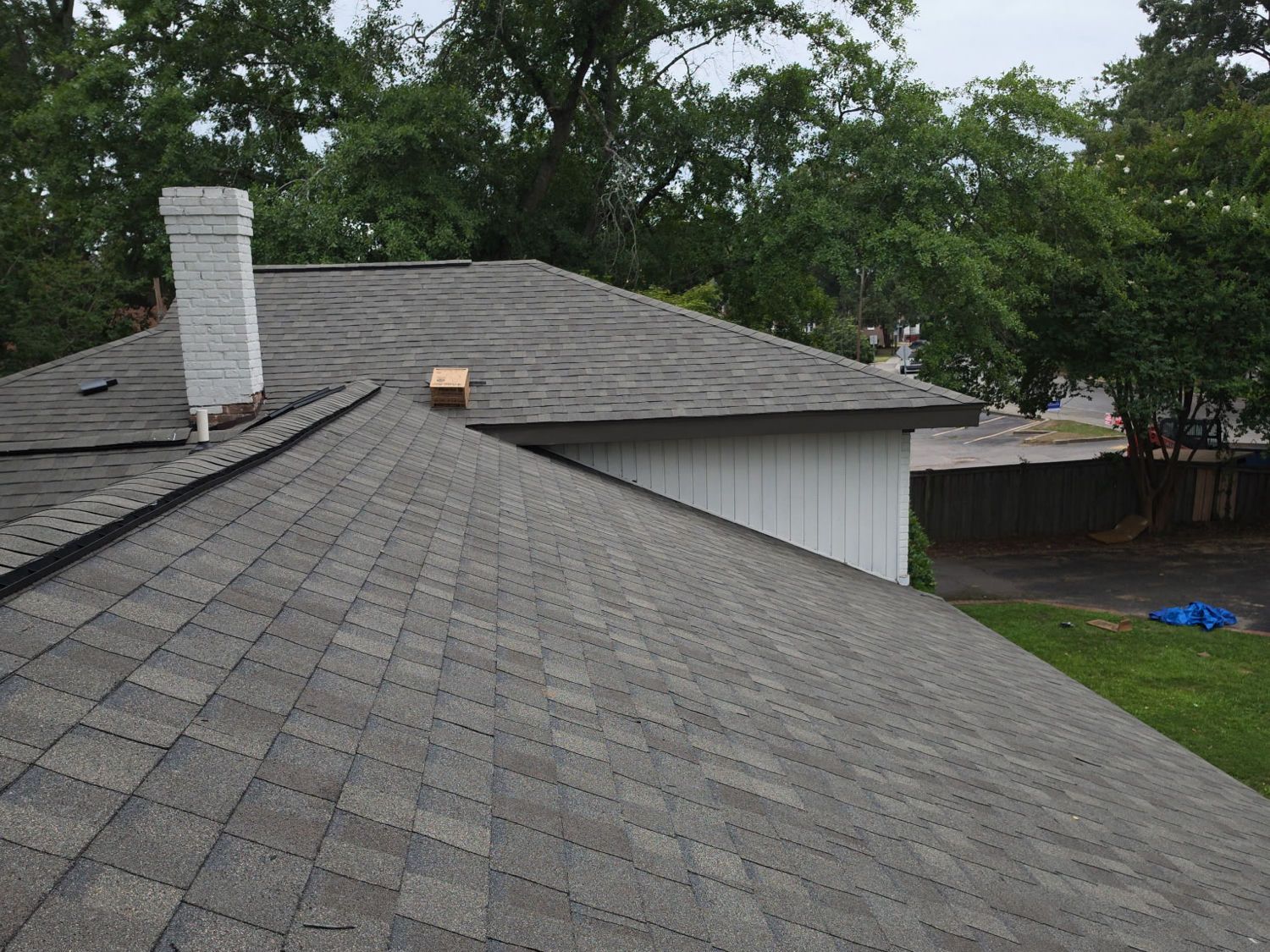
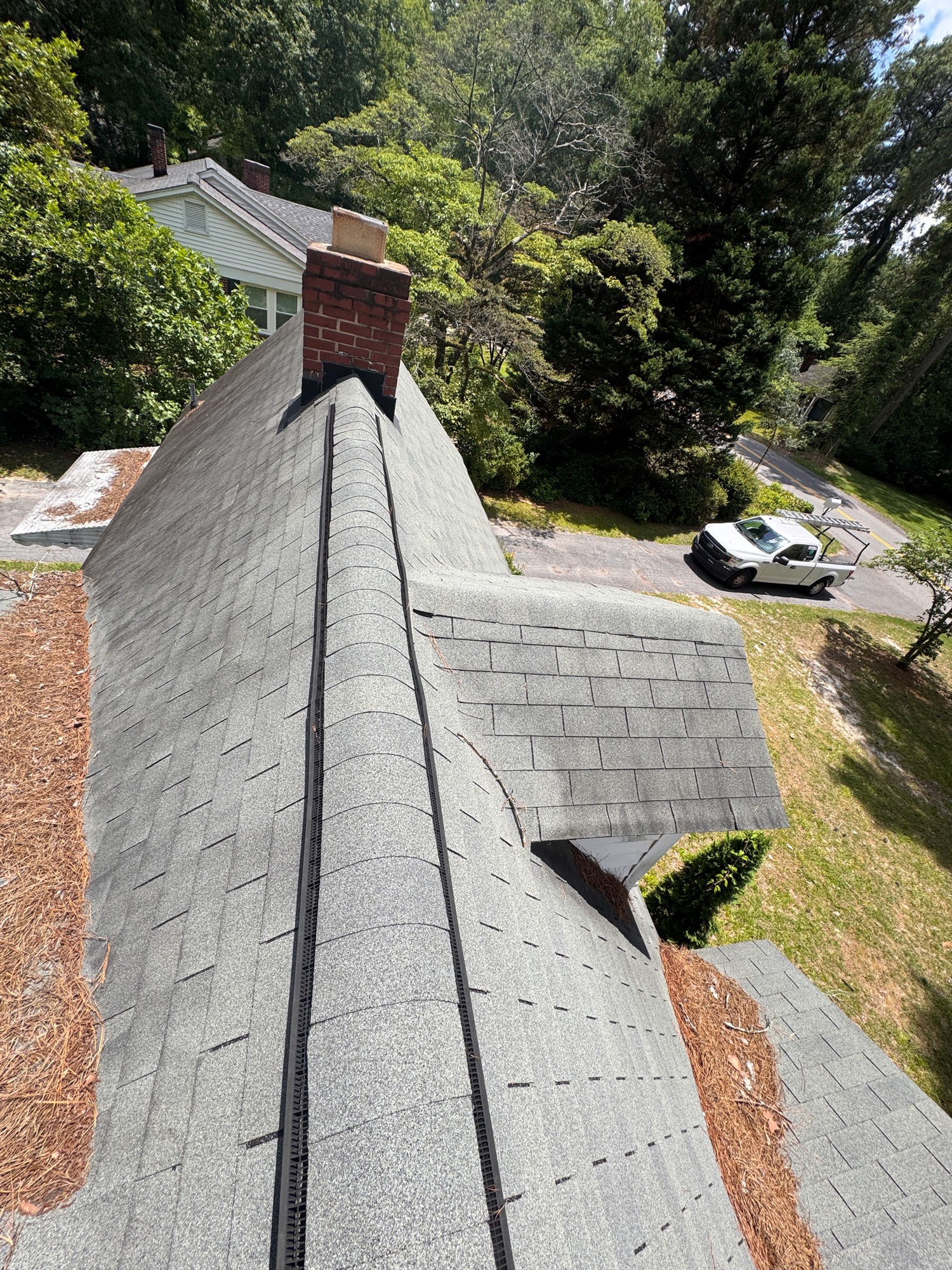
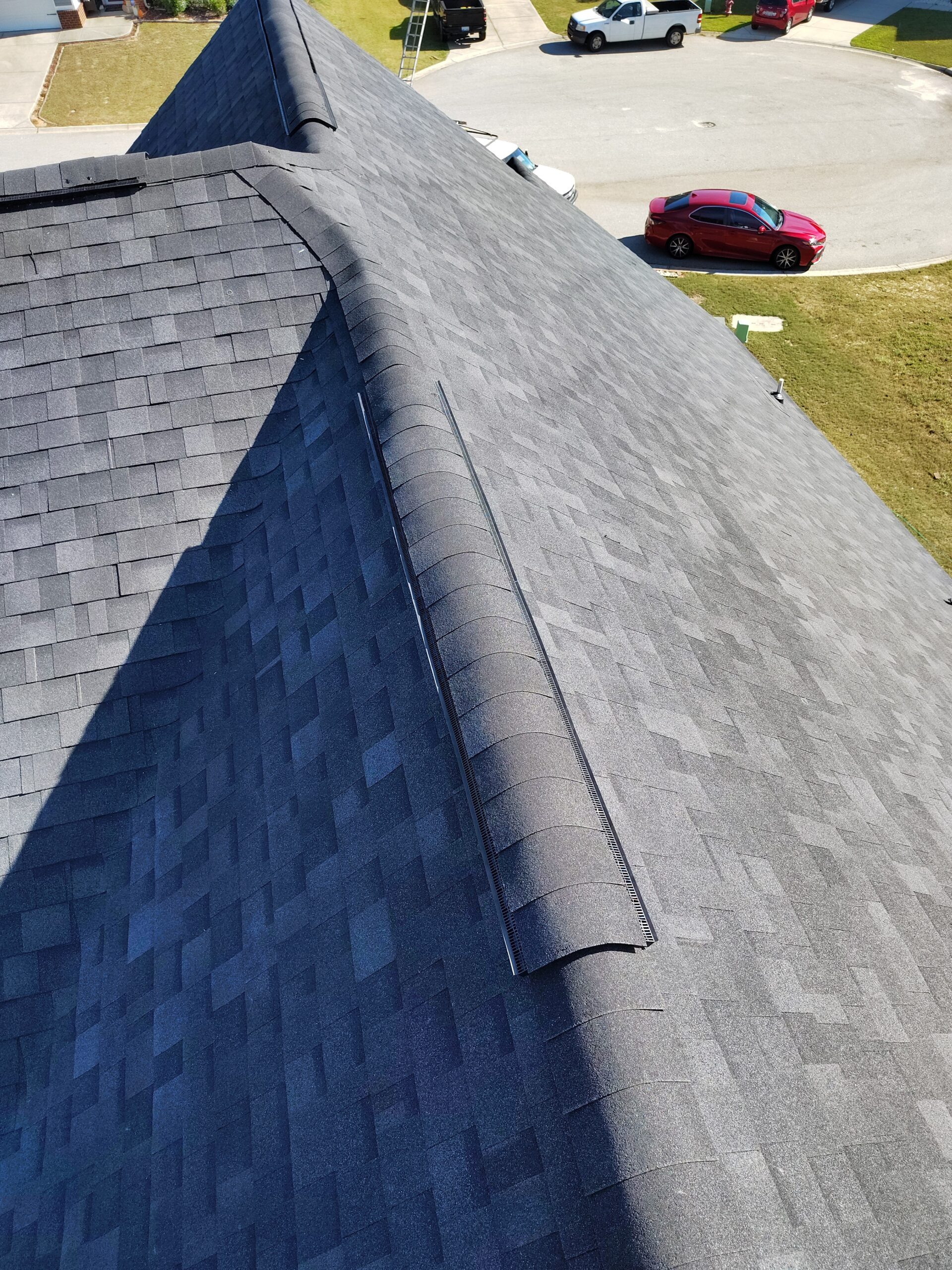
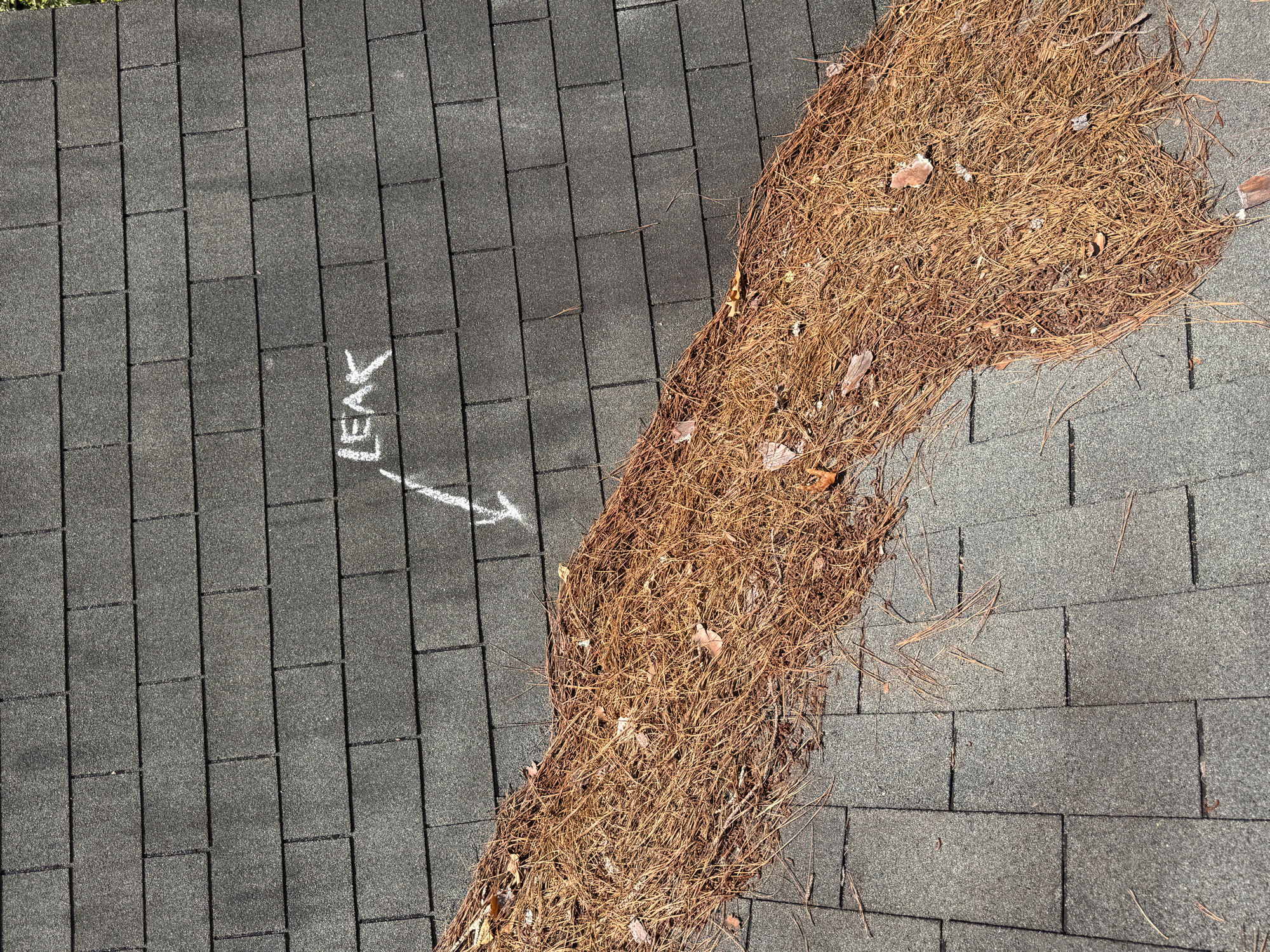
This is the most common tree problem we see. On our Forest Acres roof repair, packed pine straw in a valley held moisture against the roof and pushed water sideways under the shingle courses, contributing to a leak that ran down an interior wall. On our Forest Acres roof replacement, the before photos show leaf litter and dead vine growth packed along a valley under trees that hang right over the slope.
Moss, algae and shade
Heavy shade keeps shingles damp longer after rain and dew. That encourages dark algae streaks and, in the dampest spots, moss, which holds water against the surface and can lift shingle edges. Trimming for light and air, and keeping debris off, does more than any cleaner.
Abrasion from rubbing limbs
A limb that touches the roof scrapes the granules off the shingles every time the wind moves it, and the exposed asphalt wears out fast. It also gives squirrels and other animals a bridge onto the roof.
Impact damage in storms
When the remnants of Hurricane Helene crossed the Midlands in September 2024, Forest Acres lost more than 200 trees, with more than 30 roads blocked. In July 2026, a storm toppled trees across a narrow swath of the city, including one onto a home near Dare Circle. A healthy tree can still fail in saturated ground and high wind; a decaying or storm-damaged one is a bigger risk. See storm and tree damage in Forest Acres for what to do after one hits.
A roof-and-tree checklist for Forest Acres homeowners
- Look at your roof from the ground each season. Note limbs touching or hanging over it.
- Clear valleys and gutters after the main leaf drop and in spring; more often under pines.
- Watch for dead limbs, cracks in the trunk, mushrooms at the base or new leaning after storms, and call an arborist if you see them.
- If a tree might need to come down, check the permit table, apply through GovWell and hire a city-licensed tree contractor.
- Ask the city before major pruning.
- Do tree work before a roof replacement, not after.
- After a storm, check the roof even if nothing fell on it.
Our Forest Acres gutters page covers cleaning timing and guards, and the roof maintenance guide covers seasonal care.
Trees and roof replacement
If a roof replacement is coming, schedule tree work first. Removing or cutting back a tree over new shingles risks damaging them, and a roofer working under heavy overhang is slower and less safe. If a removal needs a permit, apply early so it does not hold up the roof. See roof replacement in Forest Acres.
Need a roof checked under your trees?
Cola City Roofing inspects roofs across Forest Acres and will tell you where trees are causing problems, from clogged valleys to abrasion and soft decking. We are roofers, not arborists, so we will tell you when you need one. Contact us or call (803) 734-3700. See also the roof inspection guide.