Your roof works tirelessly, day in and day out, to protect your home from the intense Columbia sun, heavy downpours, and strong seasonal winds. Because it’s always there, it’s easy to forget about it until a problem becomes too obvious to ignore. But by that point, a small issue may have already spiraled into a costly disaster involving water damage, wood rot, and mold.
Knowing the subtle and not-so-subtle signs of a failing roof is one of the most important things you can do as a homeowner. Being able to spot trouble early allows you to plan and budget for a replacement on your own terms, rather than making a frantic call during an emergency. How can you tell if your roof is simply aging gracefully or secretly crying out for help?
This checklist is designed specifically for Columbia, SC homeowners. It will guide you through the key indicators that your roof may be nearing the end of its functional life. Use these points to assess your own roof and determine if it’s time to call in a professional for a new roof.
Your Columbia, SC Roof Replacement Checklist
Some signs of roof failure are obvious, while others are much more subtle. Go through this list to get a comprehensive picture of your roof’s current health.
1. The Age of Your Roof
This is the most straightforward indicator. No roof lasts forever, and different materials have different lifespans. In Columbia, the most common roofing material is the architectural asphalt shingle, which is designed to last approximately 25 to 30 years.
- If your roof is 20-25 years old or older: It’s time to start paying close attention. Even if it looks okay from the ground, its materials are likely becoming brittle and less effective. At this age, you should begin budgeting for a replacement, as it’s living on borrowed time.
- If you don’t know the roof’s age: If you weren’t the one who installed it, look for home sale records or ask a previous owner. If that information is unavailable, assume it needs a professional inspection to determine its condition. A qualified roofer can often estimate the age based on the materials and their condition.
2. The Condition of Your Shingles
Your shingles are the frontline soldiers of your roofing system. Their condition is a direct reflection of your roof’s overall health. You can spot many of these signs from the ground with a pair of binoculars.
Check for:
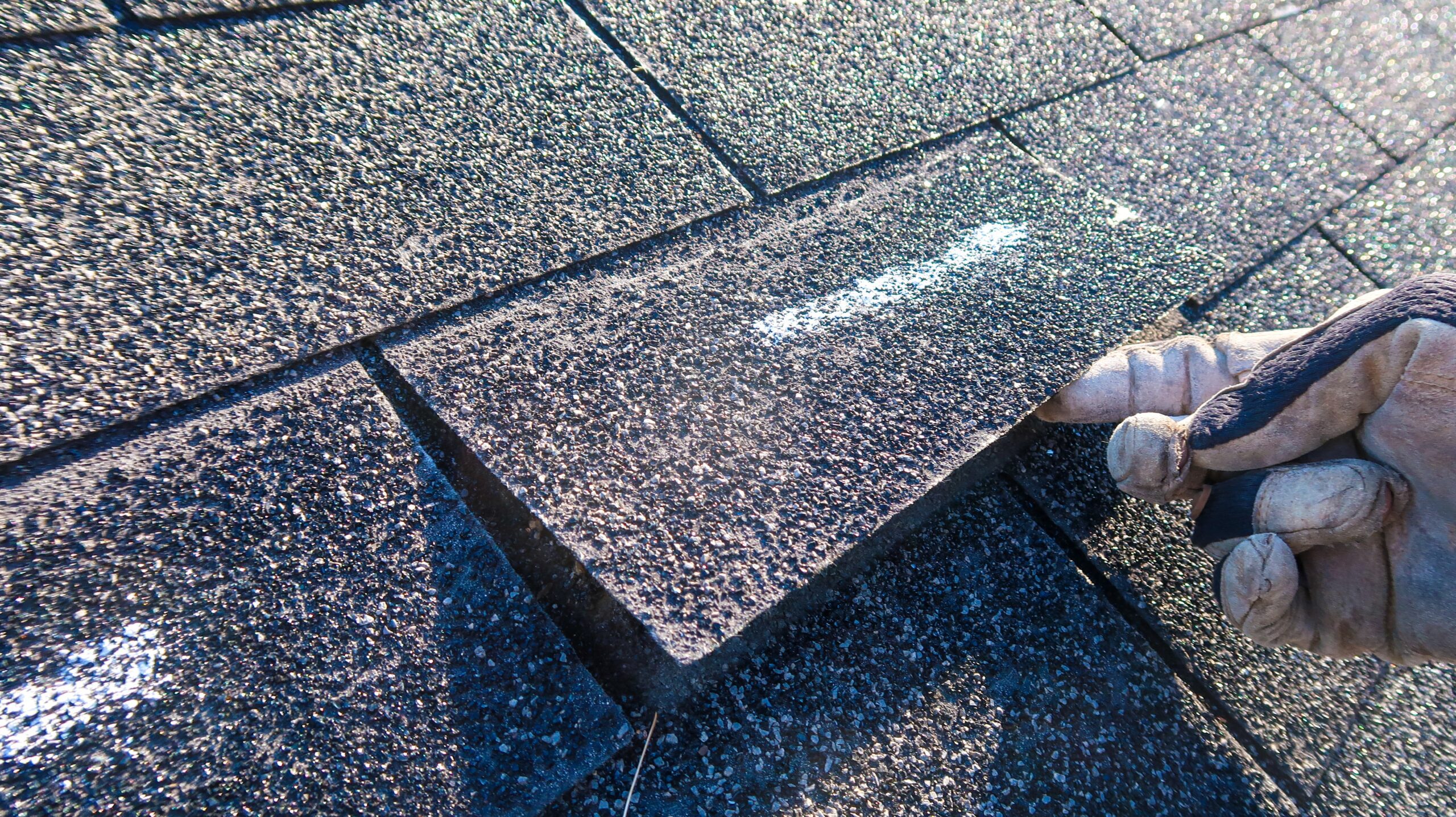
- Curling or Clawing Shingles: Look at the edges and corners of your shingles. Are they starting to curl upwards or lie flat? This is a clear sign of aging and heat damage. Curled shingles are extremely vulnerable to being caught and torn off by wind.
- Cracked Shingles: Thermal shock, caused by the daily fluctuation between hot sun and cooler nights, can cause visible cracks in shingles over time. These cracks are direct pathways for water to seep into the underlayment.
- Missing Shingles: A few missing shingles after a major storm can often be repaired. However, if you are consistently finding shingles in your yard or see multiple bare patches, it points to a systemic failure of the adhesive and fasteners.
3. Granules in Your Gutters
Take a look inside your gutters or near your downspouts. Do you see a build-up of black, sand-like particles? These are the asphalt granules that cover the surface of your shingles.
Their job is to protect the underlying asphalt from UV rays and add fire resistance. While it’s normal to lose a small amount of granules over a roof’s life, a large accumulation is a red flag. It means your shingles are "balding" and their protective layer is rapidly deteriorating, accelerating the aging process.
Galleries
Featured Work
Need proof of our skills? Check out our recent roof and gutter work!
4. Leaks, Water Stains, and Moisture
This is the sign that homeowners dread most, and for good reason. Any evidence of water inside your home is a critical issue that requires immediate attention.
- Stains on Ceilings or Walls: Dark, brownish stains on your interior ceilings or running down walls are classic signs of a roof leak. Don’t just paint over them; you must find and fix the source.
- Moisture or Mold in the Attic: On a sunny day, safely take a look inside your attic. Do you smell a musty, damp odor? Do you see any water-stained wood, active drips, or signs of black mold or mildew on the underside of the roof deck? This indicates a leak that may have been happening for a long time.
- Spongy or Soft Spots on the Roof: (For professionals only) When walking on a roof, a professional can feel for soft spots, which indicate the underlying wood decking has rotted from moisture. This is a definitive sign that a full replacement, including decking repair, is necessary.
5. Damaged or Failing Flashing
Flashing consists of the metal pieces installed around any roof penetration, such as chimneys, skylights, vents, and in the valleys where roof planes meet. Its job is to create a watertight seal in these vulnerable areas.
Inspect these areas for signs of trouble:
- Rusted or Corroded Metal: Rust can create holes and weak points in the flashing.
- Bent or Lifted Sections: High winds can damage flashing, breaking the seal and allowing water to get underneath.
- Cracked Sealant: The caulk or sealant used around flashing can dry out and crack over time, creating an easy entry point for rain.
Faulty flashing is one of the most common sources of roof leaks. While it can sometimes be repaired, widespread flashing failure on an older roof often accompanies other issues that warrant a full replacement.
6. Sagging Roof Deck
Stand back from your house and look at the lines of your roof. Are the ridgelines perfectly straight, or do you see a noticeable dip, curve, or "saddleback" in the middle?
A sagging roof is a serious structural issue. It can be caused by waterlogged or rotted decking, an improperly installed roof, or framing problems in the attic. This is not just a cosmetic problem; it’s a sign of a potential structural failure and requires an immediate professional evaluation.
When to Call a Professional
If you’ve checked off several items on this list, or if you’ve noticed one of the more serious signs like a leak or sagging, it’s time to stop guessing and call for an expert opinion. While a homeowner’s assessment is a great first step, it can’t replace the trained eye of an experienced roofing contractor.
At ColaCity Roofing, we provide comprehensive and honest roof inspections at no cost to you. Our process is designed to give you clarity and peace of mind.
Here’s what our professional inspection includes:
- A Safe, Detailed Assessment: Our experts will get on your roof to examine every component up close, identifying issues you can’t see from the ground.
- Attic and Interior Evaluation: We check for signs of moisture, rot, and inadequate ventilation from inside your home.
- Photographic Documentation: We don’t just tell you what’s wrong; we show you. You’ll get clear photos of any problem areas, so you can see the condition of your roof for yourself.
- An Honest Recommendation: Our primary goal is to provide the right solution for you. If a simple repair will solve your problem, that’s what we’ll recommend. If a full replacement is the safer, more cost-effective long-term solution, we will explain exactly why and provide a detailed, no-pressure quote.
Don’t wait for a small worry to become a major catastrophe. Take a proactive approach to your home’s health. Contact ColaCity Roofing today to schedule your free, professional roof inspection.