If you live in Rock Hill, Fort Mill, Tega Cay, York, Clover or Lancaster, you are close enough to Charlotte to get that region’s weather and far enough from Columbia that most Midlands roofers never come up. That gap is worth understanding before your roof needs work, because the roofing problems on this side of the state are not quite the same as the ones an hour south.
Cola City Roofing works the northern counties as well as the Midlands. This is a straight account of what roofs face up here, and how to judge a roofing company that is not headquartered down the road from you.
Where we work in the northern counties
Our coverage on the Charlotte side runs across three counties:
- Rock Hill and York, plus the rest of York County
- Fort Mill and Tega Cay, along the North Carolina line
- Clover, out toward Lake Wylie
- Lancaster and Lancaster County
- Chester and the surrounding area
We are based in Columbia, and we will not pretend otherwise. What that means in practice is that we schedule work up here in blocks rather than dropping in one job at a time. Call us and we will tell you honestly when we can be out. If that timing does not work for an emergency, we would rather say so than string you along. The full service area lists everywhere else we cover.
Why roofs age differently in this part of the state
You are in a storm corridor
The same spring and summer systems that roll through Charlotte cross York and Lancaster counties on their way. That means wind, and it means hail. Neither respects a state line, and a roof five miles south of the border takes the same beating as one five miles north.
Shade is not the mercy it looks like
Mature hardwoods keep a house cool and keep a roof damp. Slopes that sit in shade dry slowly after rain, and slow drying is what algae needs. The dark streaking you see running down north-facing slopes is a living organizm feeding on the limestone filler in asphalt shingles, and it holds moisture against the surface while it works. It starts cosmetic. It does not stay that way. A low-pressure softwash clears it without stripping the granules the way a pressure washer would.
Open water changes the numbers
Homes out toward Lake Wylie or along the Catawba get more wind and more humidity than the same house a few miles inland. If that describes your property, our guide to lake house roofing goes through what waterfront exposure does to a roof over time.
Hail is the damage most people miss
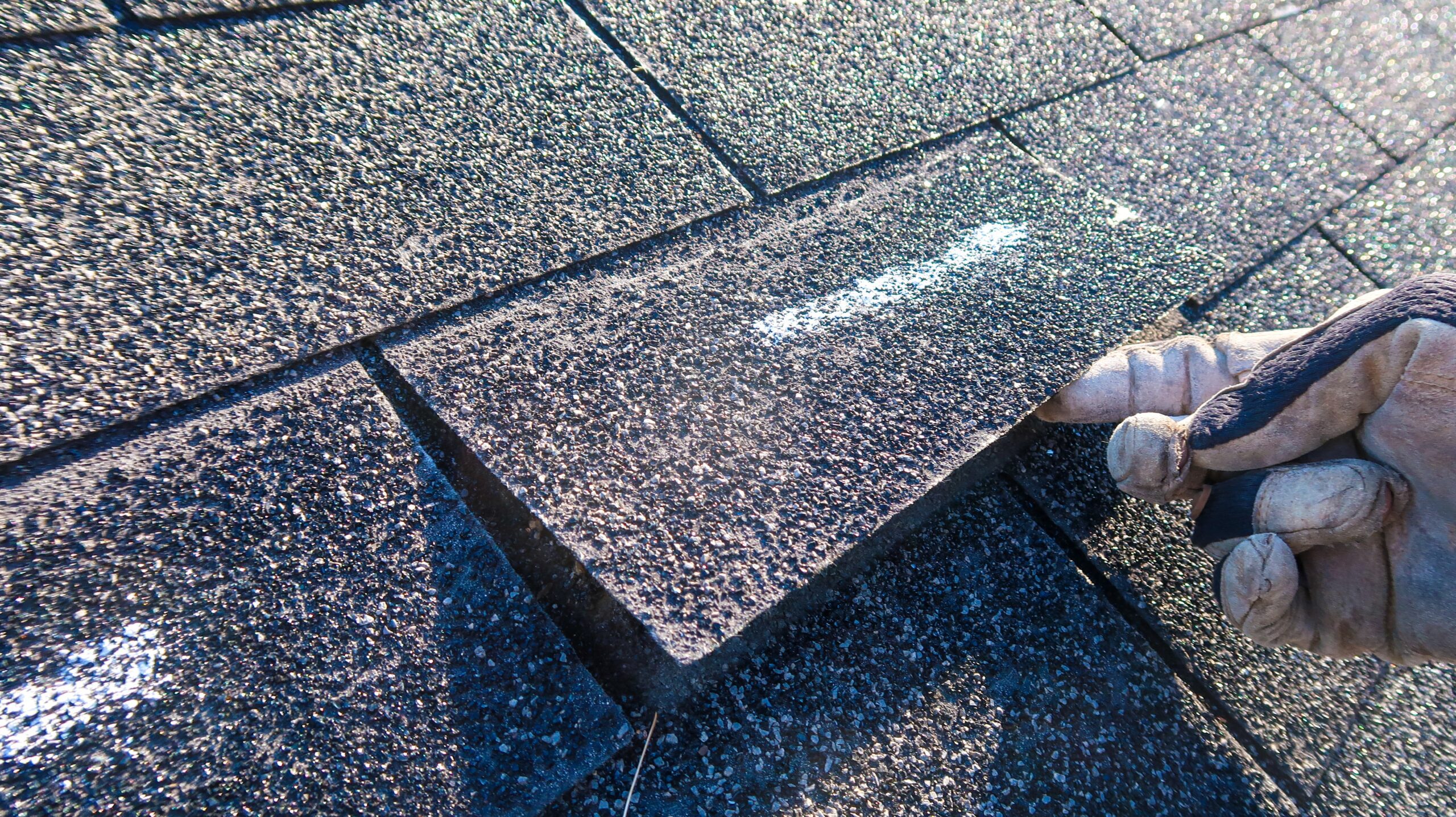
Hail does not usually punch holes. It bruises the mat underneath the granules, and a bruise is nearly invisible from the driveway. The roof looks fine, the homeowner moves on, and the failure shows up a season or two later as a leak that seems to have come from nowhere.
This matters for timing. Insurance policies generally expect damage to be reported reasonably promptly after the event that caused it, so a bruise you find three years later is a harder conversation than one you find three weeks later. If a storm goes through and you are not sure, the cheap move is to have someone look. Our post on hail damage in the Columbia area covers what the damage actually looks like up close.
What a claim looks like from here
If there is real damage, we document it and help you file. When your adjuster comes out, we come out too, so the roof is assessed with a roofer standing on it rather than judged from the ground. We cannot tell you how your insurer will rule, and any contractor who says otherwise is selling you something. What we can do is make sure the damage that exists is on the record.
One thing worth saying plainly: your deductible is yours. In South Carolina it is illegal for a contractor to waive, absorb or rebate it, and an offer to do so is a signal to walk away. There is more detail on the process in our roof insurance claims service page and our walkthrough of the claim process.
Vetting a roofer who is not from your town
Plenty of companies chase storms into this corridor from out of state, and some of them are gone before the first winter. Distance itself is not the problem. Accountability is. Ask any roofer, us included:
- Where is your crew actually based, and who is on my roof — employees or a subcontractor you met last week?
- Are you licensed and insured in South Carolina, and can I see the certificate rather than a claim on a flyer?
- Will you meet my insurance adjuster at the house?
- Is the scope written down and priced before anyone starts, including what happens if you find bad decking?
- Who do I call in two years if something goes wrong, and will that number still work?
That last one is the whole test. A company with a real business behind it can answer it without flinching. We have been accredited with the BBB at an A+ rating, we hold a 5.0 rating from more than a hundred Google reviews, and we were voted Best of Columbia in 2025 and again in 2026. None of that guarantees a perfect job. It does mean there is someone to hold to account.
Materials that earn their keep up here
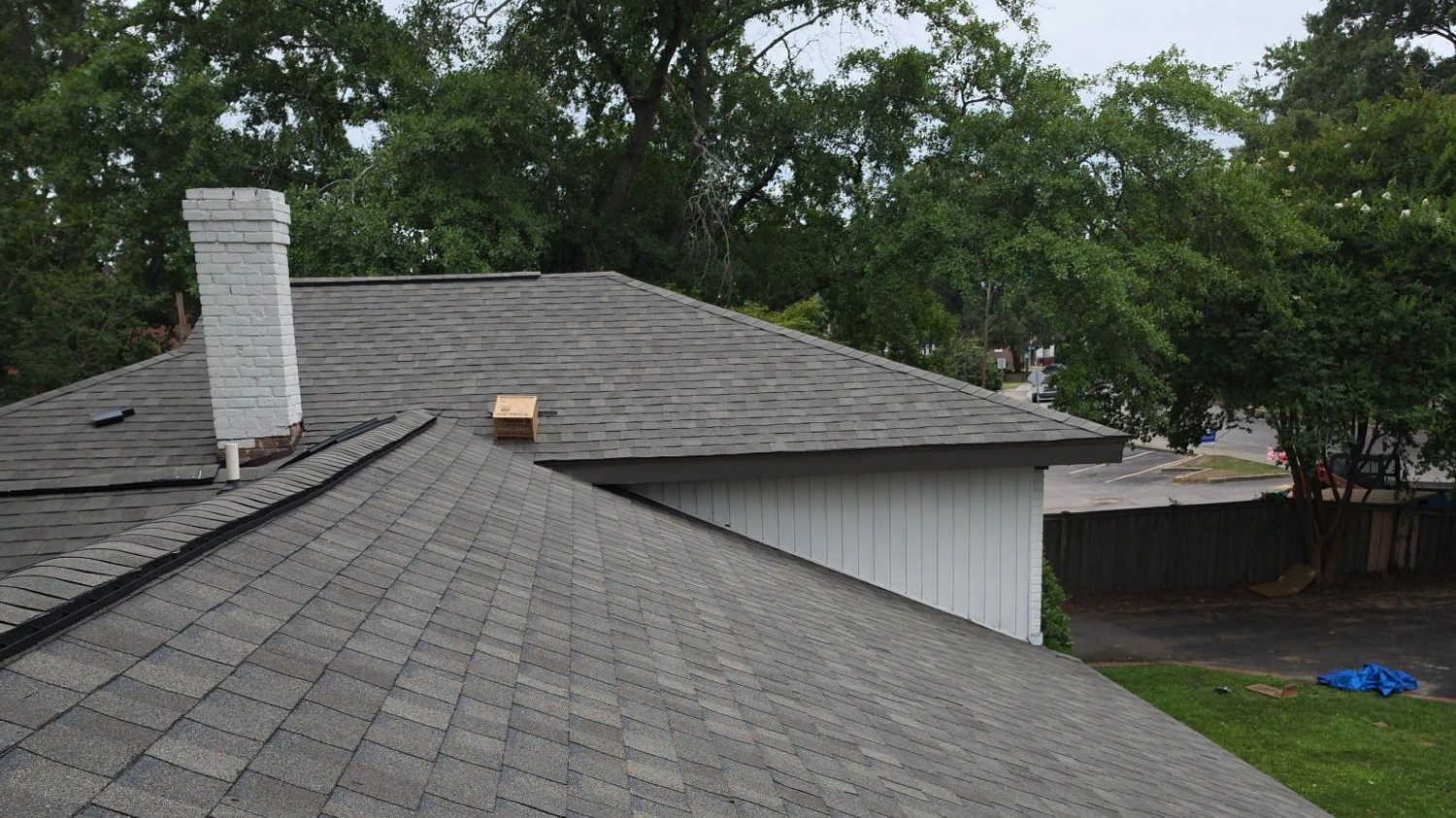
For most homes in these counties, an architectural asphalt shingle is the sensible answer, and an algae-resistant version is worth the difference if your roof spends much of the day in shade. Impact-resistant shingles are worth asking about in a hail corridor.
Metal roofing is the other option people underrate. Standing seam sheds wind and water well, does not host algae the way asphalt does, and lasts long enough that it can be the last roof a house needs. It costs more up front, which is a real consideration and not one we will talk you out of.
Getting started
An inspection is free and there is no obligation attached to it. We will get on the roof, photograph what we find, and tell you whether you are looking at a repair, a replacement, or nothing at all this year. If the answer is nothing, we will say that too.
The same crews handle gutters, roof cleaning and commercial work, so if the roof turns out to be one item on a longer list, our full range of roofing services covers the rest.
If cost is the obstacle rather than the decision, financing through a third-party lender can spread it into fixed monthly payments with no prepayment penalty. The estimate is free either way. Get in touch and we will tell you when we can be in your area.