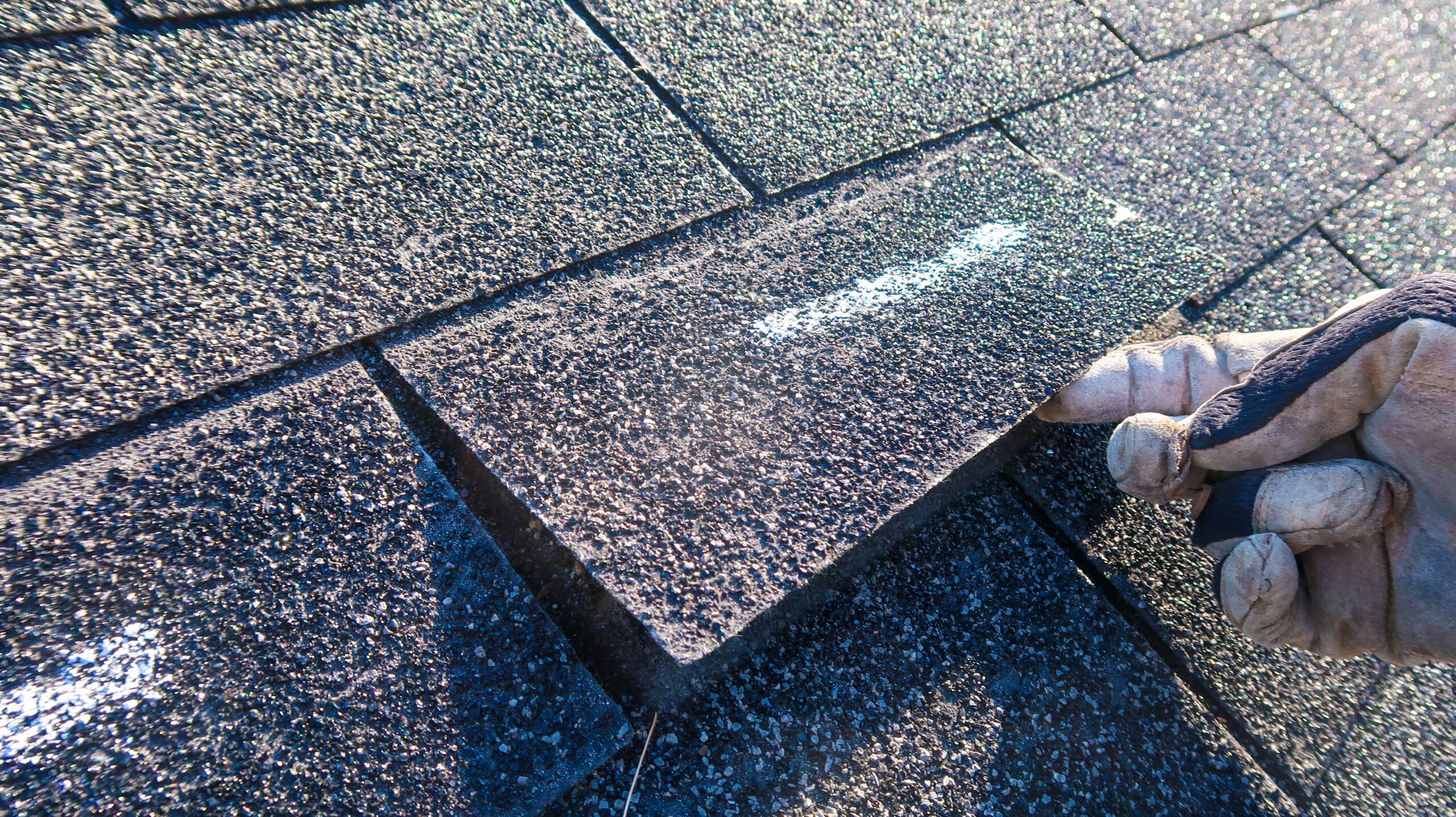
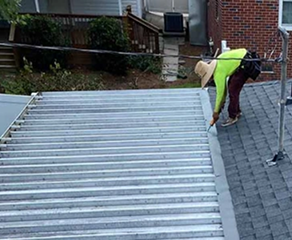
Metal panel roofs are tough. They shrug off hail that would bruise a membrane, they shed water quickly, and the panels themselves can last a very long time. So when a metal warehouse, shop or pre-engineered building starts leaking, the panels are rarely the problem. The leak almost always comes from the parts that hold the panels down and join them together: fasteners, laps, closures, trim and the openings cut through them.
This article walks through where metal building roofs leak and why, how to tell a leak from condensation, and the range of fixes from spot repair to full retrofit. If you want background on panel types and materials first, see our guide to metal panel roofing systems.
Exposed Fasteners: The Most Common Culprit
Most older metal buildings use exposed-fastener panels such as R-panel or PBR: the screws go straight through the panel into the purlins below, and a rubber or neoprene washer under each screw head seals the hole. A typical building has thousands of them, and each one is a potential leak.
- Washer breakdown: the sealing washer sits in direct sun. Over time it hardens, cracks and shrinks, and stops sealing even though the screw is still tight.
- Fastener back-out: metal panels expand in the afternoon sun and contract at night. That daily movement, repeated year after year, works screws loose so they back out of the purlin and lift the washer off the panel.
- Over-driven or under-driven screws: driven too hard, the washer squashes and splits; too loose, it never seals. Installation mistakes like these can leak from the start or fail early.
- Stripped holes and misses: a screw that missed the purlin or stripped its hole has nothing to hold, and an abandoned hole left unsealed is simply an open hole.
Fastener leaks are usually scattered: drips spread across the building rather than one concentrated wet spot, often getting worse over several years. On a building with standing seam panels, which use concealed clips instead of through-fasteners, this category largely disappears, and leaks tend to come from the seams, end laps, trim and penetrations instead.
End Laps and Side Laps
Panels overlap where they meet. Side laps run along the length of the slope and are held by stitch screws; end laps occur where one panel run ends and the next begins further up the roof. Both depend on sealant tape and fasteners.
- End laps are the bigger risk. Water running down the roof meets the lap, and on low slopes it can be drawn uphill between the panels by capillary action, especially if the sealant tape has dried out or was skipped.
- Debris dams form at end laps and against the upslope side of anything on the roof, holding water and dirt against the lap and speeding corrosion.
- Side lap stitch screws loosen like any other fastener, letting the lap open slightly in wind and allowing wind-driven rain in.
Rust lines running along an end lap are a strong clue that water has been sitting there for a long time.
Ridge, Eave and Trim Closures
The ribbed profile of a metal panel leaves gaps wherever it meets a flat piece of trim, at the ridge cap, the eave, the rake edges and wall transitions. Those gaps are filled with foam or metal closures shaped to the panel profile, and sealed with mastic.
Foam closures deteriorate in the sun, shrink, or get pulled out by birds and insects building nests. Once a closure is gone, wind-driven rain blows straight in at the ridge or eave. Leaks along the ridge line or along the top of exterior walls during storms, rather than during steady rain, often point here. Loose or missing trim pieces after a storm deserve the same quick attention, since wind can work them further loose each time.
Rust and Corrosion
Galvanized and Galvalume coatings protect steel well, but they can be breached. Rust that leads to leaks usually starts in predictable places:
- Cut panel ends and edges, where the protective coating stops.
- Scratches from foot traffic, dropped tools and installers dragging panels.
- End laps and areas where water and debris sit.
- Contact with dissimilar metals, such as copper lines or the wrong fasteners, which can corrode the panel at the contact point.
- Drip lines below rooftop equipment that discharge condensate or chemical residue onto the panels.
Surface rust is a maintenance item. Rust that has eaten through the panel, or a pattern of rust across many panels, moves the conversation toward coating, retrofit or replacement.
Penetrations, Curbs and Skylights
Pipes, exhaust stacks and HVAC curbs are harder to flash on metal than on a membrane roof because the flashing has to seal across the panel ribs. Penetrations that sit in the flat of a panel are easier to seal; ones that cross a rib, or curbs installed without a properly diverted upslope side, tend to trap water and debris. Pipe flashings with failed sealant and curbs cut in after the original install are frequent sources.
Translucent light panels, common in warehouses, are another weak point. They age, crack and become brittle in the sun, and their fasteners and laps fail just like the metal panels around them. For a broader look at leak sources across low-slope buildings, see where flat commercial roofs leak.
Leak or Condensation?
Many metal buildings "leak" on dry, cool mornings. That is often condensation: warm, moist interior air meets the cold underside of the panels and drips back down. Signs that you are dealing with condensation rather than a leak include drips on clear days, dripping spread evenly across a wide area, and damp or torn insulation facing on the underside of the roof. Torn vapor retarders and buildings that are newly heated, cooled or used for wet processes are common contributors. The fix is ventilation, insulation and vapor control, not roof repair, so it is worth ruling out before paying for one.
What You Can Check Without Going on the Roof
Walking a metal roof is risky: panels can be slippery, light panels can look solid and give way, and foot traffic in the wrong spot dents ribs and loosens laps. Leave the roof itself to a trained crew. From the ground and the inside, though, building staff can collect useful information:
- Daylight from inside: with the lights off, pinpoints of light at the underside of the roof often mark missing fasteners, open laps or rust holes.
- Drip pattern: note whether drips line up along a purlin (fastener rows), across the building at one spot on the slope (an end lap), or along the eave or ridge (closures and trim).
- Rust staining: streaks on interior insulation or framing show where water has been getting in over time.
- Exterior view: from the ground or a lift, look for missing trim, displaced closures at the eave, and staining below rooftop equipment.
- Timing: record whether leaks follow steady rain, wind-driven storms or cool, dry mornings.
That record makes the roofer's inspection faster and helps confirm afterward that the repair addressed the right cause.
Repair, Coat, Retrofit or Replace?
Once the source is clear, the options fall along a range. The right one depends on how widespread the problems are and how sound the panels and structure remain.
Targeted repairs
Replacing failed fasteners with new ones (often a slightly larger diameter screw so it bites fresh metal in the old hole), resealing end laps, replacing closures and reflashing penetrations. This suits roofs where the panels are sound and the problems are limited.
Coating systems
A restoration coating system typically treats every fastener and lap with a reinforced sealant, then coats the whole roof. It can address widespread fastener and lap leaks at once and slow surface rust. Our comparison of silicone and acrylic coatings explains how the chemistries differ. Coatings need sound panels underneath; they will not save metal that is rusted through.
Retrofit over the existing roof
Where the structure is sound but the panels are past saving, a retrofit installs a new roof over the old one: either new metal on sub-framing (metal-over-metal) or insulation that fills the panel flutes topped with a single-ply membrane. Retrofits avoid tearing off the old panels over an occupied space and can add insulation. The structure has to be checked for the added weight first; see structural load considerations.
Replacement
Full panel replacement makes sense when corrosion is widespread, when the purlins or structure need repair, or when the owner wants to move to a different system entirely, such as from exposed-fastener panels to standing seam.
Metal building leaks are often fixable without starting over, but only if the repair matches the cause. If your metal roof leaks and you are not sure which of these applies, our team offers commercial roofing services for metal buildings across the Midlands, from fastener repairs to full retrofits. You can request a free commercial roof assessment to get a clear picture first.