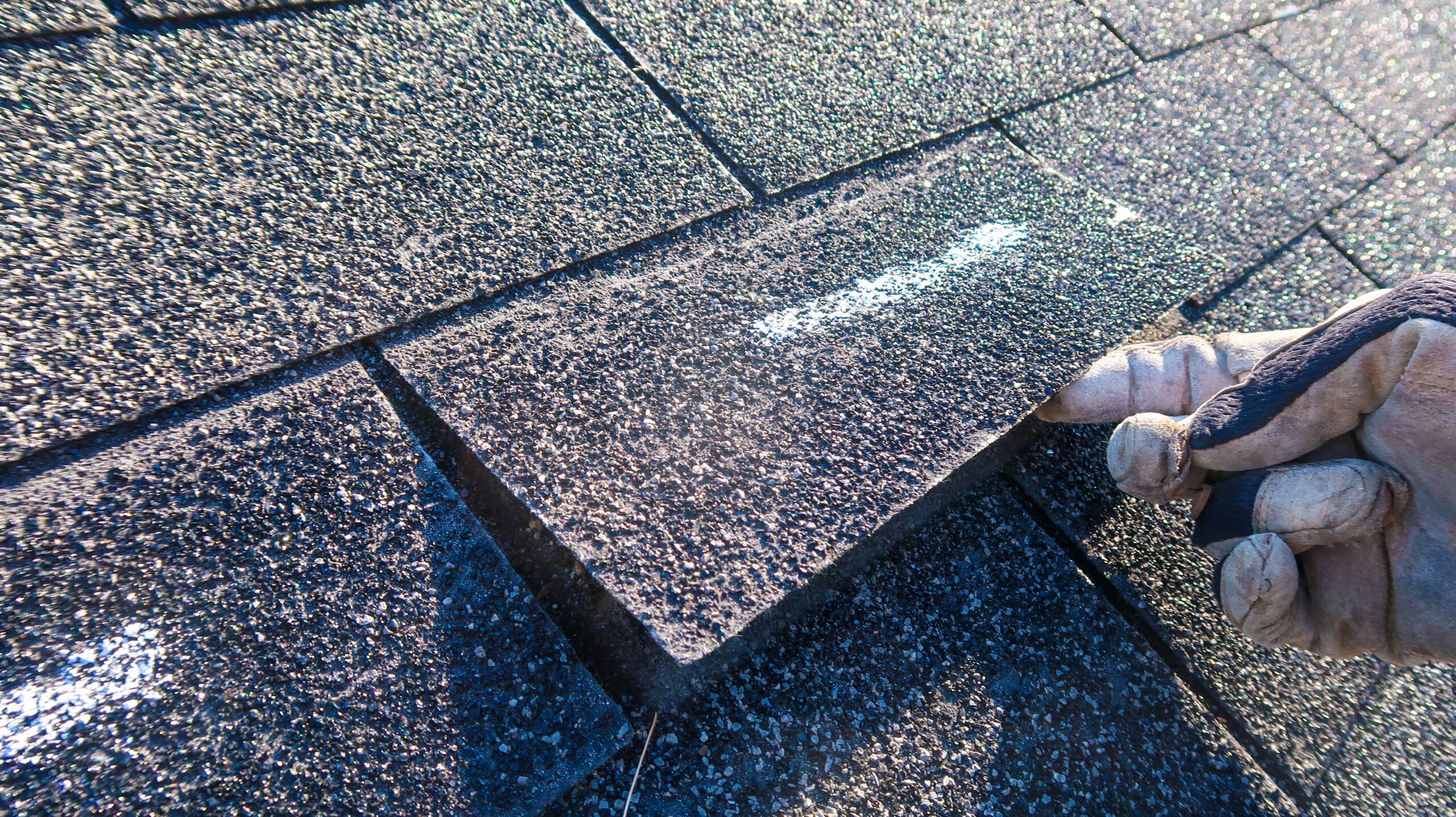
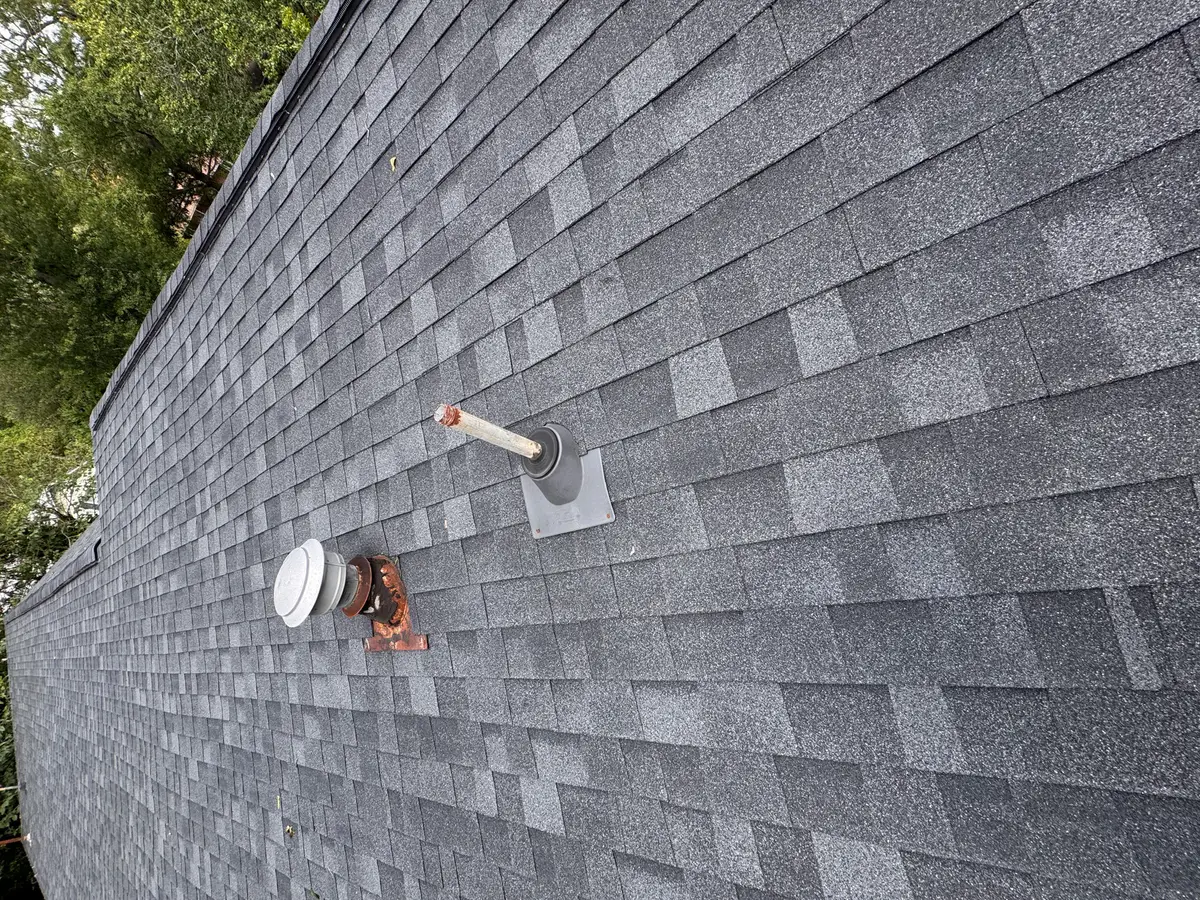
To find a leak on a manufactured home roof, start inside: trace the stain to the nearest seam, vent, stack or roof edge above it, then inspect that spot from a ladder rather than walking on the roof. Most repairs come down to resealing a seam or fastener, or reflashing a penetration. If leaks show up in several places or the roof feels soft, the whole roof needs a look.
Stay off the roof until you know what is under it
Many older manufactured homes have a one-piece metal roof. The HUD standard allows that kind of roofing to be installed without structural sheathing (24 CFR 3280.305(c)(1)(iii)), so there may be no wood deck between the metal and the ceiling. Stepping between trusses can dent the metal, open seams or put a foot through the ceiling.
Look from a ladder set at the edge, in dry weather, with someone holding it. Keep clear of the electrical service line. If you have to go further, leave it to someone with the right equipment and license.
Trace the leak from inside
- Mark every ceiling stain and note when it appears: during heavy rain, wind-driven rain, or days later.
- Look at ceiling panel joints and light fixtures, where water often shows first.
- Check around the bathroom vent, kitchen vent and plumbing stacks from below.
- Water runs along framing before it drips, so the entry point may sit upslope of the stain.
A stain that appears only on cold mornings, with no rain, may be condensation rather than a leak. That points to ventilation, not the roof surface.
Seams and fasteners
The HUD standard requires roofing membranes to be stiff enough to prevent ponding water or seams separating from wind, erection or transportation forces (24 CFR 3280.305(h)(2)). Over time, sealant ages and seams open anyway.
Where materials expand and contract at different rates, HUD calls for sealants that keep protecting against water as joints move (24 CFR 3280.307(c)). Cracked or shrunken sealant along a seam, a lifted screw or a missing washer is a likely entry point. Clean, dry the area and reseal with a product rated for that roof surface.
Vents, stacks and other penetrations
Every hole in a roof is a weak point. HUD requires all roof penetrations to be flashed and sealed, and on a metal roof, the flashing screws must land in a plywood backer at least 5/16 inch thick fastened to the framing (24 CFR 3280.305(h)(4)). If an old repair was screwed into bare metal with nothing behind it, the screws can work loose.
Check vent caps for rust, cracked rubber boots around pipes and dried-out sealant at the flashing edge. Replacing a failed boot or flashing is a common, contained repair.
Temporary fixes that buy time
A temporary patch keeps water out until a proper repair is made. It isn't the repair. Options include a tarp weighted at the edges and secured without new holes in the roof, and roof sealant or patching products labeled for your roof surface.
Some products are labeled for wet conditions. Rust-Oleum, for example, lists its LeakSeal RV and mobile home coating as adhering to wet surfaces and sealing joints, seams and fasteners (Rust-Oleum product page). Read the label for your roof type and follow the maker's instructions. Photograph the damage before you patch it.
Write it down before anyone repairs it
A short record makes any repair faster and helps if you ever file a claim or a warranty complaint. Keep these together:
- Dated photos of each ceiling stain and of the roof area above it.
- The weather when the leak appeared: steady rain, wind-driven rain or a storm.
- A photo of the data plate, which shows the wind and roof load zones the home was built for (24 CFR 3280.305(c)(4)).
- Receipts and notes for any earlier roof repairs or patches.
If the home is new enough to be under warranty, report the leak to the manufacturer in writing. South Carolina law requires corrective action within a reasonable time once a warranty problem is reported (§ 40-29-260(A)(4)).
When the whole roof is the problem
Spot repairs make sense on a roof that is sound overall. Look at the bigger picture if you see any of these:
- Leaks in several places, or new leaks soon after each repair.
- Soft, sagging or bowed areas, which can mean wet or damaged framing.
- Rust that has eaten through the metal rather than staining the surface.
- Ceiling damage spread across more than one room.
The U.S. Department of Energy advises that a roof in poor condition or near the end of its life is usually better re-covered or replaced than coated (DOE, Guidelines for Selecting Cool Roofs). Our manufactured home roofing guide compares the options, and our post on coating versus replacement covers that choice in detail.
Who can make the repair
HUD's guidance says owners should be able to repair their own homes. If the home is still under the manufacturer's warranty, the manufacturer's authorization may be required (HUD homeowner resources). In South Carolina, a new home carries a one-year manufacturer warranty from the date installation is completed (S.C. Code § 40-29-260(A)).
If you hire someone, state law requires a Manufactured Housing Board license for paid repair of a manufactured home's structural, mechanical or electrical systems (§ 40-29-30(A)). Holders of other state licenses are exempt only within their own trade (Reg. 79-24(D)). Ask which license covers the job and check it with our license lookup guide or the Manufactured Housing Board.