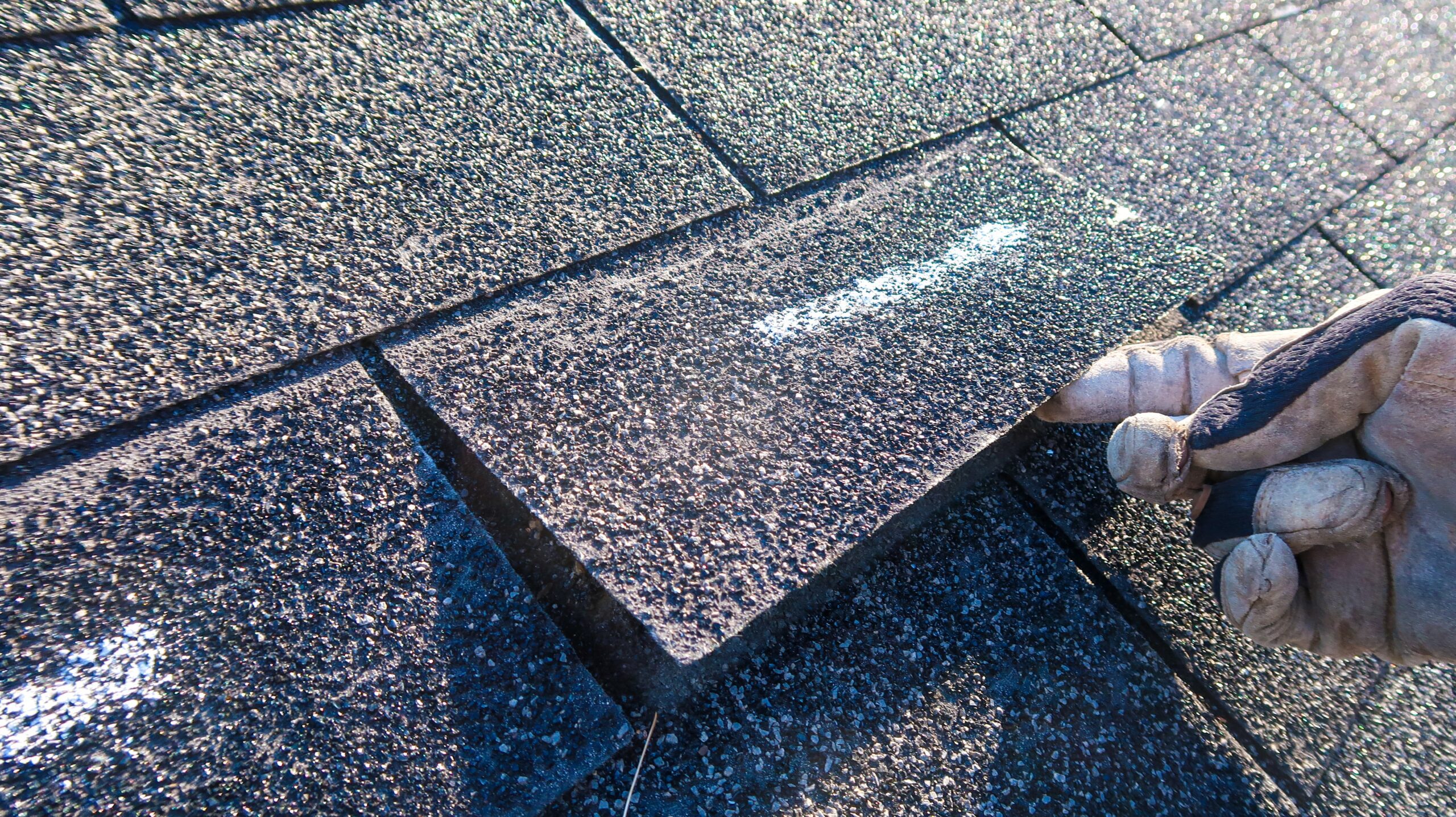
Stand at the right angle in low sun and some roofs show a scatter of small raised bumps across the shingle field. Those are nail pops: fasteners that have backed their way up out of the deck and lifted the shingle sitting over them.
They look trivial. Each one is a penetration through the weather surface of your roof, propped open by the head of the nail that made it.
What is actually happening
A roofing nail is driven through the shingle and into the deck below, and the shingle above covers the head. That is the whole waterproofing principle: every fastener is hidden under the next course.
When a nail backs out, it pushes up against the shingle above it. The shingle lifts into a small tent, the seal between courses breaks, and water that would have run over the top now has a route underneath — straight to a nail shank leading down into the deck.
Why nails back out
The deck moves
Wood expands and contracts as temperature and humidity swing, and in the Midlands that swing is considerable. Every cycle works the fastener a fraction. Repeated over years, a fraction becomes a quarter of an inch.
The nail never had much to hold
This is the big one on older homes. Plenty of houses around Columbia have plank decking — individual boards with gaps between them. A nail that lands in a gap has caught only the edge of a board, or nothing at all, and a nail holding nothing works loose quickly.
It was driven wrong
Overdriven nails cut through the shingle mat and lose their grip on it. Underdriven nails stand proud from the start. Nails placed above the manufacturer’s nailing line miss the reinforced strip they were meant to catch. These are installation faults, and a roof showing them across the whole field is usually a roof that was rushed.
The wood has gone soft
A fastener in rotten decking has nothing to bite. If pops are clustered around a chimney, a vent or a valley, the more useful question is what has been wetting the wood in that spot — see what happens when a crew finds bad decking.
How we find them
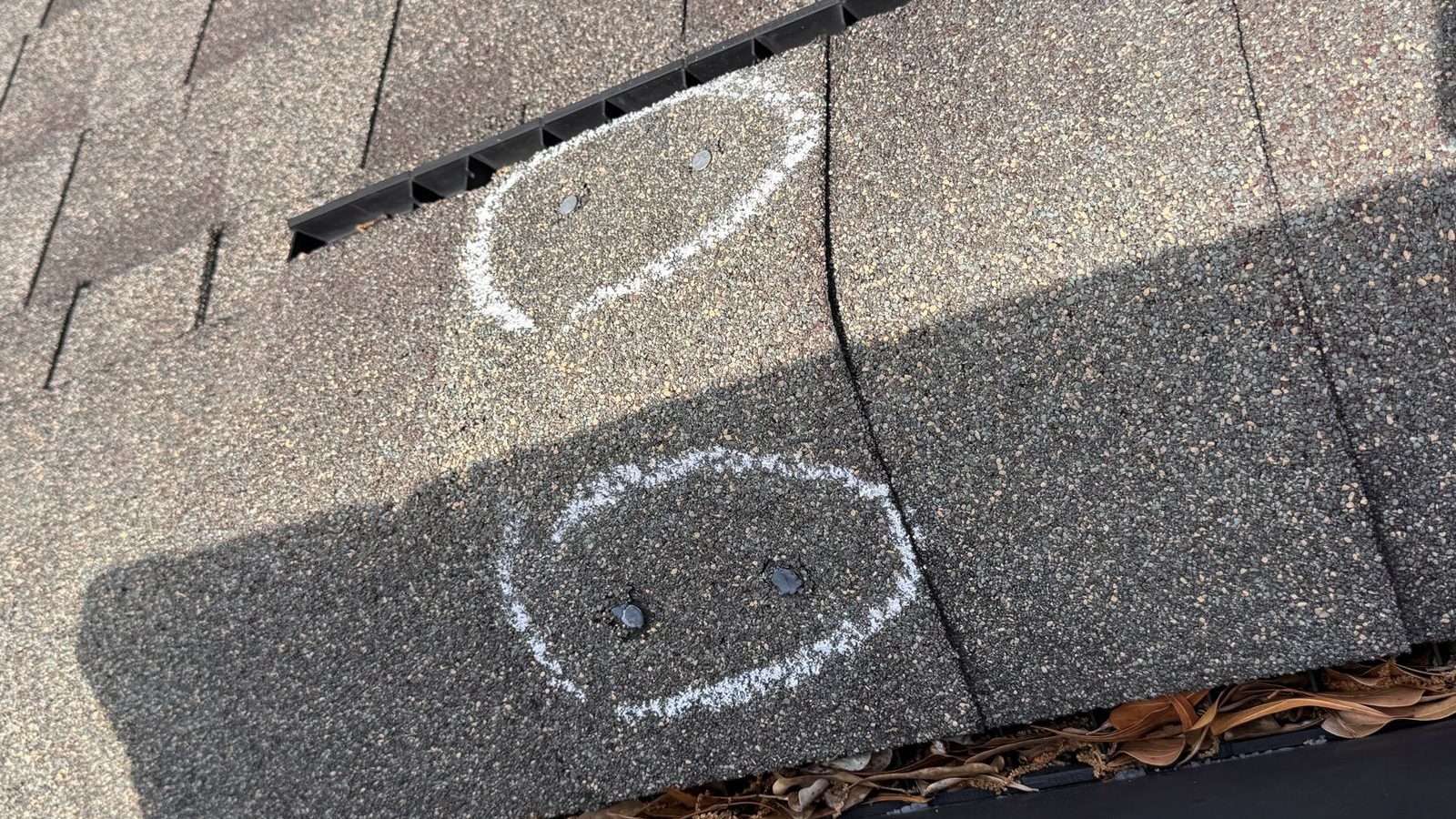
On an inspection we walk the slopes in raking light, which throws a shadow off anything standing proud of the surface, and we mark what we find in chalk so it can be photographed and counted. The featured image on this post is exactly that: two backed-out nail heads circled on a roof we inspected, with leaf litter collecting in the gutter below.
Marking them matters for two reasons. It means nothing gets missed when the repair happens, and it gives you a record. If this turns into an insurance conversation later, photographs taken before anything was touched are worth a great deal.
Repair, or something bigger?
The number and the distribution tell you which conversation you are in.
- A handful of pops in one area is a repair. The nail is reseated or removed, the hole sealed properly, and the shingle re-bonded — or the shingle is replaced if it has been stretched or torn.
- Pops concentrated around one penetration point usually mean a leak has softened the deck there. Fixing the fastener without fixing the leak achieves nothing.
- Pops scattered across every slope, on a roof past twenty years, generally mean the whole field is at the end of its service life. At that point replacement is the honest answer, and patching becomes throwing money at a roof that has already told you what it needs.
Please do not just caulk them
The instinct is to squeeze a blob of roof cement over each bump and move on. It buys a season, sometimes two. Roof cement is not a flexible long-term sealant on an exposed surface: it hardens, shrinks and cracks in the sun, and once it cracks it holds water against the shingle rather than shedding it. Meanwhile the nail is still backing out underneath.
There is also a straightforward safety point. Roofs are steeper and slicker than they look from the ground, and a nail pop is not worth an trip to the emergency room. If you can see pops from the ground with binoculars, that is enough to make the call.
Preventing the next round
You cannot stop wood from moving. You can address the things that accelerate it. Attic ventilation that actually works keeps the deck from cooking and swinging through extreme humidity — our comparison of ridge vents and box vents covers the options. Keeping valleys and gutters clear stops water sitting where it can soften wood. And on a replacement, the fastener specification is worth asking about: the right length to reach through into sound wood, driven flush, on the nailing line.
If you have spotted bumps on your shingles, we will come and look for free, mark what we find, and tell you whether it is a morning’s repair or a sign of something larger. Get in touch.