If your Camden house is on the city's list of locally designated historic properties, roof work goes through the City of Camden Historic Landmarks Commission or its staff before a building permit is issued. The city's 2014 design guidelines are less restrictive about roofing than many owners expect: composition shingles are accepted on many sloped roofs. The firm rules are about slate and tile, metal, roof shape and rooftop equipment.
This page explains who needs approval, what the guidelines say about roofs, and how to prepare an application. It is part of our Camden roofing page. Fees, the permit portal and meeting process are covered in our Kershaw County and Camden roof permit guide, so we do not repeat them here.
Does my house need a Certificate of Appropriateness?
The Camden Design Guidelines state: "Any demolition, new construction, alteration, modification, or addition to a Historic Property requires a Certificate of Appropriateness from the Historic Landmarks Commission." A "Historic Property" here means a property the city has locally designated, as a historic site, landmark, archaeological site or historic district property. The city publishes a street-by-street list of locally designated historic properties, last updated September 20, 2022. It includes addresses on Broad, Lyttleton, Mill, Chesnut and Greene streets, Kirkwood Lane and Lakeview Avenue, among others.
That list is not the same as the City of Camden Historic District on the National Register of Historic Places, which was listed in 1971 and is drawn by boundaries (the city limits on the south, the Southern Railway right-of-way on the east and west, and Dicey Creek Road on the north) rather than by a list of properties. A house inside the National Register boundary is not automatically on the city's local list. Check the list for your address, and if you are unsure, call the city at 803-432-2421.
Repair in kind versus a change
The city's historic ordinance draws a line between repair and alteration. Ordinary maintenance or repair that keeps the same material, design and outer appearance is allowed, and the Building Official can issue a certificate for it without sending it to the Commission. Switching materials, for example from shingles to standing-seam metal, or changing the roof's shape, is an alteration that needs a Certificate of Appropriateness first.
Ask before you sign
We found no published exemption for replacing an entire roof with the same material. The application form has a staff-or-Commission review box, and the city decides which applies. Call the city at 803-432-2421, describe the job and the material, and get the answer before you sign a contract or order materials.
What the design guidelines say about roofs
The roof section of the Camden Design Guidelines (printed pages 58 to 61) is short. The points that matter for a re-roof:
Keep the roof's shape and overhangs
Guideline 2.43 says to "preserve the original roof form" and avoid altering the angle of a historic roof. Guideline 2.44 protects the original eave depth: "Cutting back roof rafters and soffits or in other ways altering the traditional roof overhang is inappropriate." On a re-roof, that matters when rotted rafter tails or fascia are repaired. They should be rebuilt to the same depth, not trimmed back.
Slate and tile
Guideline 2.45 says to avoid removing historic roofing that is in good condition, and that "Specialty materials such as tile and/or slate shall be replaced with a matching material." If your house has slate, plan on slate repair or matching slate, not shingles.
Composition shingles
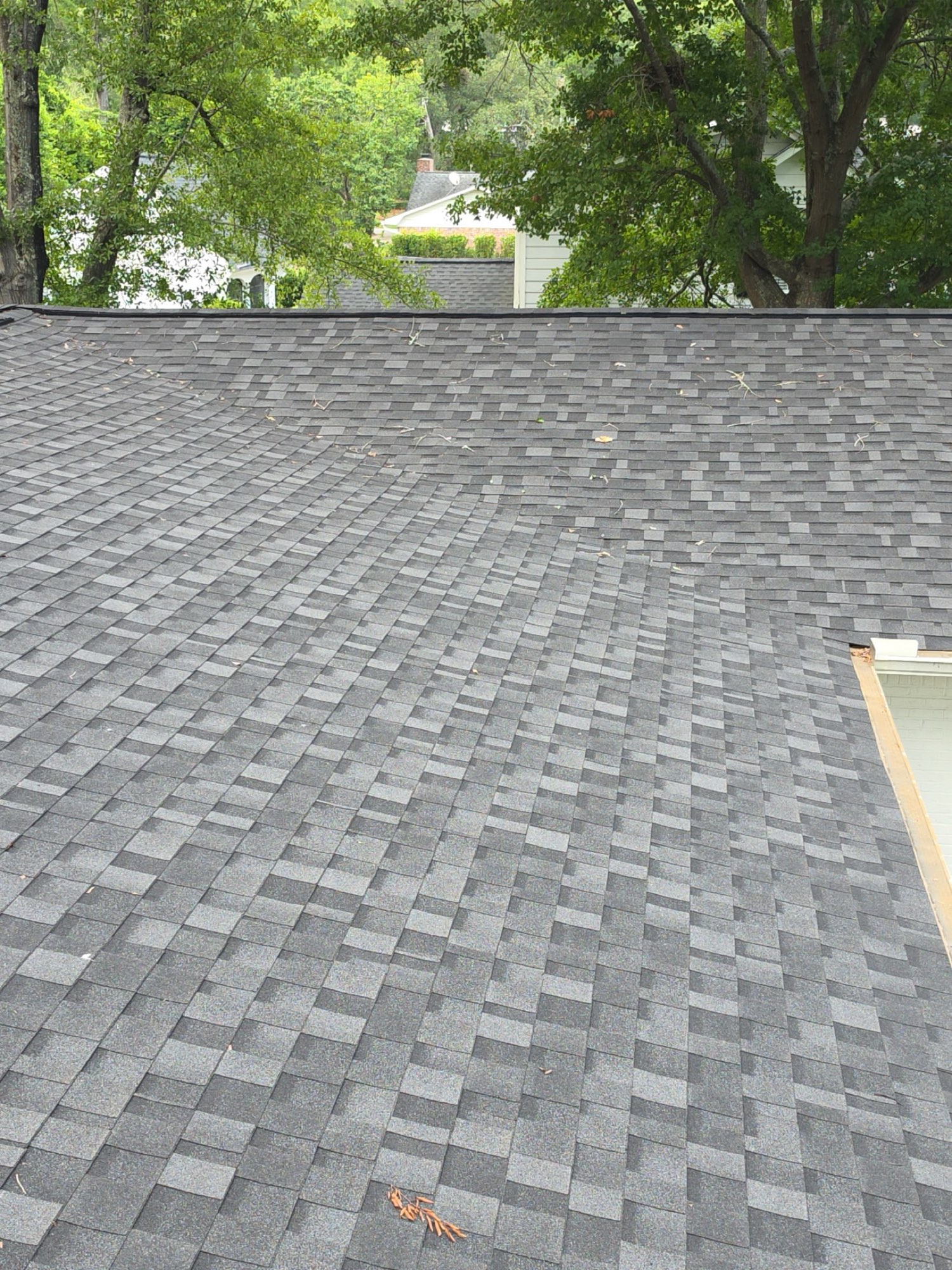
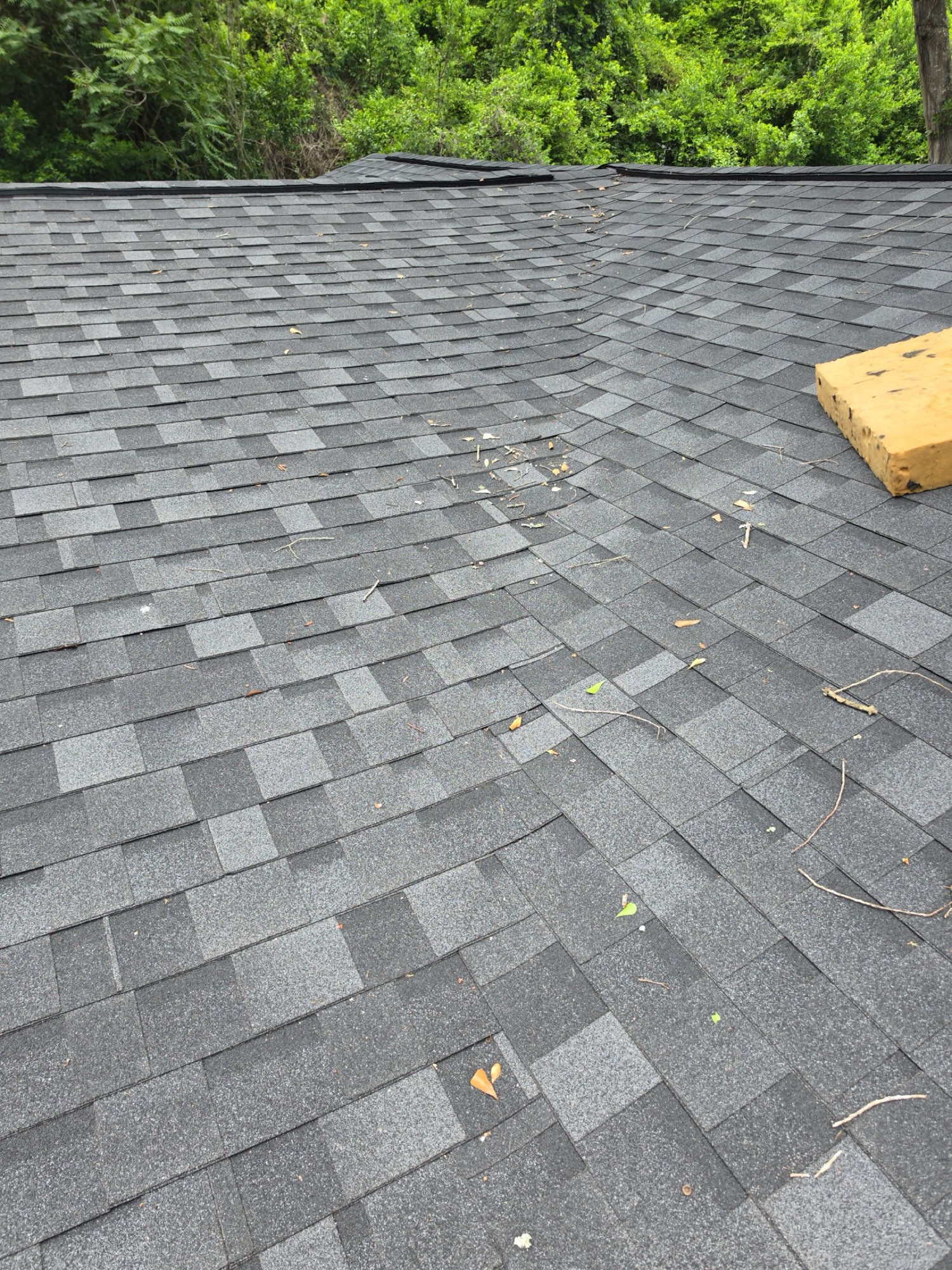
Guideline 2.46 says "Low-profile composition shingles work best for many types of buildings that have sloped roofs. Fiberglass may also be considered." Roof materials "shall generally have a matte, non-reflective finish," and a new asphalt or fiberglass roof should "match the original in color and finish to the extent feasible." Bring a sample or photo of the shingle you intend to use. Our post on historic versus modern roofing compares the options.
Metal
Guideline 2.47 allows metal only with conditions. "Metal roof materials shall be earth tones and have a matte, non-reflective finish." Seams "shall be low profile; for example, an approximately 1" high rolled narrow seam would be appropriate." The guidelines add that metal roofs "work best on small, simple single-family residences, with simple roof forms, such as front-facing gables," and on secondary buildings. A bright or tall-ribbed panel is unlikely to fit.
Skylights and solar panels
Guideline 2.49 says skylights and solar panels must not interrupt the plane of the historic roof and "shall be lower than the ridgeline." Flat, flush skylights may be considered on the rear and sides, and placing a skylight or solar panel on a front roof plane "shall be avoided."
Chimneys, gutters and other roof features
Guidelines 2.52 to 2.55 treat chimneys, finials, crests, gutters and downspouts as historic roof features to preserve, and to repair rather than replace when repair is feasible. Distinctive flue caps and chimney details should be kept. If a chimney needs new flashing or a cricket during the re-roof, that work should leave the chimney's look unchanged.
How to prepare an application
The Certificate of Appropriateness application lists review types including "Repair/Repainting" and "Alterations/Additions." For a material change, its checklist asks for:
- A written description of the proposed work and of the part of the house involved.
- Photographs of the area involved. Color is preferred, and digital images are accepted.
- A sample or photo of the materials involved.
Staff may ask for more, such as drawings, and may ask you to bring samples to the meeting. Materials are due by 4 p.m. on the posted deadline date. Under the city ordinance, a complete application has to be filed at least seven calendar days before a regular meeting, or it waits for the next one. Plan around the Commission's calendar before you set a start date with your roofer.
Good roof photos for an application show each slope from the street, close-ups of the existing material and edges, the chimney and any damage. For a shingle roof, include the product name, color and a photo of a sample board. For metal, include the seam height, profile and finish.
Choosing a roofer for a historic Camden house
The application has separate lines for the owner and an applicant, so your roofer can prepare it with you and you sign as owner. Ask any roofer you are considering:
- Will you call the city first to confirm whether this job is repair in kind or needs a Certificate of Appropriateness?
- Will you prepare the photos, material description and sample for the application?
- Will you hold off ordering materials and starting work until the certificate and building permit are issued?
- How will you repair rotted rafter tails, fascia or decking without changing the eave depth or roof line?
- Who will handle chimney masonry, if the chimney needs more than flashing?
- Do you hold SC LLR registration and a current City of Camden business license?
Our historic home roofing page explains how we approach older and historic roofs. For what a re-roof involves on any older Camden house, see roof replacement in Camden and roofs on Camden’s 1950s–1970s homes.
Talk to us about a historic Camden roof
Cola City Roofing works on older and historic homes across Camden and Kershaw County. We can inspect the roof, photograph its current condition, and give you a written scope and material sample to take to the city. Contact us or call (803) 734-3700.