Camden has more older houses than the county around it. Census Bureau estimates put the city's median year built at 1975, against 1993 for Kershaw County. About 15% of Camden homes were built in the 1950s, 15% in the 1960s and 10% in the 1970s, so close to 4 in 10 date from those three decades. If you own one of them, the roof over your head is probably not the first one the house has had, and what sits under it may be original.
This page covers what is typical on these houses, what a tear-off can turn up, and what to check before you decide on repair or replacement. It is part of our Camden roofing page.
What is typical on a 1950s–1970s Camden roof
Board or early plywood decking
Houses from the 1950s were commonly decked with individual boards. By the 1960s and 1970s, plywood sheets were more common, though early plywood was often thinner than what goes on today. Either can be sound after decades. The trouble comes where leaks have soaked the wood, where boards have shrunk and left wide gaps, or where plies have separated. Asphalt shingles have to be nailed to a solidly sheathed deck, so damaged sections get replaced at tear-off.
Older chimneys
Many of these houses have a brick chimney with flashing that has been patched more than once. The uphill side of a wide chimney needs a cricket to steer water around it. Crickets added during earlier re-roofs are sometimes built on top of old roofing instead of tied into the deck, and they fail. Mortar joints that hold the counterflashing also wear with age.
Little attic ventilation
Attics from this period were often built with a few small gable louvers and little or no soffit intake. Poor ventilation keeps the attic hot in summer and lets moisture condense on the underside of the deck in winter, which shortens the life of both the shingles and the wood. A re-roof is the cheapest time to add intake and exhaust. The roof ventilation guide explains how they have to be balanced.
More than one layer
A house from the 1950s or 1960s may be on its third or fourth roof. Earlier roofers sometimes laid new shingles over old ones to save the cost of tear-off. Under South Carolina's residential code (R908.3.1.1), a new layer cannot go over a roof that already has two or more layers, or over one that is water-soaked or deteriorated. A replacement has to come off down to the deck.
Low-pitched ranch roofs and nearly flat sections
Ranch houses from these decades often have long, shallow roofs, and porches, carports and back additions can be nearly flat. Asphalt shingles may only be used on slopes of 2 in 12 or steeper (R905.2.2), with a double layer of underlayment between 2 in 12 and 4 in 12. Shallow roofs drain slowly, so debris and worn shingles cause leaks sooner. Anything flatter than 2 in 12 needs a low-slope roofing system instead of shingles.
What a tear-off can reveal
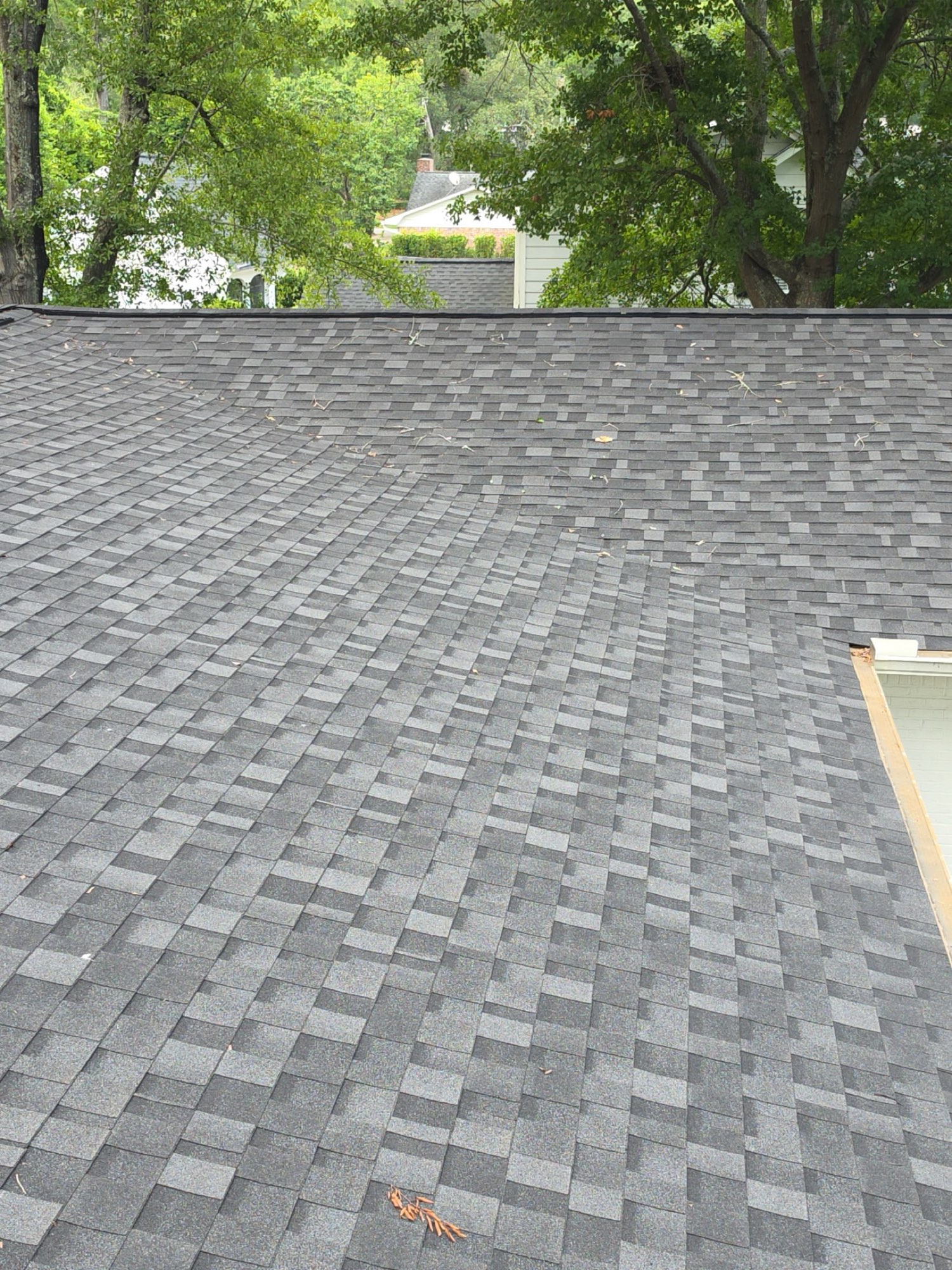
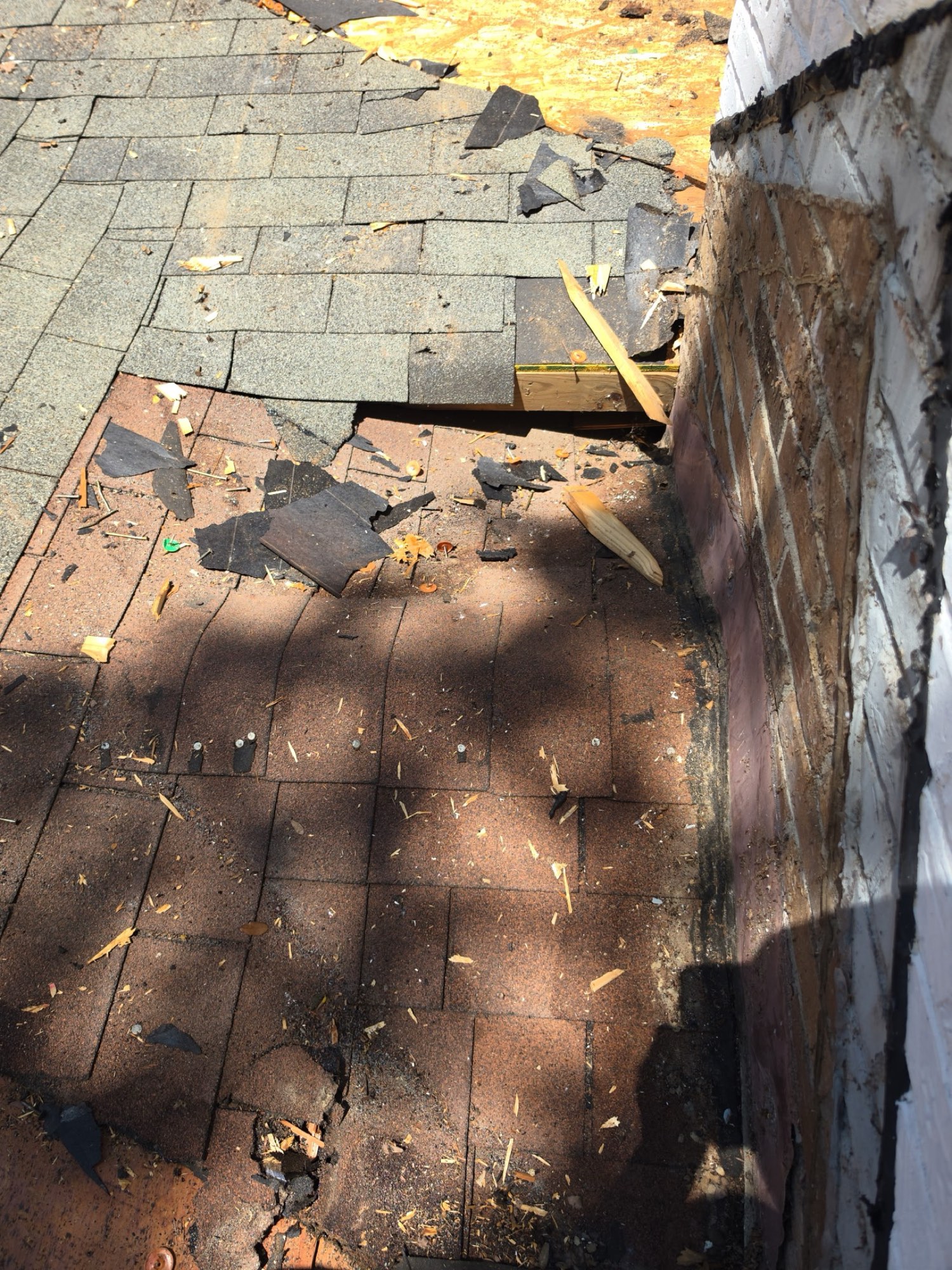
Our Camden roof replacement shows what can hide on an older house. It is a white brick ranch with a low-pitched, wide roofline under mature hardwoods. From the yard, it looked like a tired roof covered in leaves and pine straw. Inspection found soft decking and an active leak, and a stain was spreading across the bathroom ceiling. Once the old roof came off, we found:
- A second layer of old shingles under the top layer.
- Two crickets at the chimney, both installed by earlier roofers and both failed.
- Deteriorated flashing under the old roofing.
- Sheathing and framing along the chimney flashing line gone soft and dark from water getting past the old counterflashing.
- Rotted decking and damaged framing members that had to be cut out and repaired before new plywood and OSB went down.
The finished roof is charcoal architectural shingles over a rebuilt deck. The point for owners of similar houses is that the price of a re-roof depends on what is under the shingles, and nobody can see that from the ground. Your contract should say how decking and framing repairs are approved and priced. See roof replacement in Camden for the full process.
An inspection checklist for an older Camden roof
Whether you are buying, selling or just wondering how much life is left, a useful inspection of an older roof covers:
- The shingle field: granule loss, curling, cracked or brittle tabs, moss and lifted edges.
- The number of layers. Look at the edge of the roof at the gutter or rake, where layers are often visible.
- Valleys: debris, worn shingles and rusted or open metal.
- The chimney: step flashing, counterflashing, the cricket, mortar joints and the cap.
- Pipe boots, vents and any skylights.
- Shallow and nearly flat sections over porches, carports and additions.
- The attic: daylight through the deck, water stains, dark or soft wood, gaps between boards, and how much intake and exhaust ventilation exists.
- Ceilings below the roof, especially around chimneys, bath fans and exterior walls.
- Gutters and fascia: rot, sagging and overflow marks.
Our post on why an older roof needs an inspection explains what an inspection can and cannot tell you, and the roof inspection guide covers the process. If you are buying, see the homebuyer roofing guide.
Repair or replace?
An older roof with one clear leak and a sound shingle field is often a repair candidate. Worn-out shingles across the slopes, two existing layers or rot that has spread into the deck usually point to replacement. The repair or replace guide walks through the decision, and roof repair in Camden covers the most common repairs on these houses.
If your older house is on the city's locally designated historic list, roof work may need historic review. See re-roofing a historic home in Camden. Roof age can also affect your homeowners insurance; read roof age and homeowners insurance.
Get an older Camden roof inspected
Cola City Roofing inspects older roofs across Camden and Kershaw County, from the roof and the attic, and gives you photos and a written scope. Contact us or call (803) 734-3700.