The first number you hear for a roof replacement is usually built from a measurement and a material. The final invoice is built from what the crew actually finds and does. Most of the gap between the two comes from a short, predictable list of items. None of them is a trick on its own; each is real work that some roofs need. They become hidden costs only when the estimate does not mention them.
Below are the line items that most often move the price, why each one exists, and how to get every one of them priced before you sign rather than discussed on your driveway with the roof open.
Why the first number moves
An early quote rests on a few assumptions: a roof measurement taken from satellite imagery or a quick walk-around, a material tier and a standard scope. For a typical 1,500 to 2,500 square foot home in the Columbia market, that puts standard architectural asphalt at $8,000–$15,000, premium or designer asphalt at $12,000–$20,000 and standing-seam metal at $15,000–$30,000+. Where a particular house lands inside its range, and whether it creeps past the top, depends largely on the items below.
They fall into two groups. Some can be seen during a thorough inspection, from the roof surface and the attic, and belong in the first written estimate. Others cannot be counted until the old shingles are off, so the most an honest estimate can do is fix the price per unit in advance.
What is under the old shingles
Rotten decking
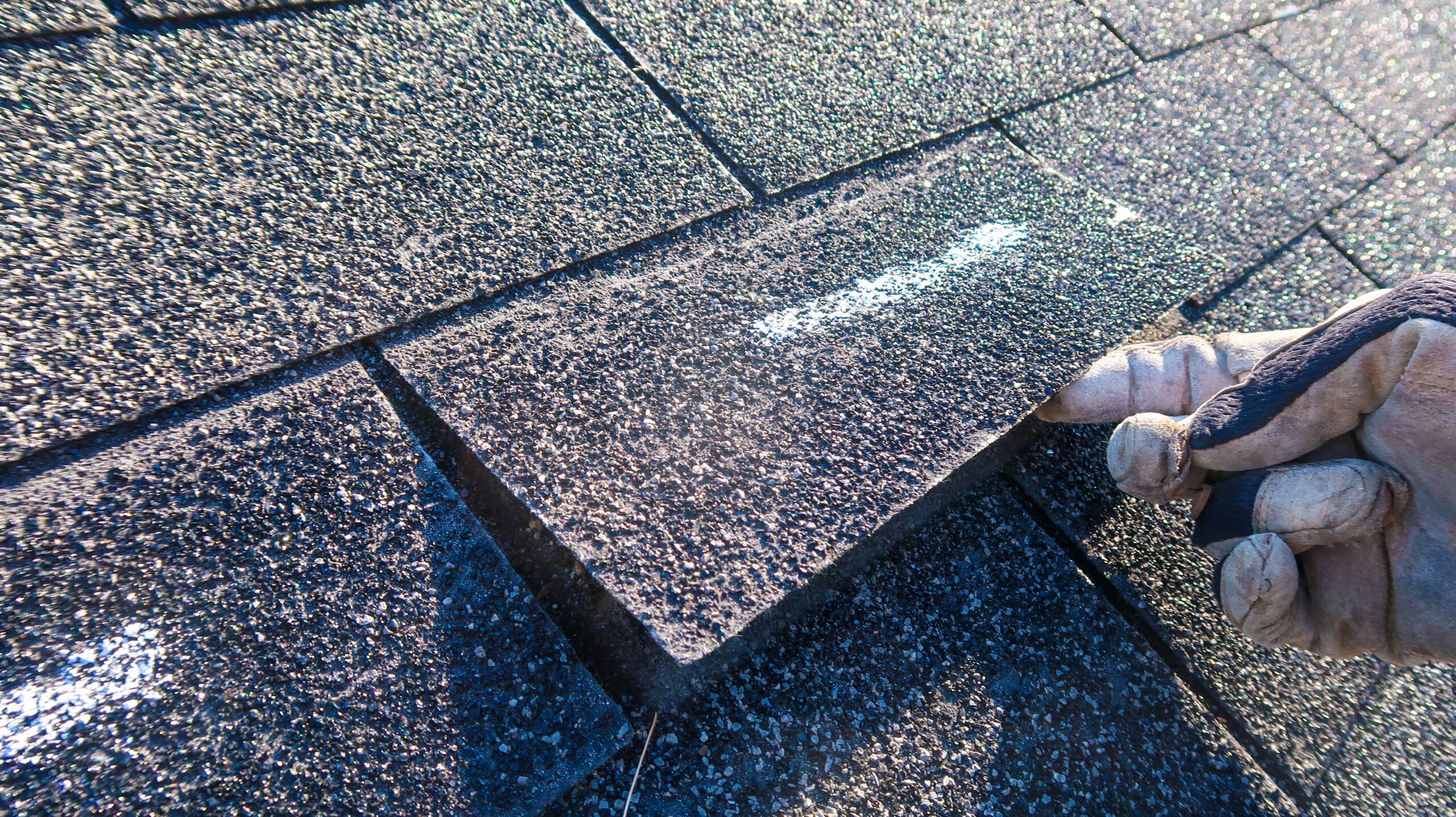
The deck is the plywood or board layer that the nails grip. A slow leak around a vent or chimney can soften it for years while the ceiling below stays dry. Nobody can count bad sheets before tear-off, which is why decking is priced per sheet of plywood, or per board or linear foot on older plank decks. A contract without that unit rate leaves the quantity and the price open at the worst possible moment. Our article on what happens when a crew finds rotten decking covers what a fair conversation about it looks like.
Extra layers to tear off
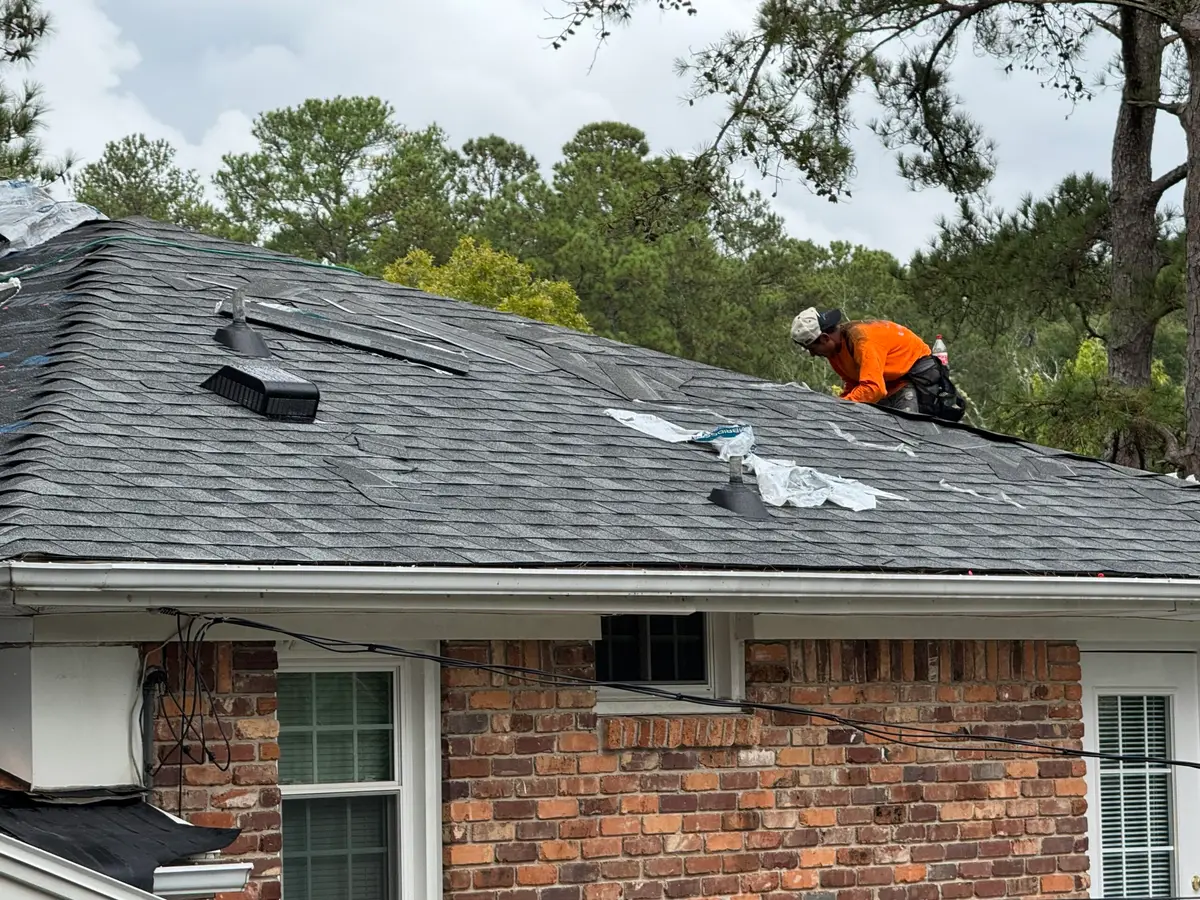
Many Midlands homes have been roofed over at least once. Every additional layer means more labor to strip, more weight to haul and more debris to dispose of, and code does not allow a new roof over two or more existing layers. Some layers are visible at the edges or in the attic; sometimes the count is only certain once tear-off starts. The trade-offs of skipping a tear-off are covered in roofing over versus tearing off.
Disposal
Old shingles are heavy. Dumpster size, the number of loads, landfill charges and how far the debris travels all feed into disposal. It is usually bundled into the tear-off line, but ask whether it is included and whether an extra layer changes it. Cleanup belongs on the same line: tarps over landscaping, debris removal and a magnetic sweep of the yard and driveway for stray nails.
Where the roof meets everything else
The field of shingles is the simple part. Most leaks, and much of the price variation, live at the edges and the openings.
- Flashing and chimney work. Step flashing along walls, counter-flashing on chimneys and a cricket behind a wide chimney all take time and metal. The key question is whether flashing will be replaced or reused. Reusing old flashing saves money on paper and is a frequent source of leaks on otherwise new roofs. Masonry repair to the chimney itself is a separate trade and should be named as included or excluded.
- Skylights. An estimate should say whether each skylight gets a new flashing kit, a new unit or nothing. An aging skylight left in place still depends on how it is tied into the new roof, and replacing it later usually means disturbing new shingles.
- Gutters off and on. Gutters often have to be detached to install drip edge and finish the eave properly, then reset. If the fascia behind them is rotten, that board needs replacing too, and new gutters are a separate decision from resetting old ones.
- Drip edge. South Carolina's residential code ties the drip edge requirement to the shingle manufacturer's instructions rather than requiring it outright, so some bids leave it out. Ask for it at the eaves and rakes, shown as its own line.
Ventilation upgrades
A roof replacement is the easiest time to fix attic airflow, and many Midlands attics need it. Without balanced intake at the soffits and exhaust at or near the ridge, summer heat builds up under the deck, shingles age faster and moisture can condense in cooler months. Manufacturers' installation instructions call for proper ventilation, and a poorly ventilated attic can affect warranty coverage.
Fixing it can mean cutting in a ridge vent, opening or adding soffit vents, installing baffles so insulation does not block the intake, or removing mismatched vents that work against each other. None of that is in a bid that simply reuses what is already there. Ask each contractor what they found in the attic and what they propose. Our article on ventilation during a roof replacement explains what a good plan includes.
Roof shape, pitch and access
Two houses with the same square footage can need very different roofs. These factors are visible before work starts, so they should already be in the estimate; they turn into surprises when a quote was produced from imagery alone and never adjusted.
- Steep pitch. Once a roof is too steep to walk comfortably, crews need roof jacks, harnesses and staging, and every task slows down.
- Complexity. Hips, valleys, dormers and intersecting roof planes mean more cutting, more flashing and more material wasted in offcuts.
- Height and access. A second or third story, a tight lot, a long carry from the driveway or landscaping that has to be protected all add labor.
- Penetrations. Every pipe, vent, satellite mount and exhaust fan is another detail to flash correctly.
Permits and paperwork
Whether a reroof needs a permit, and what it costs, depends on where you live: the City of Columbia, Richland County, Lexington County and surrounding towns each have their own rules. The contractor normally pulls the permit, because the building office wants proof of licensure. Ask whether the permit is included in the price, which office it will be filed with and whether an inspection is required. A bid that skips the permit may look lower but leaves the risk with you.
How to get every item priced up front
You cannot make the unknowns disappear, but you can decide in advance what they will cost. Before you sign:
- Ask for unit prices on anything that cannot be counted yet: per sheet of decking, per additional layer of tear-off, per linear foot of fascia.
- Use allowances for items not chosen yet, and ask how unused money is credited back and what happens if the real cost goes over.
- Require written change orders with photos before any extra work proceeds, stating the quantity and the price.
- Get an inclusions list that names drip edge, new or reused flashing, ventilation work, skylights, gutter detach and reset, the permit, disposal and cleanup.
- Compare bids line by line, not by the total at the bottom. A lower number that leaves half of these items out is not the better price.
Timing matters as much as wording. The moment to settle these rates is at the kitchen table, before you sign, when you have time to compare bids and ask questions. On tear-off day the roof is open, the weather is a factor and everyone wants the job closed up, which is exactly when a vague "we found some bad wood, we'll take care of it" turns into a number nobody agreed to. If a contractor resists putting unit prices or a change-order process in writing, treat that as information about how the rest of the job will be run.
The line-by-line guide to roofing estimates shows what each of these looks like on paper. You can also see what a complete roof replacement scope should cover, from inspection to final cleanup.
If you would like an estimate that names these items before anyone climbs a ladder, request a free roof estimate and you will get a written scope and a clear timeline before work starts.