The Atlantic hurricane season runs from 1 June to 30 November, but the activity is not spread evenly across it. The season concentrates sharply from the middle of August through October, which means the period you are in right now is the part that matters.
South Carolina does not need a direct landfall to lose roofs. The outer bands of a storm tracking up the coast, or the remnants of one moving inland, bring sustained wind and a great deal of water — and inland counties like Richland, Lexington and Kershaw take that weather as surely as the coast does. This is a practical list of what is worth doing while the sky is still clear.
Do this first: photograph the roof
If you do only one thing from this article, do this one. Take clear, dated photographs of your roof now, before anything happens.
Insurance claims turn on the difference between damage a storm caused and damage that was already there. Without a record, that argument is your word against an adjuster’s judgement, and the homeowner is the one without documentation. With a set of images from three weeks before the storm, the conversation is much shorter.
- Shoot each slope from the ground, from a few angles, on a bright day.
- Get the gutters, the fascia and the ridge line in frame.
- Photograph the chimney, any skylights, and the vents.
- Take a few interior shots of ceilings below the roof, so you can show they were unstained.
- Leave the files somewhere with their timestamps intact — a phone album or cloud folder is fine. Do not crop and re-save them.
It costs ten minutes and nothing else. Our page on roof insurance claims explains what happens from there if you do end up filing.
Clear the water paths
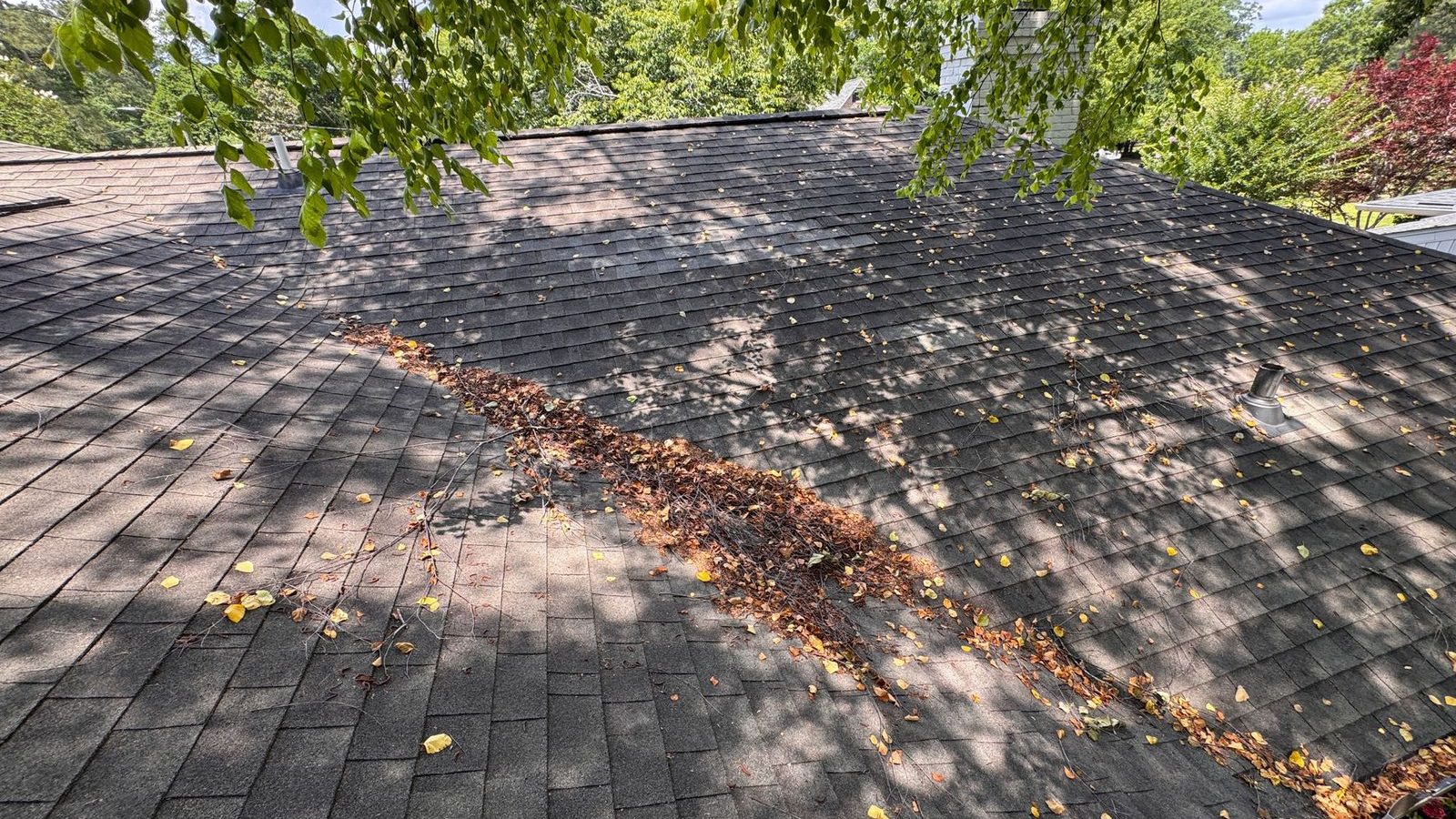
Most storm damage in the Midlands is water damage, and most water damage starts with water that could not get away. Valleys packed with pine straw and gutters full of leaf litter turn a heavy rain into standing water, and standing water finds its way under shingle courses and into the deck.
The featured image on this article is a roof we looked at with dead vine growth and leaf litter packed the length of a valley. That is not a cosmetic problem when eight inches of rain arrives over two days.
Clear the valleys, clear the gutters, and check that downspouts actually discharge away from the house. If your gutters are sagging, pulling away, or overflowing at the joints even in ordinary rain, get them dealt with now rather than in October — gutter repair is a small job compared with what overflowing water does to a fascia over a winter.
Deal with the trees
Overhanging limbs are the most predictable roof damage there is. Wind does not need to bring down a whole tree; a single dead limb over the ridge is enough. Anything touching or hanging directly over the roof is worth having cut back by someone qualified, and dead limbs should come out regardless.
This is also a heat and moisture question. Branches resting on shingles abrade them every time the wind blows, and heavy overhang keeps slopes damp enough to grow algae.
Fix the small things now
Wind finds the loose edge. A shingle that is already lifted, a length of ridge cap that has come unsealed, a vent boot that has split — each of these is a modest repair in August and an entry point in September.
- Lifted, curled or missing shingles, especially along ridges, hips and rakes, where uplift is highest.
- Split or hardened plumbing vent boots — a very common leak source.
- Flashing at chimneys and wall junctions that has pulled away or been "repaired" with a smear of roof cement.
- Backed-out fasteners. Our post on nail pops explains why each one is a hole.
- Loose or lifting gutter sections and guards.
If you are not sure what you are looking at, that is what a free inspection is for. We will get on the roof, photograph what we find, and tell you what genuinely needs doing before the season peaks — and what does not.
If you are already planning a replacement
A roof at the end of its life going into peak season is a gamble with poor odds. If you know a replacement is coming within a year or two, doing it before the weather turns is worth considering, both because the roof is sound through the storms and because crews get considerably busier after a significant event.
If cost is what is holding the decision, financing through a third-party lender can spread it into fixed monthly payments with no prepayment penalty. If you are weighing materials, impact-resistant shingles and metal roofing both handle wind better than a standard three-tab.
When the storm arrives
Stay off the roof. Before, during and immediately after — a wet roof in wind is genuinely dangerous, and nothing up there is worth it. Assess from the ground and from inside.
- Look for shingles in the yard and in the neighbors’ yards. That is your first signal.
- Check ceilings and the attic for staining, drips or daylight.
- Photograph everything, before anyone touches it or tarps it.
- If water is actively coming in, contain it and call. We aim to get to urgent repairs, storm damage included, within 24–48 hours.
Be wary of anyone who arrives unprompted at your door within hours of a storm, especially anyone suggesting you will not have to pay your deductible. That is illegal in South Carolina, and a company willing to break that rule will break others. Our hurricane roof damage guide covers what to do once the weather has passed, in more detail than fits here.
The short version
Photograph the roof this week. Clear the valleys and gutters. Cut back what overhangs. Fix the small failures while they are still small. Then, if something does come through, you are dealing with a claim from a position of evidence rather than argument.
Book a free inspection and we will tell you where your roof actually stands before the season peaks.