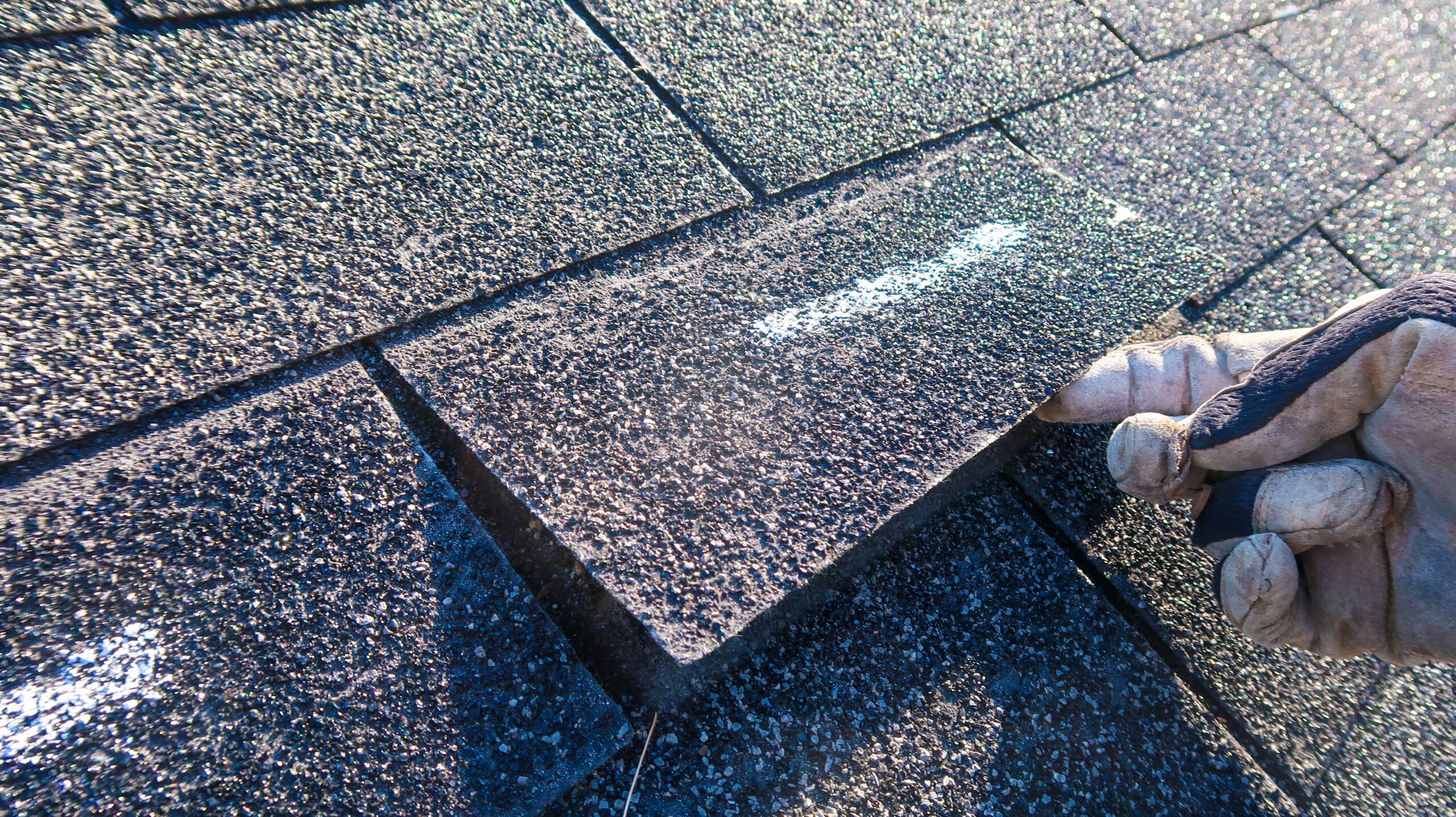

A storm takes shingles off one slope, the claim is accepted, and the insurer approves replacing that slope or a handful of squares. Then the question nobody wanted comes up: will the new shingles match the rest of the roof? Sometimes they will, closely enough that you would never notice from the street. Often, on a roof that has been in the South Carolina sun for years, they will not.
This article is about that specific problem: why partial repairs stop matching, how to raise it with the insurer, and what you can do if the answer is still a partial repair. If you are earlier in the process, start with our guide to filing a roof insurance claim.
Why a partial repair may not match
Even when the roofer orders the same brand and color name, the new section can stand out. The usual reasons:
- Weathering. UV exposure, heat and rain fade shingle granules and wash some of them away over the years. A brand-new shingle in the same color is brighter and darker than one that has spent a decade on a Midlands roof.
- Discontinued colors and lines. Manufacturers retire colors and whole product lines. If yours is gone, the closest current color may still look different.
- Different shape and size. Some product lines have changed dimensions, exposure or tab design over time. A shingle that is slightly different in size may not lie flat or line up with the old courses.
- Different manufacturers. If the original brand is unavailable locally, a substitute from another maker can differ in color blend, shadow line and texture.
- Batch variation. Even the same product varies a little from one production run to the next.
How much difference is acceptable is partly a matter of judgment. A slight shift in shade on a rear slope that only the neighbors see is a different problem from a bright patch in the middle of the front of the house. Distance, lighting and roof color matter as well: light and blended colors often hide small differences better than dark solid ones, and a difference that is obvious in morning sun can almost disappear by late afternoon. That is why it helps to look at a real sample on the roof rather than a color chip or a photo on a website.
Our comparison of the major shingle manufacturers shows how much product lines differ, which is part of why a substitute can look off.
What to ask the adjuster
Raise matching early, ideally during or right after the adjuster visit, and ask for answers in writing. Useful questions:
- Does my policy say anything about matching or uniform appearance, and where?
- If the replacement shingles do not match, what does the insurer do: replace more of the roof, consider the slope separately, or neither?
- Do you need a sample or a product identification before deciding?
- Is the estimate limited to the damaged squares, the damaged slope or something else, and why?
- If my shingle is discontinued, what evidence would you accept to show that?
Write down who you spoke with and when. If the answer changes later, a dated note of what was said is far more useful than memory.
How to document a mismatch
A matching argument is easier to evaluate when it rests on evidence rather than on opinion. Three kinds help.
Photos
Photograph the undamaged shingles in good light, with a new shingle of the proposed replacement laid next to them if your roofer can get one. Take wide shots showing how visible the repaired area would be from the street or yard, and close-ups showing color, granule loss and size differences.
Product identification
Your roofer can try to identify the existing shingle: manufacturer, product line, color and approximate age. Old wrapper labels, permit records, the original installation invoice or a shingle pulled from a hidden spot can all help. If the product turns out to be discontinued, a statement from a supplier or the manufacturer saying so is strong evidence.
Spare shingles and records
If you have leftover bundles from the original installation in a garage or attic, keep them and photograph the wrapper. They are the closest thing to a perfect match, both for identification and, in some cases, for small repairs. Keep the original contract or invoice with the product name too; it saves guesswork years later.
A sample match
Independent shingle identification services, such as ITEL-style labs, examine a removed sample and report the closest available products. Some insurers use these reports routinely; others accept them as part of your documentation. Ask the insurer whether it wants a sample sent and how, before anyone cuts one out.
Policy wording and state rules vary
This is where homeowners most often get conflicting advice. Some states have regulations that speak to replacing items so that they are "reasonably uniform" in appearance; others do not, and the wording, scope and enforcement differ. Policies differ too: some say nothing about matching, some address it directly, and some exclude cosmetic differences. A rule that applies in one state, or in one policy, may not apply to yours.
We are a roofer, not a lawyer or an insurance regulator, so we are not going to tell you what South Carolina requires. Read the matching, loss settlement and cosmetic damage sections of your policy, then ask your agent. If you still have questions about how your insurer is applying the rules, the SC Department of Insurance is the agency to ask. Roof age can affect how the policy pays, too; our guide to roof age and homeowners insurance explains why.
When a full slope or full roof may be argued
Whether the insurer agrees is its decision under your policy, but these are the situations where homeowners and their representatives commonly ask for more than a patch:
- The existing shingle is discontinued and no available product is a reasonable color and size match.
- The repaired area would be clearly visible from the street, such as the front slope of the house.
- The proposed replacement differs in size or shape enough that it cannot be woven in properly.
- Damage is scattered across several slopes, so a patchwork of repairs would cover much of the roof anyway.
- The old shingles are too brittle to remove and reinstall around the repair without breaking.
The case is usually made slope by slope. A request to replace the whole damaged slope is a different conversation from a request to replace the entire roof. If the insurer adds or corrects items after reviewing your evidence, that is handled the same way as any other added line item; our article on supplements, reinspections and the appraisal clause covers that process, including what to do if you disagree about the amount.
South Carolina does not let a residential roofer negotiate your claim. Your roofer can document the mismatch and give you the evidence; you, or a licensed public adjuster you hire, make the request.
If insurance pays for only part of the roof
Sometimes the final answer is a partial repair, and you have to decide what to do with it. The options are straightforward:
- Accept the repair. On a back slope that nobody sees, a slight color difference may not bother you, and it will often blend somewhat as the new shingles weather.
- Pay the difference to replace more. You can use the insurance payment for the damaged area and pay the extra yourself to replace a full slope or the whole roof. Your deductible still applies; South Carolina law prohibits a roofer from paying, waiving or rebating it.
- Spread the cost. If you choose a full replacement, roof financing through a third-party lender offers monthly payment terms, with pre-qualification that is typically a soft credit pull.
If a full replacement makes sense because the roof was near the end of its life anyway, ask for a written price for both the insured repair and the full roof replacement, so you can see exactly what the difference is. For storm repair and all of our storm resources, see our page on storm damage roof repair in Columbia, SC.
Want someone to identify your shingle and photograph the match before you talk to the adjuster? Request a free inspection.