
"Flat" roofs are not supposed to be flat. A properly designed low-slope roof has a gentle pitch toward drains, scuppers or gutters, and after a storm the water should be gone within a day or two. When it is not, you have ponding water, and whether that matters depends on how much, how long and why.
This article covers how to tell normal puddles from real ponding, what usually causes it on commercial buildings, why it shortens roof life, and the fixes a roofer will typically consider.
When Is Standing Water Actually a Problem?
A little water lingering in a shallow low spot after a heavy rain is common on older roofs and is not an emergency. The widely used rule of thumb in the roofing industry is that water still standing about 48 hours after the rain stops, in typical drying weather, counts as ponding. In the Midlands' summer heat a sound roof usually dries well before that; in cool, overcast weather it can take longer, so judge it against the conditions.
Beyond timing, a few signs separate a nuisance from a problem:
- The ponds are getting bigger or deeper from one season to the next.
- New ponds have appeared where there were none before, especially after equipment was added or a repair was made.
- Water sits against flashings, seams or penetrations, not just in open field membrane.
- Dirt rings, algae or vegetation mark where water regularly sits.
- Interior clues such as a sagging ceiling grid or stains below the ponded area.
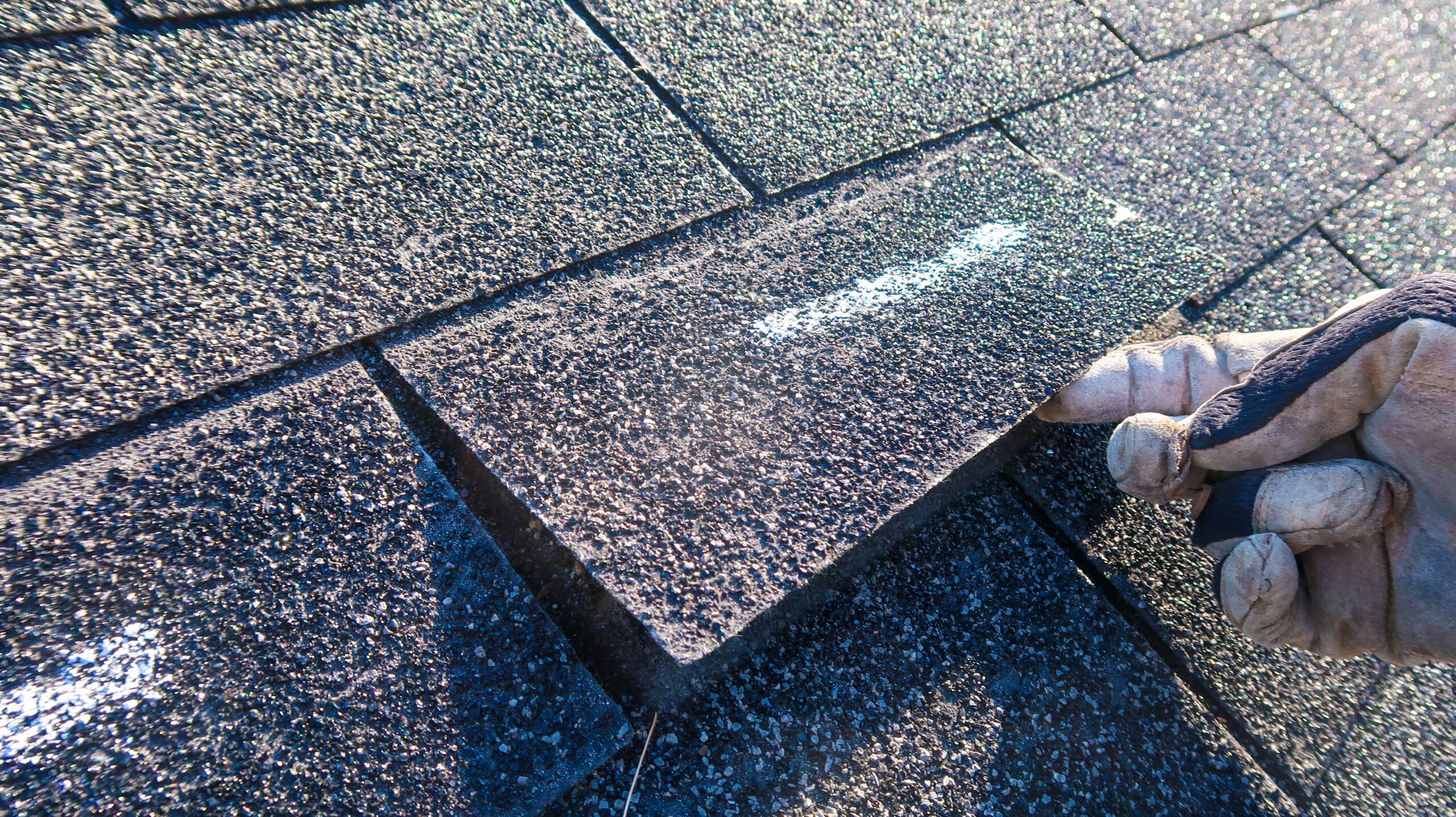
A simple way to track it: after a rain, photograph each pond and outline its edge with a paint marker or chalk safe for your membrane (ask your roofer which). Repeat after the next few storms. A pond that keeps expanding past its old outline is telling you something.
Why Ponding Shortens Roof Life
Membranes are designed to shed water, not hold it. Ponding works against a roof in several ways at once:
- Every defect becomes a leak. A pinhole or a weak seam that would shed water on a dry slope will leak steadily when it sits underwater.
- Accelerated wear. Repeated wetting and drying, sun magnified through water, and the dirt that settles out of each pond all age the surface faster than the surrounding roof.
- Added weight. Water is heavy. A pond adds load to the deck, and on a roof that is already deflecting, that load can make the low spot deeper.
- Debris and growth. Ponds collect leaves and grit and grow algae, which can clog drains and hold moisture against the membrane.
- Warranty questions. Some manufacturer warranties limit coverage for damage tied to ponding. Read the terms of yours, and see our overview of how commercial roof warranties work.
How Ponding Affects Different Roof Systems
Every membrane suffers under standing water, but the way it shows up differs, which helps explain what you see on your own roof:
- TPO and PVC: the sheet itself tolerates water well, so the risk concentrates at welded seams and flashings that sit underwater, and at dirt that collects and holds moisture against the surface.
- EPDM: the rubber handles wetting, but taped and adhered seams are the weak link. Water sitting on a lap seam for long periods works at the adhesive.
- Modified bitumen and built-up roofs: asphalt-based surfaces tend to lose granules and surfacing faster under repeated ponding, exposing the asphalt to sun and speeding cracking and blistering.
- Coated roofs: some coatings are not rated for ponding water at all, and can soften or lose adhesion where water sits. Check the product before assuming it can handle it.
Whatever the system, the pattern is the same: the ponded area ages faster than the rest of the roof, and that is usually where the first leaks appear.
What Causes Ponding on Commercial Roofs
The fix depends entirely on the cause, so this is where a roofer spends most of the diagnostic time. The common causes, roughly from easiest to hardest to correct:
Clogged or restricted drains
Leaves, plastic bags, balls, gravel and bird nests block drain strainers and scuppers. Water backs up around the drain and the pond spreads outward. This is the most common cause and the cheapest to fix, which is why drain clearing belongs on every maintenance checklist.
Drains set too high
A drain only works if it is the lowest point. After a recover or re-roof adds insulation, the membrane around the drain can end up level with or above the surrounding surface unless the drain was raised or a sump was built. The result is a ring of water that never quite makes it in.
Crushed or wet insulation
Foot traffic, dropped equipment, hail and saturated insulation all compress the board under the membrane, creating dips. These are common along walkways to rooftop units and around equipment that is serviced often. Wet insulation is worth taking seriously because it also points to a leak somewhere upslope; if you suspect one, our guide to where flat commercial roofs leak explains how those leaks are traced.
Insufficient slope
Many older buildings were designed with very little slope, or with slope built only into the structure that has since settled. Some flat decks were never sloped at all and relied on the water simply finding a drain.
Structural deflection
Long-span steel joists and decks naturally bend a little under load. Between support points they can sag enough to form a low spot, and once water collects there, its weight increases the sag. This feedback loop is why ponding at midspan should be looked at by someone who understands loads. Our article on structural load considerations covers the engineering side, including rooftop equipment loads.
Added equipment and obstructions
New HVAC units, curbs, walkway pads, sleepers or conduit runs can act like small dams, blocking the path water used to take to a drain.
How Ponding Is Fixed
A good repair corrects the drainage, not just the surface. Depending on the cause, a roofer will typically look at one or more of these options:
- Clearing and protecting drains: clean the drain line, replace missing or broken strainers, and add drains to a regular maintenance schedule.
- Lowering the drain or building a sump: tapering insulation down into the drain bowl so the drain becomes the true low point.
- Crickets and saddles: small sloped sections of tapered insulation built behind curbs, between drains and along parapets to divert water that would otherwise be trapped.
- Tapered insulation: on a re-roof or recover, a tapered insulation system builds positive slope across the whole roof toward the drains.
- Additional drains or scuppers: adding outlets where the roof has too few, or where a low area has no path out. This usually involves plumbing work and a permit.
- Replacing crushed insulation: cutting out compressed or wet board, replacing it, and adding walkway pads so service traffic does not crush it again.
- Structural repairs: where deflection is the cause, an engineer may need to evaluate and reinforce the framing before roof work will hold.
Coatings are sometimes offered as a fix for ponding. Some coating products are formulated to tolerate standing water better than others, and our comparison of silicone and acrylic roof coatings explains the difference, but no coating adds slope. A coating can protect the surface; it does not remove the water or the weight.
Repair Now or Fold It Into a Re-Roof?
Small, localized ponds with an obvious cause, like a clogged drain or a crushed walkway, are usually worth fixing as soon as you find them. Widespread ponding on an aging roof is a different decision. Building a proper tapered system is far simpler during a tear-off or recover than as a retrofit under an existing membrane, so if your roof is already near the end of its service life, it often makes sense to plan drainage corrections as part of the replacement.
Either way, the questions to ask are the same:
- What is causing the water to stay, and how was that confirmed?
- Is the insulation under the ponds wet, and if so, where is the water coming from?
- Will the proposed fix create positive drainage, or only protect the surface?
- Does the fix require a permit, plumbing work or an engineer?
Keeping Ponding From Coming Back
Once drainage is corrected, maintenance keeps it that way. Drains and scuppers should be checked and cleared on a set schedule and after major storms, walkway pads should protect routes to rooftop equipment, and any new equipment or penetration should be reviewed for how it affects water flow before it goes in. Making ponding a line item on your inspection report lets you compare one year to the next.
Ponding is one of the most common issues we see on low-slope roofs in and around Columbia, and it is usually manageable when caught early. If water is sitting on your roof longer than it should, our team provides commercial roofing services ranging from drain repairs to full tapered re-roofs. You can schedule a free commercial roof assessment to find out what is causing it.