Very few commercial buildings can close while the roof is replaced. Offices keep working, stores keep selling, clinics keep seeing patients and warehouses keep shipping. That means the re-roof has to happen over people's heads, and the success of the project depends as much on planning around the occupants as on the roofing itself.
This guide covers what owners and property managers should plan for before work starts on an occupied building: how to tell tenants, where materials and equipment go, how to manage fumes and noise, what happens to rooftop HVAC, how to protect the interior, and how phasing and daily dry-in keep the building weathertight the whole way through.
Plan the Project Around the Building, Not the Other Way Around
Before anyone climbs a ladder, the owner and contractor should walk both the roof and the interior together. The interior walk is the part people skip, and it is where most problems are prevented. You are looking for what sits directly under the work: server rooms, inventory, medical equipment, food prep areas, open ceilings, fresh-air intakes, and spaces where people cannot simply be moved.
From that walk, agree on a short written plan covering:
- Which roof areas will be worked in which order, and which interior spaces sit under each area.
- Allowed working hours, and any days or hours when noisy or odor-producing work is not allowed.
- Where the crane, hoist, dumpster and material staging will go, and which parking spaces or entrances that takes out of service.
- Which rooftop units need to be shut down or disconnected, and who does it.
- A single contact on each side for day-to-day questions, and an after-hours number for leaks.
On multi-tenant properties this plan becomes the basis for every tenant notice. Our guide to roofing multi-tenant and HOA properties covers the decision-making side of shared buildings; this article focuses on the work itself.
Tenant and Staff Communication
Occupants tolerate a surprising amount of disruption when they know it is coming and how long it will last. They tolerate very little when it surprises them. Good communication is plain and specific.
- Advance notice: send a written notice well before work starts with the start date, working hours, which parts of the building are affected and in what order, and who to call.
- Area-by-area updates: before the crew moves over a new section, tell the occupants underneath. A short email or posted notice the day before is usually enough.
- Parking and entrances: mark closed spaces and alternate routes clearly, and remind tenants to tell their own customers and deliveries.
- What to report: ask occupants to report any odor, drip, stain or ceiling movement right away rather than waiting to see if it gets worse.
- Closeout: tell everyone when work is finished and parking and entrances are back to normal.
Check your leases before sending notices. Some commercial leases spell out notice periods, access rights and how the landlord handles disruptions, and the roofing schedule should respect those terms.
Staging, Access and Safety Zones
Materials have to get onto the roof and debris has to come off it, usually by crane, hoist or chute. On an occupied site, every one of those movements happens near people. The staging plan should keep loading areas, dumpsters and the area under any crane lift fenced or coned off, away from entrances and pedestrian routes. Lifts over occupied parts of the building or over the public should be avoided where possible and scheduled when the area below can be cleared when they cannot.
On the roof, the crew needs fall protection at open edges and skylights, and controlled access points so occupants and other trades do not wander onto an active work area. Debris chutes should be enclosed and discharge into a covered container. Our article on roofing safety and compliance goes into fall protection, hazardous materials and crane safety in more detail. For the owner, the practical questions are simple: where will the safety zones be, who is responsible for keeping them clear, and what changes when it rains or the wind picks up?
Odors, Fumes and Choosing the System
Odor is the complaint that most often stops work on an occupied building, and it is largely decided by the roof system and installation method you choose.
- Hot-applied asphalt (built-up roofs): kettle fumes and asphalt odor can drift into air intakes and through openings. Kettle placement downwind of intakes matters a great deal.
- Torch-applied modified bitumen: some odor, plus open flame on the roof, which brings its own fire-watch requirements.
- Solvent-based adhesives: used on some single-ply systems; the odor is usually short-lived but can be strong near intakes while it lasts.
- Low-odor options: mechanically attached single-ply, self-adhered membranes, and water-based or low-VOC adhesives reduce odor considerably.
If the building houses people who are sensitive to odors, such as a medical office, school or food business, raise it before choosing a system. Our comparison of modified bitumen and built-up roofing explains how those systems are installed, and the trade-off between odor and system choice is worth discussing at bid stage rather than on day one.
Rooftop HVAC and air intakes
Most fume complaints come through the building's own ventilation. Plan with your mechanical contractor to shut down or close outside-air dampers on units near the active work area during odor-producing work, and to restart them after. When units need to be lifted on their curbs to flash them properly, a licensed mechanical contractor should handle the disconnect and reconnect. Agree in advance who schedules that work and how long each unit can be off, especially in a Columbia summer when an office cannot go long without cooling.
Noise and Vibration
Tear-off is loud. Power equipment, fastening into a metal deck and dragging material across the roof all carry down into the building, and on a steel deck the noise can be significant in the space directly below. Options include scheduling tear-off of noisy areas early in the day or after hours, working above conference rooms or exam rooms when they are not booked, and warning tenants which days will be loudest. Vibration can also shake loose ceiling tiles, light fixtures and items on high shelves, which leads to the next point.
Protecting the Interior
Even a careful tear-off sheds dust and debris through gaps in the deck, and an older building may have loose material above the ceiling. Before work moves over a space:
- Move or cover inventory, equipment and furniture directly under the work area with plastic sheeting.
- Secure items on high shelving and racking that vibration could dislodge.
- Check ceiling tiles and fixtures and note any that are already damaged, with photos, so pre-existing conditions are documented.
- Protect sensitive areas such as server rooms with additional sheeting and, where needed, temporary containment.
- Agree on who inspects the interior at the end of each day and how any damage is reported.
Phasing, After-Hours Work and Daily Dry-In
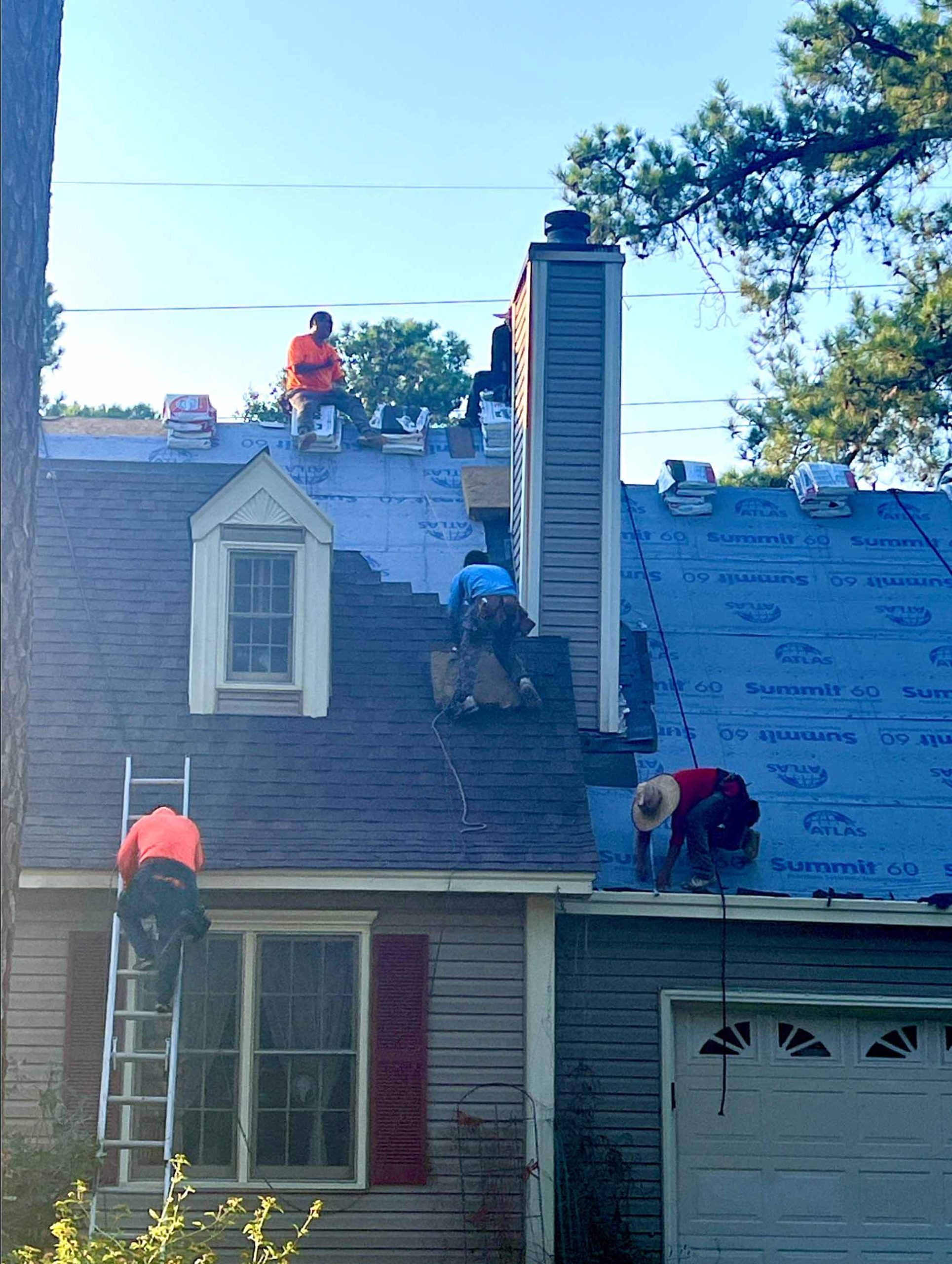
On an occupied building, the roof should never be left open overnight. The basic rule is that the crew only tears off what it can fully dry in that day. At the end of each shift, every opened area should be covered with the new system or a temporary waterproof tie-in to the existing roof. Midlands summer storms build quickly in the afternoon, so crews often plan the tear-off for the morning and keep materials ready to close the roof early if weather moves in.
Phasing breaks the building into sections that can be completed one at a time, usually following the interior uses below. A retail strip might be done unit by unit. An office building might be done wing by wing, with the most sensitive spaces scheduled when they are least used. Some work, such as tear-off over a busy storefront or work near air intakes of a clinic, may be scheduled for evenings or weekends. After-hours work usually adds cost through labor rates and lighting, so it should be priced as a line item in the bid. Our guide to comparing commercial roofing bids covers how to make sure every contractor prices the same phasing and hours.
What Owners Should Ask Before Signing
Before choosing a contractor for an occupied re-roof, ask each one to explain in writing how they will handle the points above on your specific building. Useful questions include: How much will you open each day, and how will it be dried in? What is your plan if a storm arrives mid-shift? Where will the crane and dumpster go? Which system and adhesives are you proposing, and what odor should occupants expect? Who coordinates with our HVAC contractor? Who do tenants call, and how fast will someone respond to a leak report? The answers say a great deal about how the project will feel to the people inside.
A re-roof is also a chance to address problems the occupants already know about, such as leaks at rooftop units or ponding near drains. Make sure those are written into the scope so they are fixed during the project, not after it.
If you are planning a re-roof on a building that has to stay open, our commercial roofing team can walk the roof and the interior with you and build the phasing plan into the proposal. Request a free commercial roof assessment to start that conversation.