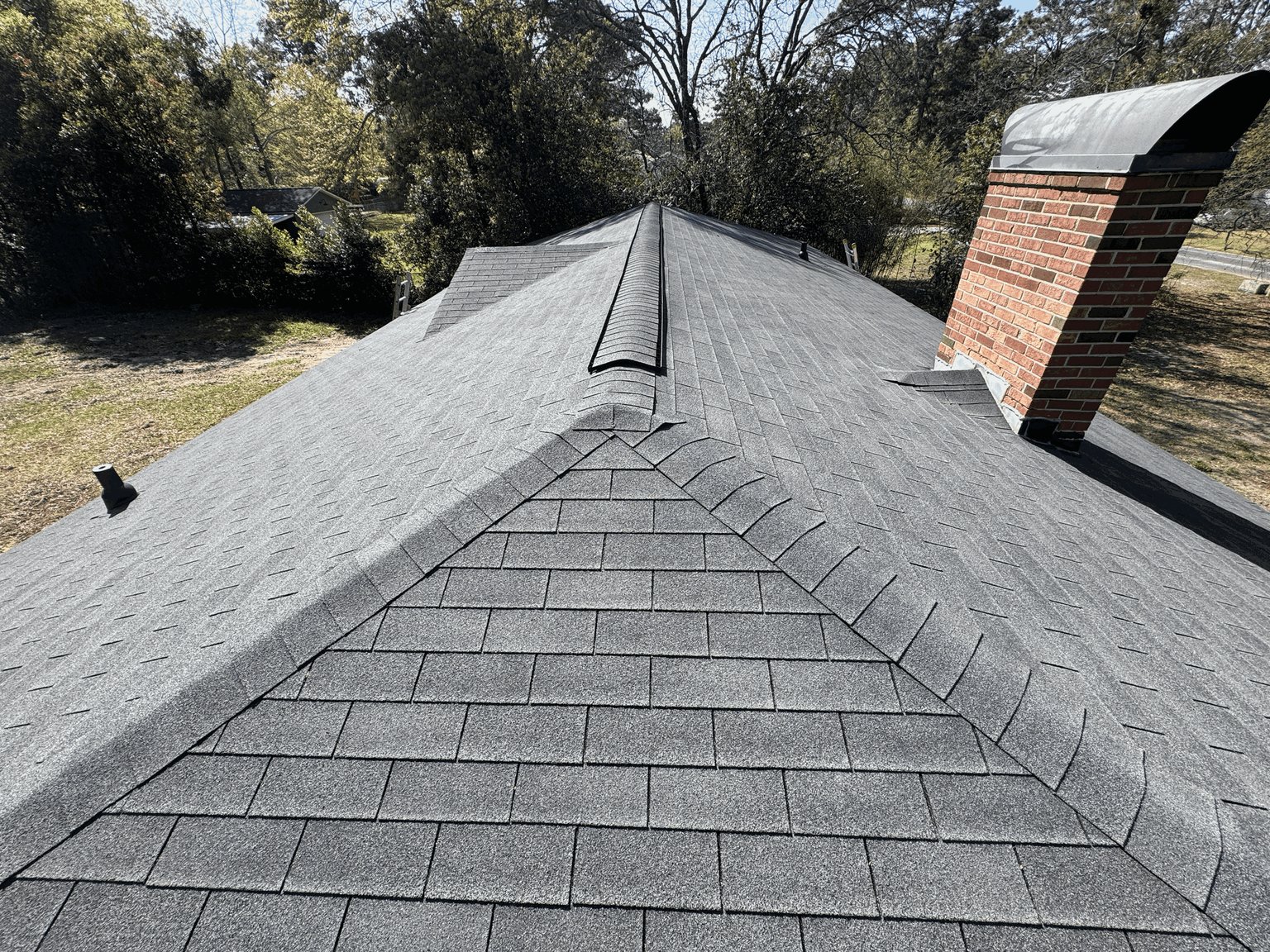
If a storm or a falling tree damages your Lugoff roof, the order is: get everyone safe and away from downed power lines, document the damage, limit further water damage once it is safe, then sort out the tree, the insurance claim and the permanent repair. In Lugoff the usual culprit is not the wind itself but the trees it brings down. That was true in Helene and in many smaller storms since.
This page covers what storms have done in and around Lugoff, what to do first, how to document damage and how insurance works in South Carolina. It is part of our Lugoff roofing page.
What storms have done in Lugoff
Helene, 27 September 2024
Helene reached Kershaw County as a tropical storm, not a hurricane. The highest gust measured at Camden's Woodward Field was 36 mph before the station stopped reporting, and the heaviest rain in the county, 3.79 inches, fell at a gauge south of Lugoff near the Richland County line. The damage came from trees. The National Weather Service record for the county reads: "Falling trees damaged numerous structures across the county. At least 154 homes sustained some level of damage including 1 destroyed and 19 with major damage." Many trees and power lines were down, some roads closed and parts of the county lost power.
A tree on a Lugoff home, May 2024
A few months before Helene, on 9 May 2024, the Kershaw County Fire Department reported a tree down on a home in Lugoff. It is one entry among many: the NOAA storm database lists trees and power lines down around Lugoff in 2016, 2018, 2021, 2022, 2023, December 2024 and twice in the summer of 2026, including along US 1 and on roads such as Lachicotte, Burdell, Ward and Grey Fox.
The July 2019 storm on US 601
On 18 July 2019, thunderstorm winds estimated at 65 knots damaged structures in Lugoff near US Highway 601, Plaza Drive and Boulware Road. According to the NOAA record, a car dealership and two restaurants had roof damage, siding and signs were damaged, and trees and power lines came down, some onto cars. Storms like that are local: one stretch of road sees damage while the next is untouched. That is why it is worth checking your own roof after any severe storm, not just named ones.
Ice storms, January 2022 and January 2026
Ice is less common here but it does happen. On 16 January 2022, around a quarter inch of ice accumulated across Kershaw County, bringing down trees, limbs and power lines. On 25 January 2026, a National Weather Service employee measured a quarter inch of flat ice between Elgin and Lugoff. Ice-laden limbs break and fall on roofs, and ice and debris can back water up at the eaves and in gutters.
What the record does not show
Hail near Lugoff has been small and infrequent in the NOAA record; the large hail in the county fell in northern Kershaw County. The EF-2 tornado of January 2020 hit near Kershaw and Clyburn in the north of the county, not Lugoff. If someone at your door says your street had major hail, ask what date and check the roof yourself.
What to do first in Lugoff
Start with people, not the roof. Clear any room under a broken limb or a sagging ceiling, and stay well back from wires caught in the tree; report them to your electric provider.
Next, take photos and video before anything is moved, inside and out. When it is safe, protect the inside by moving belongings and getting the opening tarped, and leave cutting a big tree off the roof to a tree service. Get a written assessment before you sign a repair contract. Step-by-step detail is in our guide to the first 48 hours after storm damage, and emergency roof repair covers urgent leaks.
Building a record of the damage
- Wide shots that show the house and the tree together, then a close-up of each damaged spot.
- Interior evidence: stained drywall, wet attic insulation, ruined furniture.
- The storm date, plus any National Weather Service warning or news story from that day.
- Invoices for the tarp, the tree crew and any drying or hotel costs.
- Damaged materials, kept until your insurer clears disposal.
- Roof and attic photos from your roofer. A cracked deck rarely shows from the yard.
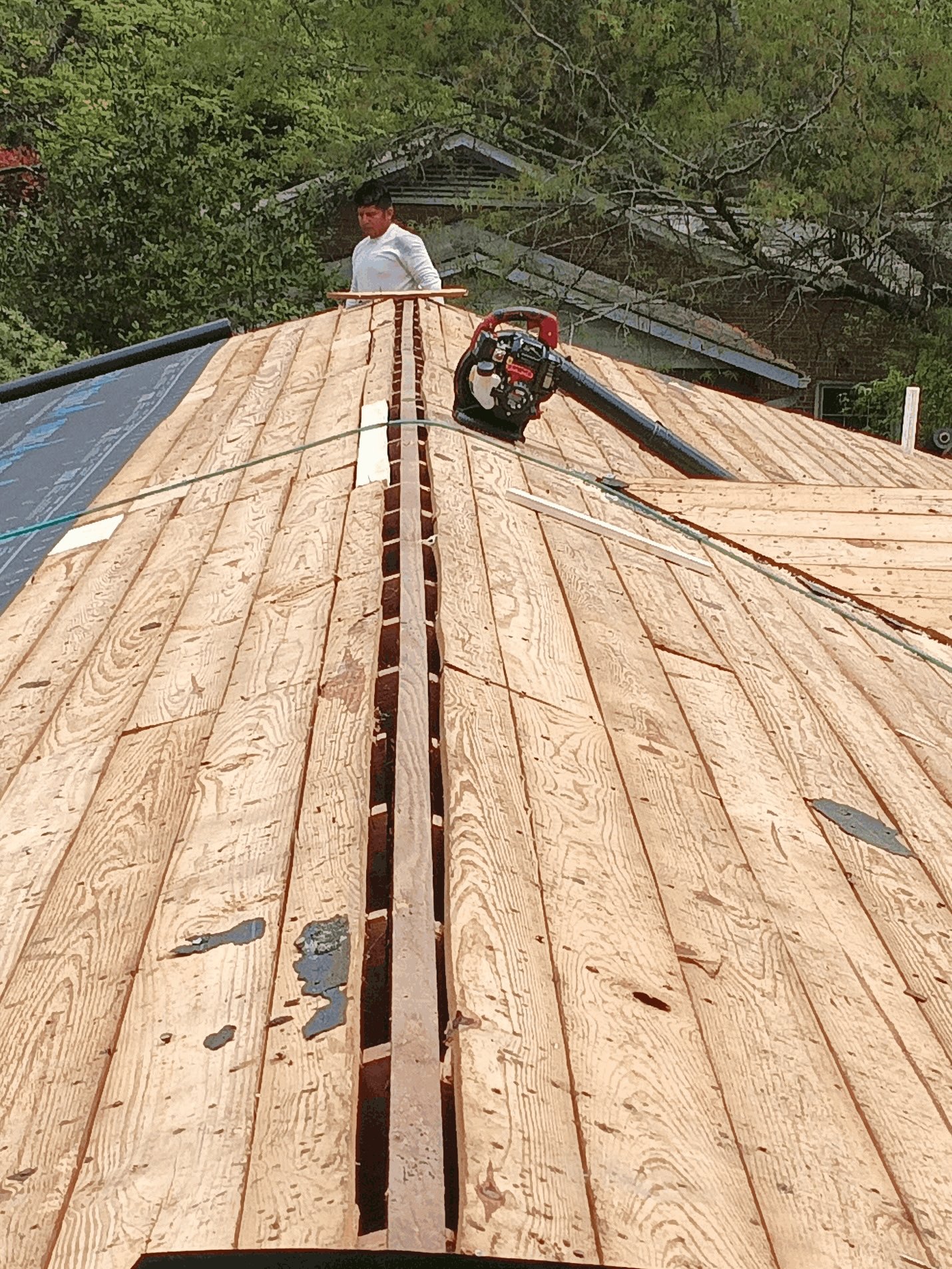
A tree strike can crack the deck, break rafters or tear shingles off their fasteners without leaving a visible hole. On our Lugoff roof replacement, rotted decking and a soft rafter at a plumbing vent only showed once the shingles came off. Storm-cracked decking can hide the same way, which is why we check from the attic as well as the roof.
Insurance: what is yours to do and what is ours
Wind and falling trees are commonly covered, subject to your deductible and the policy terms. In South Carolina the claim stays in the homeowner's hands. S.C. Code §40-59-25 bars a residential roofer from representing or negotiating for you, or advertising that it will, and from paying or rebating any part of your deductible. It also gives you five business days after a written denial to cancel a roofing contract, with no payment due before then.
We inspect, photograph, write the estimate, can meet the adjuster at the house, and do the approved work. If you want someone to negotiate for you, that is a licensed public adjuster, and a South Carolina law approved 19 May 2026 caps their fee at 10%. The roof insurance claims guide has more, and so does roof age and homeowners insurance: an older roof may be paid differently, and small damage may not clear the deductible.
Watch for storm chasers
After a big storm, out-of-town crews often go door to door. Check any roofer's SC LLR registration with our license check guide, and do not sign anything the day of the knock. The FTC Cooling-Off Rule gives you three business days to cancel most door-to-door sales made at your home. Be wary of anyone who offers to cover your deductible or says they will deal with your insurer for you; in South Carolina, both are against the law for a roofer.
Repair or replace after a storm?
Fresh storm damage on a roof with plenty of life left is usually a repair. On a roof already near the end, the damage plus the wear can make replacement the better spend, especially since insurance may pay only for the storm part. See Lugoff roof repair and Lugoff roof replacement; any permit goes through Kershaw County (see the Kershaw County roof permits guide).
Get help with storm damage in Lugoff
Need someone to look at storm damage on a Lugoff roof? We inspect it, photograph it, tarp what needs tarping and make the permanent repair. Contact us or call (803) 734-3700, and see our storm damage repair page.